Why Peruvian Pima Cotton Outlasts Synthetic Blends in High-Rep Workouts
October 1, 2026
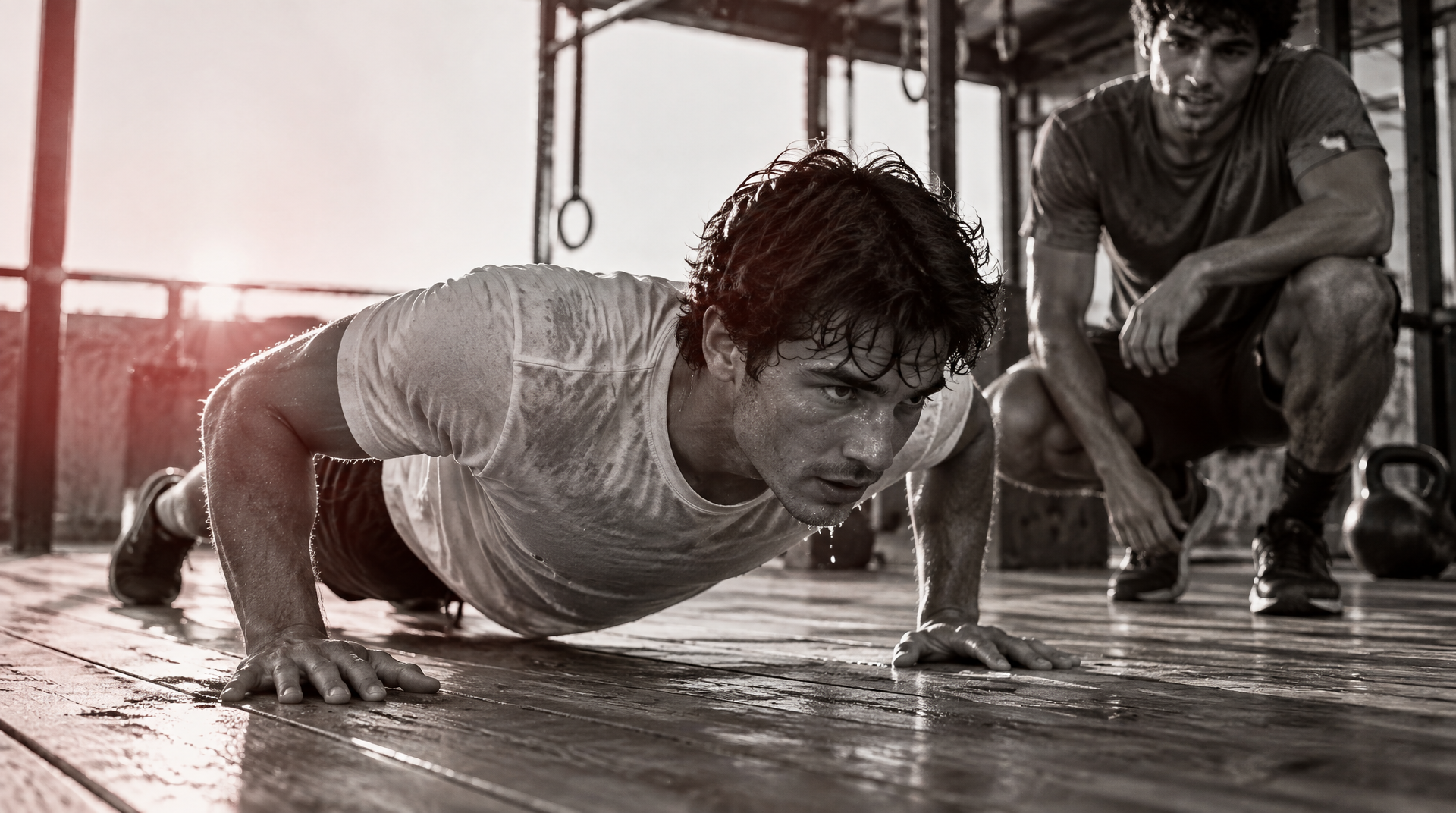
The short version:
Peruvian Pima cotton's extra-long fibers are often associated with better pilling resistance and shape retention through repeated washing. Many long-staple cotton garments are considered more durable than standard cotton, but actual lifespan depends on construction and care.
The fabric can absorb sweat while maintaining airflow between movements, which may make it comfortable for strength circuits and yoga.
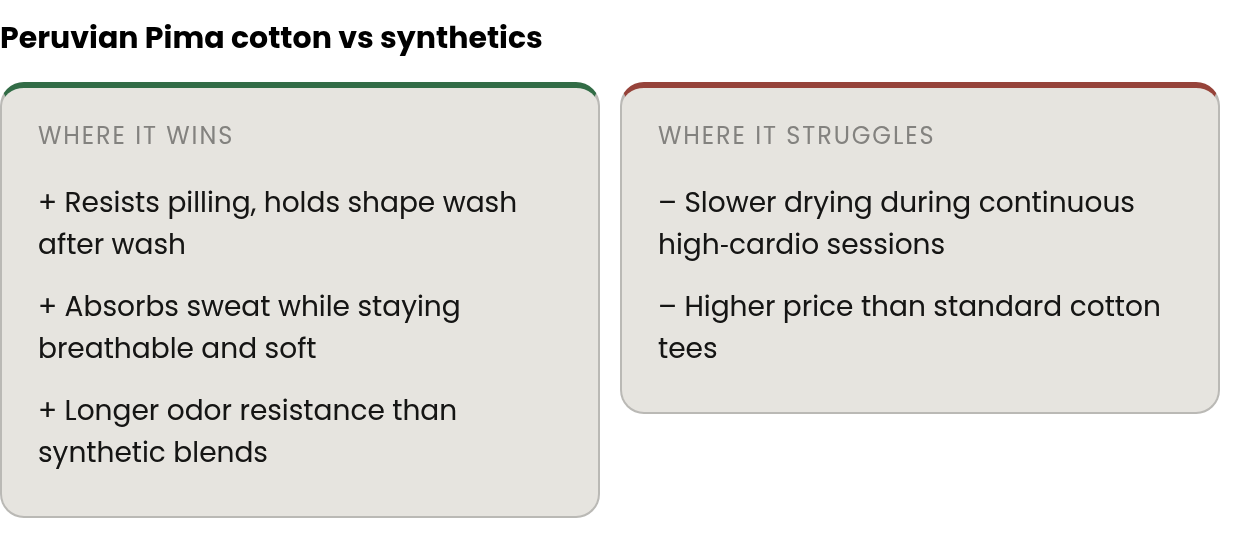
Synthetic blends tend to dry faster during continuous high-cardio sessions once saturated, because their hydrophobic fibers move moisture to the surface. For that specific wet, nonstop effort, synthetics usually pull ahead.
Pima is often positioned in the mid-market price range because production in northern Peru can be more labor-intensive than commodity cotton, and the garments are intended for longer use.
It can stay soft against skin during high-rep training and often transitions easily to everyday wear without the stiff synthetic afterfeel.
The finer, airier yarns may help reduce sweat pooling during holds and hard sets in warm climates, though the result depends on the weave and garment weight.
Quick Comparison Summary
You know that moment mid-workout when your shirt stops cooperating? It clings, it chafes, and suddenly you're thinking more about the fabric than the fifteenth rep.
We make athleisure from certified Peruvian Pima cotton, so we spend a lot of time with these trade-offs. Pima leads on airflow and sweat absorption during stop-start sessions in our experience. Synthetics pull ahead once you're drenched in nonstop cardio. Here's the side-by-side.
| Fabric | How it handles high-rep sweat | Durability | Feel next to skin | Best for |
|---|---|---|---|---|
| Peruvian Pima cotton (our line) | Can absorb sweat into the fiber and vent between movements | Long-staple fibers may resist pilling and help the garment hold shape wash after wash | Exceptionally soft, breathable | Hot yoga, warm-climate movement, gym-to-street wear |
| Conventional cotton | Absorbs well but may pill faster and lose openness over time | Can mat down with washing | Soft but less refined | Casual everyday wear |
| Polyester / spandex blends | Often repels water and dries fast once soaked | May degrade with heat and repeated wash cycles depending on the garment | Slick, sometimes clammy after peak sweat | Continuous high-cardio, running, rowing |
Which fabric wins for high-rep workouts?
For intermittent, high-rep training, Pima cotton holds a real edge in comfort. Longer-staple fibers can spin into finer, airier yarns, so air keeps moving while the fiber absorbs sweat before it pools against the skin—though the exact performance depends on weave, weight, and finish.
Synthetics still win one lane. If you're running steady miles or grinding nonstop intervals, moisture-wicking polyester often dries faster once fully saturated. REP Fitness notes those hydrophobic fibers move sweat to the surface quickly. For that kind of effort, lean synthetic.
What about pricing and the bigger picture?
Pima pieces often cost more than basic cotton because the fiber quality and production requirements can differ from commodity tees. The value may show up in rotation: fewer stretched necklines, less pilling, and a garment that keeps its breathability instead of turning dense after regular washing—though actual durability varies by construction.
Why These Options Matter
Picking workout clothes feels simple until you're ten reps deep and your top is working against you. The fabric decision happens at the rack, long before the sweat starts.
Peruvian Pima cotton carries a reputation for resilience. The garment you start with can be closer to the one you keep training in months later, rather than something that stretches out, fades, or loses its clean shape after a few laundry cycles.
What should you actually compare?
Most people reach for one of three options. Each fits a different kind of training and a different set of values.
| What matters to you | Peruvian Pima cotton (our line) | Synthetic performance blends | Standard cotton tees |
|---|---|---|---|
| Feel during stop-start reps | Soft, breathable, can absorb sweat | Dry fast, can feel slick | Soft but heavy once damp |
| Nonstop cardio in heat | Good to a point | Often best for drenched sessions | Tends to struggle |
| Where it's made | Crafted in Peru | Often large-scale facilities | Varies widely |
| Everyday wear after the gym | Easy, may avoid plasticky feel | Can hold odor | Comfortable, less structured |
Which workouts suit this choice?
Pima tends to shine in strength circuits, Pilates, yoga, and the kind of training where effort comes in waves instead of one long pour. During those sessions, comfort is not just about dry speed—it's about whether the fabric stays pleasant against your skin while you move, pause, stretch, and reset.
If your session is pure sustained cardio in high heat, synthetics may still pull ahead once you're fully soaked. We'd rather tell you that plainly than oversell.
For most women balancing fitness with the rest of a full day, Pima can handle the workout and the errands after without the stiff, synthetic afterfeel.
The selection factors come down to three things: how you sweat, how long you want the garment to last, and whether the story behind it matters to you. If that last point lands, our certified Pima guide is worth a read before you trust any label.
Feature Comparison
Once you move past the quick summary, the difference between natural-fiber athleisure and a synthetic blend shows up in three places: how the fabric handles moisture, how it feels over a long session, and what your purchase sets in motion once the workout ends.
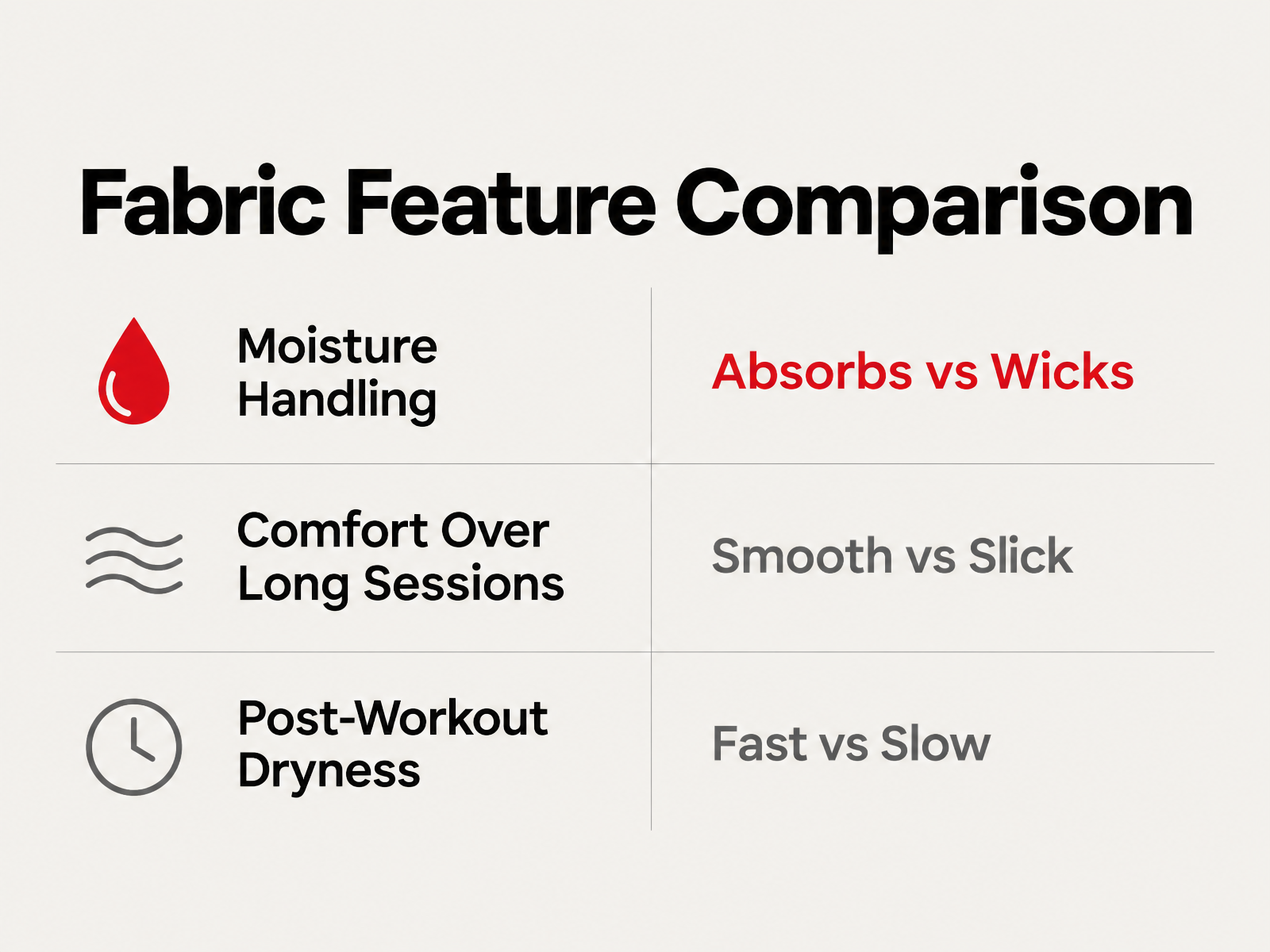
Natural cotton and synthetic blends take opposite approaches to moisture. Synthetics—polyester, nylon, or spandex—are often engineered to repel water and move it outward. Cotton absorbs moisture and remains soft against you. Both approaches can work. They just suit different kinds of effort.
Which features matter for high-rep sets?
High-rep work is rarely one unbroken blast. You move, breathe, reset, and go again. That pattern rewards a fabric that can stay comfortable through changing intensity rather than one built only for maximum evaporation.
| Feature | Peruvian Pima cotton (our line) | Synthetic blends |
|---|---|---|
| Sweat handling | Absorbs into the fiber, stays soft | May wick to the surface and dry fast |
| Feel next to skin | Smooth, may not cling on rest breaks | Slick, can cling once saturated |
| Odor over time | May stay fresher longer | Can hold odor without treatment |
| Breathability | Can offer high airflow between reps | Depends on weave and weight |
What does the fabric choice set in motion?
A spec sheet rarely captures what happens after repeated real-life wear. Synthetic blends can be useful for fast-dry cardio, but they may need more frequent washing when odor settles into the garment.
Pima can bring a different kind of performance: softness that lasts, a smoother hand, and an end-of-life profile that doesn't rely on plastic fibers. Natural cotton may break down more readily than polyester when a garment is finally retired, depending on finish and dye; polyester can shed microplastic fibers during laundering, while cotton does not. If you want to understand what the certification actually promises, our team wrote a guide on reading the Peruvian Pima label.
Comfort you can feel. Quality you can trace. That's the pairing we chose.
Performance Comparison
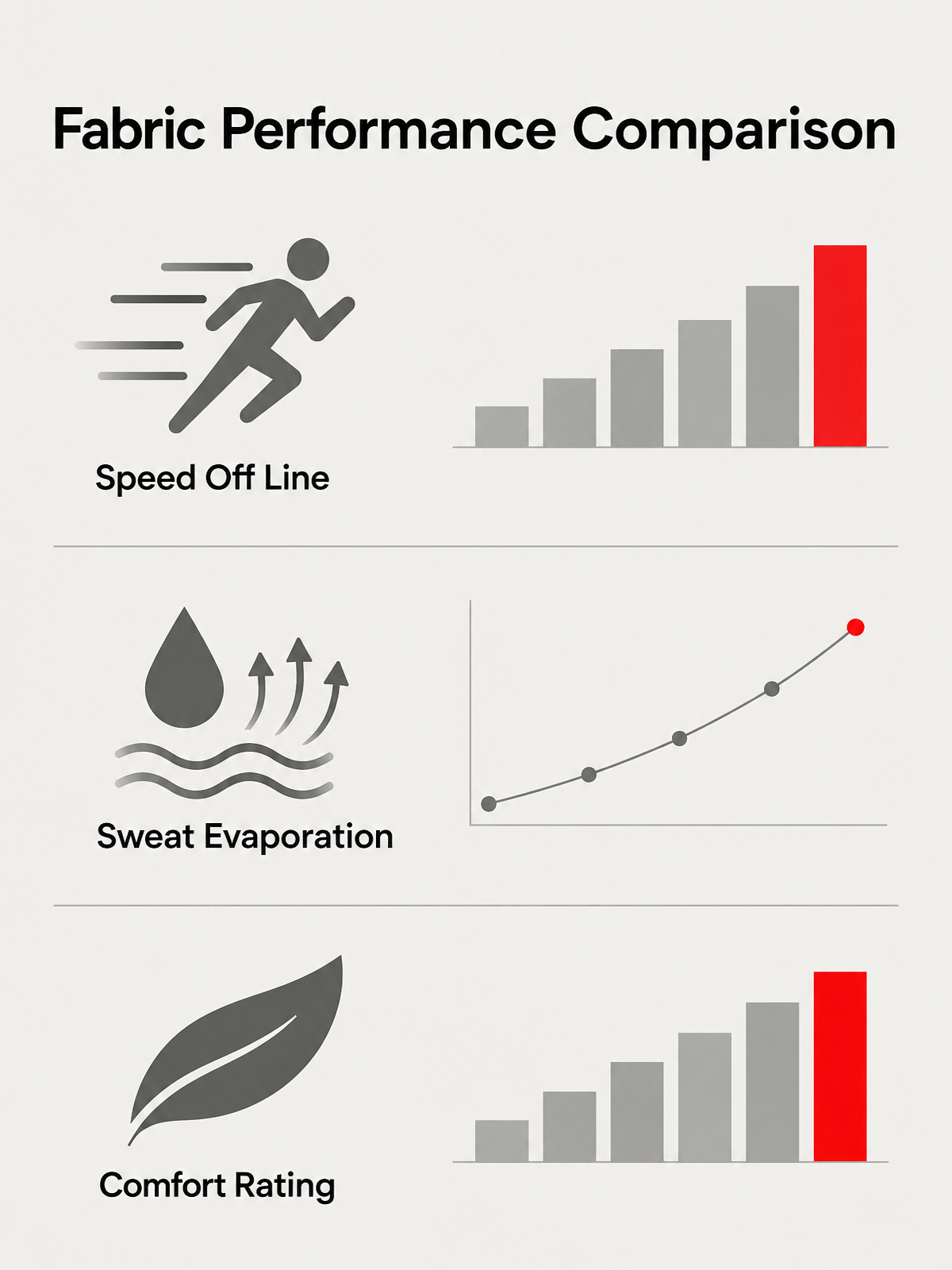
Speed off the line is where synthetics often win, and we'll say it plainly. Polyester and nylon push sweat to the surface fast, so during nonstop cardio they can feel dry sooner. If your session never pauses, that moving-water trick matters.
But most strength work isn't nonstop. It's sets, then rest, then sets again. That stop-start rhythm is exactly where extra-long staple Pima may hold its own, because the fabric can absorb sweat during the set and give moisture somewhere to go while you catch your breath.
Where each fabric pulls ahead
Think about resource usage over the life of the garment, not just one workout. Synthetics can dry quickly but may trap odor and shed microplastics in the wash. Pima may stay fresher between washes and keep its shape through heavy rotation, so one shirt can cover more sessions.
| What you're measuring | Peruvian Pima cotton (our line) | Synthetic blend |
|---|---|---|
| Dry speed in nonstop cardio | Slower | Faster |
| Comfort across stop-start sets | Can stay soft and breathe | Can feel clammy at rest |
| Odor over repeat wears | May resist longer | May hold odor |
| Shape after many washes | Can keep structure | May pill over time |
| Where it's made | Crafted in Peru | Often factory-scale |
Why durability matters more than one dry cycle
A garment that holds up through many sessions can mean less waste and more value from a single piece. Pima's longer fiber length—when present and verified from the supplier—is often cited as one reason for stronger yarn that resists pilling and stretching. That structural difference may show up after months of wear, not just the first week.
So the honest call: if you only do steady-state cardio and want the fastest dry, a synthetic tee makes sense. For high-rep training, long gym days, and clothing you'll wear for years, Pima is the stronger pick. If you want to read how we verify the fiber, our guide on reading the label breaks it down.
Pros and Cons
Let's be honest about where each fabric shines and where it lets you down. No material wins everything, and pretending otherwise helps no one standing at the rack trying to decide.
Peruvian Pima cotton can excel at sustained comfort over time. Choosing Pima cotton labeled as certified and crafted in Peru means you're wearing a fabric grown and made with care in one of the few regions that produces it. That's the part synthetics can't match on a spec sheet.
Where our cotton gives ground is drying speed during nonstop cardio, and we won't dress that up.
What are the real trade-offs?
| Peruvian Pima cotton (our line) | Synthetic blends | |
|---|---|---|
| Odor resistance after wear | May stay fresher longer | Can smell sour quickly |
| Shape retention | May hold structure wash after wash | May stretch out or warp over time |
| Fast-sweat drying | Slower | Faster |
| Where it's made | Crafted in Peru | Varies |
| Environmental impact | Potentially biodegradable; no synthetic microplastics | May shed plastic fibers |
Pima's strengths are easy to feel. The long fibers can keep the surface smooth, and the natural structure may let air move instead of trapping it against you. If you want the detail on why that airflow matters, we wrote about it in Pima Cotton Wins for breathability.
The honest downside: during a sweat-soaked spin class that never pauses, cotton tends to hold moisture longer than polyester does. You may feel damp sooner. That's physics, not a flaw we can design away.
When should you skip cotton?
Skip our cotton for long, uninterrupted cardio where you're drenched start to finish. A moisture-wicking synthetic may keep you drier through that specific effort, and we'd rather you be comfortable than loyal.
But for lifting days, studio classes, and clothing that has to move into the rest of your schedule, the picture flips. You can get a stable fit, a softer hand, and a garment that doesn't depend on plastic performance fibers.
Pick the fabric that fits how you actually move. For most high-rep training, that's where natural fiber can earn its spot.
Use Cases and Ideal Users
Think about who you actually are when you're shopping for workout clothes. Not a demographic. A person with a specific way of moving, a specific drawer full of gear that half-works.
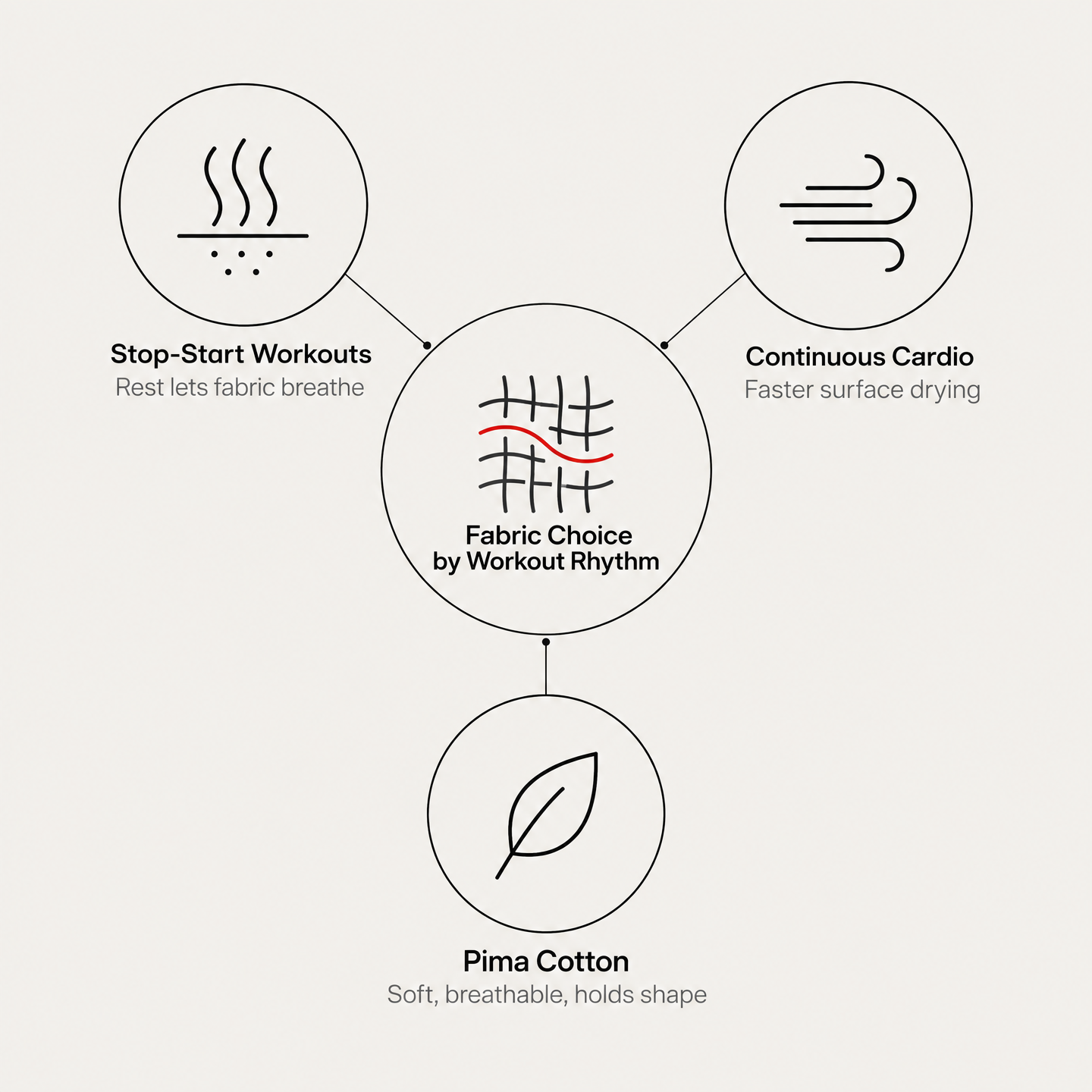
If you train in sets with rest between them, you're our ideal reader. Strength circuits, Pilates, barre, flow-based yoga, mat work with pauses. The pauses matter because they may give natural fibers a chance to settle against the body rather than staying plastered in place.
Who gets the most from Pima, and who should look elsewhere?
We'll be honest about the limits. If your sessions are nonstop sprints or hot, drenching cardio with zero breaks, a synthetic blend may feel drier sooner. We won't pretend otherwise. Reach for performance polyester on those days and save the cotton for everything else.
| Your workout style | Best fabric fit | Why |
|---|---|---|
| Strength sets, barre, Pilates, flow yoga | Peruvian Pima cotton (our line) | Rest periods may let the fabric breathe and recover |
| Nonstop cardio, hot sessions, long sweaty runs | Synthetic blend | Faster surface drying when you never pause |
| Casual wear, errands, lounge-to-studio days | Peruvian Pima cotton (our line) | Soft, breathable, may hold shape wash after wash |
Why does the purpose matter as much as the performance?
What sets our ideal user apart is not just workout style. You care where your clothes come from. Our Pima cotton is grown in Peru and crafted there into pieces designed for comfort and movement. You're not chasing the cheapest option or the flashiest tech—you want gear that shows up session after session without pills, sag, or that washed-out synthetic feel that can creep in after months of use.
That's the reader we serve best: someone who wants gear that lasts, feels soft through a full session, and values the craft behind what they wear. If that's you, Pima earns its spot in your rotation.
Want the detail on what "certified" actually means? We broke it down in this label guide.
What I'd actually do
After all the trade-offs, the fabric you pull over your head still comes down to one practical question: what kind of movement are you dressing for?
Which fabric should you reach for?
| Your workout | Best pick | Why |
|---|---|---|
| Strength circuits, Pilates, barre, flow yoga | Peruvian Pima cotton | Stop-start rhythm may give the fiber time to absorb and release sweat |
| Nonstop cardio, hot sweaty sessions | Synthetic blend | Can push moisture to the surface faster when you never pause |
| Everyday wear plus light training | Peruvian Pima cotton | Soft enough to live in, structured enough to train in |
That's the honest split. No single material wins everything, and the smartest drawer may hold both.
What you're really committing to
Most brands will tell you about thread count and lab tests. We'd rather talk about how a neckline behaves after long use, how a hem sits after repeated laundering, and whether a top still feels good when it has become one of the pieces you reach for without thinking.
Our Pima pieces are designed for that kind of quiet reliability. The seams are intended to stay flat under a sports bra strap. The hem is cut to avoid curling after a year. And when you pull it on for errands after an early session, it's meant to fit your day without announcing that you just left the gym.
Synthetic blends often recover faster between washes and pack lighter for travel. Cotton may ask for a bit more care and can offer longevity and everyday wearability in return. To understand what "organic" actually promises on a label, our guide breaks it down plainly.
So match the fabric to your movement. Choose Pima when your training breathes with you, keep a synthetic layer for the all-out days, and know that comfort and purpose don't have to be separate choices.
References
[1] Moisture-Wicking vs. Cotton Training Apparel - REP Fitness - https://repfitness.com/blogs/guides/moisture-wicking-vs-cotton-training-apparel
[2] Cotton vs polyester for fitness, head to head | LAINE HILL - https://lainehill.com/blogs/journal/cotton-vs-polyester-fitness?srsltid=AU7gw4XRZhA92MJ1Yx2WmcPVMzEmEbnr23Qgwjn_EYXgjChlZcS-01Ga
Frequently Asked Questions
Does Pima cotton really stop smelling faster than synthetic workout clothes?
Pima cotton can be a good choice if odor is one of the reasons you avoid rewearing activewear. Polyester may hang on to smell, especially after repeated intense sessions, while cotton often feels fresher because it is not built from plastic performance fibers.
How long does a Pima cotton workout top actually last compared to a polyester one?
A well-made Pima cotton top is intended for long rotation, not just a few flattering first wears. The difference may be most visible in the places that usually fail first: the neckline, surface texture, side seams, and overall drape. Polyester can be useful, but it may lose its clean feel as heat, washing, and sweat build up over time.
Will Pima cotton work for hot yoga or should I stick with moisture-wicking fabric?
Pima cotton works well for hot yoga when the class includes holds, transitions, breathwork, and moments where intensity rises and falls. If your practice feels more like continuous cardio from start to finish, a technical synthetic layer may be the better choice for that specific class.
Why does Pima cotton cost more if it's just natural fabric?
You may be paying for fiber quality, traceability, and a garment designed to stay in use instead of being treated like a disposable tee. With Pima, the value is not only how it feels on day one; it is how often you can keep reaching for it without the piece looking tired.
Can I wear Pima cotton straight from the gym without looking sweaty?
Yes, especially after workouts that are intense but not fully drenching. Pima cotton has a softer, more everyday look than many shiny technical fabrics, so it pairs naturally with errands, coffee, school drop-off, or heading back to work after an early session.
When should I actually choose synthetic over Pima cotton for a workout?
Choose synthetic when the workout is all-out and continuous: running, rowing, spin, or any class where you know you will stay soaked until the end. Choose Pima for high-rep training, studio movement, warm-weather casual wear, and days when comfort matters beyond the workout itself.