Athleisure That Actually Breathes: Certified Cotton vs Lab Synthetics
October 8, 2026
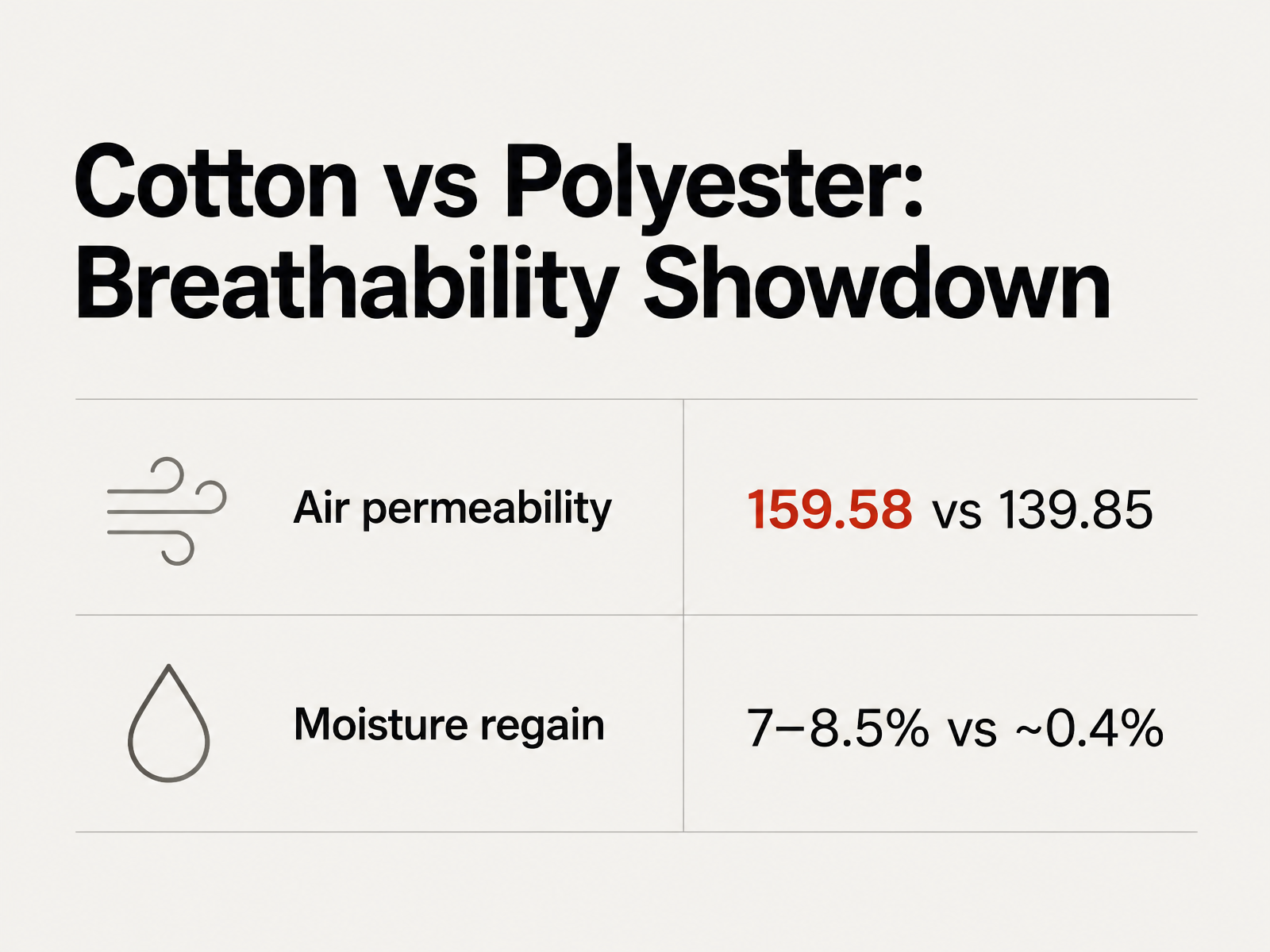
In short: Cotton measured 159.58 cc/s/cm² air permeability versus polyester's 139.85 in standardized ASTM D737 testing—a 14% breathability advantage in dry conditions. Polyester absorbs only 0.4% of its weight in moisture while cotton holds 7–8.5%, so cotton feels drier against skin during low-intensity wear. Odor-causing bacteria thrive on polyester in ways they don't on cotton, which is why synthetic gym shirts smell again the moment sweating resumes. PFAS "forever chemicals" have been reported in major-brand leggings and sports bras. In PuraKai's testing, its organic cotton fabric screened below 2 ppm detection limits for total fluorine. That result applies only to the tested fabric, not organic cotton generally or Black Pearl products. Cotton's breathability drops when fibers swell with moisture, making synthetics better for prolonged high-sweat cardio but cotton ideal for studio-to-street moderate activity.
Why breathability matters when you're wearing the same outfit all day
Air permeability testing measures how easily air moves through fabric. Higher values mean more airflow. Cotton's hollow fiber structure lets air pass through naturally. Polyester is extruded plastic that can be knit loosely to compensate, but the fiber itself doesn't breathe. That difference shows up as clamminess ten minutes into a warmup.
Breathability also includes moisture vapor transmission, which tracks how quickly water vapor escapes from fabric. Cotton's natural structure allows air to circulate, helping you stay comfortable during movement, relaxation, and everyday activities.
Cotton's moisture advantage for studio-to-street wear
Activity intensity makes the cotton conversation more honest. Cotton pulls moisture into the fiber, which can make it feel calmer and less slick during lower-sweat wear. Polyester behaves differently. It moves moisture across the surface, which can help during harder training. It may feel wet or cool when you're stopping, stretching, sitting, or moving through your day.
Yoga and similar low-intensity practice sit in the range where cotton's moisture-swelling airflow reduction is useful rather than limiting. You're not saturating the fabric, so cotton's absorbency can feel dry and calm without the wet-state drop that matters in sustained cardio. The dynamics shift when sweat volume climbs. Once cotton is fully saturated, it no longer behaves like the dry, airy fabric you'd expect. For long runs, spin classes, or extended cardio where fabric stays soaked, synthetic construction has a real performance role.
Odor and chemical-finish concerns beyond the studio
Odor isn't only about sweat. It's also about what the fiber holds onto after washing. Polyester can retain the compounds that make workout clothes smell stale, which is why some synthetic gear seems clean in the drawer but turns sharp again as soon as body heat returns. Cotton is easier to refresh because it doesn't rely on antimicrobial coatings to stay wearable between wash cycles.
There is also a chemical-finish gap. Many synthetic performance fabrics use disperse dyes, odor-control treatments, softeners, or water-repellent finishes to create the feel and function you expect. Untreated cotton removes much of that finishing stack from the equation when your clothing sits against warm skin for hours.
Breathability & moisture management
The lab data gives the debate a useful starting point, but not the whole answer. Dry fabric and worn fabric aren't the same thing. Under controlled testing, cotton can move air extremely well, especially when construction is comparable. That's why a cotton tee or legging can feel noticeably less sealed off during gentle movement than a slick synthetic piece built around surface wicking.
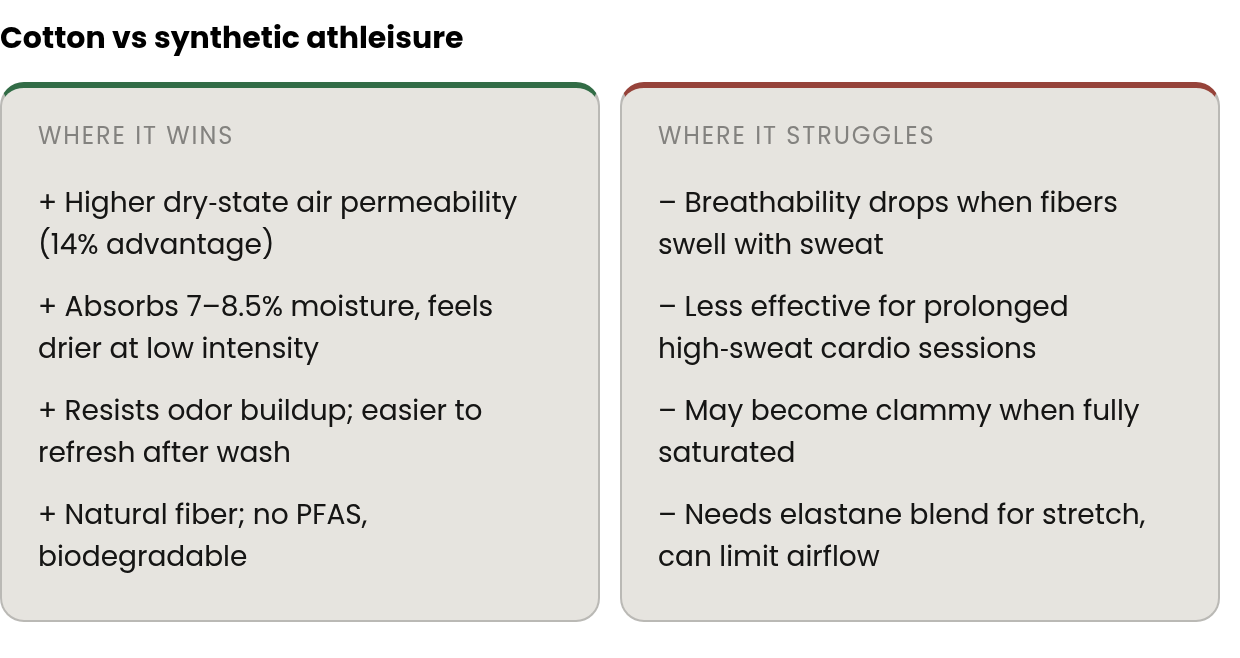
The catch sits in moisture. Cotton swells as it takes in sweat, and that swelling narrows the tiny pathways air uses to move through cloth. Polyester doesn't absorb much water into the fiber itself, so it can maintain more of its structure when sweat keeps coming. As the same lab breakdown puts it, the test measures dry fabric but the body wears wet fabric. That's why synthetics may keep your body temperature lower across longer workout sessions where sweat keeps pouring.
Intensity decides the winner, not the fiber
The honest answer depends on how hard you move. For drenching, high-sweat efforts, synthetics shed heat better once the fabric saturates. For the gentle, moderate airflow of a yoga flow or a café-to-errands stretch, cotton's dry-state comfort holds and its absorbency can make the fabric feel less slick against the skin. Cotton works for everyday and low-intensity wear. Synthetics work better for sustained cardio.
| Property | High-cotton | Synthetic blend |
|---|---|---|
| Air permeability (dry) | Higher in comparable dry testing | Lower in comparable dry testing |
| Moisture regain | Absorbs meaningfully into the fiber | Absorbs very little into the fiber |
| Wet-state breathability | Drops as fibers swell | Holds structure better |
| Best use | Low–moderate intensity | Prolonged, high-sweat |
One more quiet point on testing: if a brand is making breathability claims, ask how they measure them. Useful standards include ASTM E96, ISO 11092 Ret, and AATCC TM195 for liquid moisture. Those methods help separate real material performance from vague "cooling" language.
Comfort, softness & odor control
There's a moment on any busy athleisure day when you notice your clothes less than you notice how you feel in them. Soft against the skin. Not clinging. Not stale. That quiet comfort is mostly a fiber story.
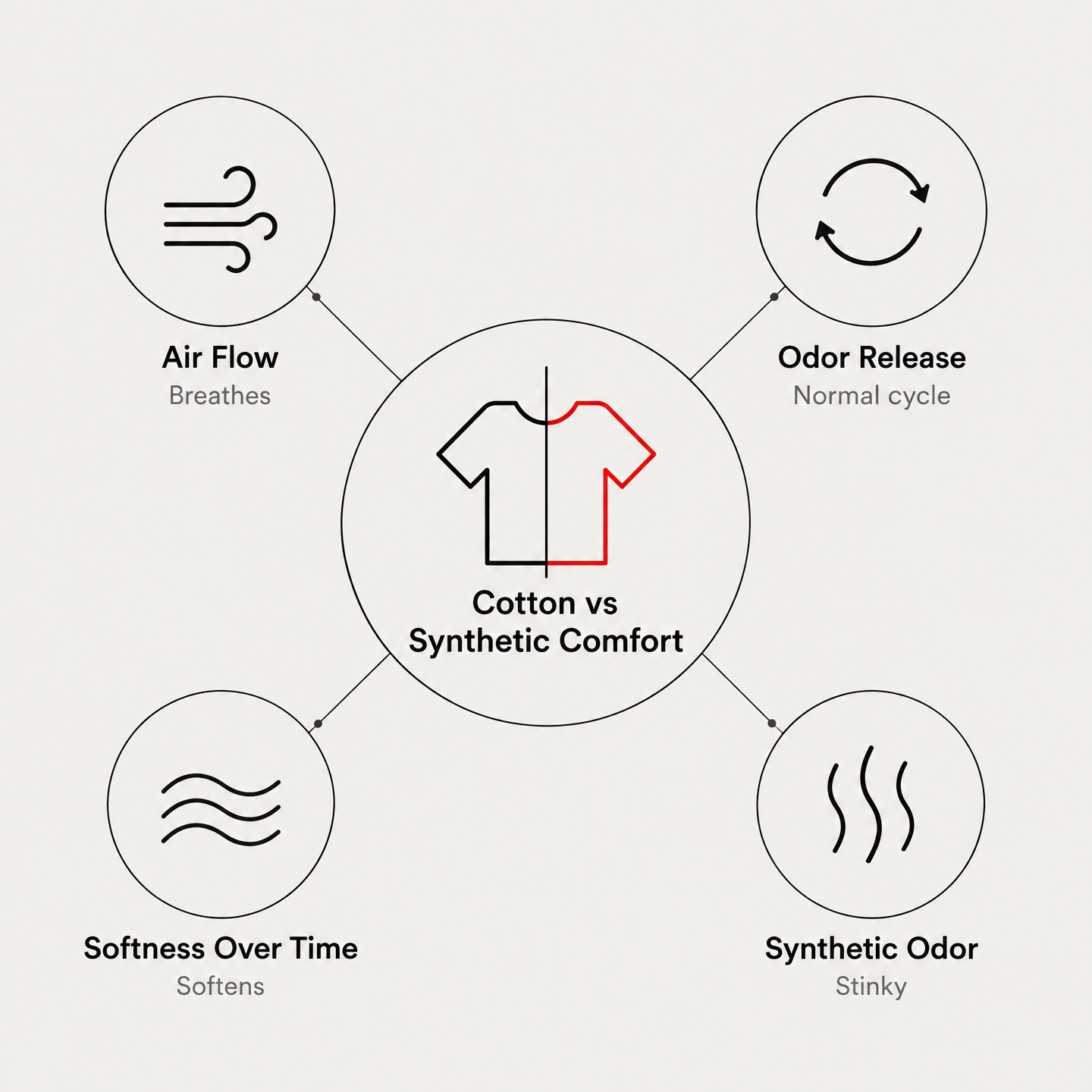
Start with hand-feel. A high-cotton knit reads as soft and breathable, and the honest comparison in PuraKai's cotton-vs-synthetic breakdown points the same way: cotton breathes instead of trapping heat, and it stays comfortable for hours. Cotton also softens with wear. Synthetics tend to pill, shine, snag, or go crispy as finishes wash off. That matters for athleisure because these aren't garments you wear once for a race and retire. They're the pieces you pull on repeatedly for travel, errands, stretching, recovery days, and casual work-from-home hours.
The odor gap synthetics can't wash out
Synthetic gym gear tends to get stinky after multiple workouts, driven by microbial odor-profile differences between polyester and cotton after a session. The practical issue is that odor can become embedded in the garment's routine: wash, wear, warm up, smell returns. Cotton is less dependent on chemical odor-control treatments because the fiber is easier to clean back to neutral.
| Factor | High-cotton blend | Synthetic |
|---|---|---|
| Hand-feel | Soft, softens with washing | Can pill, go crispy |
| Odor after repeat use | Easier to refresh in wash | Can retain stale smells |
| Chemical finishes | Natural fiber, no antimicrobial coating needed | May carry performance finishes |
On chemistry, synthetic performance fabrics commonly carry disperse dyes, antimicrobial treatments, and specialty finishes to simulate comfort, odor control, or water resistance. Natural cotton takes much of that question off the table, with no coating needed to begin with. Fewer unknowns against your skin is the simpler trade.
Performance, durability & care
During an athleisure day that stretches from a quick morning workout into errands and evening plans, your clothes have to hold up. The stretch needs to stay put. The fabric can't pill after a few washes, and sweat shouldn't turn your leggings into a biohazard. Breathability and durability are a package deal. One without the other leaves you either damp or patching holes.
Stretch and recovery without the synthetic anchor
Elastane—also sold as spandex or Lycra—is what gives activewear its stretch. Cotton-forward athleisure typically blends a small amount of spandex with a high percentage of cotton to deliver recovery without going full synthetic. The cotton carries the breathability and soft hand, while the elastane fraction handles the movement. You get four-way stretch that snaps back without the clammy synthetic shell.
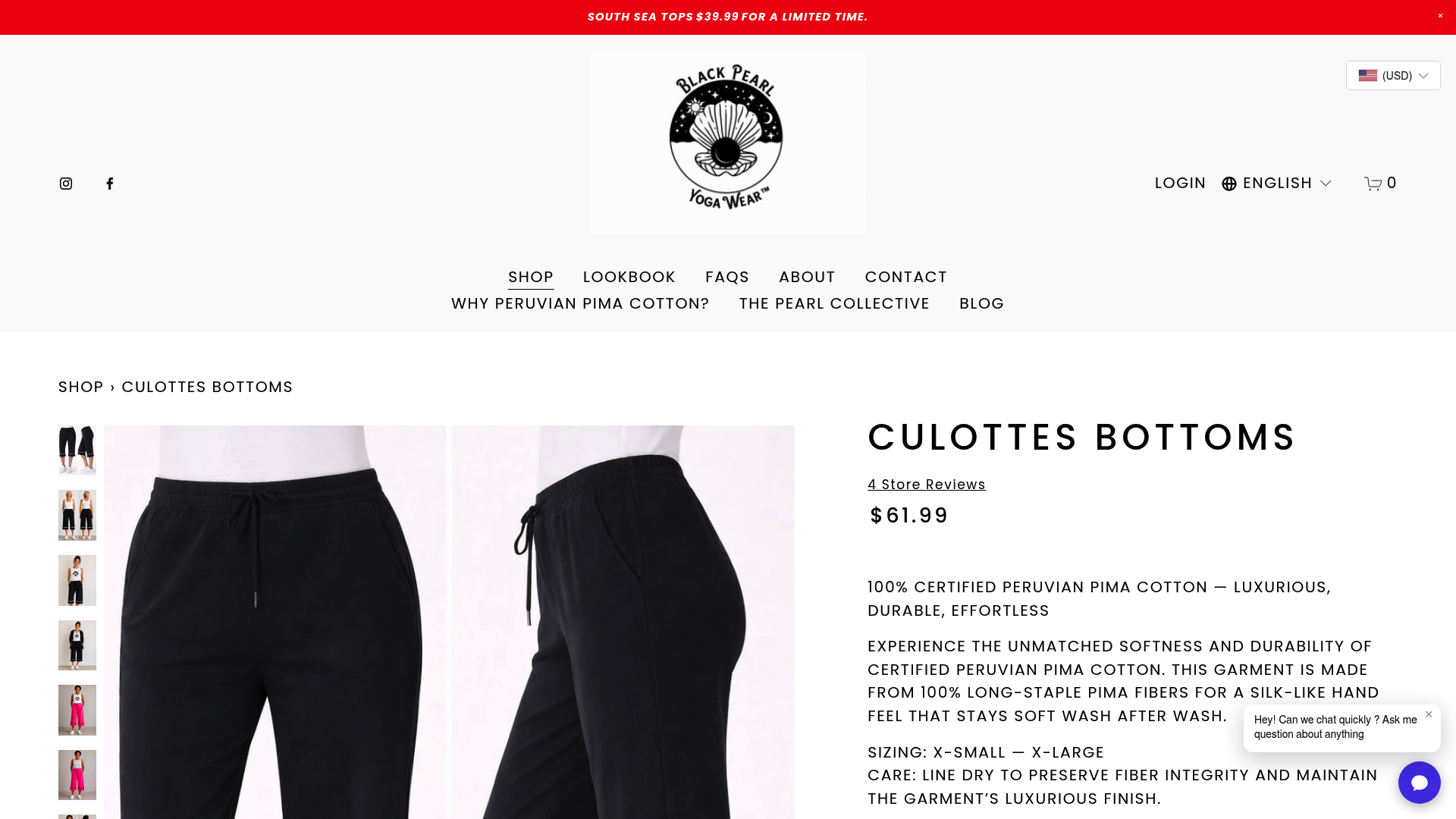
That composition matters because stretch without recovery turns into baggy knees and sagging waistbands. A tight knit construction paired with a modest elastane content delivers consistent snap-back without sacrificing the cotton character you bought the garment for in the first place. Too much spandex and you trap heat. Too little and the fabric loses its memory after a single wear.
Durability that shows up in daily wear
Hot-climate athleisure needs fabric that survives sweaty commutes and repeated washing without pilling or thinning after a month. Cotton naturally absorbs moisture, which supports evaporative cooling and keeps the fabric comfortable against your skin even when damp. Tight weaves improve abrasion resistance but can limit airflow, so weave choice is a direct tradeoff between breathability and longevity.
Longer staple fibers create smoother yarns with fewer protruding ends, which directly reduces surface fuzzing and pilling. Longer staples also mean fewer splice points per inch of yarn, so seams hold tension better and fabric maintains its structure through dozens of wash cycles.
Chemical screening and environmental indicators
Every wash cycle of polyester leggings can release plastic fibers that don't biodegrade in the way plant-based fibers do. Cotton fibers break down naturally. For athleisure you wear against damp skin for hours, that difference matters. It applies not just to waterways but to what sits against your body.
Natural fibers require no proprietary moisture-wicking treatments or antimicrobial coatings to function in hot weather. Those finishes degrade and wash out over time, leaving behind base fabric that may not feel like it did new. Cotton's intrinsic moisture absorption and evaporation capacity doesn't depend on a surface treatment. The fabric actually softens and becomes more absorbent as the fiber structure opens slightly through repeated wear and washing.
Black Pearl Yoga Wear: the certified cotton champion
You reach for leggings that move with you, breathe through a full day, and feel soft enough to forget you're wearing them. Black Pearl Yoga Wear focuses on certified cotton because the fiber's structure—longer staples and a hollow core—solves some of the problems that make other materials feel wrong by midday.
Cotton lets air move through the fabric before sweat saturation changes its behavior. That's what you feel during a yoga flow or errands: air moving against your skin instead of trapped heat. Cotton also takes moisture into the fiber rather than leaving all of it slick on the surface, which is exactly the kind of comfort difference that matters on slower, studio-to-street days.
When certified cotton beats synthetics for your athleisure day
Peruvian Pima cotton's longer staple fibers spin into smoother, stronger yarn that resists pilling at waistbands and underarms. The odor question matters when you're wearing the same leggings from morning yoga into afternoon meetings. Polyester tends to hold onto odor-related compounds more stubbornly, while cotton is easier to clean back down to neutral. For daily athleisure, that means fewer special detergents, fewer masking finishes, and less of that "clean until I warm up" problem.
Environmental concerns sit here too. Synthetic textiles account for roughly a third of the microplastics entering the ocean, according to IUCN estimates, and those fibers don't biodegrade. Cotton fibers break down naturally. For pieces you wear against your skin daily, fewer unknowns feels like the better trade.
References
[1] Cotton Workout Clothes vs. Synthetic Activewear: An Honest Comparison - https://purakai.com/blogs/threads-of-change/organic-cotton-vs-synthetic-workout-clothes-best-for-performance-health?srsltid=AU7gw4Wuj0UIu_B7oBItZAV_OJf4zcI4pCenHVQ2K6hSyA_GWEwMu7Ao
[2] Cotton vs synthetic: What's best for outdoor activities? - RevolutionRace - https://www.revolutionrace.com/campsite/cotton-vs-synthetics
[3] What Makes Fabric Breathable? Airflow, Moisture & Performance ... - https://spandexbyyard.com/blogs/stretch-fabrics/what-makes-fabric-breathable?srsltid=AU7gw4W10tpX1YkV4I5vJIA-TXpaiaQ9vjgIFG6c7L4-3r05ZvKAccLz
[4] Does Cotton Breathe Better Than Polyester? Lab Data - NatuClothes - https://natuclothes.com/materials/cotton-vs-polyester-breathability/
[5] How Air Permeability Testing Impacts Wear Comfort Performance in ... - https://www.testextextile.com/how-air-permeability-testing-impacts-wear-comfort-performance-in-activewear-fabrics/
[6] (PDF) The effect of fabric's structure on the breathability and the drying ... - https://www.researchgate.net/publication/352792668_The_effect_of_fabric's_structure_on_the_breathability_and_the_drying_rate_Properties
[7] Correlation of Air Permeability to Other Breathability Parameters of Textiles - https://pmc.ncbi.nlm.nih.gov/articles/PMC8747439/
[8] Fabric Science: Breathability and Durability - The Rugged Soul - https://theruggedsoul.com/blogs/articles/fabric-science-breathability-and-durability?srsltid=AU7gw4WPuvq5ygcl52-R-7U_Q4SyQbj-SXAaJg1iXtnW3FjSPzziDnOK
[9] Cotton vs. Synthetic: What's Best for Workout Gear? - ISSA - https://www.issaonline.com/blogs/safety-and-injuries/cotton-vs-synthetics-why-the-natural-choice-may-not-be-cotton?srsltid=AU7gw4W8iWDR938ZLKnDWzSopncZNO3zcDOUNkR73d4SOLadqeVUWQuJ
[10] The Comparison of Air Permeability Among Different Textiles - Testex - https://www.testextextile.com/the-comparison-of-air-permeability-among-different-textiles/
Frequently Asked Questions
Does cotton lose its breathability advantage once I start sweating?
Yes, moisture changes cotton's airflow behavior. That does not make cotton a poor athleisure fabric; it means you should match it to the right use. Choose cotton-forward pieces for yoga, walking, travel, errands, lounging, and other moderate movement. Save fully synthetic performance gear for workouts where you expect to stay soaked.
Why do my polyester workout clothes smell even after washing?
Polyester can hold onto odor-related residue more stubbornly than cotton, so heat and fresh sweat reactivate what seemed gone after laundering. If this keeps happening, the issue may be the fiber itself rather than your detergent.
What's the difference between regular cotton and Peruvian Pima cotton for activewear?
Peruvian Pima cotton is prized for longer, smoother fibers that spin into a softer and stronger yarn than standard cotton. In activewear, that helps with comfort, surface smoothness, and resistance to fuzzing in high-friction areas.
Are there chemicals in synthetic activewear I should know about?
Some synthetic activewear depends on dyes, antimicrobial treatments, water-repellent finishes, or other performance coatings to achieve its feel and function. If chemical exposure is a concern, look for clear testing information, simpler fiber content, and fabrics that do not need added odor-control finishes to perform.