Organic Athleisure: From Certified Soil to Sweat-Tested Durability
October 7, 2026
Key Takeaways
- GOTS certification requires certified organic fibers and restricts many chemical inputs.
- Organic cotton farming avoids synthetic pesticides and herbicides, while supporting healthier soils through biological pest management.
- Synthetic activewear sheds microplastic fibers with every wash.
- Open pores during exercise can help chemicals migrate from tight fabrics into skin.
- Bio-based elastane in certified blends adds compression and bounce-back.
- Annual third-party audits and Transaction Certificates trace each GOTS-certified batch from farm through processing to finished garment.
Quick Summary
You want organic athleisure that breathes, stretches, and feels comfortable. Certification matters more than marketing copy. Understanding what the label verifies helps you choose better pieces.
What Certified Organic Athleisure Actually Means
GOTS certification covers farming without synthetic pesticides, processing without toxic stabilizers, and wet processing with low-impact or natural dyes instead of azo-disperse formulations that can migrate to skin during sweat. Annual third-party audits verify compliance, and Transaction Certificates trace every batch from farm to finished garment.
Organic cotton farming skips the synthetic pesticides and fertilizers used in conventional production. GOTS bans glyphosate and limits chemical inputs that show up in mainstream performance apparel, including restricted finishes. Polyester itself doesn't contain PFAS unless treated, but many commercial athleisure fabrics add coatings for water or stain resistance. You won't know which brands use them unless they disclose—or get investigated.
When properly constructed with quality materials, organic garments hold up to regular wear. Peruvian Pima cotton has extra-long staple length and natural tensile strength, handles everyday movement, and remains fully biodegradable. Synthetic blends deliver compression but shed plastic microfibers with every wash, contributing to microplastic pollution in oceans. Organic cotton decomposes in soil; polyester does not.
The tradeoff: lighter-colored organic cotton shows sweat. Many who prioritize breathability find this acceptable compared with synthetic moisture management. If you need compressive support, look for blends with minimal spandex—enough stretch to hold, low enough to maintain organic certification and limit synthetic content.
Why Organic Athleisure Matters
Women choose organic athleisure for documented environmental and health reasons. You might pick organic cotton to avoid pesticide residue on your skin, but the larger benefit comes from how the crop was farmed: organic systems use biological pest management and support healthier soil ecosystems, while conventional cotton relies heavily on synthetic pesticides and herbicides.
The wearer-facing concern is not that every synthetic garment is automatically unsafe; it is that the fabric system often includes undisclosed finishes. During training, your pores are open when you sweat, making it easier for chemicals to migrate from tight fabric to your skin.
Certified Organic Standards: The GOTS Framework
Most activewear needs stretch because pure organic cotton won't hold compression or bounce back after washing. The solution in certified organic athleisure is bio-based elastane, which delivers the compressive, held feeling that all-cotton workout gear can't match.
GOTS certifies organic fiber content and regulates the entire textile supply chain, including inputs, processing, and social and ecological criteria. The Organic Content Standard (OCS) tracks organic content from farm to final product, but it does not regulate wet processing or dye chemicals the way GOTS does. For activewear, that gap matters: you avoid pesticide residue in the fiber itself, but you still need to check what dyes and finishes were used.
Two certified fabrics can behave differently depending on yarn quality, knit density, sewing, and finishing. What GOTS can't guarantee is seam performance or durability—those depend on thread count, weave structure, and garment construction, not certification status.
From Seed to Soil: The Certified Peruvian Pima Journey
Organic certification shifts what you can verify at the farm and processing stages. GOTS products must contain certified organic fibers, with strict restrictions on the remaining content. Where conventional processing uses petroleum-based waxes to strengthen fibers, GOTS-certified facilities substitute cornstarch or double-plying, reducing chemical exposure points.
What Organic Soil Practices Actually Deliver
Organic cotton farming skips synthetic pesticides and fertilizers, substituting biological pest management and crop rotation. The benefits show up as reduced herbicide runoff and healthier topsoil. Conventional cotton is one of the most pesticide-intensive crops globally, and that chemical load degrades farmland over time. Organic certification forces a different calculus: preserve soil productivity, accept slightly lower short-term yields, and avoid the chemical treadmill that strips topsoil of microbial life.
Women choosing organic athleisure aren't just avoiding pesticide residue on their skin. They're backing a farming system that reduces synthetic runoff and supports long-term fertility. Durability holds up through repeated wash cycles, and that longevity matters when you're paying a premium for certified organic activewear.
Fabric Architecture: Breathability, Stretch & Moisture Management
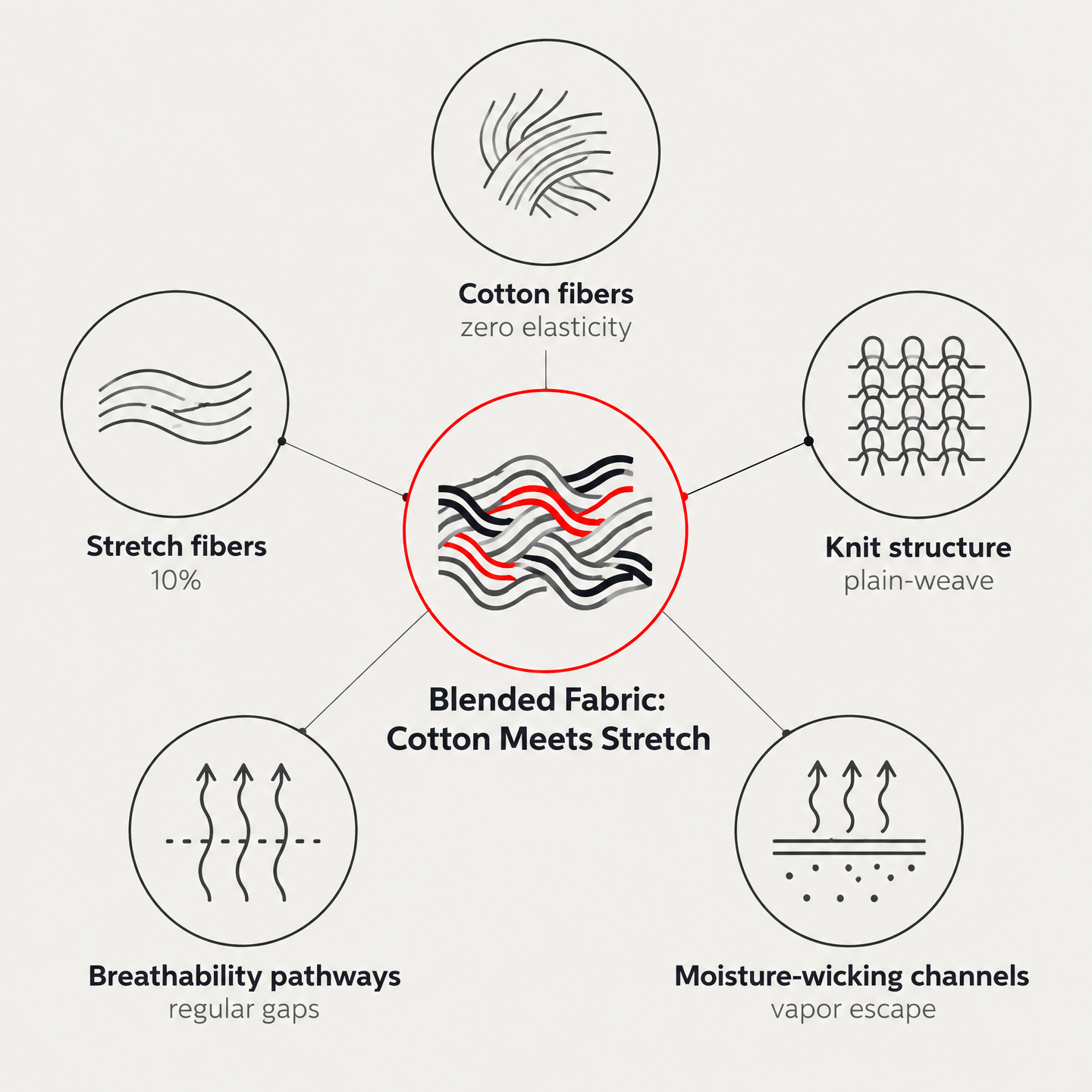
Organic athleisure hinges on a simple tradeoff: natural fibers deliver breathability and skin safety, but they don't stretch on their own. Cotton, even certified organic cotton, has zero elasticity in its natural state. The solution lies in yarn spin, knit structure, and a small percentage of stretch fiber blended in without crossing the threshold that would strip organic certification.
Longer-staple cotton can be spun into smoother yarns with fewer protruding fiber ends, which reduces pilling and moves more easily against your skin during high-rep movements. But staple length alone doesn't provide recovery in leggings. Bio-based elastane provides that recovery while keeping the garment closer to a natural-fiber profile.
Knit Structure and Airflow Paths
The weave or knit determines how air moves through the fabric when you're sweating. A plain-weave structure creates regular gaps that allow body heat and moisture vapor to escape. Tighter knits trap warmth, which works for base layers but turns clammy in a heated flow class. Looser knits let air circulate but sacrifice compression, so designers balance loop density against the compressive held feeling women expect from performance gear.
Seam construction matters for durability. Organic cotton fabrics are designed to hold up at seam lines—the points where stitching perforates the fabric—so the garment won't split during a deep squat or overhead reach. Well-made clothes usually have efficient seams, with lower values indicating fabric damage during sewing. Organic cotton performs well enough for everyday athleisure, though it won't deliver the same extreme stretch as a synthetic blend engineered for high-intensity athletic stress.
Choosing Your Perfect Organic Athleisure Piece
Start by checking the GOTS label grade. The certification tier determines which fibers passed third-party verification and which components remain unaudited. Look for the specific grade printed on the hangtag—it signals how much of the garment meets organic standards versus how much relies on conventional inputs.
Matching Fabric Attributes to Your Movement
Lower-synthetic organic blends suit yoga, lounging, and everyday wear because they prioritize breathability over compression. Organic cotton naturally wicks moisture through mechanical structure rather than chemical finishes, but it won't grip your waist the way high-compression synthetics do. Some brands bridge this gap by using stretch technologies that maintain shape recovery without relying entirely on petroleum-based elastomers—look for garments that specify the source of their stretch content.
High-sweat or high-compression activities—HIIT, cycling, or hot yoga—often require more technical knits. Organic cotton won't perform like synthetic compression gear in every scenario, but it reduces reliance on plastic-based fabrics and undisclosed performance finishes. If you need compression for high-intensity training, prioritize reinforced waistbands and gussets that prevent roll-down without chemical coatings.
Your Pre-Purchase Verification Checklist
Before you buy, inspect the fiber-content tag and look for disclosed spandex or synthetic percentages. Brands using bio-based stretch should state it clearly. Check whether the GOTS certification covers only the cotton or the entire garment, including thread and elastic trims. Ask whether the brand discloses OCS or Organic Exchange thresholds if the product includes blended fibers. If the website doesn't specify the certification body or Transaction Certificate number, the organic claim is unverifiable. Verify that dyes and finishes also carry GOTS approval—some brands use certified fabric but apply restricted substances during printing or softening treatments.
Caring for Your Organic Pieces: Making Them Last
Extending the life of organic athleisure starts with straightforward care: follow the garment label, wash cold or cool with mild detergent, skip harsh bleach, reshape damp fabrics before drying, and air-dry when possible. These practices protect the fibers and reduce the environmental load tied to frequent replacements.
Organic cotton grown without synthetic pesticides avoids the chemical input load of conventional production. When you extend that garment's lifespan through proper care, you reduce the need for new production cycles—each requiring water, energy, and raw materials.
Eco-Friendly Laundry Practices That Align with Lower-Impact Goals
Wash full loads, use cold or cool water, and choose gentle biodegradable detergents free of phosphates and synthetic fragrances. Skip unnecessary dryer cycles; line-drying or flat-drying extends fabric life and avoids the energy pull of heat cycles. If you use a dryer, choose low heat and remove items while slightly damp to reduce fiber stress.
Well-constructed garments show durable seam performance through repeated wear and washing. Gentle handling preserves those seams. At end-of-life, organic cotton can return to the soil, while petroleum-based fibers remain a disposal challenge. Caring well is what lets the environmental benefit compound over time.
References
[1] The Good Trade
[2] Lezat Clothing
[3] Ecocult
[4] PrettyOrganicGirl
[5] MATE the Label
[6] Eurofins GOTS Certification
[7] Global Standards
[8] Seam performance and biodegradability study
[9] PERFORMANCE DAYS Textile Certifications
[10] Firebird Kids: What Is GOTS Certified Organic Cotton
[11] Green Sail: Sustainable Fabrics Guide
[12] tasc Performance: Sustainable Fabrics Guide
[13] Sustain Your Style: Sustainable Fabrics
[14] Organic Cotton: Fibre to Fashion
[15] Biomaterials for environmentally sustainable textiles
Questions People Ask
1. Does organic cotton athleisure actually biodegrade, and how does that compare to synthetic activewear?
Yes, but the cleanest end-of-life story applies to pieces made primarily from natural fibers. Synthetic stretch, trims, and coatings complicate disposal. If biodegradability is a priority, choose organic cotton-rich styles and check the full fiber-content label rather than relying on the word “organic” alone.
2. Can organic athleisure provide the same compression as synthetic leggings for high-intensity workouts?
It can provide supportive compression for yoga, studio workouts, and everyday wear, but the feel is different from fully synthetic performance gear. Look for a dense knit, a stable waistband, and gusseted construction if you want the garment to stay put without sacrificing breathability.
3. How can I verify that organic athleisure is genuinely certified and not just green marketing?
Look beyond the front-facing sustainability claim. A credible product page or hangtag should name the certification body, clarify whether the full garment or only the fiber is certified, and disclose the fiber blend. Terms like “natural,” “eco,” or “clean” without third-party verification are marketing until proven otherwise.
4. Why do organic cotton leggings show sweat marks more visibly than synthetic activewear?
Organic cotton absorbs and releases moisture through the fiber and knit structure, so damp areas can appear more clearly, especially in pale colors. Darker shades, textured knits, and looser silhouettes make sweat less noticeable while preserving breathability.