Is Your Athleisure Actually Built for All-Day Wear? 8 Quick Tests
October 6, 2026
Before we get into it, the short version:
- One pair made from 77% nylon, 23% Lycra elastane held up through three years of frequent washing with no visible pilling or tearing.
- Good stretch fabric snaps back fast when you pull and release it. Slow recovery means the piece bags out before lunch.
- Fit swings wildly between brands. Reviewers report being a size 4 in one label and an extra-small in another at the exact same measurements.
- Wicking well at the gym and feeling good all day are two different jobs. A legging that breathes during HIIT can turn clingy by mid-afternoon.
- Flat-lock or bonded seams should lie smooth as you move, not dig in or ride up when you sit, squat, or reach overhead.
- A true all-day piece should look right with a workout tank and sneakers, then just as right with a button-down and slides.
The two-day test protocol
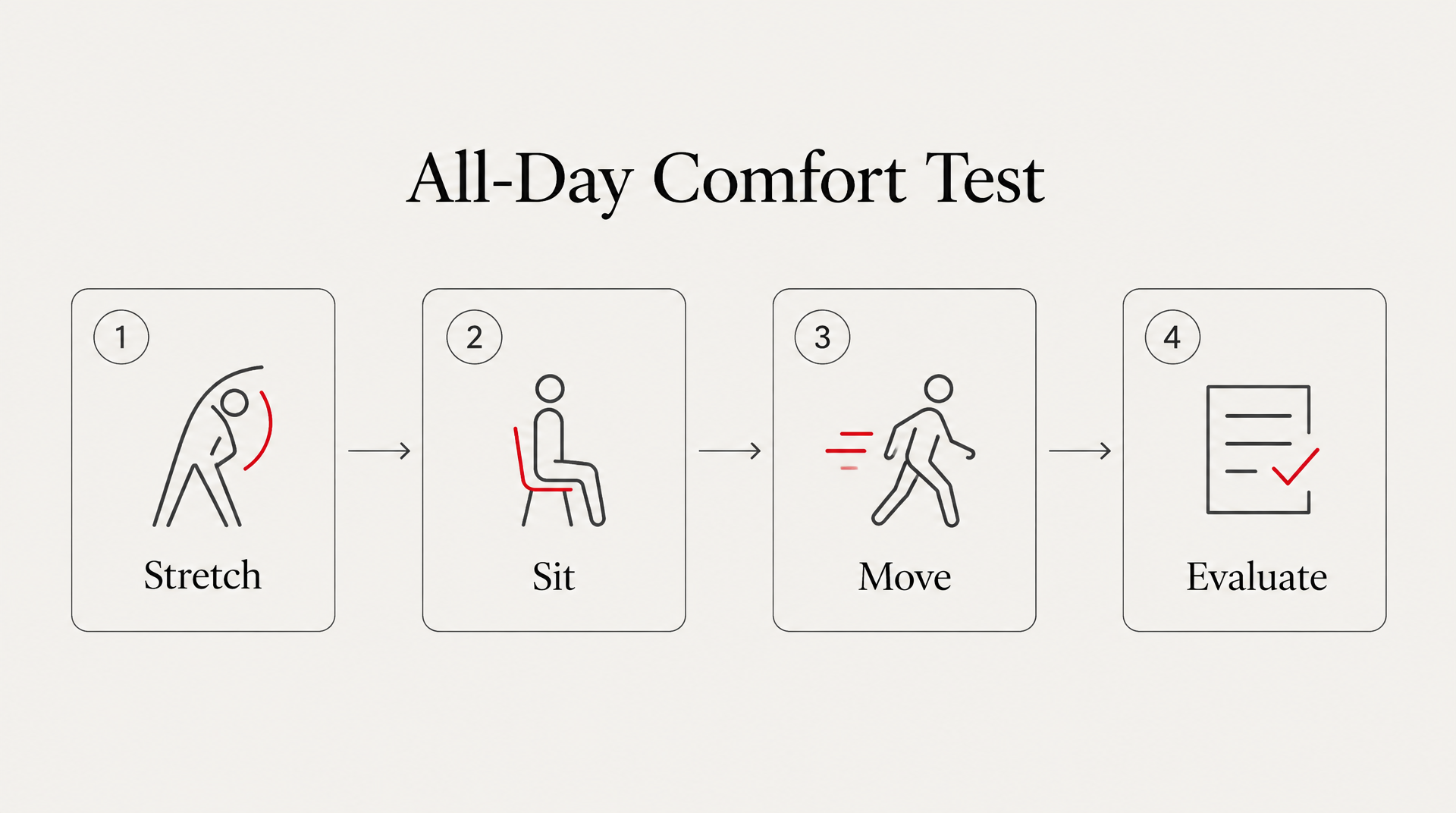
All-day athleisure asks two different questions. Run one high-heat or sweaty movement day, then one 8+ hour low-activity day. The first tells you whether the fabric can move sweat and recover. The second tells you whether it stays comfortable through sitting, walking, and posture changes.
Day 1: High-heat or sweaty movement test
Lab studies measure moisture movement under controlled exercise conditions, and that is useful for thermoregulation and comfort. But your real test is the warmest, sweatiest scenario you will actually repeat: a workout, a fast walk in afternoon heat, or a commute. Note how long dampness lasts, whether the fabric clings, and whether it feels airy or suffocating.
Day 2: 8-hour low-activity test
Wear the same piece from morning through evening. Include sitting in a meeting, walking to the car, standing in line for coffee, and shifting posture at a desk or in a car. A legging that wicks beautifully during a HIIT session can feel uncomfortably clingy by three o'clock. Gym performance and all-day comfort are not the same thing.
The eight hands-on tests
Run these in order. If a piece fails any of them badly, do not talk yourself into it.
1. Stretch recovery
Pull a section of fabric away from the garment, then let it go. A quality stretch blend should snap back fast, with no stretched-out pocket left behind. One pair we followed made from that 77% nylon, 23% Lycra elastane blend resisted pilling and tearing across three years of frequent workouts. Your fabric may behave differently, but the recovery principle holds. Slow or incomplete snapback means the piece will bag out at the knees or waistband before lunch.
2. Waistband pressure
Compare your measurements to the brand's size chart, not your usual size. Reviewers report being a size 4 in one label and an extra-small in another, so cross-brand variation is real. If a brand will not list stretch percentage or fabric composition, treat that as a yellow flag.
Then try it on. Sit, bend forward, exhale. Mild compression can still allow unrestricted movement, but if you feel pinched in the dressing room, you will hate it by hour three. Fold the waistband over and release. A quality band springs back flat instead of curling, rolling, or losing its grip. Check again at the end of the low-activity day.
3. Seam rub
Sit, squat, reach overhead. Flat-lock or bonded seams should lie smooth against your skin, not dig in or ride up. We have seen too many pieces with gorgeous, soft fabric and badly placed side seams that chafe during a yoga flow or press into your hip when you sit cross-legged. If a seam catches your attention, fail it.
4. Breathability/light test
Breathability is partly structure, partly finish, and partly fit. Hold the fabric to a bright light and look at the knit. A very tight, shiny, or coated-looking surface is a yellow flag for all-day wear in heat. This is a rough screen, not a lab rating, so do not treat your eye as a final verdict.
5. Sweat-and-dry test
After the high-heat day, check how long dampness lingers in the thighs, waistband, and lower back. A piece that wicks well during a HIIT class but stays wet or clingy by mid-afternoon is not doing the all-day job. Dry time, not just the first ten minutes of sweat, is what matters.
6. Odor check
Odor is a wear-test question, not a lab score. After the sweaty day, air the piece as you normally would, then smell it. If it still smells stale before washing, it may need more frequent laundering than you want.
7. Wash/pill test
Wash it, dry it, then look closely. Pull the fabric between your fingers and see if it still snaps back. Run your hand over the surface for pilling or rough patches. Hold it to the light and check whether the color stayed true or faded to a washed-out version of itself.
- Check seams and stitching: run your fingers along every seam for loose threads or puckering that was not there before.
- Test stretch recovery: pull a section and release it.
- Look for pilling: inspect high-friction zones like inner thighs and underarms.
- Assess color fade: hold the piece next to an unwashed item in the same shade, or compare it to your memory of the original tone.
- Inspect the waistband: fold it over and release.
The benchmark is not a single number. If your piece pills or loses its shape after a few washes, it is built for short-term rotation, not daily wear. A piece you will reach for on an athleisure day should survive repeat washing without obvious breakdown.
8. Two-outfit confidence check
Pick one piece, pair it with your go-to workout outfit, then swap in something casual and ask if it still feels right. The same legging that works with a cropped tank and sneakers should feel just as put-together with a linen button-down and slides. If you are tugging at the waistband or hem in one of those setups, it is not pulling its weight across both.
- Start with a workout outfit: pair it with your usual sports bra or performance tank.
- Switch to casual: try it with a relaxed tee, an oversized sweater, or a denim jacket.
- Ask the comfort question: in both looks, check coverage, support, and confidence.
- Test the style balance: it should look intentional in both, not like you forgot to change after class or overdressed for a workout.
Related Video
Watch: I Tried Every Popular Workout Legging which is for you? by Keltie O'Connor
References
[2] The Role of Sports Clothing in Thermoregulation, Comfort, and ... - https://pmc.ncbi.nlm.nih.gov/articles/PMC9051004/
[3] I Tried Every Popular Workout Legging which is for you? by Keltie O'Connor - https://www.youtube.com/watch?v=vMntxDg8i7U
This kind of honest look in the mirror tends to serve you better than styling inspiration that does not account for your body or your routine. The goal is not to follow a formula. It is to build a small rotation of pieces that feel comfortable, polished, and right no matter where your day takes you. When a garment clears both checks without any wardrobe anxiety, it has earned its spot in your all-day lineup.
Frequently Asked Questions
1. How do I know if my athleisure fabric will actually hold its shape through a full day?
Pull a section of fabric away from the garment and release it—quality blends should snap back immediately without leaving a stretched pocket. If the recovery feels slow or incomplete, that piece will bag out at the knees or waistband before lunch, no matter how comfortable it feels in the fitting room.
2. Why does sizing vary so much between athleisure brands even when my measurements stay the same?
Cross-brand fit variation is real and worsened by vanity sizing—reviewers report being a size 4 in one brand and an extra-small in another despite identical measurements. Always compare your actual measurements to the brand's size chart rather than relying on your usual size, and look for fabric-composition details as a sign of transparency.
3. Can athleisure that performs well during workouts feel uncomfortable later in the day?
Yes—gym performance and all-day comfort are different. Leggings that wick moisture beautifully during a HIIT session can feel uncomfortably clingy by mid-afternoon when you're standing in line or sitting through a meeting. Test pieces by asking whether you'd still want to wear them eight hours after your workout ends.
4. What's the fastest way to check if an athleisure piece works for both the studio and casual settings?
Pair it with your usual workout outfit first, then swap in a casual piece like an oversized sweater or denim jacket and assess whether it still feels polished. If you're adjusting straps or second-guessing the fit in either context, the piece isn't versatile enough to justify its place in an all-day rotation.