How to Build One Athleisure Outfit That Works From Gym to Dinner
October 6, 2026
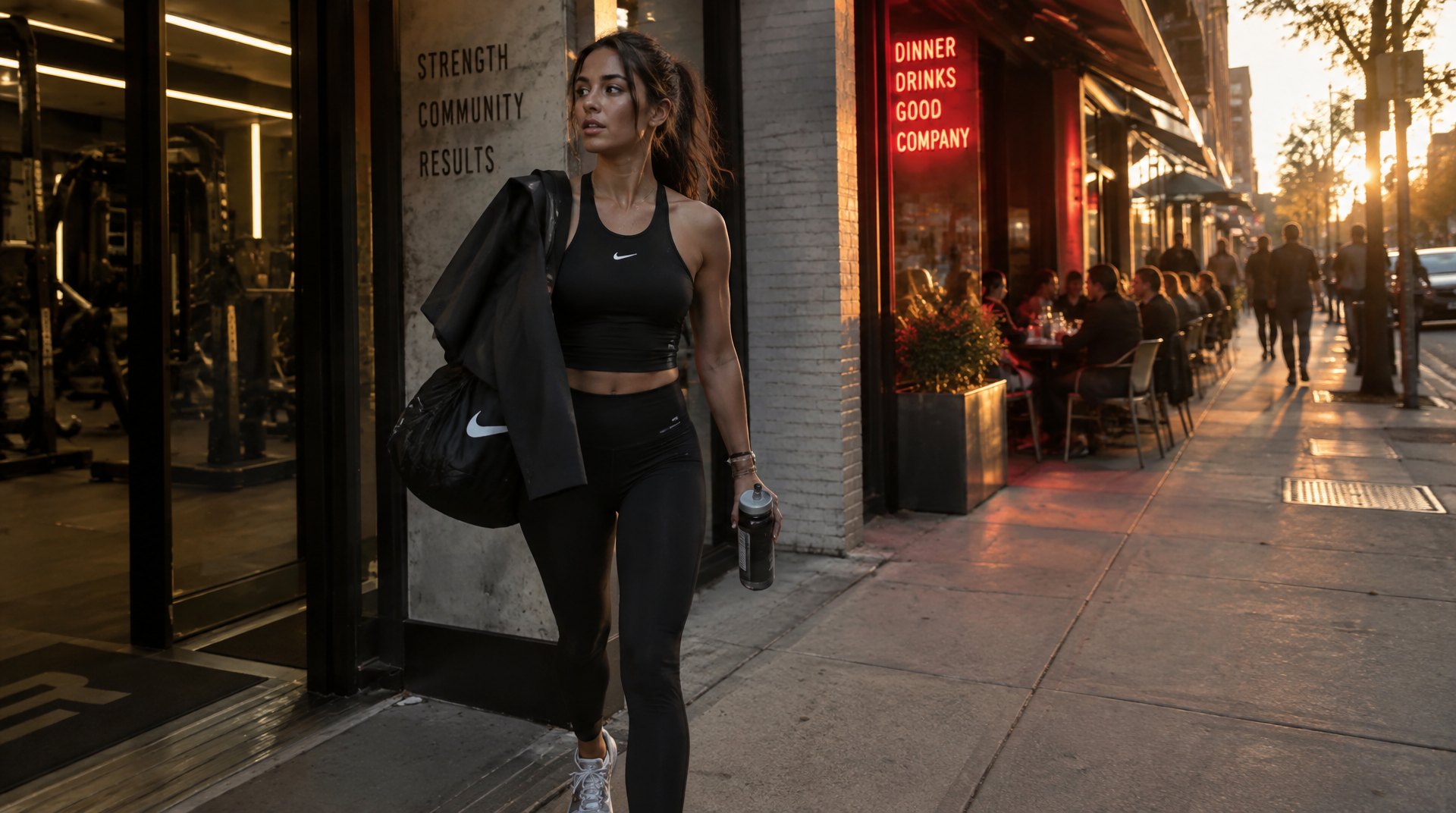
In short: The best gym-to-dinner outfit starts with pieces that move well. They should also look deliberate after class. Start with a streamlined bottom, add a top that styles easily, and plan your outer layer, footwear, and bag before the day starts. You're not trying to disguise activewear. You're making the outfit feel chosen, clean, and appropriate for each stop on your schedule.
Why This Outfit Matters
You finish your morning workout, grab your phone, and realize you have zero time to go home and change before your next stop. The outfit that got you through spin class suddenly needs to carry you through the rest of the day.
The shift toward workout clothes that work as everyday wear has moved from niche to mainstream, visible in coffee shops, offices, and sidewalks everywhere. Busy schedules don't always leave room for a full outfit change after a workout. One style blogger describes seeing athleisure worn at lunch and shares how she regularly goes straight from the gym to the grocery store, post office, and dry cleaners in the same clothes. Another notes that she carries face wipes, deodorant, and a travel makeup set for quick post-workout touch-ups.
🏋️ Gym-Only vs. 🍽️ Dinner-Ready: The Quick Visual Check
What separates a gym-only look from a dinner-ready one? The base says "athletic," but the layers say "intentional". At the gym, you're in a fitted tank or sports bra, training shoes, and a gym bag. For dinner, you swap in a structured jacket or oversized shirt, clean sneakers or ankle boots, and a crossbody bag or minimal jewelry. The transition doesn't require a complete wardrobe change—just three strategic swaps.
This approach also supports wardrobe efficiency. A small athleisure capsule—four bottoms, five tops, three outer layers, and three footwear options—generates dozens of combinations. You're buying fewer pieces but creating more outfits, which means less clutter and more versatility. When the core pieces are neutral, the top gives enough coverage for non-gym settings, and the finishing layer looks polished, the same outfit moves smoothly from morning class to evening plans.
1. Choose the Perfect Base: High-Waisted Legging or Jogger
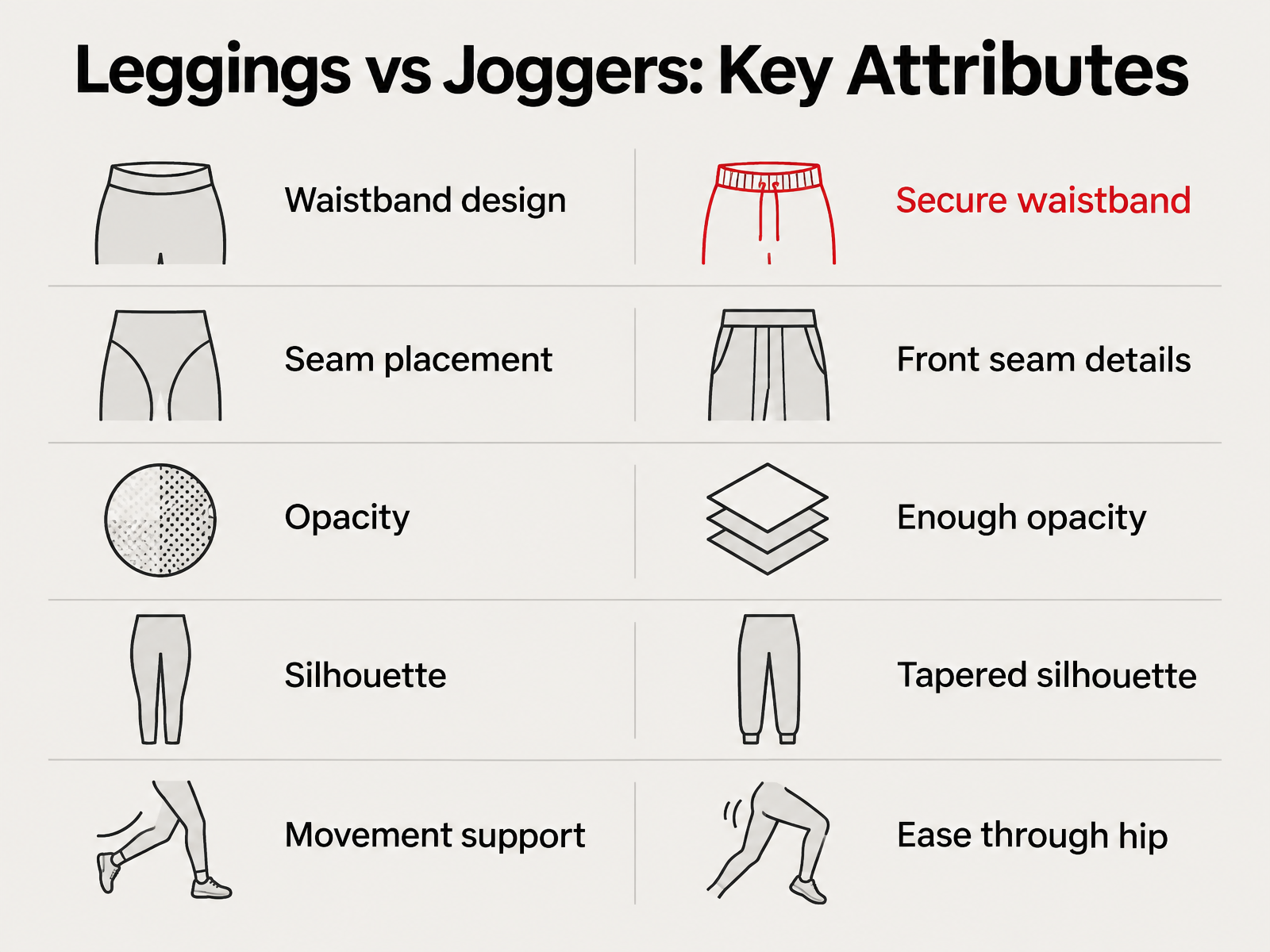
Every gym-to-dinner outfit starts with the bottom, because it anchors everything else. The right legging or jogger needs to move with you through a workout, hold its shape when you sit down for dinner, and look intentional enough that nobody questions whether you just rolled out of spin class. High-waisted styles with a secure waistband do most of that work—they stay in place during movement and create a clean silhouette that reads as polished rather than purely athletic.
Look for leggings with front seam details, subtle paneling, or a waistband that feels substantial rather than flimsy. One style blogger saw a pair with structured front detailing on her sister-in-law and immediately ordered them, specifically because they felt more elevated than basic black leggings. That extra design complexity makes the difference between a piece that only works at the gym and one that transitions into the rest of your day without a full wardrobe change.
Fit Characteristics That Work Beyond the Gym
Check three things before you buy: waistband comfort when you sit, seam placement that doesn't cut across your hip bone, and enough opacity that you're not adjusting constantly. Length matters too—full-length styles work for cooler weather and evening plans, while 7/8 cuts pair well with ankle boots or slip-on sneakers for a more casual look.
For joggers, choose a tapered silhouette rather than oversized sweatpants. The right pair should have enough ease through the hip and thigh for movement but taper at the ankle to avoid looking bulky. When you invest in durable fabrics with solid construction, the cost per wear stays low even as the pieces hold up through repeated wear.
Color Palettes That Transition Seamlessly
Black works, but it's not your only option. Navy, charcoal, olive, and deep burgundy all function as neutrals that layer well with both workout tanks and the structured jackets you'll add for dinner. Cream and soft grey create a lighter base that feels fresh for daytime but still transitions with the right accessories.
Save brighter colors and patterns for tops and layers rather than bottoms. Neutral bases give you more flexibility when you're building that one outfit that needs to work across multiple settings.
2. Pick a Versatile Top: Hoodie, Crop, or Fitted Tee
The top is your outfit's pivot point—the piece that signals whether you're still in workout mode or ready for what comes next. A hoodie worn zipped reads gym-bound. The same hoodie worn open over a fitted layer suddenly feels styled. That shift matters when you're moving from a morning class to errands or lunch without going home to change.
Start with necklines that preserve your styling effort. Wide-neck or boat-neck styles let you pull a sweatshirt on and off without disturbing your hair or makeup, which helps when you're freshening up in a locker room or car. Cropped tops and fitted tees work best when they hit around mid-thigh or lower—what some stylists call the fingertip test—giving you enough coverage to feel polished outside the gym.
Sleeve styling changes the entire read. Push or roll sleeves on a hoodie or pullover to expose your wrists and create visual breaks. A fitted long-sleeve tee tucked slightly at the front waistband—the half-tuck—adds shape without full commitment. Layering matters too: adding a jacket, crossbody bag, or jewelry transforms the same athletic base into something that feels intentional rather than accidental.
We design Pima cotton pieces with this transition in mind—tops that breathe during movement but look refined enough to wear through dinner. The tight, smooth weave resists pilling through repeated wear, so your tops stay looking clean and intentional.
3. Layer Smartly: Light Jacket, Blazer, or Structured Cardigan
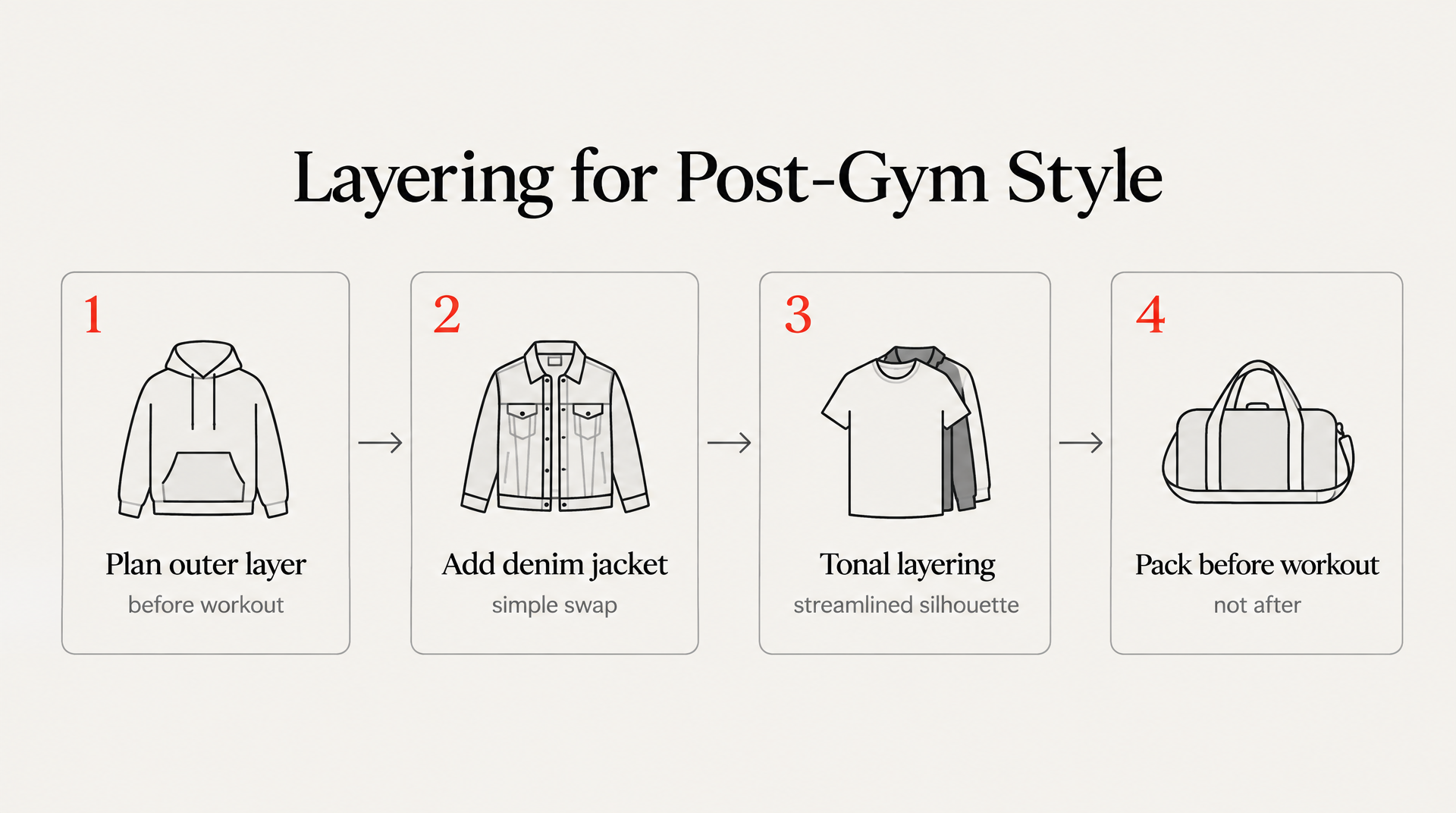
Plan an outer layer before you finish your workout, because adding a jacket or cardigan is what separates "just left the gym" from "ready for the rest of the day." The layer doesn't have to be complicated. It just needs to be structured enough to shift how the whole outfit reads.
A denim jacket is the simplest swap. One writer mentions throwing on a denim jacket after the gym to take her outfit straight to lunch and errands, and the logic holds: denim signals intention without feeling overdressed. Light jackets, blazers, and structured cardigans work the same way, covering athletic basics while adding visual weight that reads as styled rather than purely functional.
Tonal Layering Versus Contrast
You have two paths here. Tonal layering—charcoal jacket over charcoal leggings, cream cardigan over cream joggers—creates a streamlined silhouette that looks intentional from a distance. Monochrome dressing also makes casual fabrics feel more refined because the eye reads one continuous line instead of separate workout pieces.
Contrast works when you want the outfit to feel more evening-appropriate. A black blazer over burgundy leggings, a camel trench over olive joggers—the jacket stands out visually and pulls focus away from the athletic base. For dinner or drinks, contrast signals effort without requiring a full change.
Choose Layers You Can Carry
Prioritize lightweight, packable layers that don't punish you for planning ahead. If the jacket is too heavy or too structured to fold into your gym bag, you won't bring it, and the transition fails before you leave the house. Look for unlined blazers, cotton-blend cardigans, or soft denim that rolls into a tote without wrinkling.
The layer transforms the outfit only if it's with you when you need it. Pack it before the workout, not after.
4. Footwear That Works for Both Gym and Dinner
Pick your sneakers before you finish your workout, because they're the hardest thing to get right when you're moving from movement to an evening meal. A clean performance sneaker with a sleek silhouette bridges both settings better than any other footwear category—it handles the physical demand of training while looking intentional enough that nobody questions whether you just stepped off a treadmill.
The safest bet is a low-profile trainer in white, black, or neutral tones. Writers who transition straight from the gym to errands regularly lean on white leather sneakers because they read as styled rather than purely athletic. Look for shoes with minimal branding, a streamlined shape, and a sole that doesn't scream "running shoe." Bulky cross-trainers and heavily cushioned running shoes stay gym-only. Slim trainers with clean lines move into dinner territory without friction.
Keep Your Shoes Looking Fresh
The condition of your sneakers matters more than the brand. A scuffed, worn-down pair signals gym use no matter how carefully you've styled the rest of your outfit. Wiping down your sneakers with a damp cloth after workouts prevents visible dirt buildup. Replacing or tucking laces keeps the look tidy—loose, frayed laces read as careless. Slip-on styles eliminate the lace question entirely and make post-workout transitions faster.
If you're serious about gym-to-dinner versatility, keep a second pair of sneakers in your bag. Swap your training shoes for a cleaner pair before you leave the locker room. That single change shifts how the whole outfit reads.
5. Accessories & Finishing Touches
Finish the gym-to-dinner shift with accessories, because they're the fastest swap that signals intention. A polished bag replaces your gym tote. Simple jewelry appears where wristbands sat an hour earlier. The outfit underneath can stay identical—leggings, fitted top, maybe a jacket—but the finishing details are what tell observers you're done training.
The bag does most of that work. One writer mentions carrying an oversized tote rather than an actual gym bag for exactly this reason—it reads as everyday carry, not workout gear. Look for structured shapes in black, cream, or metallics that hold your phone, wallet, deodorant, hair tie, lip product, and any post-workout necessities without looking like you're hauling equipment. A crossbody or midsize tote with clean lines works better than anything with mesh panels or obvious athletic branding.
Small Adds That Shift the Read
Jewelry keeps it simple: small hoops, a thin chain, or stud earrings that won't interfere with movement if you do end up back at the gym tomorrow. Jewel tones and metallics work here because they feel evening-appropriate without requiring you to carry extra pieces. Sunglasses work as another styling layer, especially when you're moving between daytime stops and want the outfit to feel finished quickly.
A lightweight scarf or wrap works as optional cover if you want another styling element without committing to a full jacket change. You're not hiding the athleisure base. You're layering context cues that make the whole outfit feel more intentional than functional.
6. Put It All Together: A Sample Outfit Walk-Through
We've built the athleisure day from the ground up, piece by piece. Now let's see how those parts come together in real time—the morning you slip into leggings and a tank, move through yoga, grab a coffee, handle an afternoon meeting, and end up at dinner without once feeling underdressed.
Morning to Midday: The Base Outfit
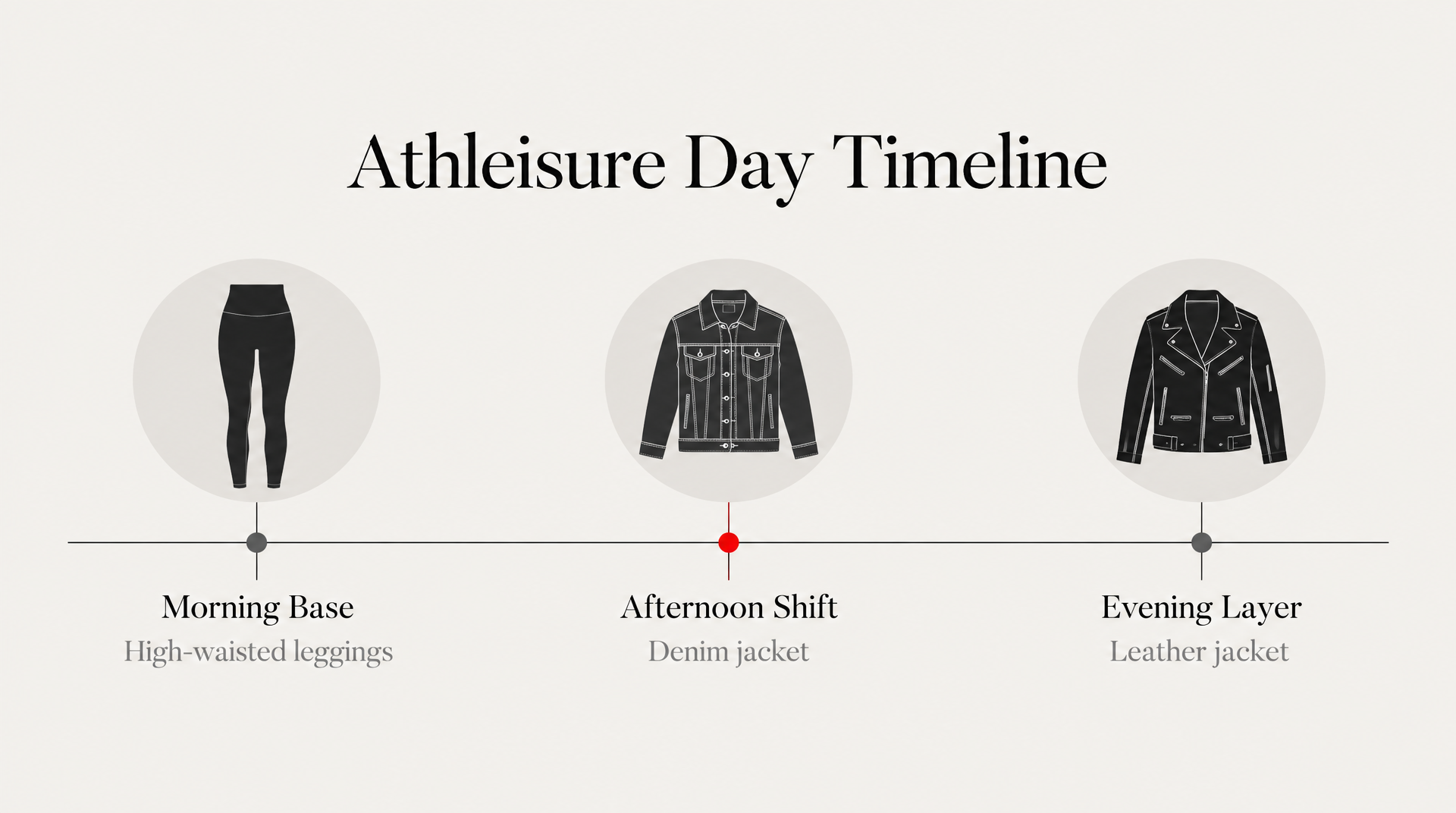
Start with a streamlined legging and a close-fitting tank. Choose the bottom based on the fit checks above, then add a pullover or tee you can layer without fuss. Clean sneakers keep the outfit practical for movement and polished enough for the stops that happen immediately after class.
The outfit reads as athletic at this stage, and that's fine. You're still in motion. The trick is knowing what you'll add later.
Afternoon Shift: Layer and Swap
Around midday, throw a denim jacket or structured cardigan over the tank. The jacket shifts the context immediately—what was gym gear now reads as styled. Swap your gym tote for a crossbody bag or structured tote, add sunglasses, maybe simple gold hoops. You haven't changed the base outfit, but the finishing details signal you're done training.
This is the psychological shift observers respond to. The leggings stay. The top stays. The accessories tell a different story.
Evening: One More Layer
For dinner, add or swap one more structured piece. A leather jacket, a longline blazer, or a clean wool coat elevates the whole look. If you packed a fresh fitted top in your bag earlier, now's the time to change it. Otherwise, the jacket does the work. Your sneakers stay if they're minimal and clean, or you swap to ankle boots if you planned ahead.
The outfit never screamed "gym." It carried you through the day because each piece was chosen to work beyond its original context.
References
[1] 9 Vogue-Approved Ways to Style Your Activewear - https://www.vogue.com/article/activewear-outfit-ideas
[2] How to Style Athleisure for an Elevated Casual Look - Express - https://www.express.com/exp/express-style-101/athleisure-wear
[3] Gym to Brunch: Athleisure That Works All Day - HOUSE of HARPER - https://houseofharper.com/style/gym-brunch-athleisure-works-day/
[4] CUTE ATHLEISURE OUTFITS TO WEAR ALL DAY - Chic Over 50 - https://chicover50.com/cute-athleisure-outfits-to-wear-all-day/
[5] The Athleisure Trends Making Everyday Activewear More ... - https://www.fashiontimes.com/beyond-gym-athleisure-trends-making-everyday-activewear-more-fashionable-ever-14447
[6] Exploring Athleisure: A Comprehensive Guide - Luxeit - https://www.luxeit.com/blogs/blog/exploring-athleisure-a-comprehensive-guide?srsltid=AU7gw4XTzI8WN0iJupP1KKDZKX8Lw-p0lQI37vQOhRHgXlHF0D8lyIAh
[7] The Art of Athleisure: Looks That Move with You - Macy's - https://www.macys.com/s/guides/the-art-of-athleisure/
[8] Activewear Outfits: The 2026 Athleisure Style Guide - Klodsy - https://klodsy.com/blog/activewear-outfits-athleisure-style-guide/
[9] Updated Athleisure Styles to Help You Stay Fit - Stitch Fix - https://www.stitchfix.com/women/blog/trends-and-occasions/updated-athleisure-styles-to-help-you-stay-fit/?srsltid=AU7gw4X8UfXNawMqQ_BdgS7VRtzlDbPqk_eWt854E6cu80uN1-l7jy-y
Frequently Asked Questions
1. What if I sweat heavily during my workout — can I really wear the same base to dinner?
You can, but plan for comfort as much as appearance. If the workout is intense, pack a fresh top or lightweight layer so the piece closest to your skin is the one you change. The base bottom can often stay the same if the fabric dries cleanly, keeps its shape, and still feels comfortable once you sit down.
2. Should I pick full-length leggings or 7/8 for a gym-to-dinner day?
Choose the cut that works best with the shoes you plan to wear later. A cropped hem can make footwear feel more visible and intentional, while a longer line creates a sleeker silhouette. The more important test is whether the leggings still feel secure and opaque after both movement and sitting.
3. Is it worth carrying a second pair of sneakers, or can one pair do everything?
If your workout is light, one polished trainer can be enough. If your shoes take visible wear during training, carrying a cleaner pair is worth the space. Footwear is one of the first details people notice, so fresh shoes can make the rest of the outfit look more deliberate.