The 4 Fabric and Construction Signals That Separate True Curvy Design From Vanity Sizing
October 13, 2026
Before we get into it, the short version:
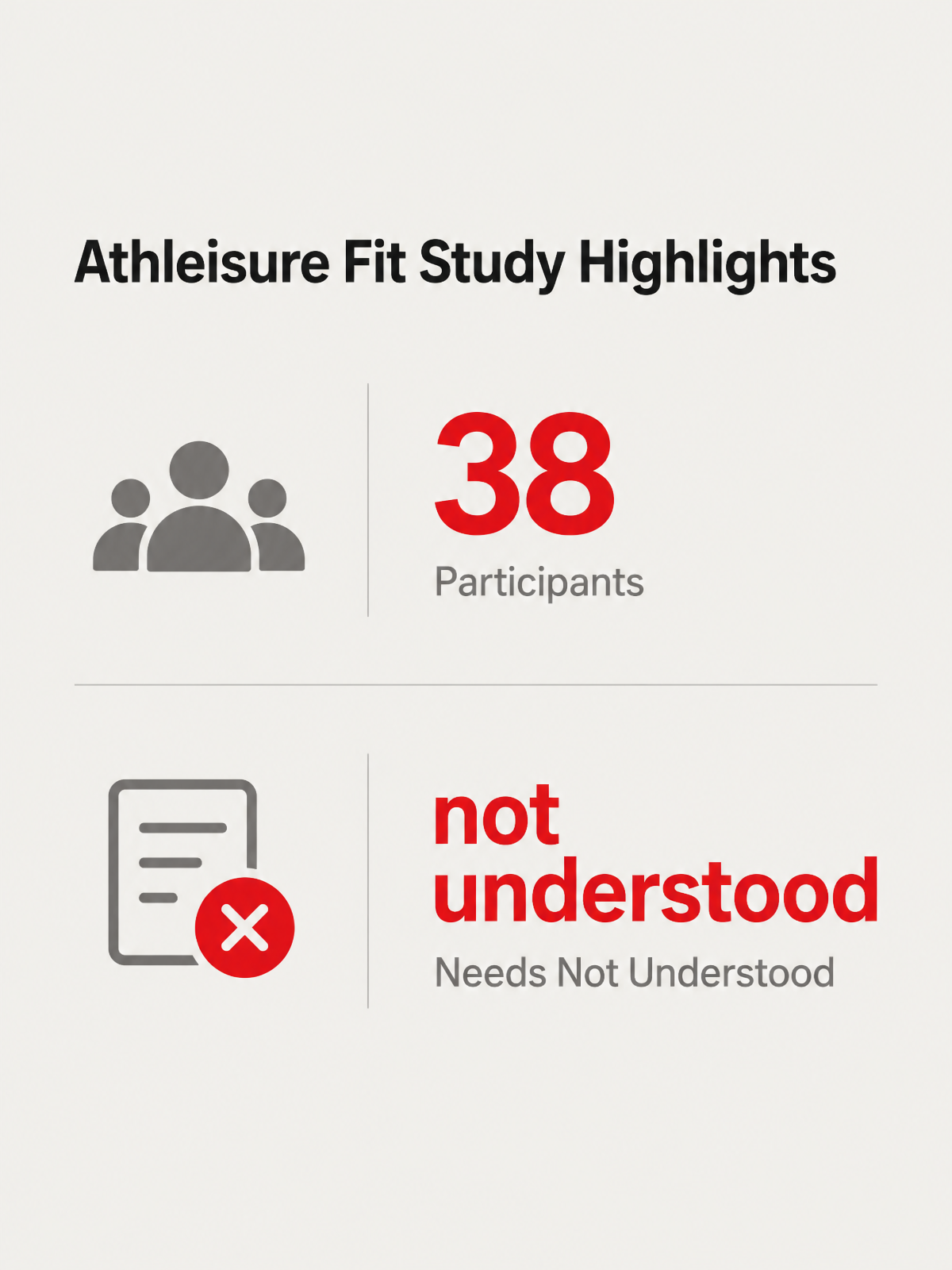
- A 2024 qualitative study of 38 plus-size women in Cape Town found that local retailers failed to recognize or understand their activewear needs.
- In our experience, fabric rebound matters more than the stretch number. Material that stays slack after a squat tends to bag out by midday.
- Flatlock seams are worth checking. A seam that lies flat is less likely to chafe than a raised folded seam.
- A gusset is a diamond panel at the crotch that reinforces fit where movement puts strain.
- In our experience, highly stretchy fabric can mask vanity sizing, letting more bodies fit one size while skipping the shaping that real curves need.
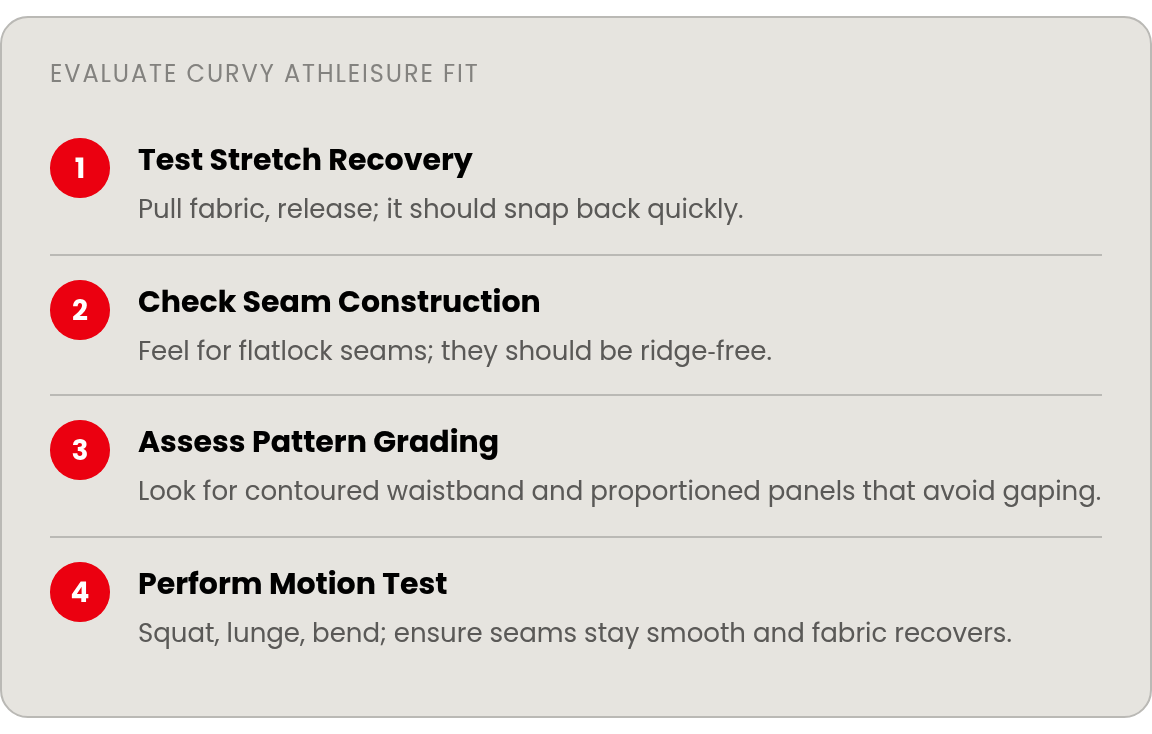
- The four curvy signals are a contoured waistband, flatlock seams, a gusset, and proportion-aware panels with flat pocket placement.
Quick Summary
You know that moment when a label promises "curvy fit" and the leggings still roll at the waist? Real curvy athleisure shows itself in the fabric and the seams, not the marketing. Run this quick check before you buy.
| Signal | Fabric Metric | Construction Detail | How to Spot It | Impact |
|---|---|---|---|---|
| Contoured waistband | High stretch recovery | Wide, shaped band | Try-on movement check: bend, does it stay put? | ✓ comfort |
| Flatlock seams | Flexible thread | Flat, ridge-free joins | Instant touch check: run a finger along the seam | ✓ fit |
| Gusset | Shaped insert | Diamond panel at crotch | Label/product-page check | ✓ confidence |
| Proportion-aware panels | Good recovery | Flat pocket placement | Try-on check: no gaping, no twisting | ? Verify |
Read the icons simply. A check means a strong signal. A question mark means look closer. An X means it's missing.
What should you look for first?
Start with the touch and the try-on. Those reveal what a size label can't.
- Press the fabric, then let go. Quick snap-back means it holds shape across your curves.
- Feel for flat seams. They should rub less where you move most.
- Move in it. No gaping pockets or twisting panels are the real proof.
Why the Label Keeps Letting You Down
You've probably stood in a fitting room, pulled on a pair of leggings, and felt that quiet sting of being an afterthought. The fabric pinches here, gaps there, and the "designed for you" tag starts to feel like wishful thinking. That feeling is exactly why athleisure deserves a closer look than the label gives it.
That frustration has real context. When shoppers say activewear wasn't made for their bodies, they're often responding to genuine retail fit gaps. That's why we build our athleisure around comfort and quality, using 100% certified Peruvian Pima cotton that feels soft and breathes through the day.
Why does true fit change how you move?
Fit isn't vanity. It's whether you can bend, stretch, and breathe without tugging.
- Comfort you forget about. The clothes disappear, and the workout stays front of mind.
- Movement that follows you. It flexes through every reach and squat without riding up.
- Confidence that holds. When the fit is right, you stop checking the mirror and start living.
Signal #1 – Stretch That Respects Your Curves
Stretch is the first thing your hands notice. It tells you more than any size tag ever will. Good curvy athleisure moves with you, then settles back instead of slouching where pressure lands hardest.
Stretch is only half the story. Fabric has to expand across the hip, thigh, or seat, but it also has to recover cleanly once you stand back up. If it doesn't, a garment may technically "fit" for a few minutes and still lose its polish as the day goes on.
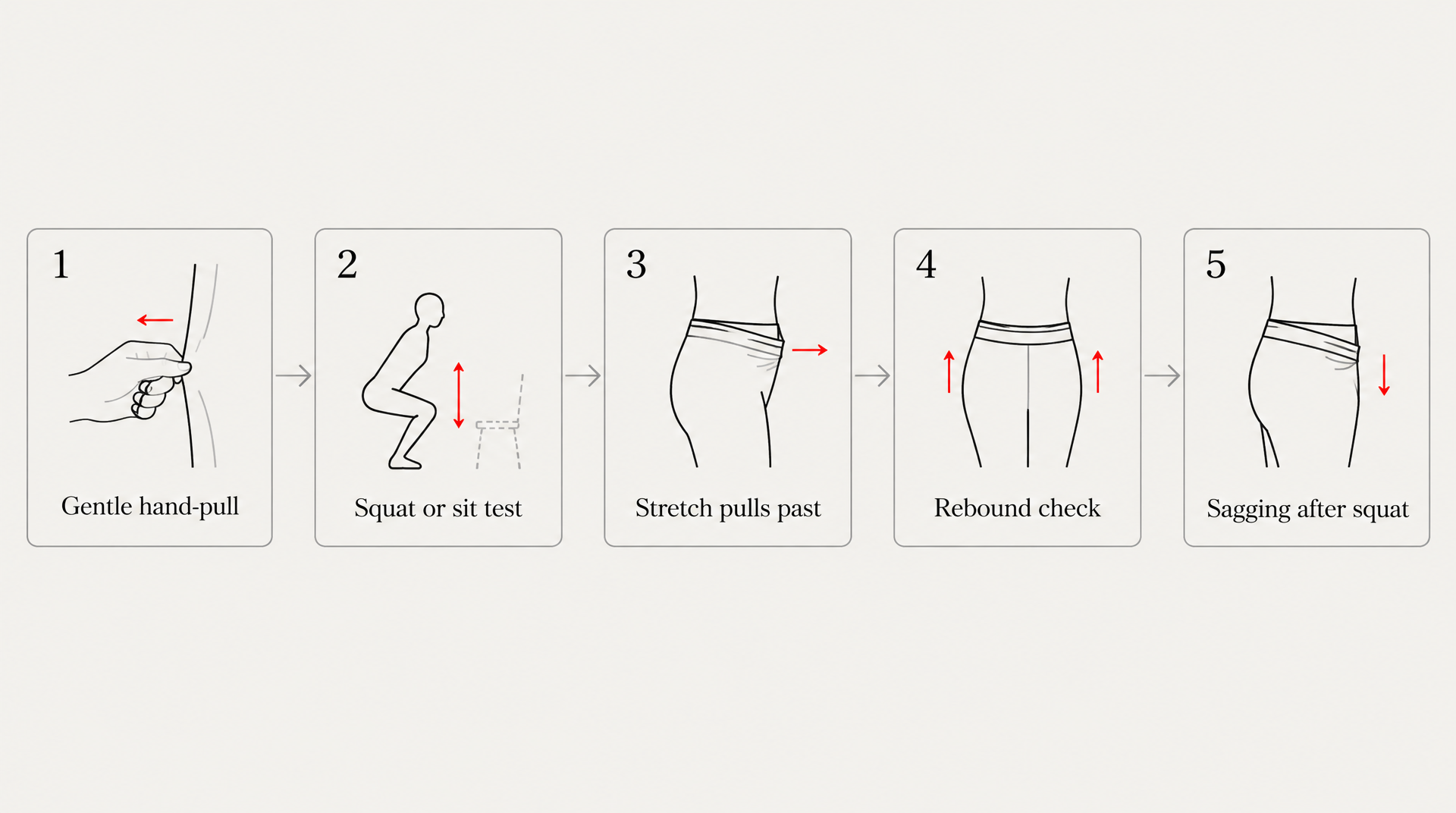
How do you test stretch before you buy?
Run these quick checks in the fitting room, or the moment a package lands at your door.
- Gentle hand-pull: tug the waistband and a thigh panel, then let go. It should snap back flat, not stay slack.
- Squat or sit test: drop into a squat and watch the knees and seat. No gaping, no see-through strain.
- Rebound check: pinch and release. Quick recovery means lasting shape.
Check the care label or product page for fiber content and any spandex or elastane. Most labels name fibers, not exact stretch performance, so your hands stay the better judge.
Signal #2 – Seam Placement That Works With You, Not Against You
Seams are the quiet troublemakers. You feel them before you notice them: a rough join at the inner thigh, a line that shifts across your hip, stitching that pulls when you reach. Good curvy athleisure uses construction to cut friction instead of making your skin negotiate with the garment.
The principle is simple. Seams should steer clear of high-rub areas, keep bulk low, and flex with your body instead of slicing across it.
Flatlock Seams Beat Bulky Ridges
Flatlock construction is one signal we look for in motion-ready pieces. The seam lies smooth instead of forming a raised ridge, and that matters most where fabric brushes skin or another layer over and over.
A gusset changes how a bottom moves, too. In our experience, a shaped insert at a stress point gives the garment more freedom through bends, steps, and lunges. It also eases the tug that tends to concentrate at a single seam.
Run a movement check before you commit.
- Squat deep and feel for seams digging into your thighs or seat.
- Lunge forward and notice if the crotch seam pulls tight.
- Bend and twist, checking that side seams stay smooth, not twisted.
Signal #3 – Pattern Grading That Honors Your Shape
Here's what we see go wrong with vanity sizing. It often takes a straight-size pattern and scales every measurement up by the same amount. But bodies don't grow uniformly. As sizes increase, the waist, hip, rise, thigh, and seat can shift at different rates. In our experience, true curvy athleisure grades each of those zones on its own, so the fit stays balanced instead of pulling in one place and gaping in another.
This is where "bigger" and "better shaped" part ways. A garment can have plenty of fabric and still fail if the rise is wrong, the thigh is undercut, or the waistband was widened without being contoured.
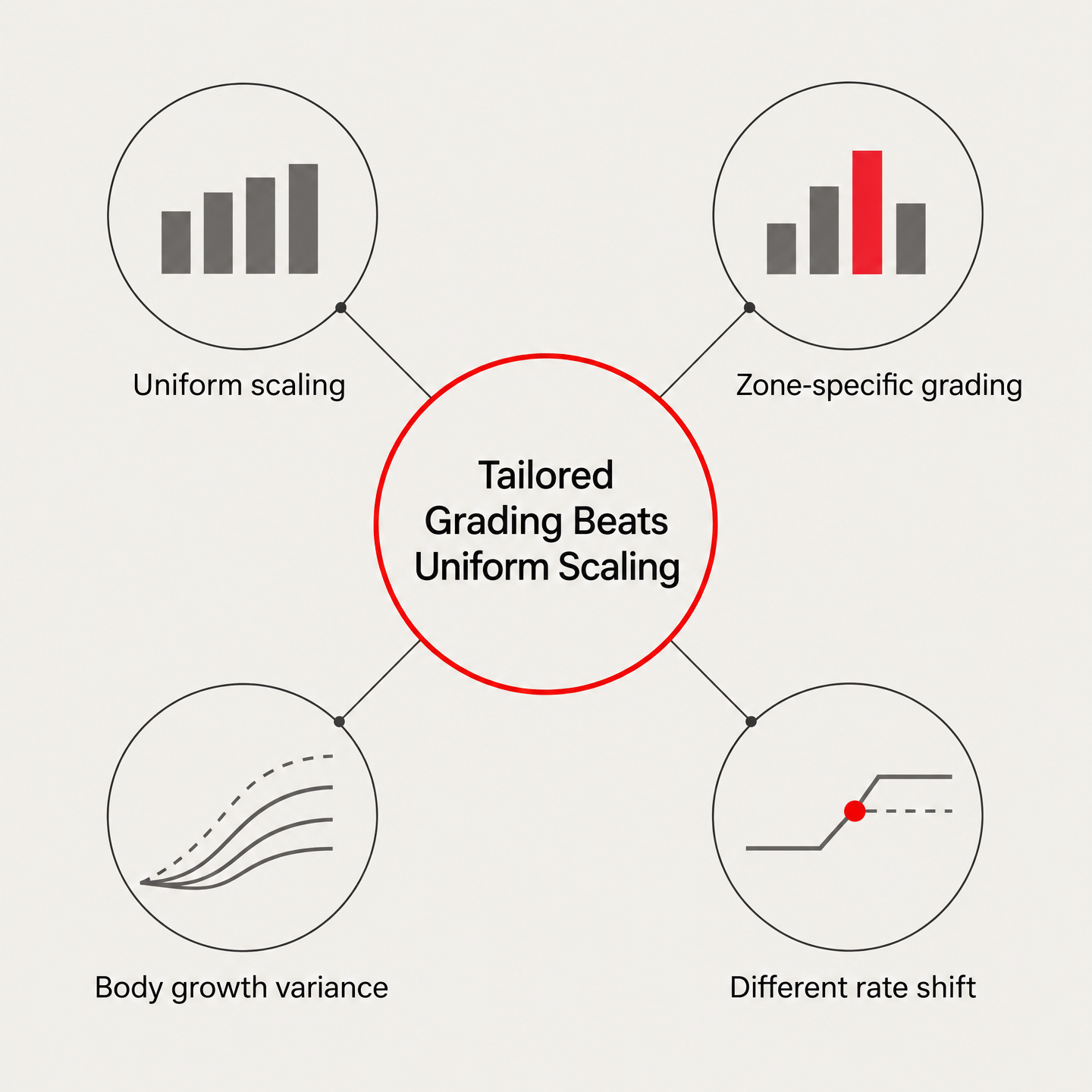
How do you spot proportion-aware grading?
Don't trust a "curvy-specific cut" tag on its own. Check the build.
- A contoured waistband curves to sit higher at the back, so it holds through a bend.
- Visible room through the hip and thigh, not just a wider leg opening.
- A secure rise covers you when you reach or squat.
- Panel seams are shaped to follow your curves, not straight lines forced over them.
Signal #4 – The Details That Prove Themselves in Motion
The best test for curvy athleisure happens when you move, not when you stand still in the mirror. A garment built for appearance looks fine on the hanger. A garment built for movement proves itself in a deep bend.
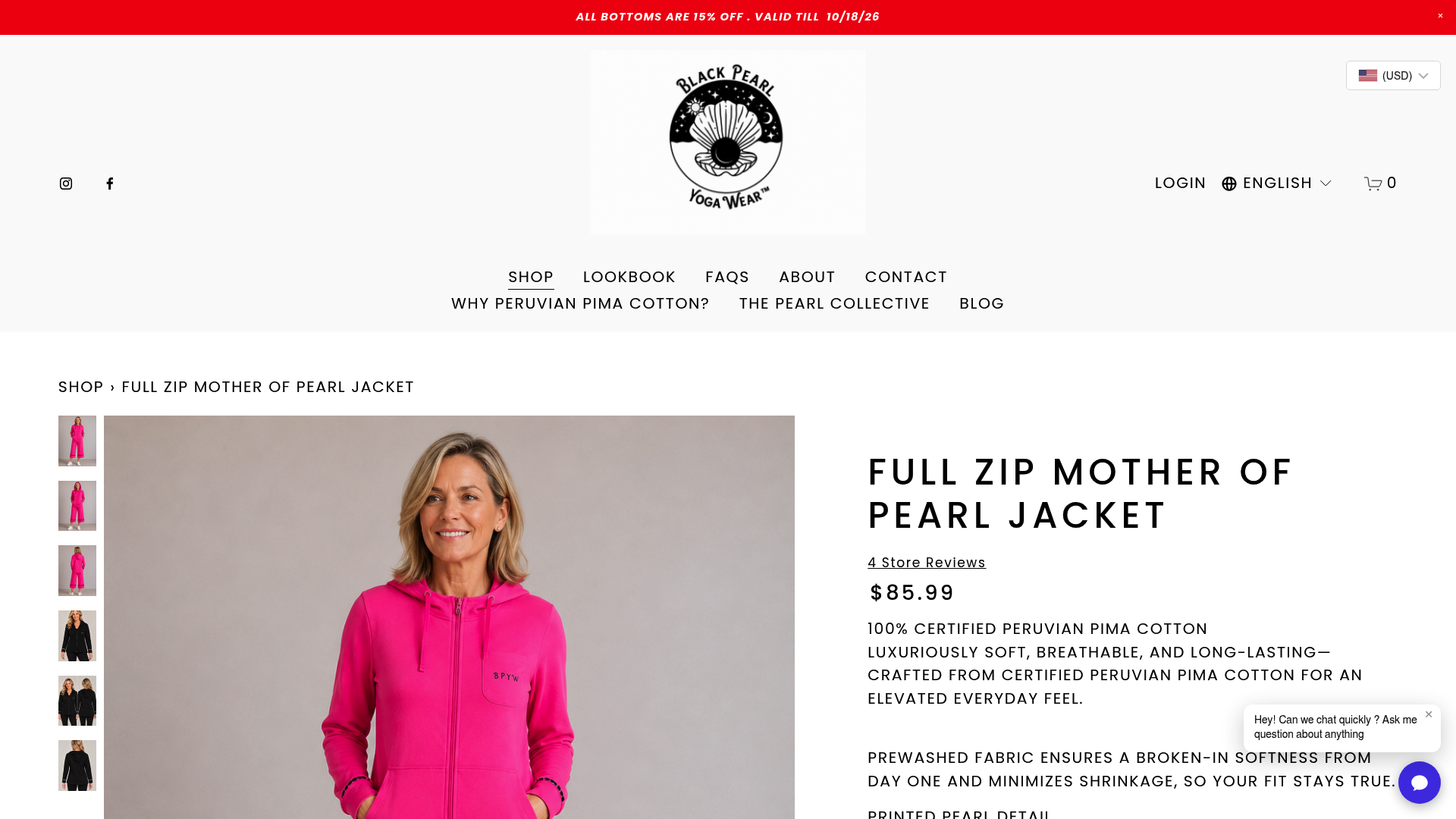
So before you buy, put the piece through a few honest motions and watch what the fabric and finishing actually do. Small cues tell you more than any "designed for curves" tag ever will.
What to watch for once you start moving
Here's what we look for in a true curvy fit, judged by behavior rather than labels.
- Ventilation that keeps coverage: breathable panels should let air through without going sheer when stretched. Bend forward and check that nothing turns see-through.
- Pockets that lie flat: a side or hidden pocket should sit smooth against your hip. It should not pull at the seam or gape when you walk or sit.
- Seams that stay calm in a squat: drop low and feel for ridges digging in or lines twisting across the thigh.
- Recovery after stretch: pull a panel, release, and watch it return toward its shape instead of staying slack.
Confidence lives in that return.
References
[1] (PDF) Fit satisfaction and experiences of plus-size females with active ... - https://www.researchgate.net/publication/378887566_Fit_satisfaction_and_experiences_of_plus-size_females_with_active-wear_in_Cape_Town_South_Africa
Common Questions
1. How can I check for these four signals when I'm buying online and can't touch the fabric?
Use the product photos like a fit map. Look for a waistband that visibly curves rather than forming a straight tube, close-up seam shots that look smooth instead of bulky, and pocket placement that sits flat against the body. When the order arrives, try it with the same movements you actually plan to wear it for before removing tags.
2. Does 100% cotton actually hold its shape for athleisure, or do I need spandex?
You do not automatically need spandex for a piece to feel comfortable. What matters is whether the fabric has enough natural give, softness, breathability, and structure for the intended activity. For low-impact, everyday athleisure, a well-chosen cotton can feel polished and easy to wear without relying on a synthetic stretch blend. For high-stretch or high-impact activewear, check recovery carefully instead of assuming the fiber alone will handle it.
3. Isn't a higher stretch percentage always better for a curvy fit?
No. More stretch can make a garment easier to pull on, but it cannot fix poor shaping. If the waistband is not contoured, the rise is too short, or the panels are cut like a straight-size pattern, extra elasticity may only make those problems less obvious at first. Look for stretch working together with thoughtful construction.