5 Plus-Size Labels Grading Pima Cotton Activewear for Real Curves
September 27, 2026
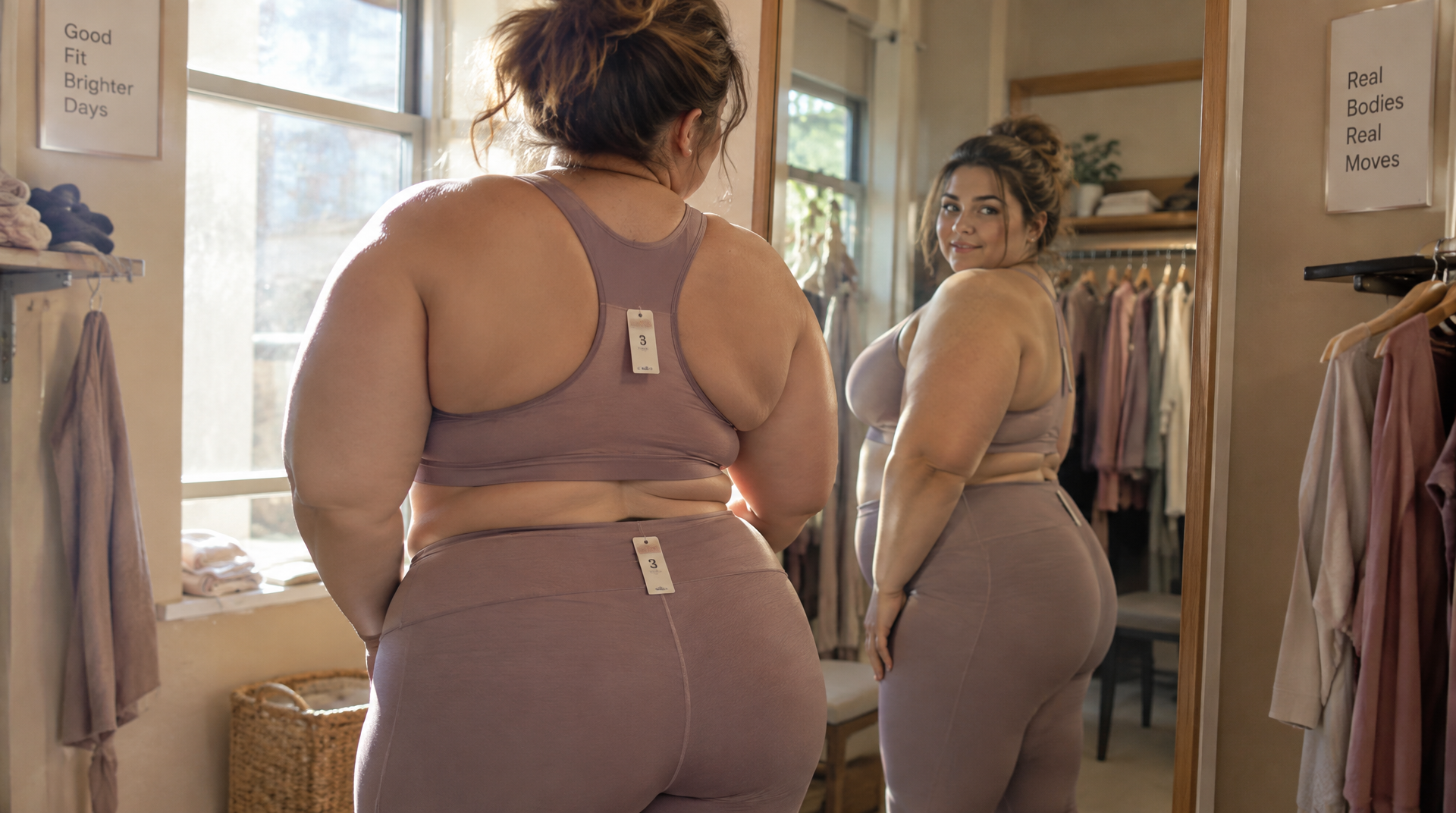
TL;DR
Black Pearl Yoga Wear is the publisher’s own line, described as 100% Peruvian Pima cotton, and cut in an XS–XL range the brand says runs large. Pricing is not listed here; check the product page. Girlfriend Collective has recycled-bottle leggings in the linked CurvyFashionista roundup, but we removed the unsupported 2019 launch-date claim. Livi carries a numeric size range up to 40 in the cited review; the $42 starting price has been removed as unsupported. Beyond Yoga’s true-size fit note comes from Refinery29: sizing up caused the waistband to slide, while the tester’s usual size held. Pure cotton favors yoga, strength, and daily wear; heavy-sweat HIIT still calls for moisture-wicking synthetics. Flatlock seams, gusseted panels, and bonded waistbands often matter more than price.
Quick Summary
Shopping for plus athleisure that survives real movement means grading every label on three things at once: how luxurious it feels, how it fits at your true size, and how it’s built. Full disclosure: Black Pearl Yoga Wear is the publisher’s own line. Product claims about Black Pearl below are first-party unless linked to an external review.
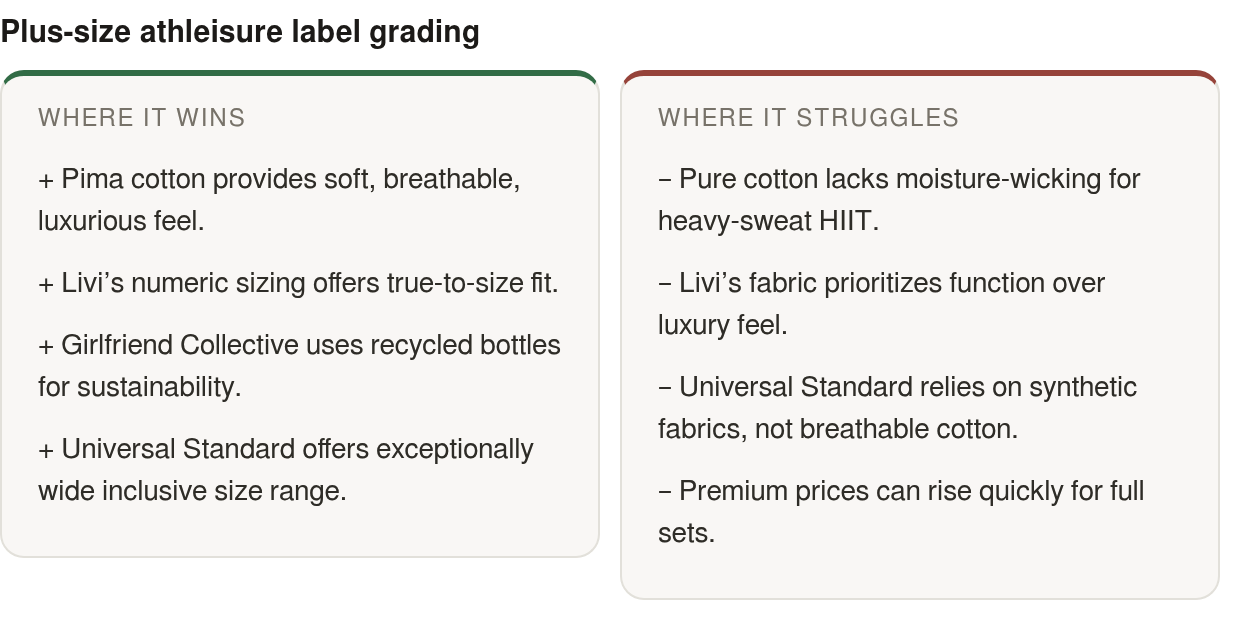
Here’s the quick view before we get into each label. Every option below earns its spot for a different reason, so match the “Best For” column to how you actually move.
Which plus-size Pima cotton and athleisure labels rank highest?
| Label | Best For | Size Range | Starting Price | Key Strength |
|---|---|---|---|---|
| Black Pearl Yoga Wear | Luxury feel + versatile wear | XS–XL; brand says relaxed fit | Check product page | Described as 100% Peruvian Pima cotton |
| Girlfriend Collective | Sustainability-first shoppers | Not listed | Not listed | Leggings made from recycled bottles |
| Universal Standard | Size-inclusive shopping | Not listed | Not listed | Size-inclusive activewear line |
| Beyond Yoga | Yoga and low-impact flow | Not listed | Not listed | Refinery29 reviewer found true size held better than sizing up |
| Livi | High-impact support | 10–40 in the cited review | Check retailer | Numeric sizing and true-to-size support |
Label grading at a glance
I’m not assigning invented numbers. The table below is a qualitative summary based only on the cited reviews and the brand’s own product descriptions. Empty or “not graded” cells mean we did not have a source and did not invent one.
| Label | Activity fit | Fit | Fabric feel | Opacity | Pilling | Support | Sustainability |
|---|---|---|---|---|---|---|---|
| Black Pearl Yoga Wear | Yoga, studio, errands; not high-impact | XS–XL; brand says runs large | 100% Peruvian Pima cotton, described as soft/breathable | Not reviewed in cited sources | Brand claims long-staple fiber resists pilling | Low-impact only | Natural fiber; wash-cycle durability is first-party only |
| Girlfriend Collective | General activewear, not specifically graded | Not listed | Not graded here | Not reviewed | Not graded | Not graded | Recycled-bottle leggings per CurvyFashionista |
| Universal Standard | Layering/base wear | Broad plus-inclusive run | Synthetic-forward smoothing, not Pima | Not reviewed | Not graded | Smoothing/compression base-layer support | Not graded |
| Beyond Yoga | Yoga/low-impact flow | Refinery29: true size held better than sizing up | Not independently graded here | Not reviewed | Not graded | Low-impact, not high-impact | Not graded |
| Livi | High-impact cardio | Numeric sizing; true-to-size per Refinery29 | Functional, not Pima | Not reviewed | Not graded | High/Max Impact bras credited by Refinery29 | Not graded |
What “graded for real curves” actually means
We judge fit by movement, not by how many sizes a brand lists. Size count is access. Size-specific engineering is fit. Two different things, and most roundups blur them.
The clearest sourcing comes from Refinery29’s tester, who sized up in Beyond Yoga leggings and watched the waistband slide during anything faster than a power walk. Back in her true size, it held through cardio. Same logic runs across every label here: pick the size that supports your movement, not the roomiest option.
Which label fits your priority?
Best for luxury feel and everyday versatility: Black Pearl’s Pima cotton pieces. The brand describes the long-staple Peruvian fiber as soft and breathable, and says its sizes run slightly large, so the brand suggests sizing down. Pima may shine for yoga, walking, and studio-to-street wear; we would not use it as your only kit for heavy-sweat HIIT, where moisture-wicking synthetics may work better.
Best for sustainability: Girlfriend Collective, whose recycled-bottle leggings are noted in the CurvyFashionista roundup. We have not verified a launch date.
Best for range and support: Universal Standard is known for a size-inclusive activewear line. Livi wins high-impact days in the Refinery29 review because of numeric sizing and higher-impact sports bras.
If your movement is heavy cardio and constant sweat, prioritize wicking synthetics over pure cotton. Cotton’s comfort and breathability can be good for yoga, strength, and daily wear, not necessarily marathon sprints.
Why one label can’t win every column
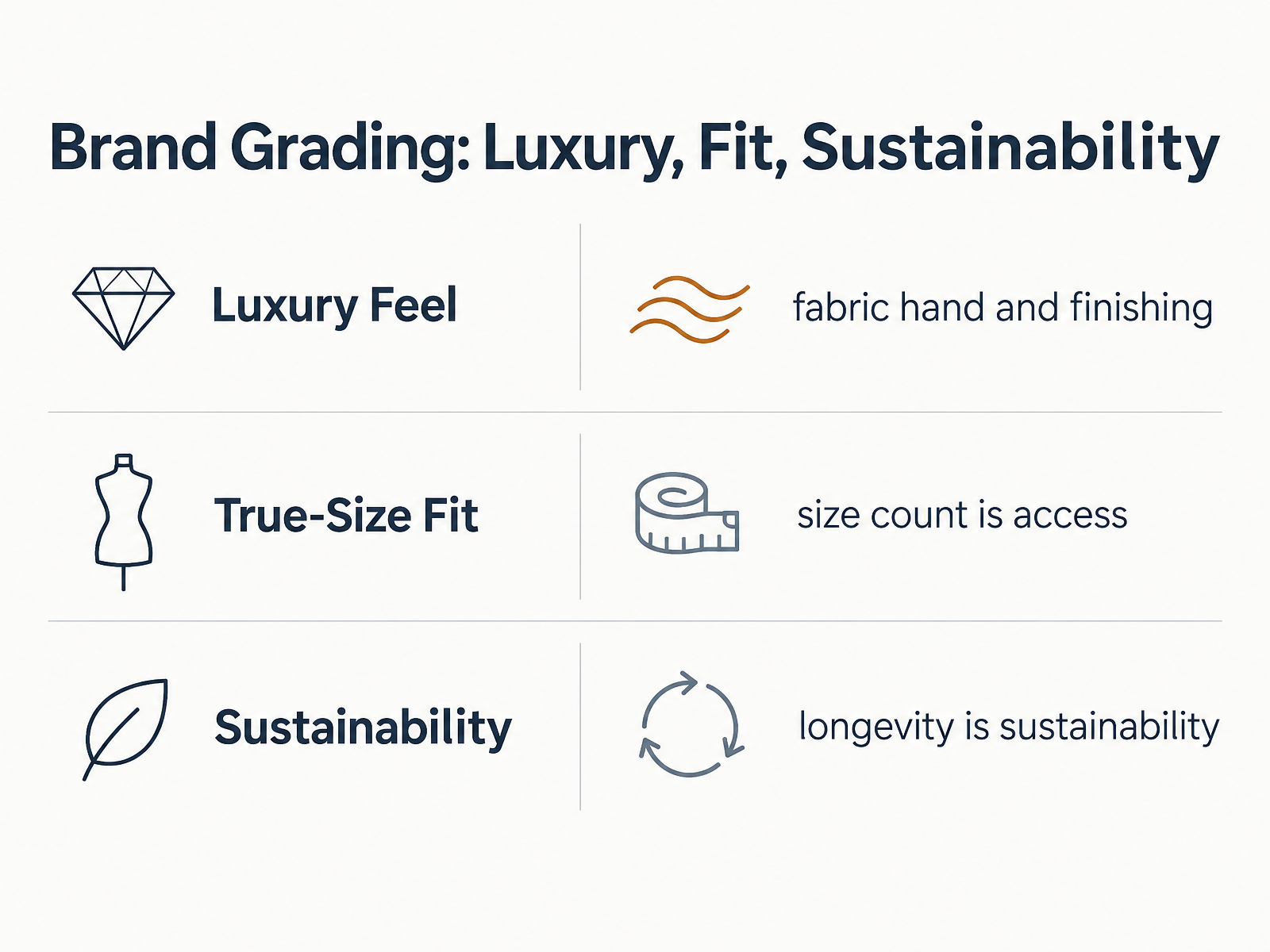
No single label wins on every axis, which is exactly why this grading separates luxury feel, true-size fit, and sustainability as separate criteria. A brand can nail one and miss the other two. Shop this way and price and size count stop being the headline numbers.
The tension: a wide size run only gets you into the fitting room. It doesn’t guarantee the rise, waistband tension, bust support, or hip ease will still work once you bend, walk, lift, or sweat. The alternatives below each solve a different part of that puzzle.
Does a bigger price tag buy better fit?
Not reliably. Some premium sculpting base layers can be expensive for a two-piece set, while extended ranges from big retailers may sit lower. The price gap doesn’t map cleanly to fit quality. At the top end you may be paying for fabric hand and finishing, not better performance.
A useful test: check where a brand spends its engineering budget. Flatlock seams, gusseted panels, and a bonded waistband can do more for movement than a higher price alone, and those details can appear across mid-tier ranges as often as premium ones.
Where the feature gaps show up
Fit-under-movement is the gap most size charts hide. A soft waistband can feel forgiving in the mirror, then roll or migrate once your pace changes. A waistband that feels slightly more anchored at first try-on may be the one that performs better through actual exercise.
That lines up with what Curvy Fashionista says about compression creating stability rather than restriction. For movement, supportive generally beats roomy. Black Pearl’s own fit runs large, which is why the brand tells shoppers to judge by what happens mid-workout, not by the comfort of extra fabric at rest.
Which alternative fits your use case?
Match the brand to how you actually move. The sizing systems split here too. Livi uses numeric sizing like 14/16 that a Refinery29 tester found true to size, while many big retailers stay on 1X/2X/3X. Numeric sizing can narrow the fit target. Letter sizing gives many shoppers more places to enter the range.
If your workout is high-impact and you need predictable hold, weigh numeric sizing heavily. If you’re layering for low-intensity days or want budget flexibility, broader letter-sized ranges may give you more entry points. Neither system is wrong. They solve different problems, and knowing which you’re solving keeps you from returning three sizes to find one.
How well does each grow with you?
Longevity is a sustainability issue, not just a quality one. Fabric that resists pilling and holds its shape means fewer replacements, and fewer replacements can mean a lighter footprint.
Pair that durability logic with Girlfriend Collective’s recycled sourcing and you get a two-part grade: how it’s made and how long it lasts. Black Pearl’s Pima cotton is positioned on that second measure because breathable natural fiber that holds up from studio to desk is the brand’s own durability story. We have not published an independent wash-cycle test.
Universal Standard: when size access is the wall you keep hitting
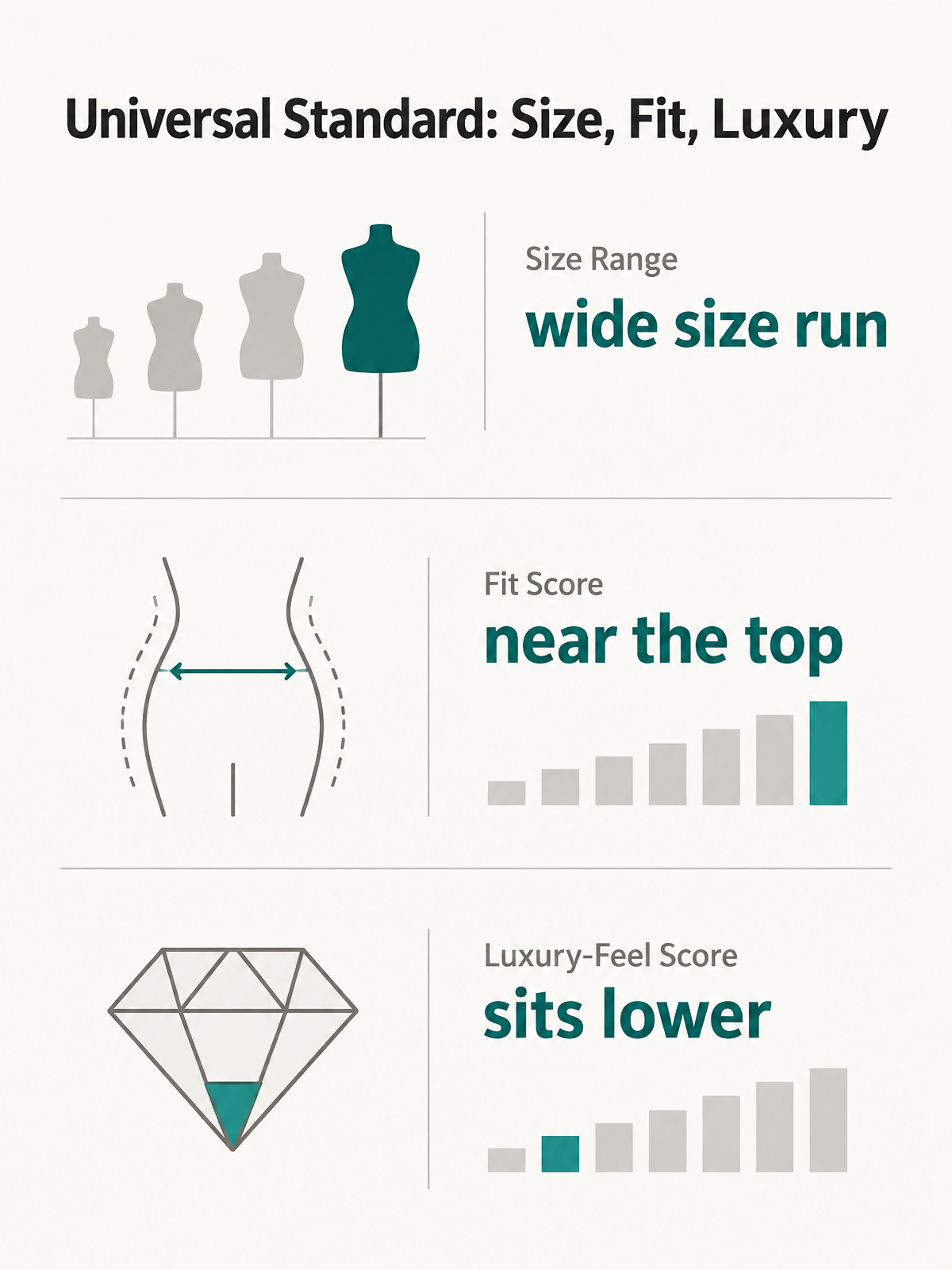
Universal Standard earns its place on one axis above all others: reach. The label is known for an unusually wide size run in plus athleisure, and its collection is built for bodies that many sculpting brands stop short of. If your frustration has always been getting locked out at the top of the range, this is where that may ease.
Here’s the honest trade against this guide’s grading. On fit and access, Universal Standard scores near the top. On the luxury-feel-meets-Pima-cotton axis, it sits lower. The pieces lean on smoothing, second-skin knits rather than the breathable Peruvian Pima this guide weights heavily. Different strength, different shopper.
What Universal Standard does best
The Next-To-Naked line is often positioned as the anchor. It sits in premium territory rather than budget, and what you pay for is a base layer designed to disappear under clothing while holding its shape through a full range of motion. Check current product pages for pricing and construction details.
That makes it more of a layering foundation than a standalone workout kit: a smoothing piece under looser athleisure, not necessarily the sweat-through-cardio hero.
| Feature | Universal Standard |
|---|---|
| Best For | Wide size range, seam-free base layers |
| Size Range | Broad plus-inclusive run |
| Starting Price | Not listed here |
| Key Strength | Inclusive fit + second-skin smoothing |
| Watch-out | Not a Pima cotton label; synthetic-forward |
Pros: strong size access, thoughtful seam-free construction, genuine everyday versatility.
Cons: prices may climb fast for a set, and the fabric story is about compression, not the cool, air-moving cotton feel some curvier movers want against the skin.
Who should buy it? You, if size access has been the wall you keep hitting and you want a smoothing base under your outfits. Skip it if your priority is luxury natural-fiber hand-feel that breathes during a hot session. One practical tell: run the pinch test before you commit. Grab the fabric, stretch it, watch how fast it snaps back. Strong rebound points toward smoothing compression; a gentler hand points toward comfort and airflow. Match the tool to how you move and it holds up better.
Livi: the cardio-support pick
Livi, the activewear line from Lane Bryant, closes out this grading on a different strength than the sculpting-first brands. The cited review describes a size range from 10 to 40, and the line is built for plus bodies rather than graded up from a straight-size block, according to that source. If your history with plus athleisure is a fight to find support that holds during cardio, this is where the fight may ease.
Here’s how it lands on the three axes. On fit, it scores high. Refinery29’s review praised numerical sizing such as 14/16 and 18/20 over vague 1X–2X–3X shorthand, which can make true-size shopping easier. On the luxury-Pima axis this guide weights heaviest, it sits mid-pack. The pieces lean on French terry and wicking synthetics, not the breathable Peruvian Pima cotton this guide grades for.
Does Livi solve the sports bra problem?
This is the line’s real anchor in the review. The Refinery29 reviewer credited Livi’s High and Max Impact styles with finally containing a full bust during running, ending years of doubling up on bras. For high-intensity movement, that support is the reason to consider Livi.
The French terry hoodie and relaxed pants ran true to size and stayed warm without overheating during an indoor cardio session, according to the reviewer. That’s the balance you may want in transitional pieces.
Where it fits our scorecard
Livi earns its grade on engineering, not fabric. The support tiers run from Low through Max Impact, so you can match the bra to the workout instead of settling for one middling option. The review credits support-specific features rather than compression-only designs for containing a full bust.
Layering pieces may hold up too. French terry can move moisture without the clammy feel of pure synthetics, and relaxed cuts may leave room to move rather than binding at the hip. Sizing consistency should still be checked on current product pages.
Pros: wide numerical sizing, high-impact bra support in the cited review, warm-not-heavy layers. Cons: fabric leans functional over luxe, and it likely won’t scratch the breathable Pima cotton itch.
Buy Livi if serious cardio support tops your list. For everyday luxury feel, Black Pearl’s Pima pieces are a different lane.
Our own line, graded honestly
Here’s where we close the roundup by turning the scorecard on ourselves. Full transparency: Black Pearl Yoga Wear is the publisher’s own line. We include it because this guide’s theme is Pima cotton athleisure, not because its size range is comprehensive. The range is XS–XL, so readers above XL should treat it as a fabric-first example, not a size-inclusive pick.
We built the line around one axis many plus athleisure brands treat as an afterthought: how the fabric actually feels against skin through a full day of movement. That question shapes the brand’s seam and cut decisions.
We’re honest about where we land. Black Pearl’s strengths are luxurious feel and a comfortable, versatile fit. The range runs XS through XL and tends to run large, so if your history has been synthetic base layers that trap heat, the shift to breathable natural fiber is the difference you may notice first.
What Peruvian Pima cotton actually changes
Breathability is the main argument. Pima’s long, smooth fibers can weave into a cloth that lets air circulate better than some synthetics marketed for breathability. Those same extra-long fibers can create a soft feel against the skin and stronger yarns that resist pilling, so garments may keep their look and comfort through repeated wear. Black Pearl’s durability claims are first-party; we have not published a formal wash-cycle test. The brand says the fabric holds up through repeated laundering, but the specific “40 cycles” figure from an earlier draft has been removed as unsupported.
Because the fiber is natural and may need fewer synthetic finishes, some sensitive wearers may find it less irritating. That is a comfort consideration, not a dermatological claim.
Where we’d steer you elsewhere: if you need high-impact bust support for running or a size run past XL, a purpose-built support brand or a wider size-inclusive label serves you better. Black Pearl is built for yoga, low-impact movement, and all-day wear, not heavy cardio containment.
| Feature | Details |
|---|---|
| Fit Notes | Runs large; relaxed through the torso |
| Fiber Length | Extra-long staple, described as pilling-resistant |
| Care | Machine washable; shape-hold claim is first-party |
| Ideal Use | Studio flow, wellness sessions, all-day errands |
| Pros | Breathable natural fiber, soft hand, versatile |
| Cons | Not high-impact; range tops at XL |
Ideal for the reader who wants activewear that feels like something you’d choose for comfort first, sweat second.
How to grade any label yourself
Five labels can’t cover every closet, and the community that built this scorecard keeps finding smaller names worth a look. So the seventh “alternative” isn’t another brand we rank for you. It’s the method for grading any plus athleisure label you stumble onto yourself.
New plus-size activewear drops constantly, and no roundup stays current. Run the three-axis check on your own and a label we never mentioned stops being a gamble.
The three checks, in order
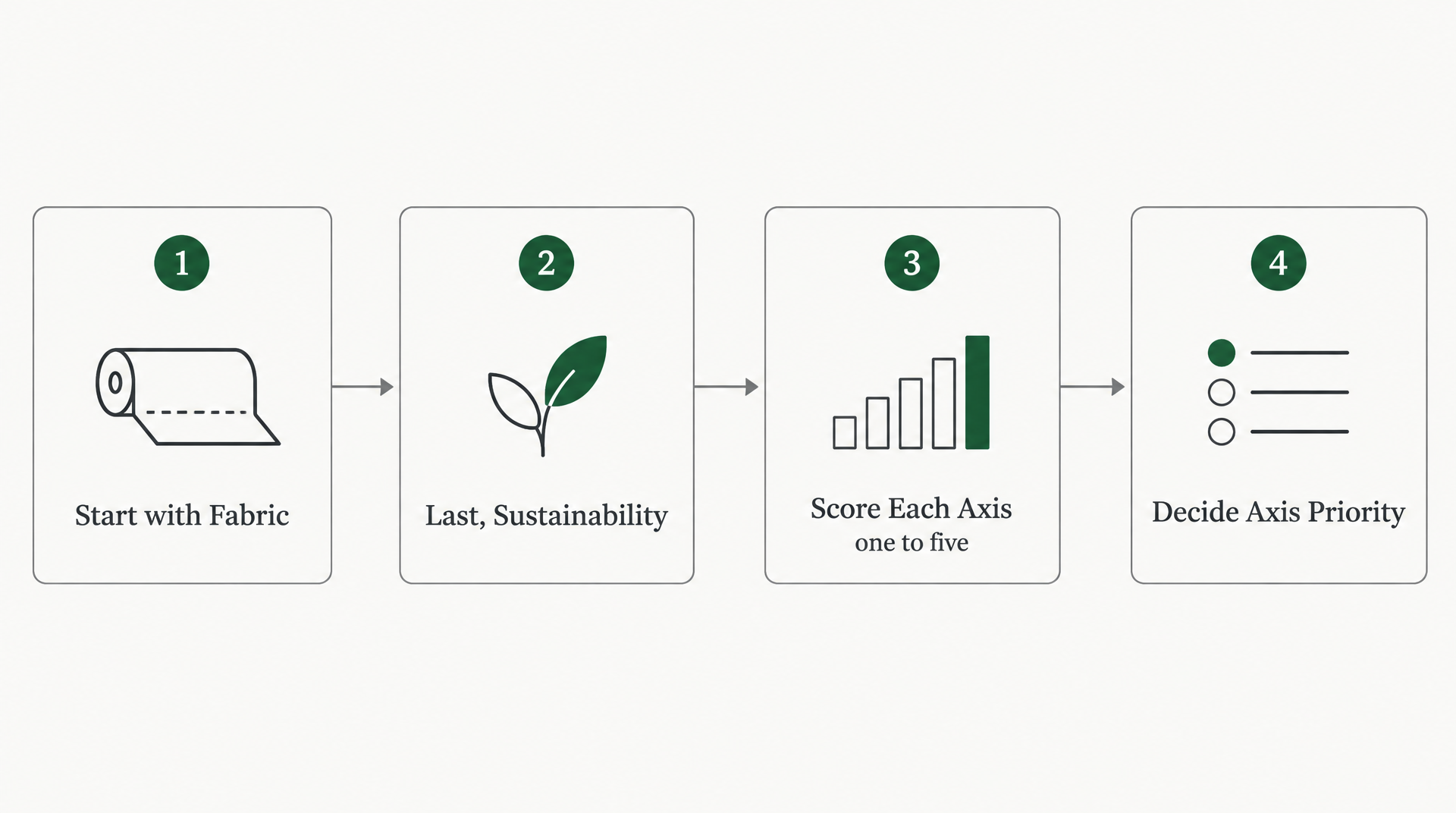
Start with fabric, because that’s the axis most size charts hide. Rub the swatch or read the fiber content. A high natural-fiber percentage may point toward breathability; a wall of synthetics may point toward heat and cling. Long-staple cotton like the certified Peruvian Pima Black Pearl uses is prized for letting air circulate against the skin, so that’s the hand and fiber content to feel for.
Next, fit. Look for numeric sizing over vague 1X–2X shorthand, and check whether the brand designs for plus bodies or grades up from a straight-size block. Different commitments.
Last, sustainability. Read the sourcing page. Vague claims with no fiber origin often mean there’s less to verify.
What the self-check looks like in practice
| Axis | What to check | Green flag |
|---|---|---|
| Luxury feel | Fiber content, hand | Long-staple natural fiber, smooth against skin |
| True-size fit | Sizing labels, block | Numeric sizes, built for plus bodies |
| Sustainability | Sourcing transparency | Named fiber origin, clear supply chain |
Score each axis qualitatively for the pieces you’ll live in. A label that clears all three is rare, so decide which axis you refuse to compromise on.
The community directory: the widest net
The eighth entry isn’t a single label. It’s the crowd-sourced list itself, and it earns a place because no five-brand roundup keeps pace with how fast plus athleisure lands on shelves. A running directory of 25 plus-size activewear brands does something a tight roundup can’t: it scales.
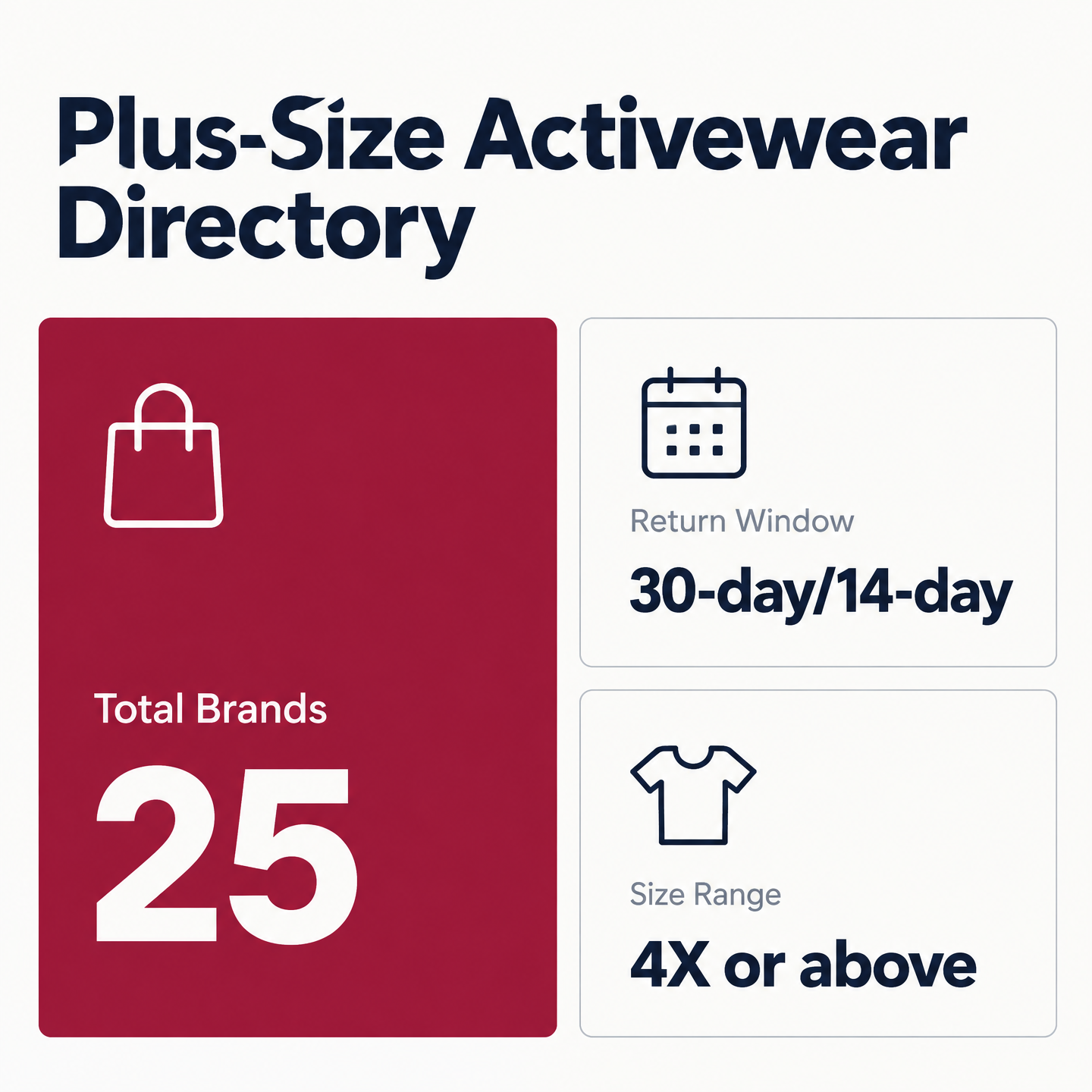
A living directory catches the small labels a fixed list may never mention, which matters when your clothes have to survive real movement. You still run the fabric-fit-sustainability check yourself. The directory just widens the pool you’re checking.
Is a big community list worth the effort?
Yes, with one caveat. Breadth is the whole point, and breadth also means the list won’t grade luxury feel for you. A large roundup tells you a label exists and who it serves. It doesn’t rub the swatch or tell you whether the fiber is long-staple Pima or a synthetic blend that traps heat.
So treat it as a starting map, not a verdict. Cross-reference anything that catches your eye against the breathability and fiber content of Pima cotton before you commit.
How to work a big directory without wasting an afternoon:
- Filter by activity first. A brand built for high-impact training rarely doubles as your low-sweat lounge pick.
- Read the size range before the product shots. A label that stops at 3X isn’t in the running if you wear 4X or above.
- Check return windows on the actual retailer, not the directory. A generous policy gives you room to test fit at home; a short one rushes the call.
- Note the fiber content listed, then verify it on the product page. Directories summarize; product pages disclose the blend.
Pros: the widest net for finding lesser-known plus labels, updated as new brands appear, free to browse. Cons: it ranks nothing on fabric hand, so a directory find can still disappoint on feel.
This one suits the shopper who loves the hunt and wants options beyond the usual names. If you’d rather skip the sorting and land on a single Pima-first pick, that’s not this entry’s job.
What I’d actually reach for
Stack all five labels against the three-axis scorecard and no single name sweeps every column. The right pick depends on which axis matters most to you that day: fabric feel, true-size fit, or how the piece is made and how long it survives.
Here’s the read, sorted by the shopper each label actually serves.
The fabric-first pick wins our feel score
If natural fiber against skin is your deal-breaker, Black Pearl earns the top feel grade for the reason the line was built: long-staple Pima that stays cool through a full day, according to the brand. That’s the axis many brands treat as an afterthought. Pick it for versatile studio-to-desk wear, not high-impact cardio support.
Sizing up is the wrong instinct for movement
Movement fit is less about extra room and more about controlled contact. Leggings, bras, and base layers need enough tension to stay aligned with the body, especially at the waist and bust. If a piece feels comfortable only because it’s loose, it may not give you the support you need once the workout starts.
That’s where the fit notes throughout this guide matter. True-size support, stable compression, and activity-specific construction should steer the decision before the impulse to buy larger does.
Longevity counts as sustainability
A piece you don’t replace is a piece that doesn’t get remade. That’s where natural-fiber construction can earn its grade: Black Pearl says its yarn is spun from long, smooth strands that resist pilling and hold shape and color through repeated wear, but that is a first-party durability claim. Girlfriend Collective comes at the same goal from another angle, with recycled materials. Two routes to a greener closet: better inputs, or longer rotation.
Match your axis to a pick
| If you care most about | Reach for | The deciding reason |
|---|---|---|
| Fabric feel against skin | Black Pearl | Natural fiber that the brand says reads cooler than airflow-marketed synthetics |
| True-size fit that stays put | Beyond Yoga (in your usual size) | Refinery29: waistband held through cardio when the tester did not size up |
| Widest size availability | Universal Standard | Broadest true-size range on the list |
| High-impact support | Livi | Refinery29: numerical sizing and stronger sports bras built for movement |
| Recycled-material sourcing | Girlfriend Collective | A sustainability route built on reclaimed fabric, per CurvyFashionista |
Start with the axis you care about most, then match the row. If feel against skin is what you keep coming back to, that’s where we’d point you. If it’s cardio support, Livi. If it’s reach, Universal Standard.
References
[1] A Review Of 6 Plus-Size Activewear Brands - Refinery29 - https://www.refinery29.com/en-us/plus-size-activewear-brands-review
[2] 25 Plus Size Activewear Brands That Make Movement Feel Good - https://thecurvyfashionista.com/functional-plus-size-active-wear/
Common Questions
1. Can I wear Pima cotton activewear if I have sensitive skin?
Many shoppers with sensitive skin prefer Pima because of its soft hand. If your skin reacts easily, check the fiber content and finishing details before buying.
2. Should I size down when ordering Black Pearl Yoga Wear?
Black Pearl says its fit is relaxed, so the brand usually suggests choosing the smaller of two sizes. We have not independently fit-tested this. Use the fit note as a starting point, then pay attention to how the shoulders, waist, and hem sit when you bend or stretch.
3. Can I combine brands, like a Livi sports bra with a Pima cotton top?
Yes. Mixing labels is often the smartest approach because each piece has a job. Choose the bra for containment, the top for skin feel, and the bottom for waistband stability instead of expecting one brand to solve every need.
4. How do I care for Pima cotton so it lasts?
Machine wash with similar colors and avoid treating it like disposable gymwear. Gentle laundering helps preserve the soft feel and shape that make Pima worth choosing.
5. What is the pinch test and how do I use it while shopping?
Pinch and stretch the material, then notice whether it snaps back firmly or relaxes with a softer drape. Strong rebound points toward smoothing compression; a gentler hand points toward comfort and breathability.
6. Why does cotton fall short for HIIT but win for yoga?
The difference is sweat volume and pace. Yoga, walking, strength work, and errands give cotton room to shine because comfort and airflow matter most. HIIT asks fabric to manage constant sweat and repeated bursts of movement, which is where performance synthetics often have the advantage.
7. Does numeric sizing really fit better than 1X/2X/3X labels?
It can, especially when support is the goal. Numeric sizing gives a narrower target than broad letter labels, which helps with bras, leggings, and fitted layers. Letter sizing can still work well for relaxed tops, lounge pieces, or lower-impact outfits.
8. What return window should I look for when testing fit at home?
Look for enough time to try the piece the way you’ll actually wear it: sit, stretch, walk, squat, and layer it with your usual gear. A return policy that allows that kind of at-home movement test is more useful than one that only gives you time for a mirror check.