Why Athleisure Never Fits Curvy Bodies: Grading Math, Stretch Recovery, and Seam Placement Explained
October 12, 2026
Before we get into it, the short version:
- Many athleisure brands grade patterns as if size 18 is just a bigger size 8.
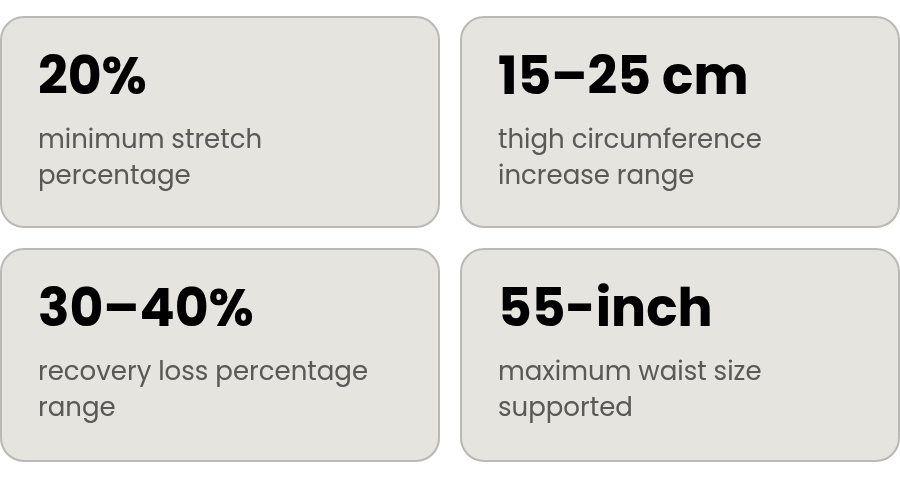
- Fabrics with strong recovery help prevent knee bagging; cotton-lycra blends below that threshold can lose shape after you've worn them a few times.
- Thigh circumference can change across an extended size range, but many brands add only a small fixed increment per size grade, leaving fabric too tight where curvy bodies need it to move.
- Flatlock or coverstitch seams with athletic polyester thread help prevent blowouts at inner thighs and seat, where tension hits hardest on curvy bodies.
- Gripper elastic at hems and fold-over waistbands can stop shorts from riding up during exercise—a fix documented by pattern designers and home sewists who actually test this stuff.
- Compression fabrics can lose meaningful recovery capacity under higher localized stress, so uniform grading formulas may fail for larger sizes during movement.
What You're Actually Dealing With
You probably own leggings that bag at the knees after twenty minutes or ride up during every squat. That's not an accident—it's a design gap. When brands scale patterns across size ranges without adjusting for how curvy bodies distribute tension, the math breaks down. Fabric stretch recovery, seam construction, and grading checks matter more than most labels admit, and the evidence shows exactly where they fall short.
The table below lists the fit challenges curvy athleisure wearers face, what designers can adjust, and the specs or examples that back those fixes. We've pulled these from pattern designers, industrial sewing guides, and home-sewing communities where people document what actually works.
| Fit Challenge | What Designers Can Adjust | Supporting Spec or Example |
|---|---|---|
| Bagging at the knees after repeated wear | Use stretch fabric with reliable recovery; choose four-way stretch material that returns to shape after compression | Cotton-lycra, Supplex, and dance fabrics with documented recovery; user reports confirm some knits bag out when recovery is weak |
| Riding up or falling down during exercise | Add stable hem anchors and deeper bands at waistbands or leg openings | Melissa (Fehr Trade) recommends gripper elastic on bottoms; Suzy suggests a deeper fold-over band for hems to prevent riding up |
| Seam abrasion in negative-ease garments (leggings, compression shorts) | Flatlock or coverstitch construction; overlapped fabric instead of folded seam allowances | Flatlock machines overlap fabric edges, providing a flat, low-bulk seam for stretched garments |
| Inadequate seam stretch causing blowouts at stress points (inner thighs, seat) | Athletic thread; serged or coverstitch seams instead of straight stitching; negative-ease grading that accounts for proportional tension zones | Home sewists report Cake Patterns fit up to 55-inch waist when sewn with four-way stretch; industrial garments use serger or coverstitch with looper threads to allow seam elongation |
| Hem instability (flipping, rolling, losing shape after washing) | Coverstitch with looper on the underside; fold-over elastic or self-fabric bands | Coverstitch construction keeps hems flat; fold-over elastic adds stability without flipping |
Size-Range Grading Checks That Catch Bagging and Blowouts
Many brands grade patterns by adding or subtracting uniform increments across all measurements. That works fine for many simple garments, but curvy athleisure needs proportional grading that accounts for where tension concentrates. A fabric that feels stable on one waist measurement can behave differently when stretched across a much larger waist, hip, or thigh. Recovery properties don't scale neatly across a size chart; larger sizes often create more concentrated stress at the inner thighs, waistband, and seat, so seams and fabric need extra capacity in those zones.
Style Arc patterns adjust rise, inseam, and gusset width—not just scaling everything up. When you see leggings that bag at the knees on curvy bodies, it's often because the designer graded the knee circumference uniformly without checking whether the fabric could recover from the extra tension those measurements create during movement.
Why Curvy Athleisure Still Breaks Down
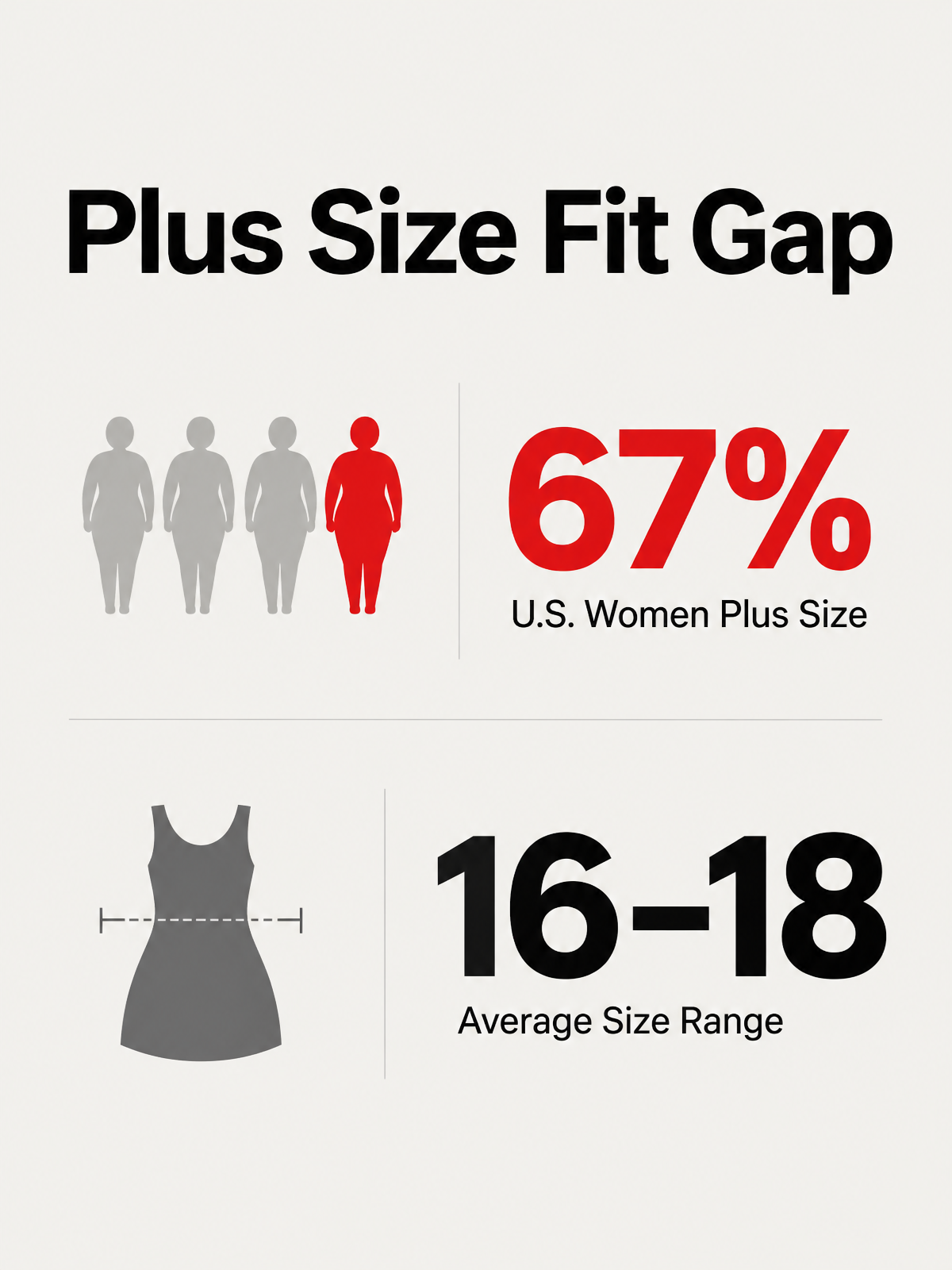
Curvy shoppers want simple things: leggings should stay up, shorts should stay put, and seams shouldn't distract during a workout. The problem is that much of the market still treats extended sizing as a final scaling step instead of a design category with its own fit logic. Many athleisure brands build from a smaller base pattern, then rely on the grade rule to carry the garment into sizes where the body is changing shape, not simply getting wider.
Movement Problems Ready-to-Wear Keeps Creating
Ready-to-wear activewear rides up or falls down during exercise—not because bodies are wrong, but because the construction math doesn't account for differential tension. A waistband that holds on a smaller frame can become an anchor point on a curvy one, pulling fabric down while the legs want to travel up. If the thigh, hip, and waist grades don't reflect how those measurements diverge, the garment loses ease exactly where motion demands it most.
You see this frustration play out in reviews and sewing communities where people document what fails: hems that roll, inseams that chafe, and leg openings that cut in. Industrial grading formulas often assume stretch behaves uniformly across all sizes. Brands that skip proportional adjustments—adding gripper elastic, reinforcing high-tension zones, or testing recovery across the whole size run—end up shipping garments that look fine on the hanger and fail in motion.
The gap isn't about adding more fabric everywhere. It's about smarter grading checks, seam placement that respects how curvy bodies move, and fabrics engineered to spring back after compression. When those pieces align, the riding-up and bagging stop.
Seam Placement That Moves With You
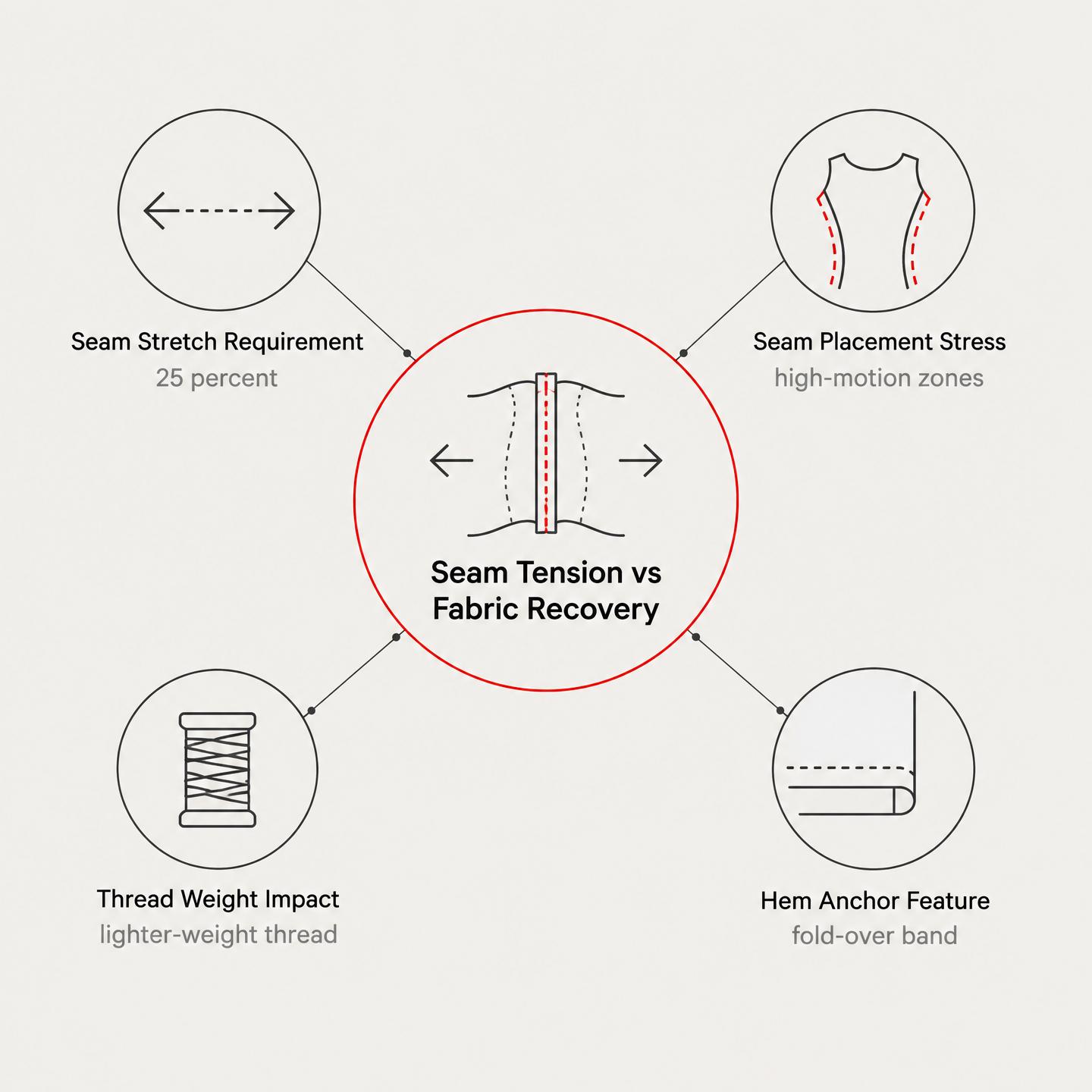
When you squat in leggings and feel a stitchline tug instead of glide, the seam is doing more work than it was designed to handle. Most curvy athleisure pieces are sewn with seams that can't keep pace with the fabric's stretch, so they become anchor points that drag the garment down while the material itself wants to travel upward. Activewear seams need to stretch at least 25 percent without resistance from the thread, ideally 50 percent for garments meant to stay stretched when worn. If a seam can't match that range, it puckers, pulls, or pops.
This problem gets worse when seams land on high-motion zones. Compression sportswear guidance specifically flags seam placement that follows the knee as a setup for discomfort, because every bend multiplies the tension on that stitchline. The same applies to any seam crossing a high-flexion area—inner thigh, hip crease, back of the knee—where movement puts significant stress on both fabric and thread.
Thread and Edge Construction That Stays Put
Thread weight matters more than most brands admit. Heavier thread can dig into skin under the compression of negative-ease garments, so many activewear pieces use lighter-weight thread to reduce abrasion. That friction shows up fastest on curvy bodies, where fabric stretch is already working harder through the hip, seat, and thigh.
Hems deserve the same attention. A fold-over band at the bottom edge helps prevent riding up during activity, because it creates an intentional anchor at the anatomical spot where you want stability. Gripper elastic does the same job for shorts, holding the hem in place instead of letting it migrate north with every lunge.
Testing Prototypes Before They Hit Your Closet
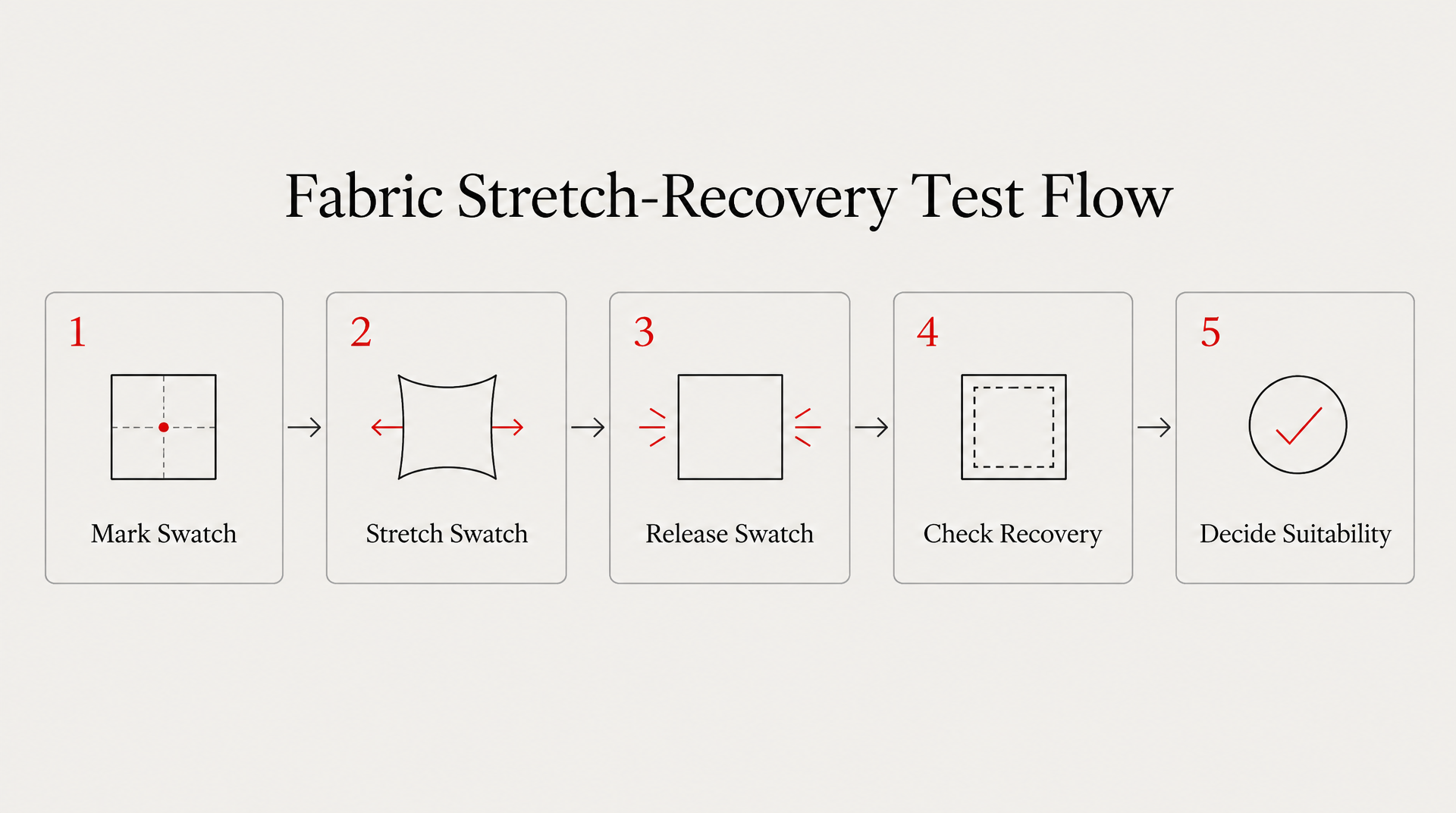
Testing curvy athleisure prototypes can start with measured fabric swatches: mark a swatch, stretch it, release it, and check whether it returns cleanly instead of relaxing into a longer shape. That simple stretch-and-recovery test shows whether a fabric can survive repeated wear without developing slack at the knee or seat. Before sewing a single seam, confirm that the fabric has enough resilience for the garment's intended negative ease; weak recovery shows up quickly once the body starts moving.
Start with Size Coverage, Not a Single Fit Model
Linear grading adds the same fixed increment between every size. Proportionate grading adjusts those increments based on how body shape changes across the range. Many mass-market brands lean on linear grading because it's faster, but that's exactly why leggings can bag at the knee or pull at the waist when you squat. Extended-size patterns show what proportionate grading looks like in practice, with waist-to-hip ratios that shift as sizes increase. Compare those ratios against your intended size chart; if the hip grows differently than the waist as sizes increase, your seam placement and fabric choice need to account for that differential tension.
Recruit fit testers across your full size range; two endpoints won't catch every fit gap in the middle and upper end of the chart. Measure each tester's waist, hip, and thigh against your chart, then watch where the garment pulls during a squat or lunge. Seam placement checks should confirm that seams don't run directly behind the knee, where they anchor the fabric and create drag. After the first wash-and-wear test, check whether hems stay flat or roll up; if they ride up, add a stable hem finish before moving to production samples.
How to Design for Real Bodies
Designing curvy athleisure to work with real body measurements starts with recovery, not just hand feel or opacity. Pattern designers who serve extended sizes consistently point to recovery as the difference between a garment that returns to shape and one that slowly relaxes through the knees, seat, and waistband. When a fabric can't recover, you end up with sagging knees and a waistband that rolls down.
Gusset design separates functional activewear from pieces that fail after one wash cycle. A diamond gusset can redistribute tension across four seam lines instead of concentrating stress at a single crotch seam, which is why athletic leggings often hold their shape better than fashion tights. The gusset also helps prevent center-front wedging during high-leg movements like lunges and step-ups, where fabric needs to expand in multiple directions simultaneously without creating pressure points.
Design to Real Extended-Size Measurements
Patterns need to accommodate the actual body range of curvy customers. Style Arc patterns accommodate up to size 30 with 58-50-61 inch measurements, and Cake Patterns espresso leggings fit up to a 55-inch waist. Those examples matter because they show grading as a set of fit decisions: rise, gusset shape, inseam, waist placement, and hip curve all need to be checked together.
When brands skip proportionate grading, they lose control over fit across the size spectrum. A waistband drafted from a smaller base and simply scaled upward can place elastic tension in the wrong anatomical location—too high on the natural waist or too low on the hip—because torso length and rise proportions shift as bodies get larger. You need rise adjustments that correspond to actual seated and standing postures, not just width increases. Otherwise, you get back gaps when sitting and compression discomfort when standing.
Stabilizing hems is a small construction choice with a large fit payoff. Pattern designer Melissa from Fehr Trade recommends gripper elastic on shorts bottoms because it creates an intentional anchor point at the correct anatomical location—your mid-thigh or knee—rather than letting the fabric migrate upward during movement. That simple addition keeps bike shorts from bunching under dresses and leggings from creeping north during squats.
References
[1] How Seam Lines Shape Activewear Without Extra Compression - https://www.youtube.com/watch?v=BhS2eg6NSf8&vl=en
[2] How to Sew Athletic Wear - Seamwork - https://www.seamwork.com/sewing-tutorials/strong-sewing?srsltid=AU7gw4VnduMbA06QD-NgxiNXM0n1dnvCT4KjuMQxyBVbb9P9DF8eMNk5
[3] Activewear 101 Series: Patterns and Fabric - Curvy Sewing Collective - https://curvysewingcollective.com/activewear-101-patterns-and-fabric/
[4] Introducing our curvy & plus size activewear sewing pattern collection! - https://blog.cashmerette.com/2018/01/plus-size-activewear-sewing-pattern-collection.html
[5] [PDF] Plus-Size in the Athleisure Wear Market Catherine Madrigal - https://digitalcommons.lmu.edu/cgi/viewcontent.cgi?article=1230&context=honors-research-and-exhibition&filename=0&type=additional
[6] [PDF] Exploration of Compression Sportswear Product Development ... - https://ecommons.cornell.edu/bitstream/handle/1813/112939/Kim_cornellgrad_0058_13428.pdf?sequence=1
FAQ
1. Why do my leggings bag at the knees even though they're labeled as high-quality stretch fabric?
“Stretch” only tells you that a fabric can expand. It does not guarantee that the fabric will return to its original shape after repeated bending, sitting, walking, or squatting. Knee bagging usually means the material has enough give to fit over the body but not enough recovery to pull back into place after compression.
2. What's the difference between linear and proportionate grading, and why does it matter for curvy bodies?
Linear grading treats every size jump as the same kind of change. Proportionate grading recognizes that the waist, hip, rise, thigh, and inseam do not all change at the same pace across an extended size range. That matters because curvy bodies distribute garment tension unevenly; if the grade rule ignores that, seams and elastic can land in the wrong place even when the size label looks correct.
3. Can I fix riding-up shorts at home, or do I need to buy new ones?
Sometimes, yes. If the shorts otherwise fit well, adding a stable hem treatment can help the leg opening stay where you want it. The best home fix depends on the fabric and your sewing comfort level, but the goal is the same: give the hem enough structure that it stops crawling upward during movement.
4. Why do seams blow out at the inner thigh faster on curvy bodies than smaller sizes?
Inner-thigh seams sit in a high-friction, high-stretch zone. On curvy bodies, that area often carries more garment tension during walking, squatting, and sitting, especially when the pattern has not been adjusted through the thigh and seat. If the stitchline cannot elongate with the fabric, the seam becomes the weak point.
5. What thread type should I look for if I'm sewing my own curvy activewear?
Look for thread and stitch construction designed to move with knit fabric. Athletic polyester or nylon-core thread paired with serged, flatlock, or coverstitch seams is a better match than a rigid straight stitch. The seam should stretch with the garment instead of acting like a tight cord against the body.