4 Checks Before Buying Plus Athleisure: Fabric, Waistband, Seams, Stretch
September 25, 2026
The Short Version
Long-staple Pima fiber spins into smoother, stronger yarn. It feels softer and pills less over time. But it is still cotton. It absorbs moisture well and dries slowly. That makes pure Pima better for lifestyle wear than hard training. A blend with some spandex gives you breathability and stretch together. A higher cotton share can feel restrictive in tougher workouts. Whether a waistband rolls depends on elastane percentage and rise height. A high-spandex, mid-rise band tends to stay put on fuller figures. Flat or covered seams in high-stress zones help prevent blowouts. Single-stitch construction can fail during squats and repeated movement.
The Four Checks That Separate Keepers From Regrets
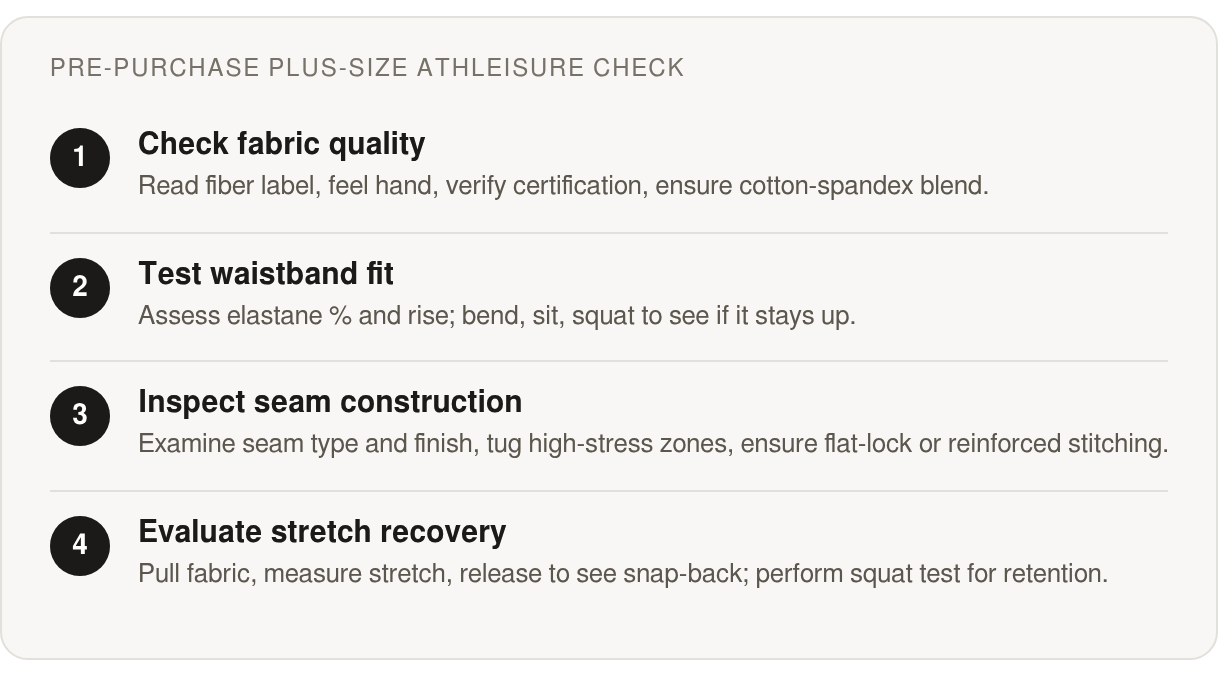
Plus athleisure lives or dies on details you can judge before checkout. Look past the marketing copy. Put your hands on the fabric, waistband, seams, and stretch before you commit. That two-minute habit separates the piece you keep reaching for from the one that looks tired after three wears.
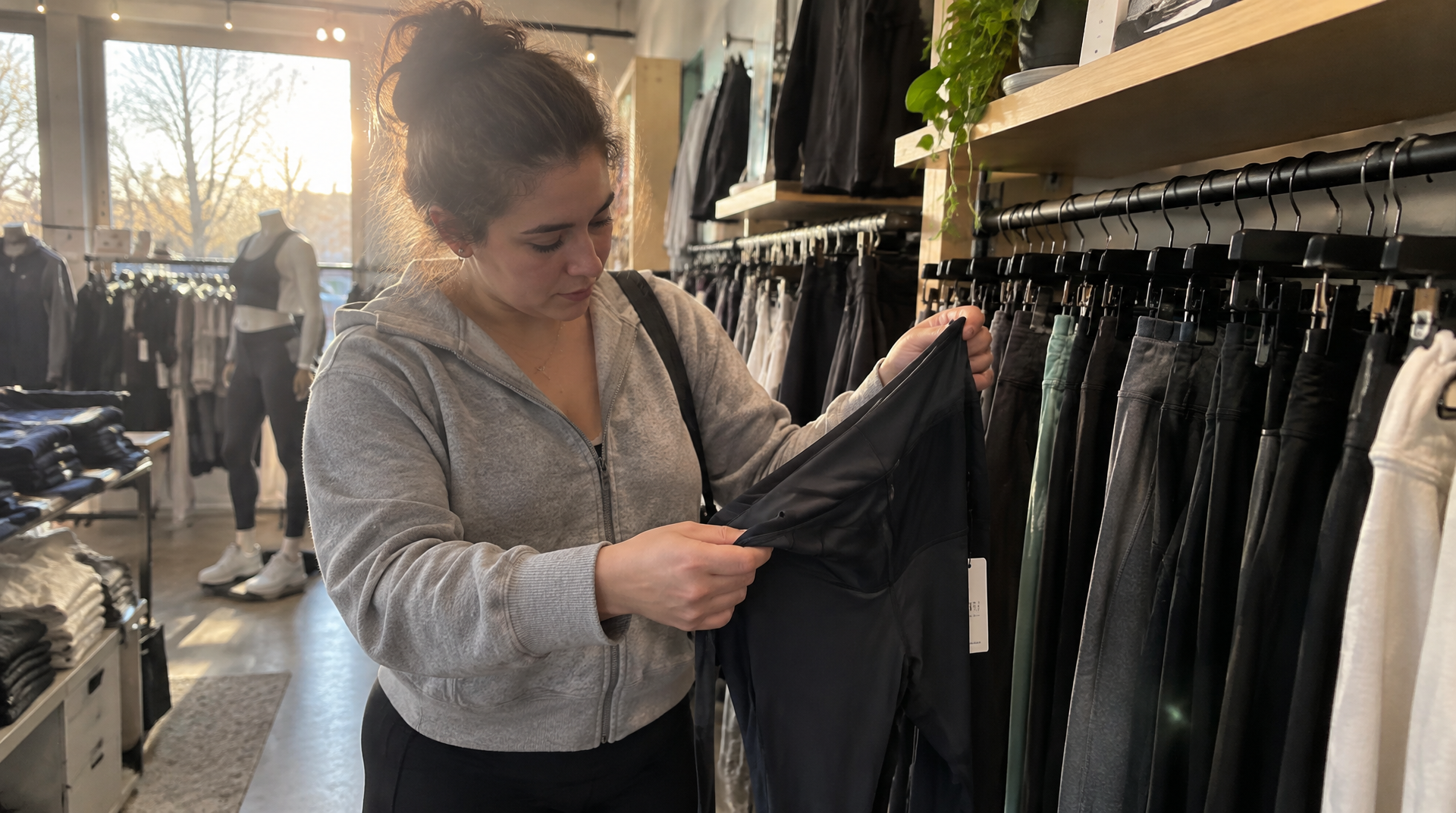
Here's why the inspection has to be sharper for plus sizes: the garment carries a heavier real-world load. It stretches farther. It sits against more skin. It has to move through bending, walking, sitting, lounging, and workouts without shifting. A straight-size sample does not always show the weak points that appear once panels scale up.
Why does fabric quality decide comfort and lifespan?
Fabric is the foundation of every legging and bra you own. Barbell Logic's guide to leggings starts there too. It recommends feeling the material and reading the fiber content first. Do the same.
The trick is choosing fabric for the life you actually want the garment to live. Barbell Logic makes a strong case for synthetics in performance pieces because they wick, resist fading, and survive hard use. Seamwork's activewear guide adds the other half of the story: those same performance fabrics can hold onto odor-causing oils. So synthetics earn their place in sweat-heavy training, while natural fibers like Peruvian Pima cotton win when softness, breathability, and freshness matter most.
- Read the fiber content label and feel the hand before buying, since composition predicts how a piece ages, breathes, and lasts.
- Do a squat-and-check opacity test, because thicker fabric can stay breathable while still blocking see-through, as one plus-size editor found.
What makes the waistband stay put?
A waistband stays put when the band has enough recovery and the rise lands where your body actually bends. Spandex helps the band return to shape after movement. The cut decides whether it anchors comfortably or fights your midsection. That plus-size editor's top priority was a waist that "stays up and doesn't roll down." The only band worth trusting proves it during a bend, sit, and squat.
- Check both the elastane percentage and the rise height, then move in the garment before buying instead of judging the band while standing still.
Why do seams and stretch make or break the fit?
Seams and stretch retention decide whether a garment still feels good after repeated wear. The dreaded crotch-seam burst that Barbell Logic describes traces straight back to seam type and placement. Stretch matters just as much. When shorts hold their compression through wash after wash, that is the recovery you want to see before you trust a fitted piece.
- Inspect seam type by zone, especially at the crotch, inseam, side seam, and waistband attachment.
- Stretch the fabric and let it snap back, checking that it recovers fully rather than staying baggy over time.
| Check | What to Look For | How to Test | Quality Indicators | Common Pitfalls | Difficulty (1-5) |
|---|---|---|---|---|---|
| Fabric | Fiber content, hand-feel | Read label, feel material | Named certification, honest blend | Vague "premium" claims | 2 |
| Waistband | Elastane % + rise | Bend and squat | Stays put, no roll | Thin band, low spandex | 2 |
| Seams | Seam type by zone | Tug high-stress points | Flat, covered seams | Single-stitch crotch | 3 |
| Stretch | Recovery, not just give | Pull, then release | Snaps back fully | Stays baggy after wear | 3 |
Buy the piece whose fabric, band, seams, and stretch all pass a hands-on test. That is how comfort and durability stop being a coin flip.
Check #1 – Fabric Quality (Focus on Certified Peruvian Pima Cotton)
When we assess fabric for plus athleisure, we start where the marketing stops: the fiber content on the care label. Peruvian Pima gets its reputation from a long, smooth fiber that creates a noticeably soft surface and a cleaner-looking knit. But softness alone does not earn a spot in your drawer. You still have to match the fabric to your day.
The honest tension is moisture. Premium Pima has a beautiful feel, but it is still cotton, so it behaves like cotton once sweat enters the picture. That is why we position our 100% certified Peruvian Pima pieces as lifestyle-first: dreamy for a flow class, errands, or lounging, and built to move from yoga and wellness into everyday life.
Does more cotton always mean better?
No, and this trips up a lot of shoppers. The Curvy Fashionista points toward cotton-rich blends that still carry some spandex, because that little bit of stretch changes how a garment moves. The Good Trade's editors found the same limit from the other side: when cotton dominates too completely, leggings can feel less forgiving during harder training.
That small slice of elastane is not a compromise on natural fibers. It helps preserve shape. Cotton knit on its own can either resist movement or relax too much at the knees and seat. The elastane helps the garment snap back to its original fit.
- Read the fiber content label first and confirm the cotton-to-elastane relationship, since that ratio predicts both comfort and shape retention.
- Look for spandex or elastane in leggings and fitted pieces, because that content supplies the stretch recovery cotton lacks on its own.
- Match the fabric to the activity: reach for Pima on low-impact and lifestyle days, and synthetics when you'll sweat hard.
How do certifications tie fabric to the mission?
This is where fabric quality meets the scorecard we care about. A certification like GOTS signals the cotton was grown and processed under strict environmental and labor standards, and it keeps harmful chemistry like PFAS out of a garment that sits against your skin all day. That's why we build around 100% certified Peruvian Pima cotton: the certified fiber is what lets us stand behind the softness, breathability, and lasting quality in every piece.
Synthetics still deserve respect for performance, and they can be the right pick when drying speed and compression matter most. Certified Pima fills a different need: clothing that feels soft, breathes naturally, and stays pleasant against the skin through daily wear.
- Verify a legitimate certification like GOTS or an equivalent organic mark, rather than trusting vague labels like "natural" or "eco."
- Run the squat test and the hand-feel check in person when you can, reading for weight and opacity the way Barbell Logic's author does with every garment.
Check #3 – Seam Types & Finishing Techniques
Seams are where plus athleisure earns or loses its reputation. A garment can sail through the fabric and waistband checks and still fail here, because seams carry the load when you squat, reach, or bend. One manufacturer's guide puts it bluntly: athletic and stretch garments are engineered products, not simple cut-and-sew pieces. Every seam has to support motion, hold shape, and stay comfortable against skin.
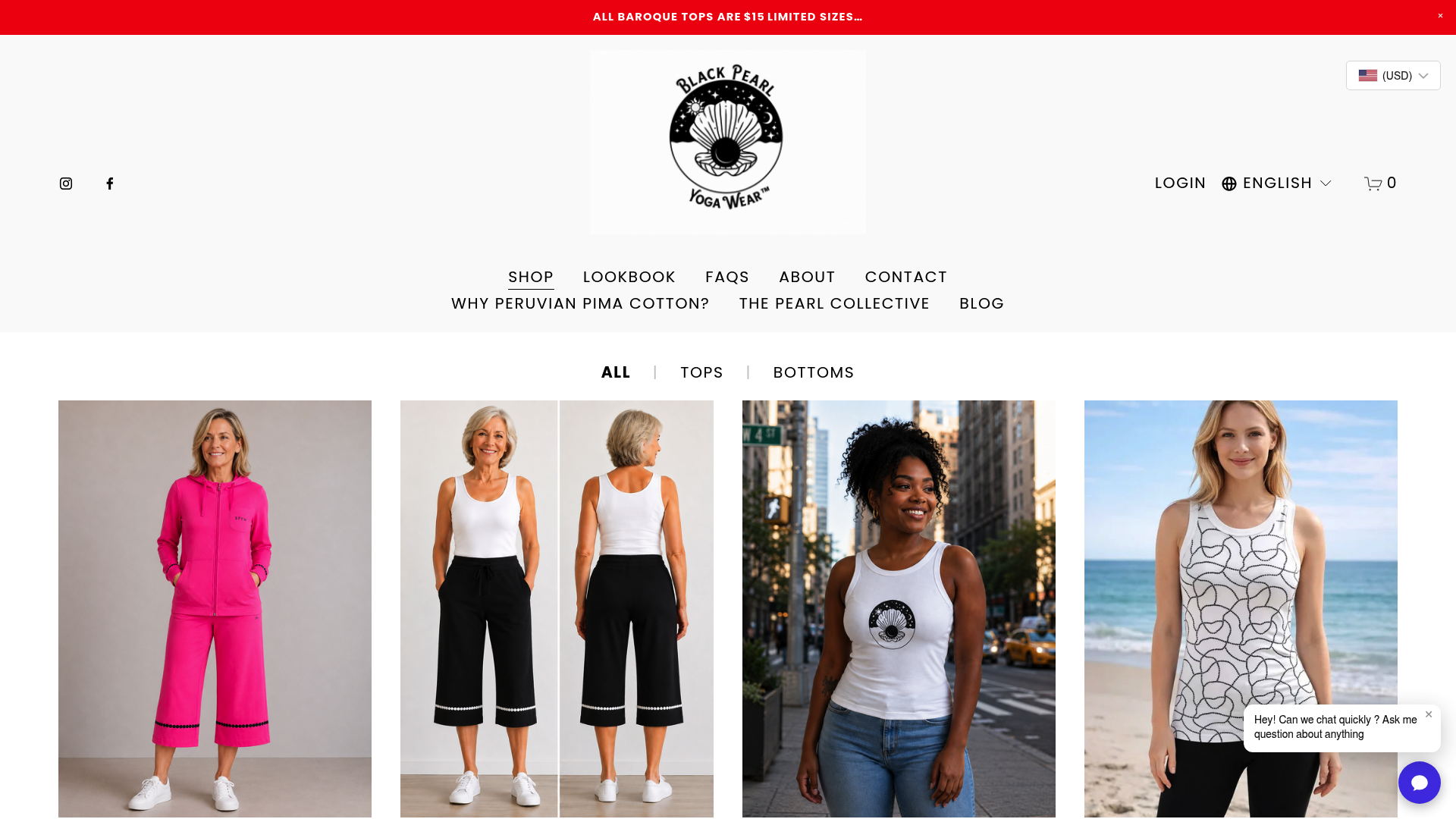
This matters more as size scales up. Larger panels mean more seam surface area and more strain at the joins, so plus-size activewear cannot rely on construction choices made for small samples. It also connects straight back to fiber. A luxury cotton sewn with lazy seams still gaps, twists, and wears out too soon. The finishing has to match the fiber.
What seam types actually hold up in stretch garments?
Not every seam should be built the same way. Stitch type gets chosen per zone based on fabric weight, placement, and purpose, which avoids overbuilding one area while leaving another weak.
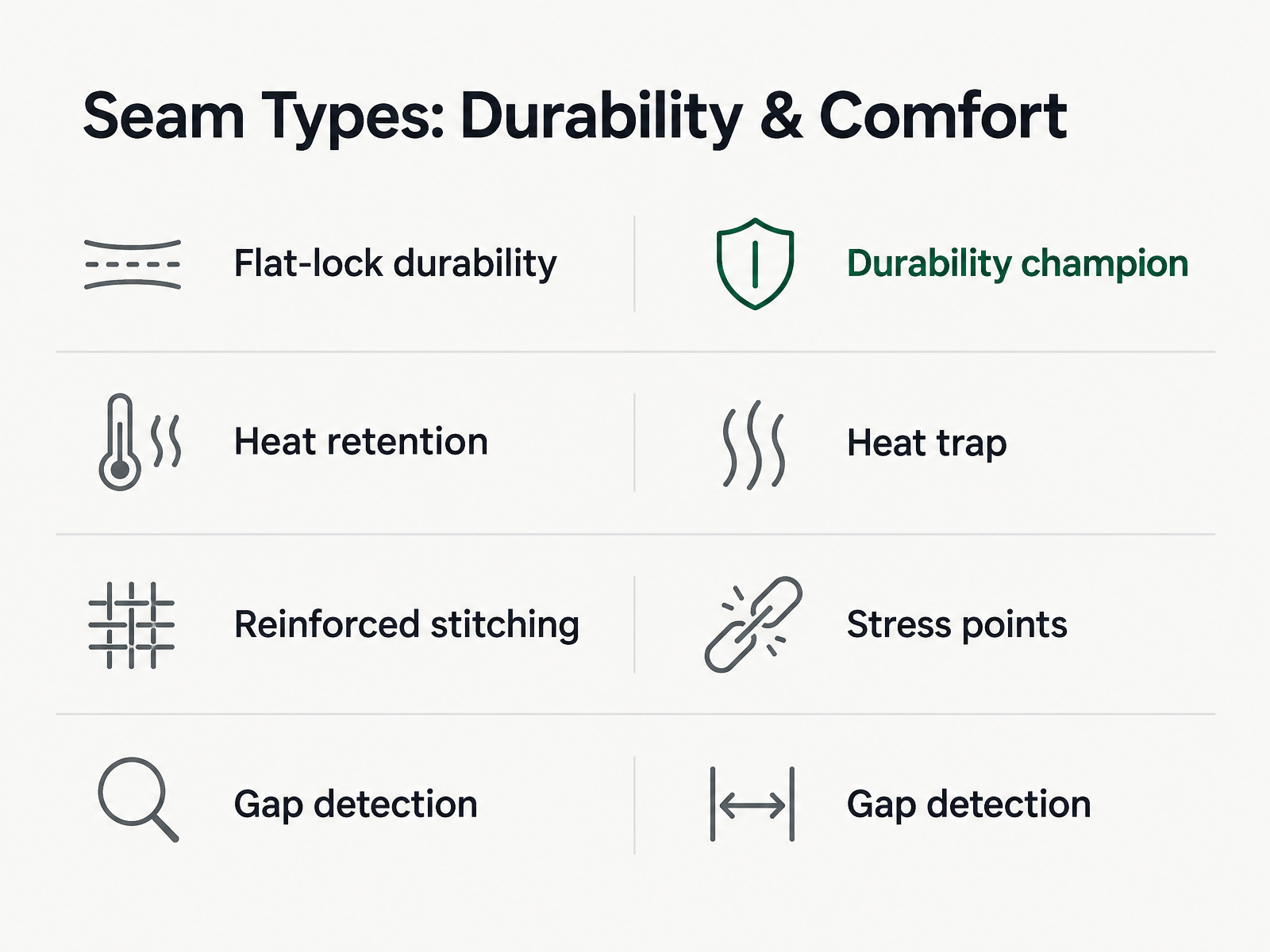
- Look for flat-lock seams in high-motion zones. This method joins panels edge-to-edge and spreads stress evenly, so shoulders, side panels, and leg seams recover their shape after wear and washing.
- Check for reinforced single-needle stitching at stress points. Crotch seams, pocket attachments, and structural joins need extra stability without killing the stretch around them.
- Feel the inside of the seam. Flat, smooth joins reduce friction and chafing, which counts when a seam sits against more skin through a longer workout.
There's a comfort tradeoff worth knowing. Flat-lock is excellent for strength and a low-profile feel, but seam construction can affect warmth as well as durability. Researchers have studied how seam construction changes the thermal properties of athletic bodywear, which means the seam you choose can shift how the garment feels during extended wear.
On larger garments those details are simply more noticeable. If you run hot or train hard, weigh seam smoothness against airflow, then pair this against the fabric check above. A naturally breathable fiber like Peruvian Pima can help offset the warmth heavier construction adds.
How can you judge seam quality by hand in a store?
You do not need a lab. Your fingers and eyes do most of the work.
- Stretch the seam sideways and watch for gaps. Quality stitching flexes with the fabric and springs back flat; puckering or thread strain signals early failure.
- Scan the stitch line for evenness. Consistent stitching without skipped spots holds under load better than sparse, uneven runs.
- Tug gently at the crotch and side seams. These take the most stress, and a brand that reinforces them is telling you it tested the garment where it counts.
Brands that treat seam placement as a tested decision, not an afterthought, tend to be the same ones that certify their fiber and stand behind their sourcing. Construction care and ethical care usually travel together.
Check #4 – Stretch Performance & Recovery
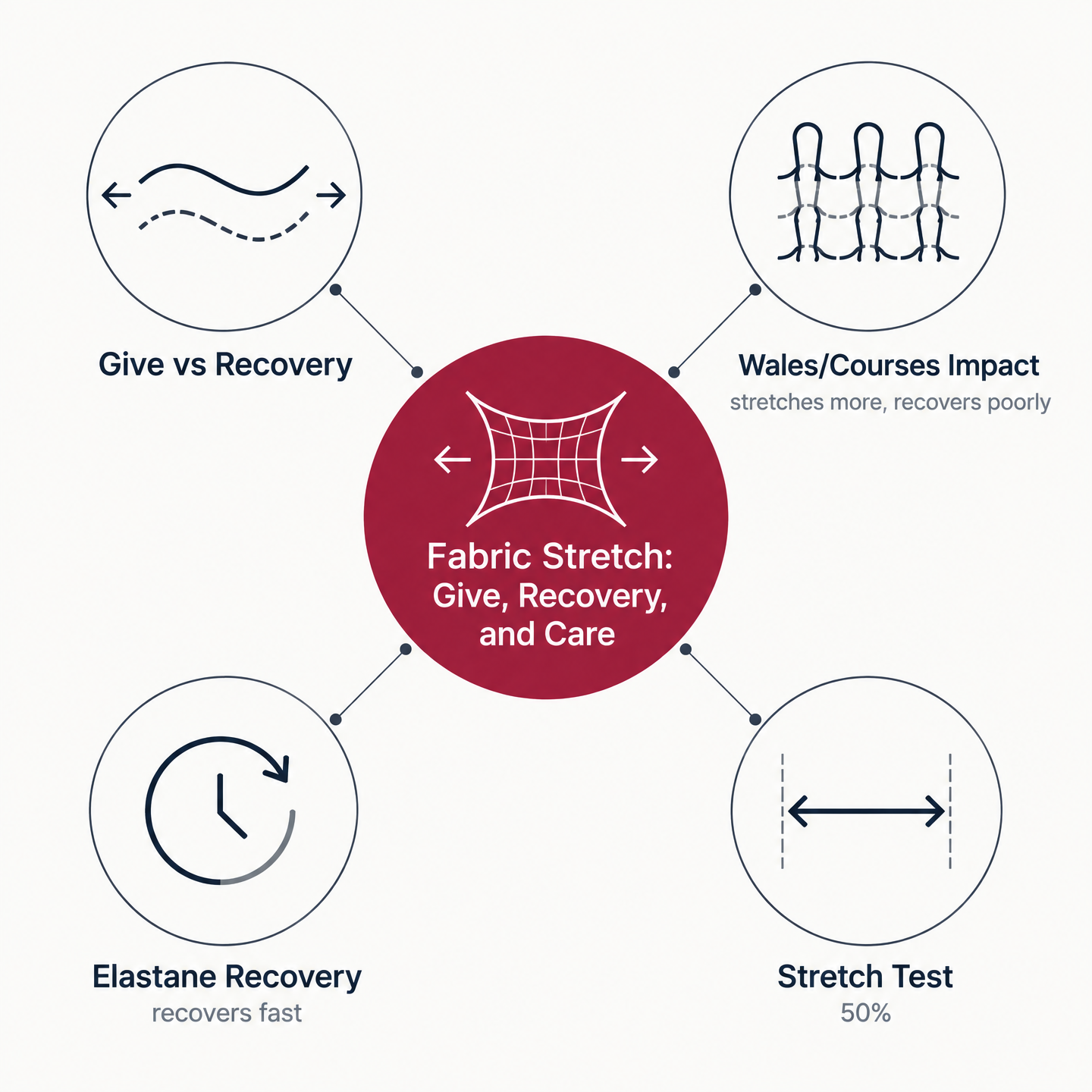
The most useful thing to understand about stretch: give and recovery are not the same trait. A study on rib knits found that fabric with fewer wales and courses stretches more easily but recovers poorly, so easy stretch and good recovery work against each other. For plus athleisure, that tension decides whether your leggings bounce back after a squat or bag out at the knee by lunchtime.
This is where the sourcing story meets the fit story. A pair can carry a proud ethical label and a luxurious Pima hand and still fail you if the knit and elastane balance is wrong. So we weigh stretch alongside the mission, not after it. A garment that helps the women who made it should also hold its shape on the woman wearing it.
How do you measure stretch and recovery at home?
No lab required. A simple pull test tells you most of what you need.
- Mark a 10cm span on the fabric, then stretch it against a ruler. If it reaches 15cm, that's 50% stretch in that direction, which tells you how much room a seam has before it strains.
- Test stretch both crosswise and lengthwise. Rib knits behave differently by direction, so a piece that stretches wide may resist stretching long.
- Release the fabric and watch it snap back. A slow return or a visible ripple is your early warning that recovery is weak.
- Run a squat test in the fitting room. If the waistband slides or the fabric sheers, it fails before it reaches your cart.
Why does elastane content matter more than you think?
The fiber-content label tells you more than softness. Reviewers who love organic cotton leggings still look for spandex, because the blend decides whether the garment returns to its original shape after pressure. A cotton-spandex blend borrows spring from elastane so the garment resets instead of sagging.
Treat elastane as insurance for fit, not just extra flexibility. The catch is that a cotton-rich piece still has a natural comfort profile, not a high-performance training profile. Premium Pima is a lifestyle-first fiber. We steer it toward yoga, walking, and daily wear, not sweat-soaked interval sessions where moisture retention works against you.
Girlfriend Collective's bike shorts, 79% recycled bottles and 21% spandex, keep their compression even after repeated washing. That label tells you why: the construction is designed around serious recovery.
How do you keep stretch from wearing out?
Care decides how long recovery lasts. Stretch fabrics with spandex need gentle cycles and low heat to protect their elasticity.
- Wash on a cool, gentle cycle to keep elastane fibers from breaking down early.
- Skip the dryer or use low heat, since heat wears out stretch over time.
- Rotate pieces instead of wearing one pair daily, giving the knit time to relax and rebound.
Do that, and a well-made Pima blend rewards you for years, with ethics and comfort intact.
Case Study – Black Pearl Yoga Wear's Approach to the Four Checks
When you're weighing athleisure on fabric, waistband, seams, and stretch, here's where we fit. The four checks give you a way to test any garment. They're also the same standards we hold ourselves to on every piece.
So our fabric decisions aren't a marketing badge. The long, smooth, hand-harvested fiber we use makes our clothing feel soft against the skin, breathe naturally, and hold up over time. We pair that quality with a mission of building community among women.
How Our Peruvian Pima Cotton Holds Up
Here's what the fabric brings to every piece we ship.
- The label matches the garment. What's printed is what you get: the exact material, tested against the fabric check, with no surprise blends hidden in the weave.
- Comfort you feel through movement. The extra-long, smooth fibers create a soft, luxurious feel, and the fabric breathes naturally so air circulates during workouts, yoga, and everyday wear.
- Durability built into the fiber. Longer fibers spin into smoother, stronger yarns, helping garments keep their look and comfort through repeated wear.
- Color that lasts. Smooth fibers are less likely to break and pill, and Pima takes color beautifully, so shades stay rich wash after wash.
The Mission Behind Every Piece
Comfort is only part of what we're about. Our mission is to help women feel confident in themselves, and to foster connection, support, and collective growth. By uplifting one another, we build a community where women thrive together. #weallcanwin.
That's the point of pairing feel with mission. You should not have to choose between a fabric that lasts and clothing that stands for something. Our pieces move easily from yoga and wellness into everyday life. Softness you can feel, quality you can keep.
Final Buying Checklist & Quick Decision Guide
Here's how the four checks come together into one call at the register. Score each check from 0 to 5, add them up, and let the total tell you whether a piece earns a place in your rotation. It turns a vague gut feeling into a number you can trust.
The scorecard keeps the ethical side honest too. A luxurious Pima hand and a proud sourcing label mean nothing if the waistband rolls or the seams give out. Weigh feel, fit, and mission together, and plus-size athleisure stops being a gamble.
How Do You Score Each Check?
| Check | Falls Short (0-1) | Meets Expectation (2-3) | Exceeds Expectation (4-5) |
|---|---|---|---|
| Fabric | Vague blend, no fiber named | Named fiber, decent hand | Certified long-staple cotton, soft and stated on label |
| Waistband | Rolls, thin elastic | Holds through bends | Wide, supportive, stays put in a squat |
| Seams | Puckered, single-stitch | Flat and even | Flatlock or coverstitch built for motion |
| Stretch | Bags out, poor recovery | Gives and returns | Strong four-way stretch with fast recovery |
Add it up. 16 and above is a keeper. 10 to 15 means try it on and inspect twice. Below 10, put it back.
What Are the Red Flags?
Some signs tell you to walk away before you reach the fitting room. These are the ones we watch for.
- No fiber content on the label. A brand that won't name what's in the fabric usually won't stand behind the quality either.
- A waistband that rolls when you fold it. Thin elastic fails first, and it fails fast on larger panels.
- Puckered or single-stitched seams. These pop under the stress of a real workout.
- Fabric that stays stretched after you pull it. Poor recovery means saggy knees by lunchtime.
- Certification claims with no detail. A vague ethical badge and no fiber story is marketing, not sourcing.
Bring a small ruler to measure waistband width, and use the pinch-and-pull test on the fabric. Two minutes of checking saves you months of regret.
References
[1] The Best Plus-Size Workout Clothes, Tested by a Plus-Size Editor - https://www.prevention.com/fitness/workout-clothes-gear/g64906584/plus-size-womens-workout-clothing/
[2] 10 Best Organic Cotton Leggings For Women (Reviewed) - The Good Trade - https://www.thegoodtrade.com/features/organic-cotton-leggings/
[3] The Ultimate Guide to Leggings (Part 1): Start Here - Barbell Logic - https://barbell-logic.com/guide-to-leggings-part-1/
[4] A guide to activewear fabrics - Seamwork - https://www.seamwork.com/fabric-guides/a-guide-to-activewear-fabrics?srsltid=AU7gw4WblKxOFx0Q0DMcAYlXFIhlFTSZ3mvQyWsH2-vJH8MJVvev9YZX
[5] Best Fabrics for Comfort and Fit in Plus-Size Clothing - https://thecurvyfashionista.com/best-fabrics-for-comfort-and-fit-in-plus-size-clothing/
[6] (PDF) Investigation of Stretch and Recovery Property of Weft Knitted ... - https://www.researchgate.net/publication/320253397_Investigation_of_Stretch_and_Recovery_Property_of_Weft_Knitted_Regular_Rib_Fabric
[7] Impact of seam types on thermal properties of athletic bodywear - https://www.researchgate.net/publication/303796932_Impact_of_seam_types_on_thermal_properties_of_athletic_bodywear
[8] Understanding Garment Sewing Methods Used in Athletic and ... - https://www.leftyproductionco.com/post/understanding-garment-sewing-methods-used-in-athletic-and-stretch-apparel
Common Questions
Can I wear pure Peruvian Pima cotton for high-intensity workouts?
You can, but it is not where pure Pima performs best. Save it for yoga, walking, travel, errands, lounging, and other low-impact days when softness and breathability matter more than fast drying. For hard training, choose a performance fabric built around sweat management.
Why do my synthetic leggings smell after a few workouts when cotton pieces don't?
Synthetic performance fabrics are good at moving moisture, but they can also hold onto body oils. That is why a pair may still smell clean out of the wash but turn stale quickly once warmed up. Cotton-rich pieces feel different because the priority is natural comfort rather than technical wicking.
What waistband setup actually stops rolling on a post-partum midsection?
Look for a waistband that combines recovery with the right rise for your torso. In practice, that means checking the fiber content and then testing the band while you sit, bend, and squat. If it folds, digs, or slides in the fitting room, it will not improve after a full day of wear.
Do flat-lock seams make a garment feel warmer?
They can, depending on fabric, placement, and how much seam coverage the garment has. The best way to judge is to feel both the inside seam profile and the fabric weight together. Smooth seams help reduce chafing, but warmer-running shoppers should also pay attention to breathability.
Aren't stretch and recovery just the same thing?
No. Stretch is how far the fabric moves; recovery is how well it returns afterward. A garment can feel easy to pull on and still lose its shape after wear, which is why the release part of the pull test matters as much as the stretch itself.
How do I keep my leggings from bagging out over time?
Treat stretch fibers gently. Wash fitted pieces on a cool, gentle cycle, avoid heat when drying, and rotate your favorites so one pair is not doing all the work. Good recovery starts with the fabric blend, but care determines how long it lasts.