Why Peruvian Pima Cotton Outperforms Synthetic Fabrics in Hot-Weather Workouts
September 16, 2026
The quick facts first:
- Peruvian Pima cotton cools by evaporation. It can keep pulling heat off your body as long as you keep sweating. Polyester wicks, but high humidity can slow that process.
- Long-staple Pima fibers are often hand-harvested; some brands describe sourcing from regenerative, women-led farms in northern Peru's warm coastal valleys. Polyester comes from petroleum and can shed microplastics in the wash.
- Synthetic gear generally dries far faster and packs down smaller. The trade-off can be odor retention and, on long sessions, chafing at underarms or waistbands.
- Pima cotton tends to stay smooth against wet skin and resist odor. Polyester can pill over time and can feel slick or clingy.
The 90-second comparison
If your sessions run hot and long, I'd pick Pima. If you need a shirt dry by the next workout, synthetic is the more practical choice. The bigger difference is where each fiber starts: farm soil or a petrochemical plant.
Sourcing can shape how these fabrics behave. Peruvian Pima is often grown in coastal river valleys and may be hand-harvested; some sources describe it as processed into lightweight knits without synthetic chemical coatings. That's a different supply chain from polyester, which starts with fossil fuel feedstocks.
What the head-to-head actually shows
Both fabrics are light. The way they handle sweat is not the same.
| Factor | Peruvian Pima Cotton | Synthetic (polyester/nylon) |
|---|---|---|
| Breathability | High, natural air flow | Varies by weave |
| Softness next to skin | Very soft, long-staple fiber | Can feel slick or clingy |
| Drying speed | Slower | Fast |
| Odor over time | Resists buildup | Traps odor more readily |
| Durability | Strong, low pilling | Strong, but pills over time |
| Sourcing story | Some Pima is marketed as regenerative, women-led Peruvian farms | Petroleum-based |
| Best for | Yoga, warm casual wear, hot studios | High-intensity, quick-dry needs |
What you're paying for at each price point
Pricing in this category often tracks fiber grade and spinning, not just logo markup. Hand harvesting is said to preserve the long staple strands that machine stripping would break, so Pima can cost more and may hold up longer across repeated wear.
Synthetic is the right call when quick turnaround between workouts is the main requirement. For studio classes, warm outdoor walks, and steady low-impact training, Pima can be a reasonable option for longer lower-intensity heat exposure and may survive repeated washing without breaking down.
Why this isn't a simple natural vs. synthetic debate
Most buying guides frame this as a binary: cotton saturates, synthetics wick. That can miss what happens under full sweat load in different climates.
Pima's fiber length is one practical advantage. These cottons are often grown in warm, consistent climates, and long uniform strands can be spun into fine, lightweight yarns. Polyester generally moves surface sweat well, but it is still tied to fossil fuel refining and resin processing.
What should you weigh before buying?
Check your training environment before you check fabric weight.
In humid conditions, the air already holds a lot of moisture, so evaporative cooling from cotton may have an advantage over quick-drying synthetics. In dry climates or when you're traveling through multiple workouts, synthetic gear tends to line-dry faster and pack tighter.
Then look at how the raw fiber was handled. Manual picking is often described as avoiding fiber fractures that industrial stripping can cause; that may show up later as better yarn uniformity and fewer weak points.
| Selection factor | Peruvian Pima cotton | Synthetic performance fabric |
|---|---|---|
| Best for | Humid heat, sensitive skin, longer low-to-moderate sessions | Fast-dry needs, packability, high-sweat intervals |
| Feel on skin | Soft, cooling, low odor | Slick, quick-drying, can hold odor |
| Fiber source | May be certified Peruvian Pima cotton | Petroleum-based, can shed microplastics |
| Skip it when | You need a shirt bone-dry in 10 minutes | You want a natural fiber and a traceable source |
Who should actually buy the Pima version
This is the group I'd put in Pima: mat work, mobility sessions, endurance walking, hot room training. Cotton can hold a thin layer of moisture inside the yarn and release heat gradually, so it may provide evaporative cooling without static cling or friction points.
Synthetic pieces fit athletes who need gear to dry during short rest windows, often on outdoor tracks or during travel. That's a specific job, and it's not the same job Pima is doing.
The four features that actually separate them
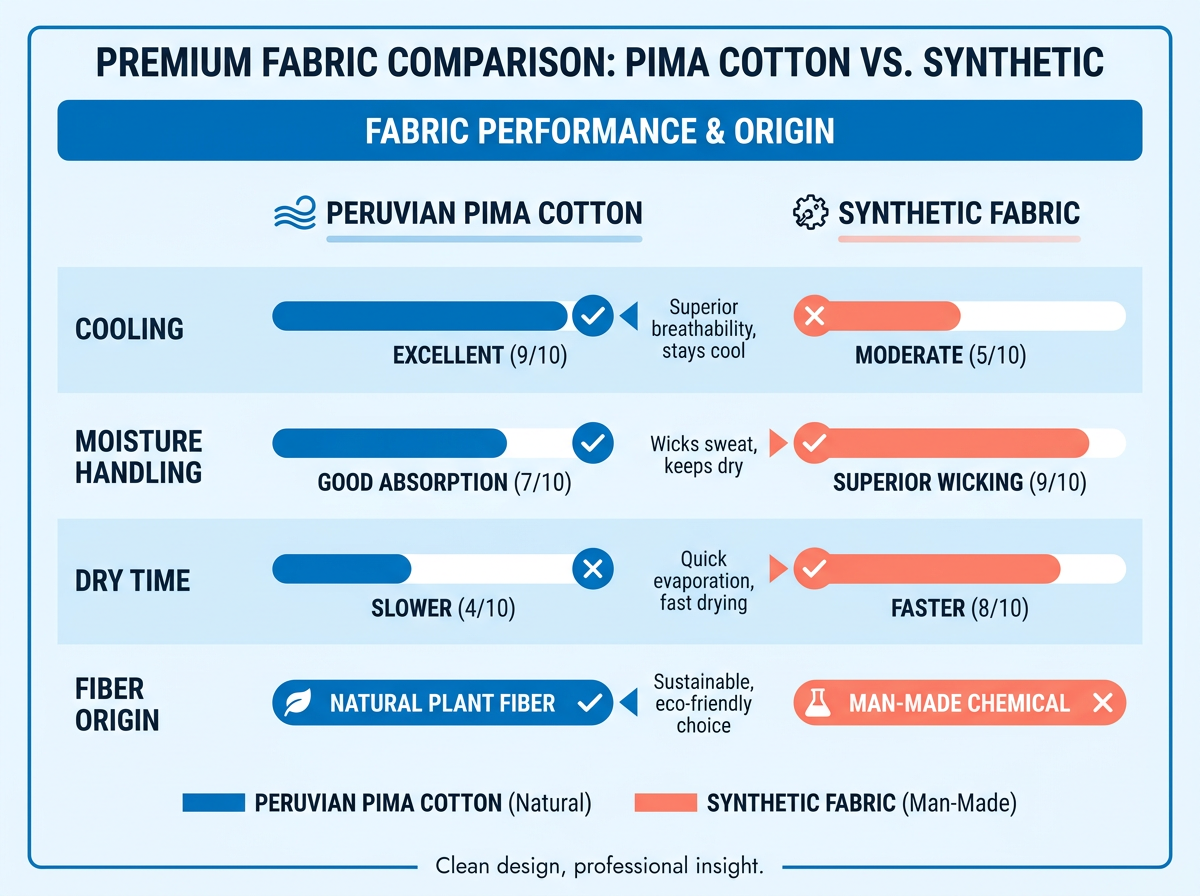
When I compare these fabrics in real heat, four things matter: heat regulation, moisture transport, dry time, and where the raw material comes from.
Pima tends to absorb moisture and lets evaporation carry heat away. Polyester often spreads moisture across the surface and depends on airflow. That works until the air is saturated and evaporation can stall.
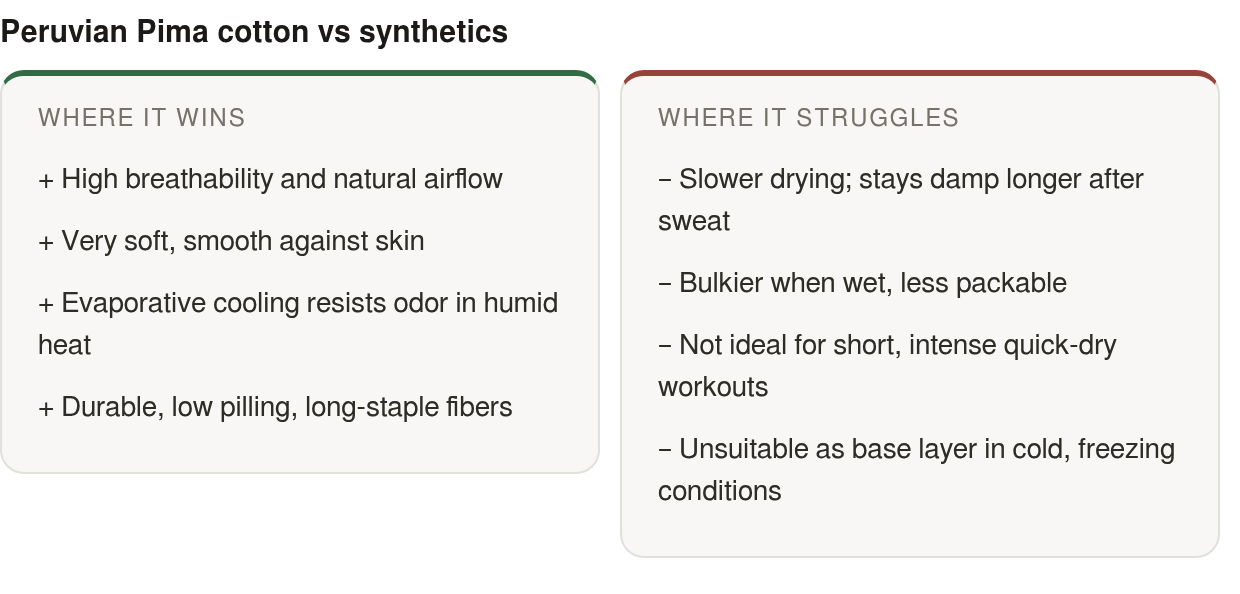
Where each fabric actually wins
Thermal regulation is a key gap. Cotton can work like an evaporative sink during steady sweating. Polyester may level off when humidity prevents the garment surface from drying.
Next is feel. Extra-long staple cotton tends to stay smooth against flushed skin. Polymer filaments can chafe in high-friction zones like the shoulders or ribcage during repetitive motion.
Synthetic wins on dry speed and packability. A polyester blend often releases moisture fast and flattens down in a crowded bag, which is why it shows up in minimalist travel kits.
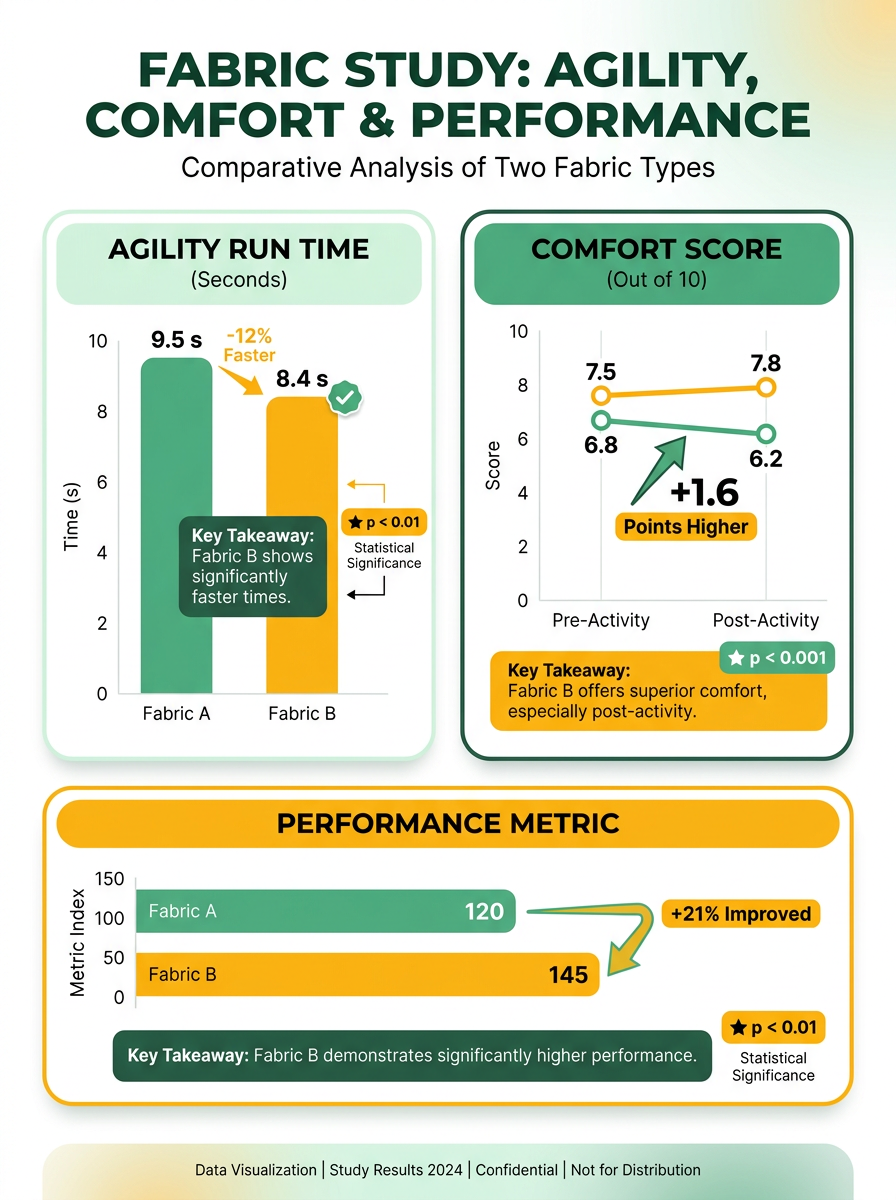
One 2014 study led by David Hooper and colleagues compared synthetic and cotton garments in agility and fitness testing; synthetic scored higher on comfort and was reported to improve performance in women during short maximum-effort testing [3]. That supports the narrow use case for synthetics: brief, hard efforts.
Cotton's case often rests on what happens over hours. Open natural fibers may exchange air more readily than dense synthetic yarns.
The feature synthetics can never list
Polyester begins as extruded polymer resin from fossil feedstocks. It resists biodegradation and can shed microfibers into the water system during normal laundering.
Pima starts as a plant. It can break down at the end of its life. Some Peruvian Pima sourcing is marketed as regenerative and as supporting local farming collectives. That's not a performance feature on a spec sheet, but it can be part of what you're paying for.
Under load, the differences get sharper
Short, violent efforts often favor synthetics. When sweat comes on fast, synthetic mesh can push it to the outer surface and keep the shirt from turning heavy.
Pima may do better over longer sessions. Its long staple fibers can be spun into dense strands that resist fraying and fuzz. An open knit structure may let air move through.
Which fabric scales to your real week
A real training week involves multiple sessions and laundry cycles. That's where odor and longevity start to matter as much as dry time.
| Metric | Peruvian Pima Cotton | Synthetic (Polyester) | Black Pearl Pima |
|---|---|---|---|
| Short-burst comfort | Good | Higher in some studies | Good, soft feel |
| Sustained-heat cooling | Strong | Moderate | Strong |
| Odor over repeat wear | Low | Builds up | Low |
| Dry speed | Slower | Fast | Slower |
| Resource footprint | Plant-grown fiber | Petroleum-based | Low-impact fiber claim |
Polyester's shortcoming is what can happen after repeated wear. Synthetic fabrics may trap odor and gradually shed microfibers in the wash. Pima's cellulose structure may resist odor retention and can hold up across years of use.
When should you skip Pima?
Skip Pima for high-intensity track intervals in dry climates. Those sessions produce fast surface sweat, and synthetic wicking often matches that demand better.
For studio practice, hot-weather walking, and daily rotation, Pima may give you steadier comfort and less skin irritation.
The real trade-offs
Every fabric has a weak spot. The decision gets easier when you match the weak spots to your actual workout calendar.
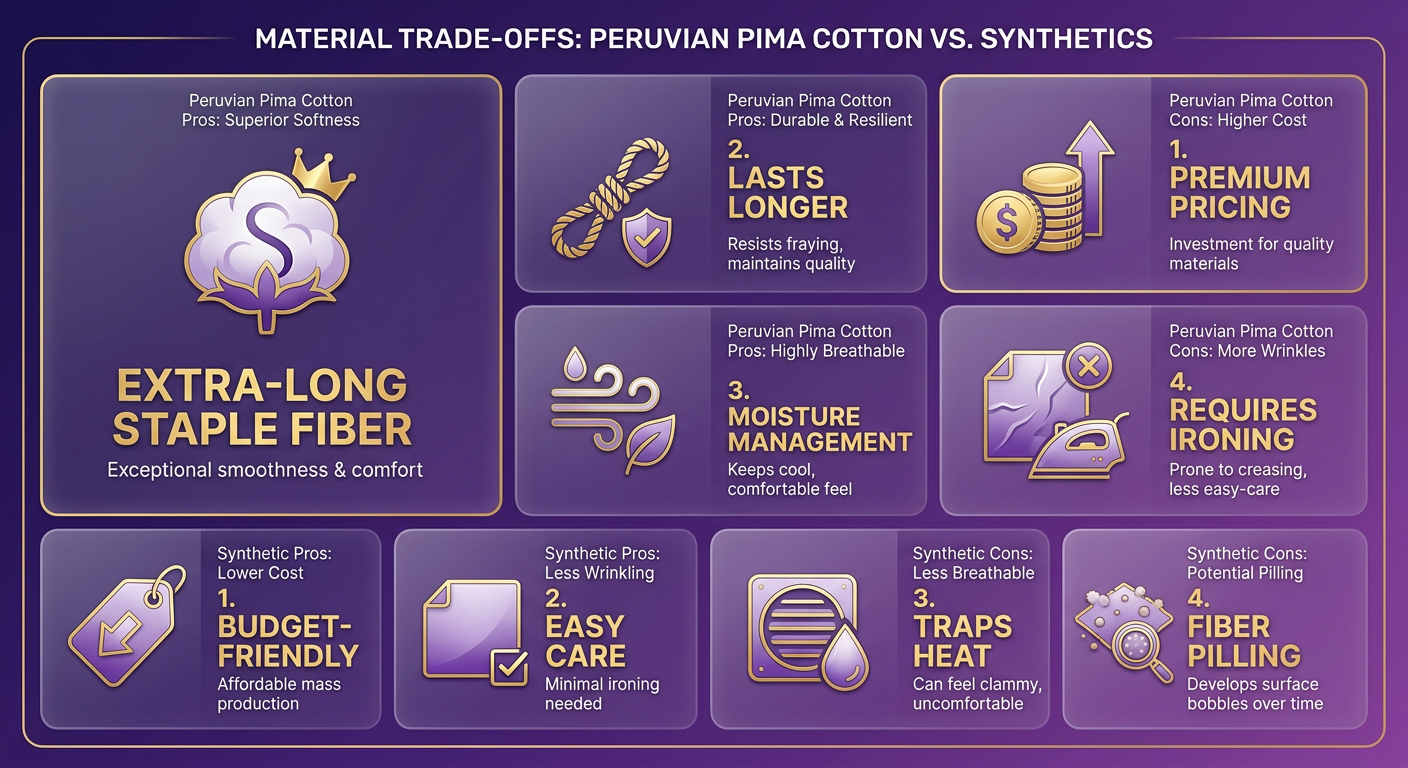
Pima's advantage can be steady evaporative cooling and soft skin contact. Its limitation is it can stay damp longer after you stop moving.
Where each fabric falls short
| Factor | Peruvian Pima Cotton | Synthetic (Polyester) |
|---|---|---|
| Hot-weather cooling | Strong, evaporative | Moderate |
| Dry time | Slower | Fast |
| Packability | Bulkier when wet | Light and compact |
| Odor over time | Resists buildup | Traps odor sooner |
| Environmental footprint | Plant-based; some Pima programs are regenerative | Petroleum-based |
| Who grows it | Some Peruvian Pima programs are women-led | Industrial petrochemical supply |
Agricultural traceability matters to a section of shoppers because synthetic production is tied to industrial refining, while some regenerative Pima farming programs in Peru are marketed as supporting topsoil health, reducing chemical inputs, and paying local farm groups. Those sourcing claims should be verified with the brand.
When should you skip cotton?
Don't wear cotton as a base layer in freezing weather or high alpine conditions. Saturated plant fibers can pull heat away from the body and become a hypothermia risk under a shell.
In warm environments and heated studios, Pima can be a better default for skin comfort and a cleaner sourcing trail.
How to pick for the workout you actually do
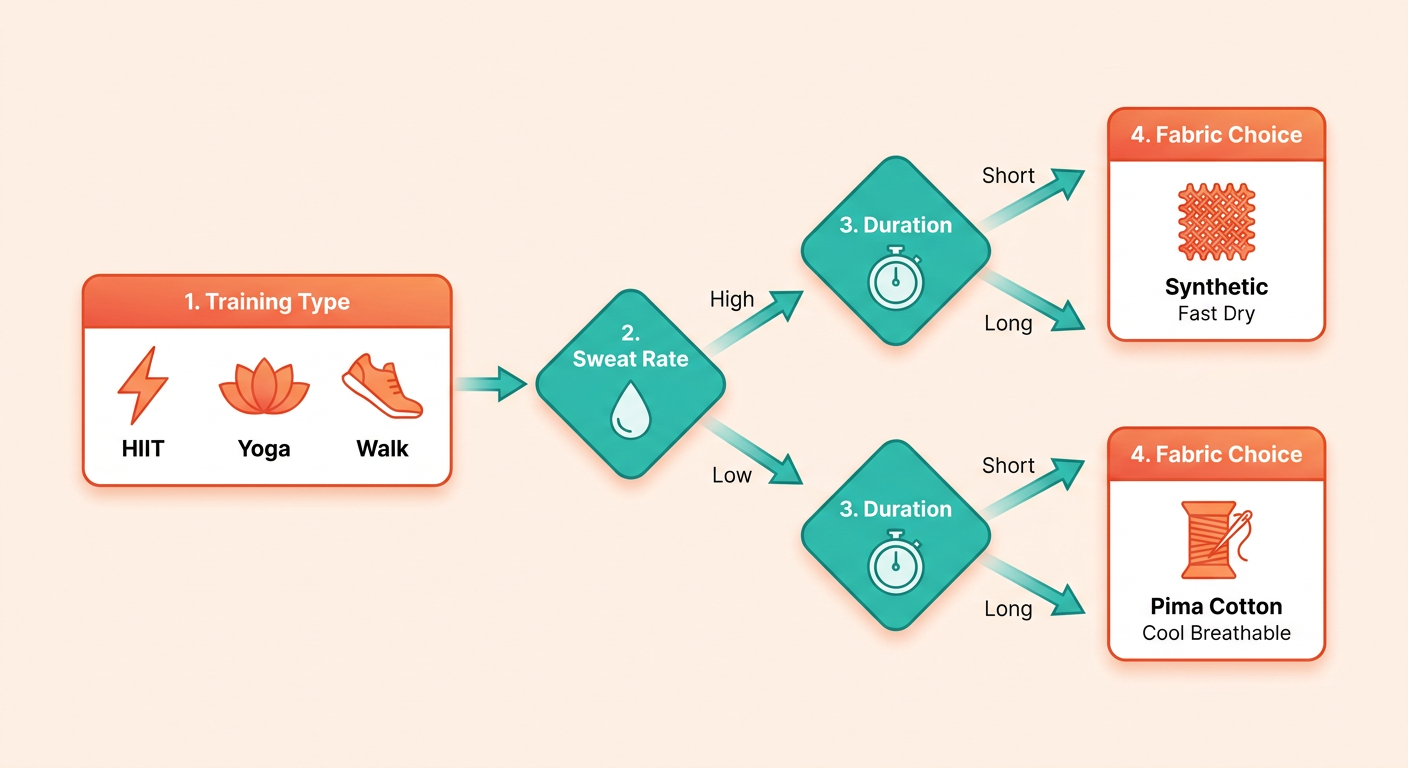
The right fabric depends on the workout profile, not the brand story. Explosive conditioning tends to favor quick-drying polyester. Yoga, walking, and long warm-weather sessions favor soft, breathable cotton knits.
For extended training in heat, long-staple Pima can give you consistent airflow and less fabric cling during deep ranges of motion.
Which fabric fits your workout?
| Scenario | Better pick | Why |
|---|---|---|
| Sprint intervals, agility drills | Synthetic | Faster dry time under short, intense sweat |
| Hot yoga, Pilates, long walks | Peruvian Pima | Steady evaporative cooling, soft over hours |
| Humid-climate everyday wear | Peruvian Pima | Breathes as humidity climbs, may feel less clammy |
| Travel where packability rules | Synthetic | Lighter and quicker to dry in a bag |
| Buying with long-wear quality in mind | Black Pearl Pima | Brand describes certified Peruvian Pima and durability |
Most people don't train in one mode. You might do interval work Tuesday and a long walk Saturday, which means both fabrics can earn a place in the drawer.
Who benefits most from Peruvian Pima?
If your skin gets irritated in heat, or you train in a humid climate, Pima may be a good first pick. You're choosing smooth tactile feel over rapid moisture shedding.
Long-staple cotton can also hold its tensile strength through repeated washing, so the pieces may transition well from studio sessions to daily wear.
Reserve synthetic for explosive track work. For all-day hot-weather comfort, Pima is often the more comfortable tool.
Your next move: match fabric to sweat rate
The right call depends on how your workout produces sweat. For short, maximum-effort sessions, synthetic shirts often shed water quickly and pack cleanly.
For sustained heat, studio flows, and warm outdoor sessions, lightweight Pima cotton can be a reasonable option for longer lower-intensity heat exposure and may give you a cleaner material source. Some Peruvian Pima is grown in sunny northern Peruvian valleys and harvested by hand to keep the fiber aligned.
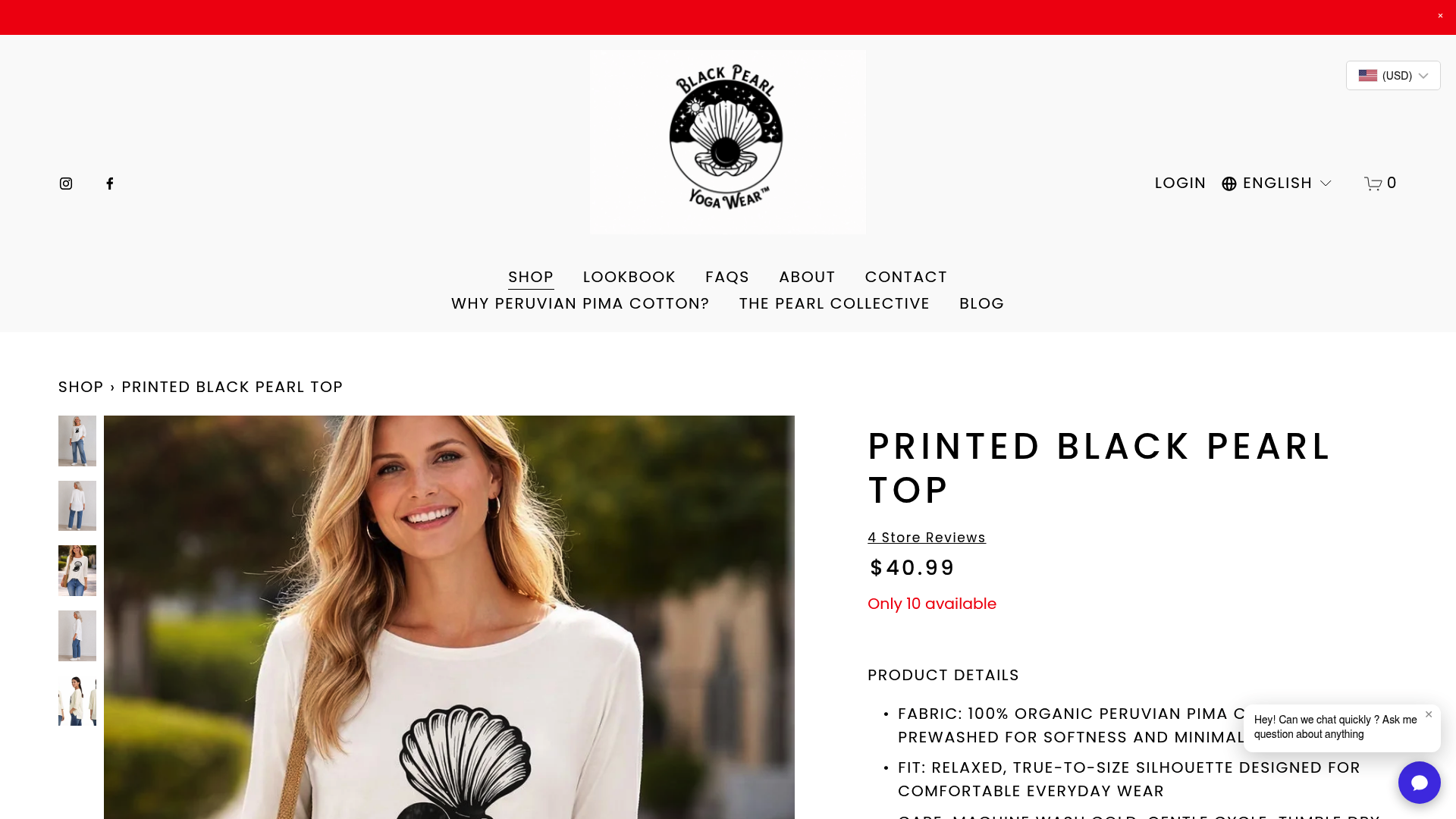
Making the call by training type
| Your situation | Our pick |
|---|---|
| Sprint intervals, agility drills | Synthetic |
| Hot yoga, Pilates, long warm-weather walks | Peruvian Pima |
| You want cooling plus lasting, durable comfort | Black Pearl Pima |
| You hate a damp waistband afterward | Synthetic |
| Soft, next-to-skin comfort for hours | Peruvian Pima |
Let your training schedule dictate the fabric. When fast dry time is non-negotiable, synthetic gear does exactly what it should.
What the fiber source changes
Where the raw material begins can influence durability and environmental impact. Synthetic knits generally trace back to refined crude polymers. Pima relies on botanical fibers that may be harvested with minimal mechanical stress.
In practice, that can mean smoother skin contact, less odor over time, and a garment that lasts through repeated wear.
Match the shirt to your sweat rate and climate. If your warm-weather sessions run long, the Pima pieces in the collection are the ones I'd start with.
References
[1] Synthetic Fabrics vs. Natural Fibers for Preventing Heat Stress - LHSFNA - https://lhsfna.org/synthetic-fabrics-vs-natural-fibers-for-preventing-heat-stress/
[2] The best fabric for extreme heat? It's more complicated than you think - https://www.ap.org/news-highlights/spotlights/2026/the-best-fabric-for-extreme-heat-its-more-complicated-than-you-think/
[3] Synthetic Garments Enhance Comfort, Thermoregulatory ... - https://www.researchgate.net/publication/269175374_Synthetic_Garments_Enhance_Comfort_Thermoregulatory_Response_and_Athletic_Performance_Compared_With_Traditional_Cotton_Garments
[4] Effect of Clothing Fabric on 20-km Cycling Performance in Endurance ... - https://www.researchgate.net/publication/357656310_Effect_of_Clothing_Fabric_on_20-km_Cycling_Performance_in_Endurance_Athletes
Frequently Asked Questions
1. Can I wear Peruvian Pima cotton for cold-weather workouts too?
Pima cotton is not recommended as an active base layer in cold climates. When cotton absorbs sweat in low temperatures, it can hold moisture against the skin and may accelerate cooling, elevating the risk of chills beneath protective outerwear.
2. Why does Pima cotton cost more than a standard cotton or polyester tee?
The premium cost often stems from selective hand harvesting and longer staple fiber lengths. Manual picking is said to keep strands unbroken and free from plant debris, which can produce a durable, high-tensile yarn and may lower cost-per-wear over time.
3. Does polyester actually perform better than cotton in studies?
Some controlled laboratory trials have reported that polyester enhances comfort and movement efficiency during brief, high-intensity anaerobic tests. The material can transfer surface sweat rapidly in controlled airflow environments, giving it an advantage during short sprint testing [3].
4. Why does cotton feel clammy less than synthetics in humid air?
Cotton can absorb perspiration into its fibers, which may allow more gradual heat dissipation through evaporation. Synthetic filaments generally do not absorb water internally, so moisture may remain on fabric surfaces and feel slick or trapped when humid air prevents drying.
5. How long do Pima cotton garments hold up before showing wear?
Thanks to longer-staple fiber architecture, premium Pima is often described as resisting surface abrasion, thread breakage, and fuzzing through repeated washing. With standard gentle laundering, the fabric may relax and develop a softer drape while maintaining its structural fit.
6. What makes the sourcing of Pima different from synthetic fabric?
Some Peruvian Pima is marketed as cultivated in fertile river valleys using regenerative agronomy intended to protect soil health and support local farming communities. In contrast, synthetic textiles are generally manufactured from non-renewable petrochemical polymers.
7. Should I own both fabric types instead of choosing one?
Maintaining both fabrics can create a versatile activewear system. Technical synthetics may handle high-cadence interval sessions and rainy outdoor runs, while breathable Pima cotton can serve hot yoga, Pilates, resistance training, and warm-weather lifestyle wear.
8. What happens to each fabric at the end of its life?
Because it is a plant-based fiber, untreated Pima cotton can biodegrade under active composting conditions. Synthetic polyester garments may persist in landfills and can shed synthetic microfibers during washing.