Why Pima Cotton Moves Air Better Than Most Fabrics Marketed as Breathable
September 15, 2026
Key Takeaways
- Peruvian Pima's extra-long staple gives it the highest air permeability of common summer fabrics.
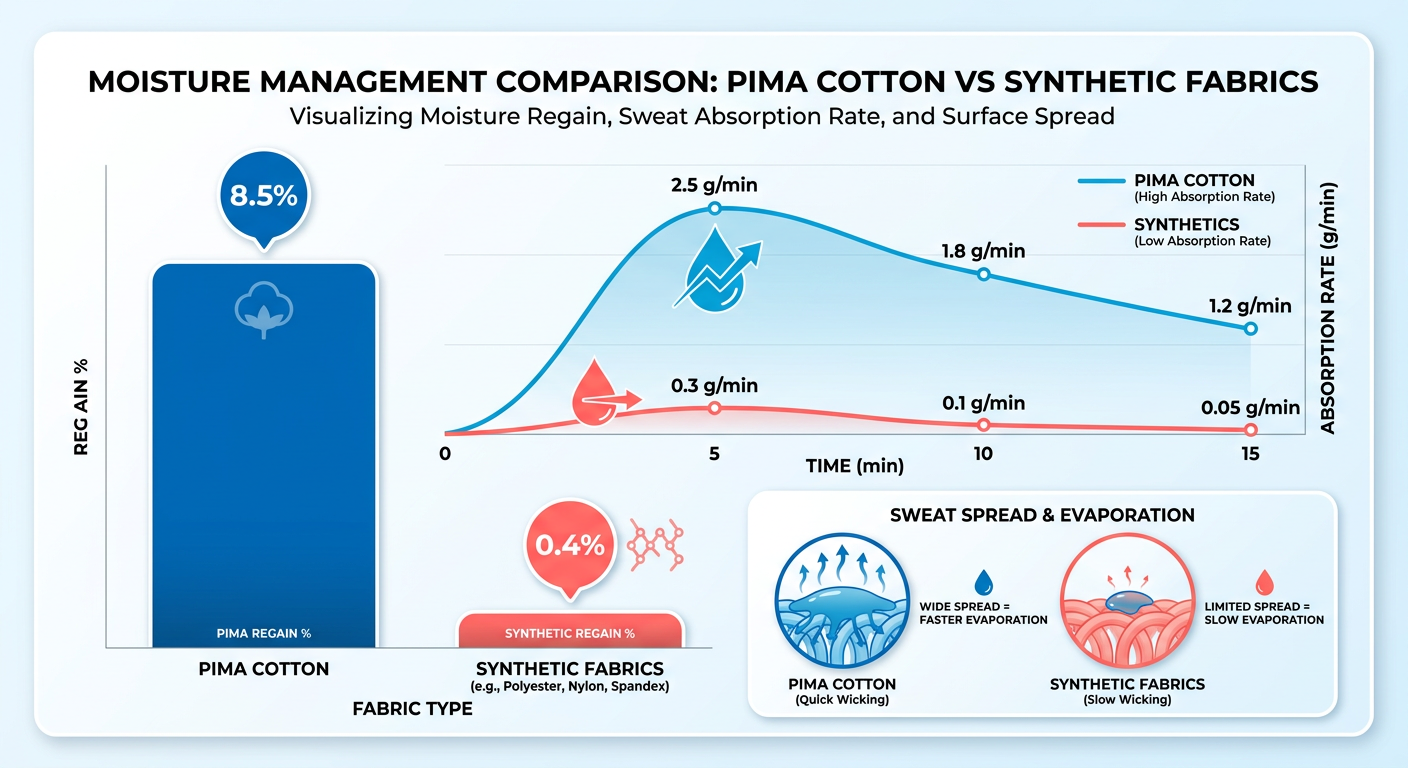
- Pima absorbs 7–8.5% of its weight in moisture, wicks sweat well, and holds little heat.
- Conventional Upland cotton runs around 159 cc/s/cm² for airflow.
- It pills faster, and pilling closes the weave over time.
- Polyester microfiber absorbs only about 0.4% moisture and hits roughly 140 cc/s/cm² at the same fabric weight.
- It does dry fast, though.
- Pima loses to synthetics on drying speed once soaked.
- Its edge is biggest during stop-start sweat sessions.
- Low pilling keeps Pima's weave open through wash after wash.
- It stays breathable longer than short-staple cottons.
- Lighter knits widen Pima's airflow lead.
- Garment weight matters as much as the fiber itself.
Quick Summary
The most breathable fabric for summer isn't always the one labeled breathable. Lab data puts extra-long staple cotton ahead of most synthetics on raw airflow, and Pima leads the cotton pack. But airflow is only half the story in a heated studio. Fabric saturates fast, and drying speed starts to count.
Pima wins on air permeability and moisture absorption. It dries slower once fully soaked. How light the knit is decides whether that trade works during class.
How these fabrics stack up on breathability
Here are the core breathability numbers in one view. Cells marked "-" aren't reported anywhere we could source without guessing, so we left them blank rather than invent them.
| Fabric Type | Fiber Staple | Air Permeability | Moisture Behavior | Wash-Retention of Breathability | Best Use-Case |
|---|---|---|---|---|---|
| ⭐ Peruvian Pima Cotton (our line) | Extra-long staple | Highest among these; ~200–300 thread count builds (Sewport profile) | Absorbs 7–8.5% moisture; high wicking, low heat retention | Holds up; low pilling keeps weave open longer | Hot yoga, warm-climate athleisure |
| Conventional (Upland) Cotton | Short-to-medium | ~159 cc/s/cm² woven (NatuClothes lab data) | Similar absorption, pills faster | Drops as pilling closes the weave | Casual everyday wear |
| Polyester Microfiber | Synthetic filament | ~140 cc/s/cm² at equal GSM | Absorbs ~0.4%; dries fast | Can degrade with heat/wash cycles | High-cardio, humid sweat |
| Nylon Mesh | Synthetic filament | Very high (open structure) | Low absorption, fast dry | Structure-dependent | Vented panels, linings |
| Bamboo Viscose | Regenerated fiber | Moderate | High absorption, soft | Low-intensity lounge | |
| Cotton-Spandex Hybrid | Blended | Lower (denser knit) | Moderate absorption | Compression, stretch fit |
Why Pima beats the synthetics that market themselves as "breathable"
Pima's edge comes down to fiber length and yarn fineness. Finer yarns build a more porous knit, and more porosity means more airflow, which is what research on single jersey fabrics shows.
Dry airflow and saturated drying speed are two different things, though. Numi's fabric analysis points out that Pima dries slower than synthetics and calls it a poor pick for sustained high-intensity sweat. That reads like a contradiction with the more upbeat textile guides. Both are right.
Airflow and evaporative drying answer different questions. Pima wins on air permeability and absorption capacity, and only gives up ground once the fibers swell at full saturation. Hot yoga is intermittent movement, not a non-stop sprint, so the high absorbency buffers sweat spikes while the open knit keeps the air moving.
Key Takeaways
- Pima leads on airflow among natural fibers, because long fibers spin into finer, more porous yarns.
- Weight is the real lever. Fabric weight and weave density move airflow more than fiber alone. For heat, go low GSM.
- Skip Pima for continuous high-cardio, where evaporative speed is what counts. Synthetics win when sweat outruns saturation.
- Durability protects breathability. Pilling resistance keeps the pores open through the laundry, where short-staple cottons mat over time.
Why airflow, not the label, decides how hot you get
Airflow through fabric decides how hot you get on the mat. When air moves freely through the knit, it carries heat and moisture vapor away from your skin, and your body regulates temperature the way it's supposed to. In a heated studio that's running past 95 degrees while you're actively sweating, the fabric choice stops being cosmetic.
The gap between airflow and drying speed is what explains Pima here. Synthetics dry faster once they're drenched, sure. But Pima's air permeability and its early absorption capacity build a comfortable microclimate while your effort rises and falls.
Why airflow beats "marketed as breathable"
Air permeability is the base metric for breathability. Pima runs on extra-long staple fibers over 1.4 inches long, as Fibre2Fashion explains. Those long strands spin into finer, stronger yarns that knit into an airier fabric without giving up structure.
Because the yarns are fine, they leave open, porous space, and air moves through the grid easily. That structure keeps heat retention low, and that's what heads off the trapped-heat feeling you get in cheap synthetic activewear.
How it holds up once you actually sweat
Pima ventilates well right up until the fabric hits full saturation, and that's when the swelling fibers start closing off the air passages. Staying under that threshold is the whole game for comfort during a class. Cotton fibers absorb moisture before they feel wet, so short sweat bursts get pulled inward while the dry-state ventilation keeps running between movements.
The guides disagree on this point. Numi warns Pima is slower to dry, while the textile registries flag its high breathability rating. Both hold up once you account for cadence: yoga's stop-and-start flow lets cotton absorb during the hard poses and vent during the holds.
For continuous, heavy cardio, distance running, rowing intervals, synthetic mesh handles the steady liquid volume better. Pima's strength stays in moderate, absorption-driven studio work.
The lever nobody talks about: garment weight
Fiber is only part of the equation. Garment weight is the main control on breathability. A lighter knit moves far more air than a heavy one cut from the exact same raw material.
| Factor | Effect on hot-yoga breathability |
|---|---|
| Extra-long staple fiber | Finer yarns, airier knit, high wicking |
| Low GSM (light knit) | Biggest single airflow gain |
| High GSM (heavy knit) | Can breathe worse than light synthetic mesh |
| Saturation point | Where airflow advantage collapses |
A heavy Pima shirt will feel warmer than a lightweight polyester mesh. So the natural-fiber advantage only shows up in low-GSM builds made for warm rooms in the first place.
How Pima handles sweat before it soaks through
Pima manages sweat by pulling moisture into the fiber core instead of repelling it. That built-in regain capacity buys you a buffer before saturation, per Fibre2Fashion's fabric profile.
On the mat, the fabric takes in sweat, spreads it across a wide surface, and hands the vapor off to the air steadily. Spreading the moisture across the yarn network keeps it from pooling in one spot against your skin.
How Pima manages intermittent sweat
Moisture regain is the percentage of water weight a dry fiber can absorb. High regain lets Pima work like a buffer while your output swings, soaking up sweat during the heavy sequences and releasing vapor during rest.
The fine yarn structure that comes out of Pima's long fibers moves that moisture without choking off ventilation. As Numi's breakdown notes, the fabric captures sweat before it pools visibly on the surface. Over a 60-minute class with shifting exertion, that internal capacity feels noticeably drier than a slick synthetic top pushing sweat straight back onto your skin.
Does Pima escape the wicking-vs-airflow trade-off?
A ResearchGate study on fiber geometry shows that reshaping synthetic fibers to maximize wicking often cuts overall air permeability. You gain one, you lose the other.
Pima steps around that trade. Its ventilation comes from yarn fineness and knit porosity, not from engineered groove channels, so high moisture absorption and open airflow live in the same fabric at once.
| Property | Pima Cotton | Synthetic Microfiber |
|---|---|---|
| Sweat spreading | Wide, into fabric | Surface only |
| Dry-feel between poses | Strong | Clammy after peak |
| Vapor release rate | Steady during rest | Minimal absorption |
| Drying speed after saturation | Slower | Faster |
When Pima isn't the right call
Unblended Pima isn't the pick for nonstop high-cardio. When the effort holds sweat at max capacity, the cotton fibers swell and airflow drops until they dry back out.
Design helps here. Numi, for one, puts Pima in the high-sweat underarm zones and runs alternate weaves elsewhere. At Black Pearl Yoga Wear we build our active tops from 100% certified Peruvian Pima for its natural smoothness and breathability across the whole garment.
Match the fabric to how you actually move, and the absorption works with the workout instead of against it.
Yarn density, weave, and why two Pima shirts can breathe differently
Raw fiber quality sets the ceiling. Yarn spec and weave geometry decide what you actually get. Two shirts cut from the same Pima batch can breathe very differently once the yarn counts and loop patterns change.
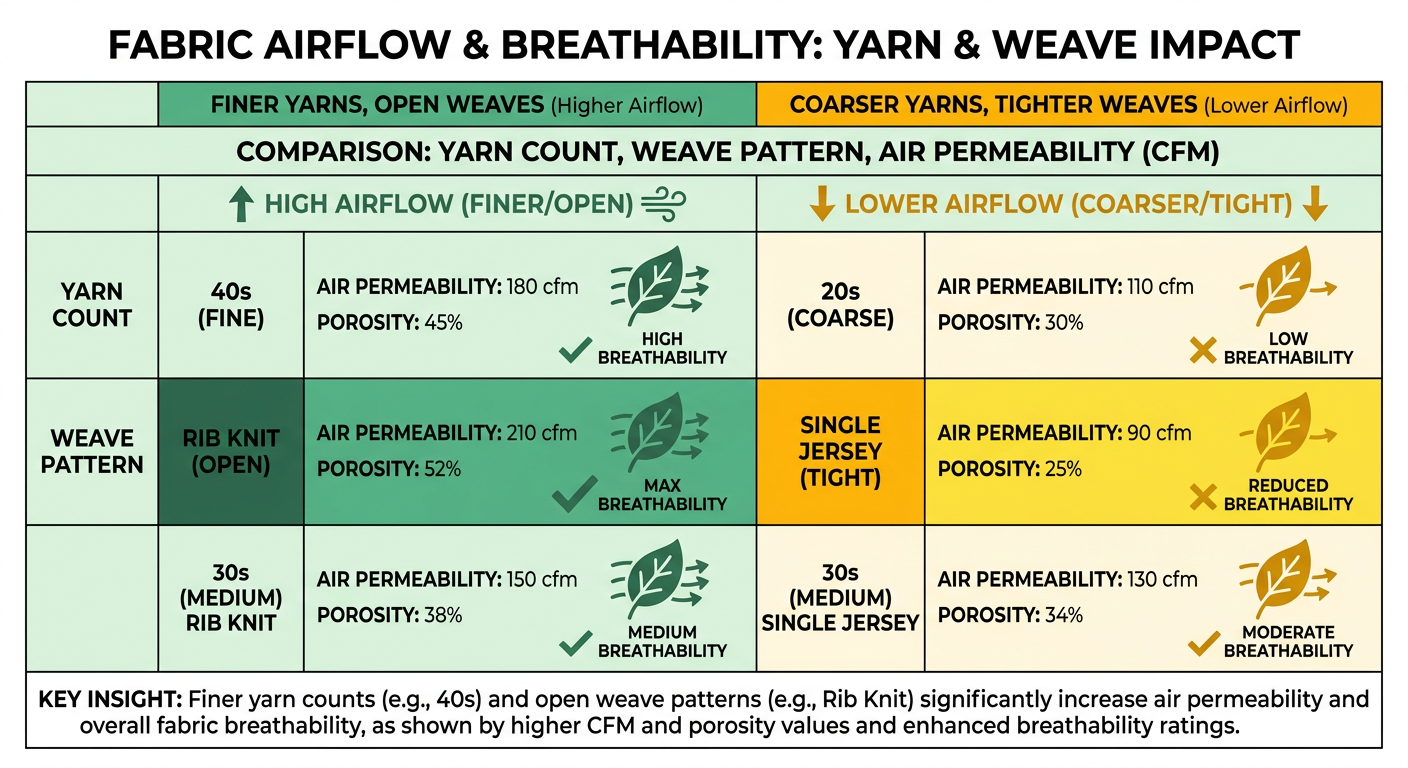
Finer yarns raise porosity and let more air cross the fabric grid. Lab work on single jersey air permeability shows finer yarn counts open up the space between knit loops.
How yarn count changes pore size
Yarn count measures fiber fineness, where a higher number means a thinner strand. Thinner strands make smaller, more evenly spread pores across every square inch. Pima's staple length is what lets spinners pull these high-count yarns without snapping threads, which short-staple cotton simply can't do.
Which weave breathes best for hot yoga
Open structures out-ventilate tight ones, every time. Testing shows breathability dropping from plain weaves down through twill and satin in both natural and synthetic fabrics (NatuClothes lab data).
Standard single jersey knits, the base for most active tees, actually read lower on air permeability than the modified knits in the single jersey study. Open tuck stitches or micro-mesh patterns push airflow well past a basic flat knit.
Does weight beat fiber for breathability?
Fabric weight often overrides the raw fiber benefit. Yarn twist stacks on top of that: a tighter twist packs the fibers together and shrinks the micro-channels vapor escapes through. Loose-twist, low-GSM Pima keeps those vapor paths open.
| Construction choice | Effect on airflow | Best for hot yoga? |
|---|---|---|
| Fine yarn (high count) | Raises porosity, more airflow | Yes |
| Coarse yarn (low count) | Fewer, larger pores, less consistent | No |
| Plain / mesh knit | Highest airflow | Yes |
| Dense satin/twill | Restricts airflow | Skip |
| Loose twist, low weight | Open channels, faster vapor transfer | Yes |
| Tight twist, high weight | Packed fibers, restricted airflow | Skip |
Skipping the artificial surface modifications is also what lets Pima keep its natural breathability and its soft hand at the same time, as the fiber cross-section research points out.
Does breathability survive the laundry?
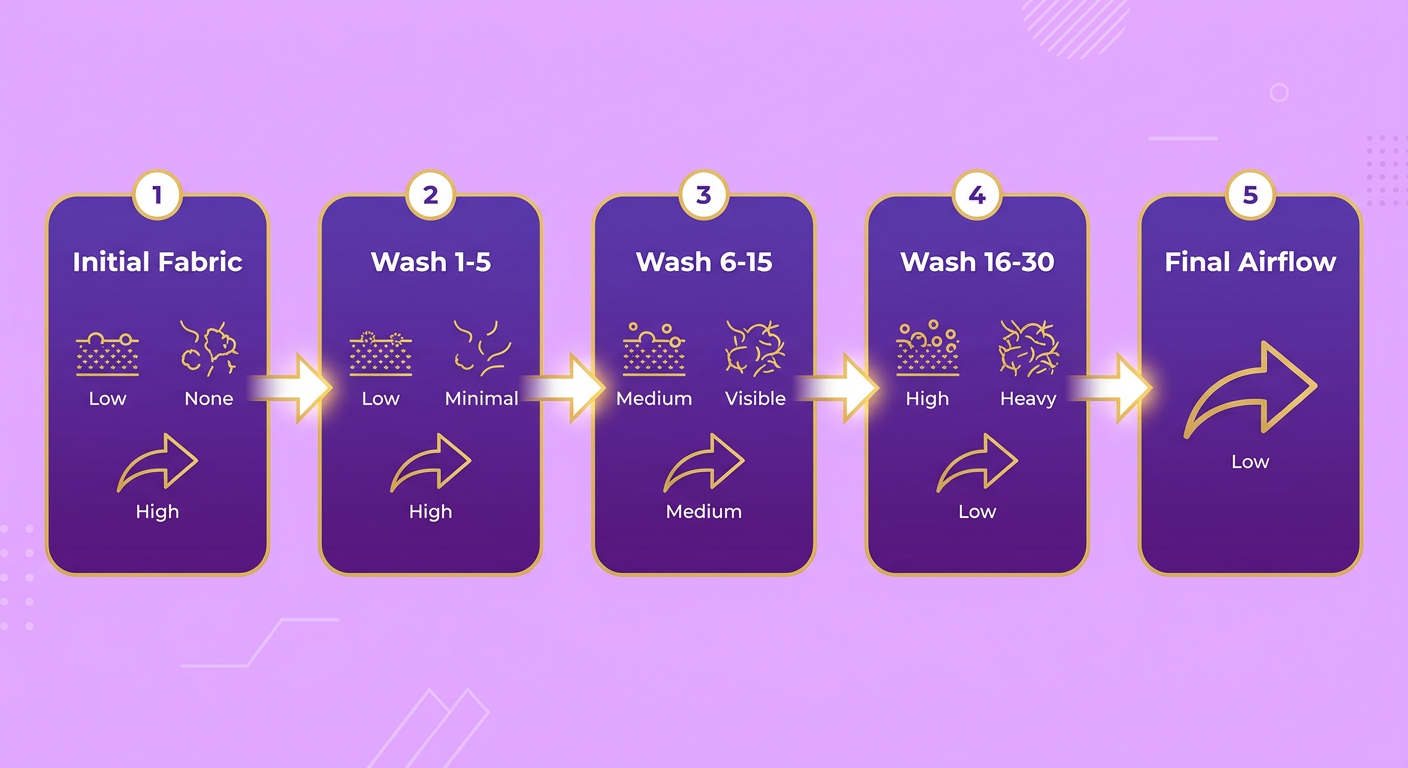
Keeping ventilation alive over months of wear takes physical resistance to surface wear. Long-staple fibers help hold the fabric structure together by resisting the pilling and fuzzing that slowly clog knit pores.
As the Numi breakdown details, Pima resists pilling better than standard short-staple cottons, which keeps the gaps between yarns open.
Does Pima hold its airflow better than synthetics after washing?
Pima leans on pilling resistance to protect its porosity. Synthetics degrade a different way. Polyester resists swelling, but its water-repelling surface attracts body oils and detergent films that coat the fibers over time.
Long-staple cotton stands up to the mechanical friction of the wash cycle, so the knit loops keep their original geometry. Synthetic fibers are strong, but they often need a warm wash to release the trapped skin oils clogging their micro-pores.
| Airflow durability factor | Pima cotton | Typical polyester |
|---|---|---|
| Pilling resistance | High (long staple) | Moderate; snags easily |
| Abrasion resistance over cycles | Strong, loops stay open | Fuzzes and mats |
| Oil/film buildup over washes | Washes out easily | Traps body oils, needs hot wash |
| Response to fabric softener | Coating fills knit gaps | Coating fills knit gaps |
How to wash it without killing the breathability
Cold water, no fabric softener. Softeners lay down a waxy film over the fibers that seals the open spaces you need for vapor exchange. Too-hot water shrinks the yarn, tightens the weave, and drops permeability.
Enough moisture will eventually swell any cotton fiber and briefly restrict airflow until it dries, as the NatuClothes analysis shows. Lightweight knits hold less water and recover faster after a wash.
When to skip Pima
Continuous, multi-hour endurance work isn't the place for all-cotton gear. When drying speed is the one thing that limits you, a high-tech synthetic mesh is the practical call.
For studio classes and warm-weather wear, though, low-GSM Pima gives you breathability that survives the laundry, provided you treat it right.
What Pima actually feels like on a warm mat
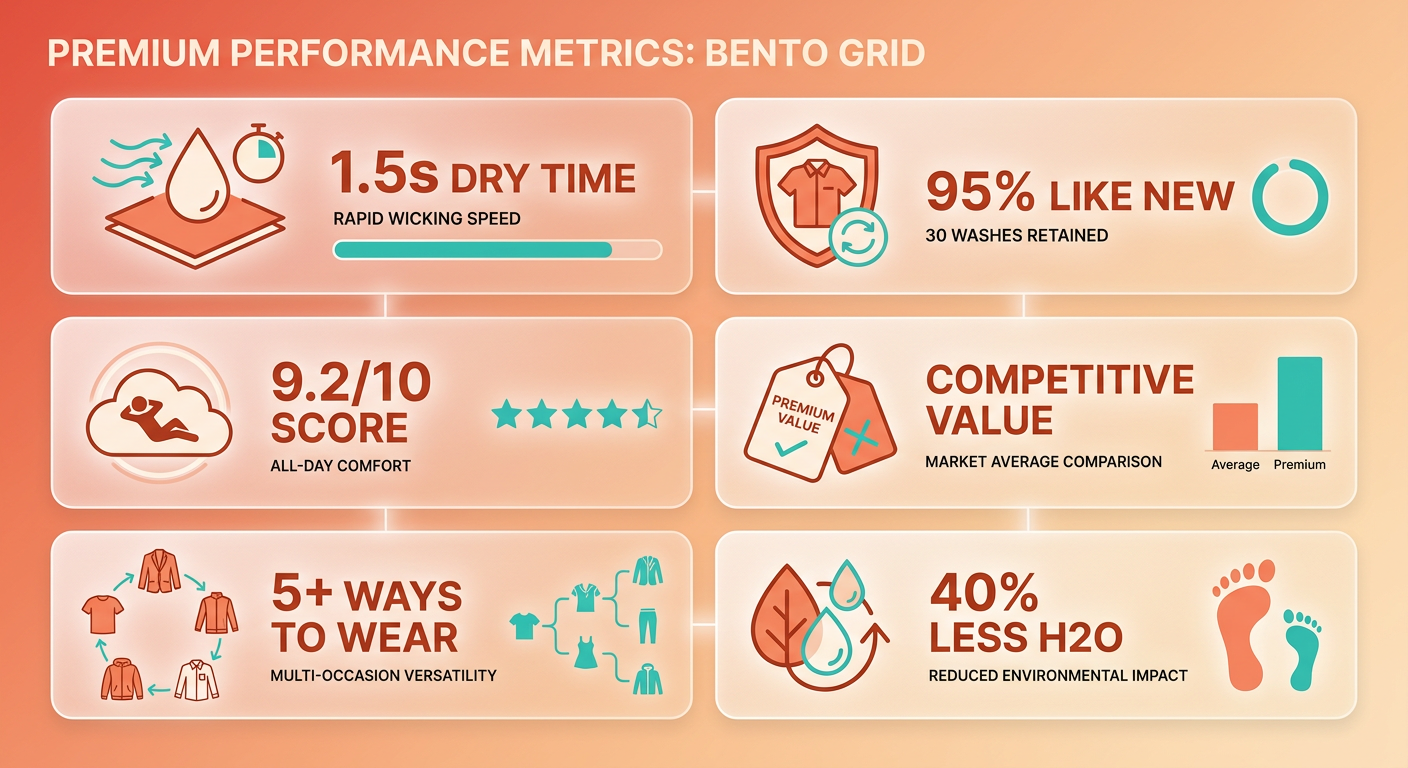
Lab airflow numbers only matter when they turn into comfort on a warm mat. Put Pima up against synthetics and the boundaries are clear: it shines during variable effort and shows its limits during nonstop saturation.
Peruvian Pima's extra-long fiber gives you high absorption with low heat retention. That balance is why we build studio tops from pure Pima knits instead of synthetic blends.
Does Pima beat synthetics in a high-intensity session?
It depends on how the session is structured. Pima has the edge during stop-and-start movement, where it buffers sweat spikes. Synthetics have the edge during continuous cardio, where fast evaporation is what matters.
The apparel reviews split along this line. Numi's undershirt analysis flags slower drying under extreme sweat loads, while textile registries point to Pima's better dry-state air permeability.
Over a standard 60-minute flow, Pima's absorption buffer keeps skin dry through the early sequences. Airflow only drops if the fabric hits total liquid capacity, and that's a threshold you rarely cross in a studio compared with outdoor road running.
How Pima feels across different activities
Pima shines in yoga, warm-weather everyday wear, and low-to-moderate training. Synthetic knits stay better for continuous heavy sweat.
| Use case | Pima cotton | Synthetic-tech knit |
|---|---|---|
| Hot yoga (stop-start sweat) | Strong: absorption buffer, stays soft | Fair: dries fast but clammy against skin |
| Continuous HIIT / cardio | Fair: slower drying once saturated | Strong: evaporative drying wins |
| Casual / athleisure | Strong: softness, low pilling | Fair: prone to odor buildup |
| Pilling resistance over time | Strong (long staple) | Varies by construction |
Design gets around the drying limits. Numi's Sweat-Shield build puts 100% Pima in the armpit zones for absorption and uses other materials elsewhere. Our focus stays on unblended Peruvian Pima made for yoga and everyday comfort.
Where Pima earns its price
Pima runs a 30–50% premium over standard cotton. What you get back is long-staple durability, pill resistance, and softness that lasts.
For studio practice and daily athleisure, that quality shows up as comfort. Match the fabric to your workout intensity and you get the full benefit of what Pima's breathability can do.
References
[1] What is Pima Cotton: Properties, How its Made and Where - Sewport - https://sewport.com/fabrics-directory/pima-cotton-fabric
[2] What is Pima Cotton Fabric: Properties, Varieties, Uses & Global Market - https://www.fibre2fashion.com/market-intelligence/texpro-textile-and-apparel/textile-guide/10533/pima-cotton-fabric
[3] What Is Pima Cotton Fabric? How It's Different - Numi - https://wearnumi.com/blogs/women-undershirts/what-is-pima-cotton?srsltid=AfmBOopYuquq6EO9ztb5AsMRtwSWyupZ2Q4uPQe9Nqr8ZzsA6vt3bdHg
[4] Does Cotton Breathe Better Than Polyester? Lab Data - NatuClothes - https://natuclothes.com/materials/cotton-vs-polyester-breathability/
[5] (PDF) Effect of fibre diameter and cross-sectional shape on moisture ... - https://www.researchgate.net/publication/226900483_Effect_of_fibre_diameter_and_cross-sectional_shape_on_moisture_transmission_through_fabrics
[6] Comparison of air permeability for different single jersey fabrics and... - https://www.researchgate.net/figure/Comparison-of-air-permeability-for-different-single-jersey-fabrics-and-derivatives-a_fig2_356216519
Frequently Asked Questions
1. Can I wear Pima cotton for outdoor running in hot weather?
Pima cotton is less ideal for prolonged running in high heat. Continuous heavy sweat eventually saturates the natural fibers, causing them to swell and reduce ventilation. For non-stop endurance cardio where quick drying is essential, light synthetic meshes disperse high water volume more effectively.
2. Does thread count matter when choosing breathable Pima cotton?
Yarn fineness and fabric weight influence airflow far more than thread count alone. While Pima is commonly woven around 200–300 thread count, low fabric weight (GSM) and open knits are what truly drive air permeability. A thick Pima shirt will move less air than a thin synthetic mesh.
3. Why does fabric softener hurt breathability?
Fabric softeners deposit a thin silicon film over textile fibers that fills the microscopic spaces between yarns. This coating restricts vapor movement across both natural and synthetic fabrics. Rinsing garments in cold water without softeners keeps the pore structure open.
4. Is single jersey the most breathable knit for Pima activewear?
Standard single jersey is comfortable, but open-work knits offer higher air permeability. Incorporating specialized loop patterns like tuck stitches or eyelet meshes creates larger physical pores, allowing significantly more heat and vapor to pass through than flat knits.
5. How does Pima cotton compare to bamboo viscose for low-intensity wear?
Both materials feel soft against the skin, but Pima provides superior air movement due to its extra-long fiber structure. Bamboo viscose absorbs moisture effectively for casual lounging, whereas Pima offers greater structural durability and lower pilling over repeated wears.
6. Will Pima cotton develop odor like synthetic activewear?
Pima cotton resists persistent odors better than polyester. Synthetics tend to trap body oils within their hydrophobic fibers, requiring specialized washing to fully cleanse. Cotton absorbs and releases moisture cleanly, allowing routine cold washing to keep garments fresh.
7. Does panelling improve Pima cotton's performance for tougher workouts?
Zoned panelling optimizes performance by placing Pima in key moisture zones like underarms for comfort and odor control while utilizing synthetic fabrics elsewhere for rapid drying. This design targets Pima's absorbency exactly where it provides the most benefit.