Pima Cotton Leggings for Women Over 40: Comfort Without Compression Fatigue
October 2, 2026
Key Takeaways
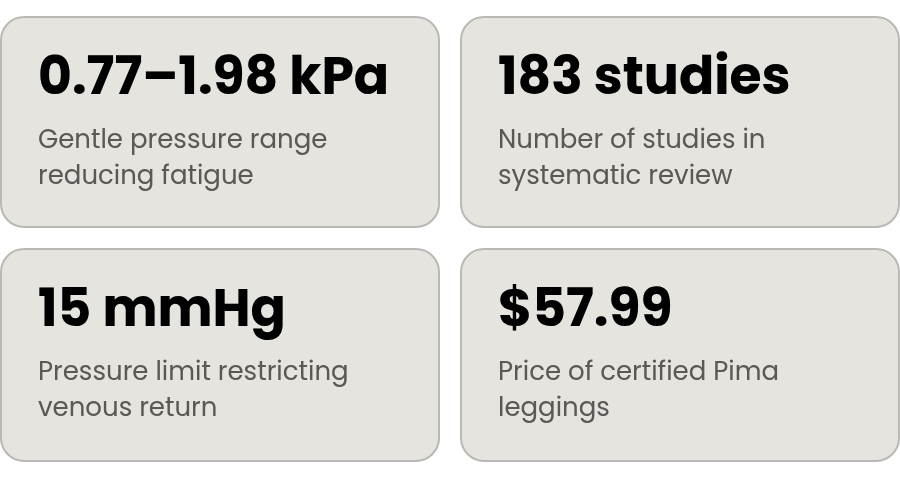
- Gentle pressure may reduce fatigue for some women.
- Compression garments rarely change core exercise measures.
- The fatigue-friendly pressure range sits below most activewear compression.
- Comfort thresholds can be lower than expected at the waist and hips.
- Pima cotton's extra-long staple fibers create a smooth, breathable surface.
- Fixed compression may help gait correction and skin blood flow.
- Light pressure can support movement better than heavy compression.
Why Pima Cotton Leggings for Women Over 40 Matter
You peel off your leggings after class, and there it is: a red groove circling your stomach. That mark is not proof the leggings worked. For women moving into their 40s and beyond, it is usually the first sign that standard compression gear was never built for your body.
This tension shows up in every conversation about athleisure for mature bodies. You want something soft enough for a slow morning, breathable enough for a flow class, and relaxed enough to wear straight to the grocery store. Our Peruvian Pima cotton bottoms are designed to live in that space.
Mature Bodies Need Less Compression, Not More
The useful fit zone for women over 40 is not about maximum squeeze. It is about enough contact to feel supported without turning the waistband, calves, or thighs into pressure points.
A study on differential pressure leggings for women in their 50s helps explain why. Instead of treating the body as one uniform tube, researchers looked at how different areas respond to varied garment pressure. The practical lesson: support does not have to feel restrictive to be effective.
A broader review on compression garment evidence also undercuts the idea that tighter automatically means better. Read the two sources together, and the message becomes clear: leggings for mature bodies should prioritize ease, breathability, and pressure distribution over a locked-in compression feel.
Where Compression and Comfort Pull in Opposite Directions
The science is not one-note. One study on fixed versus graduated compression found that firmer, more consistent pressure can be useful in a targeted movement context. That matters if the goal is correction, training feedback, or a specific biomechanical need.
Most women are not wearing leggings for a lab-monitored gait intervention. They are wearing them through yoga, errands, travel days, desk hours, and slow walks. In that everyday setting, comfort is not a luxury add-on. It is what lets you keep moving without fidgeting, overheating, or peeling the waistband away from your skin.
What Pima Cotton Does Differently
Pima cotton gives you a naturally relaxed fit that lives closer to a gentle-contact garment than a compression garment. It is extra-long staple cotton, which means longer fibers, a smoother surface, and real softness against skin that may feel more sensitive with age.
It also breathes. Where synthetic compression can trap heat and leave you overheating mid-class, cotton lets air move. If you are rethinking your drawer, our guide on swapping synthetic activewear for Pima walks through the switch without losing the softness you want.
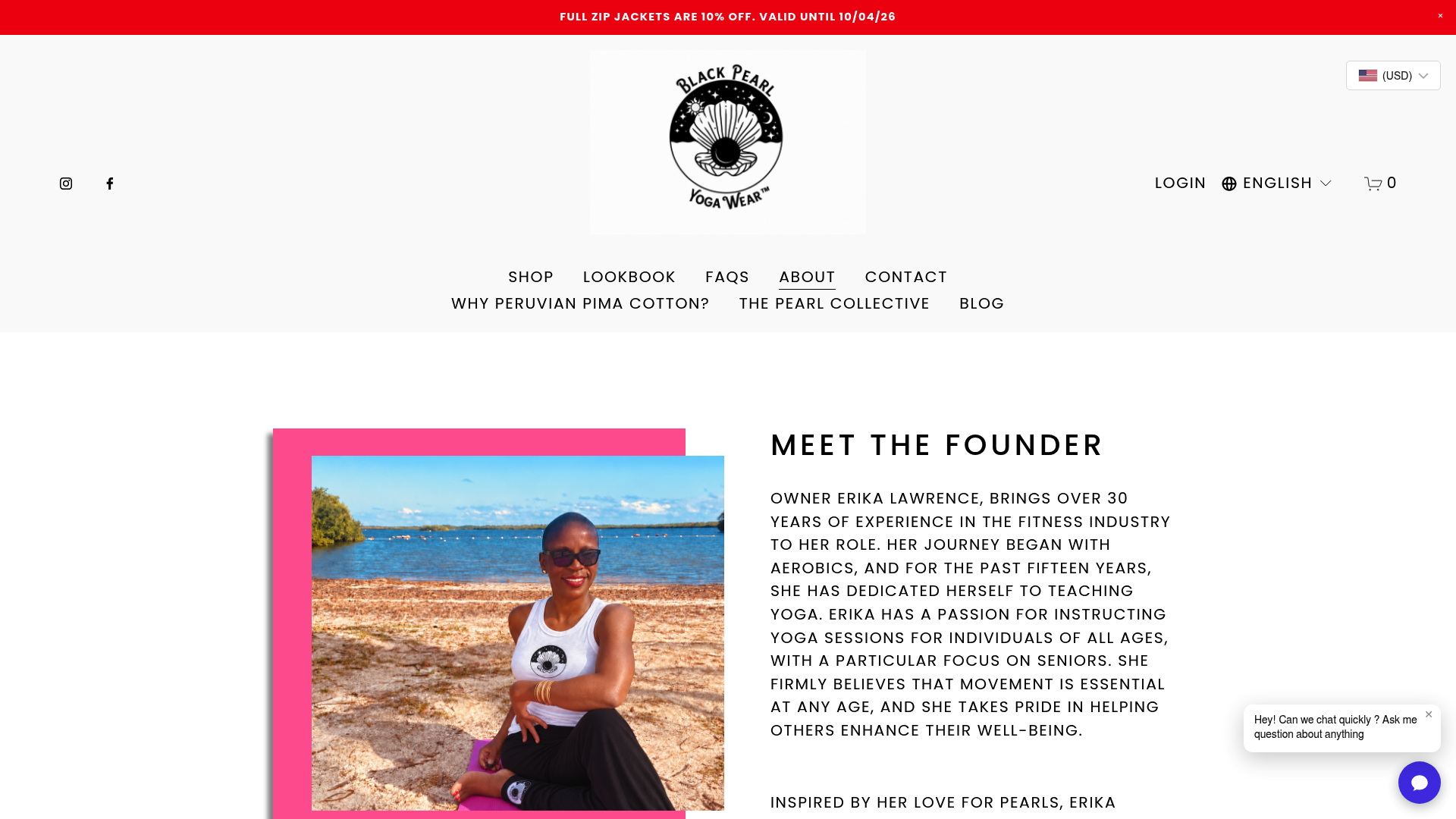
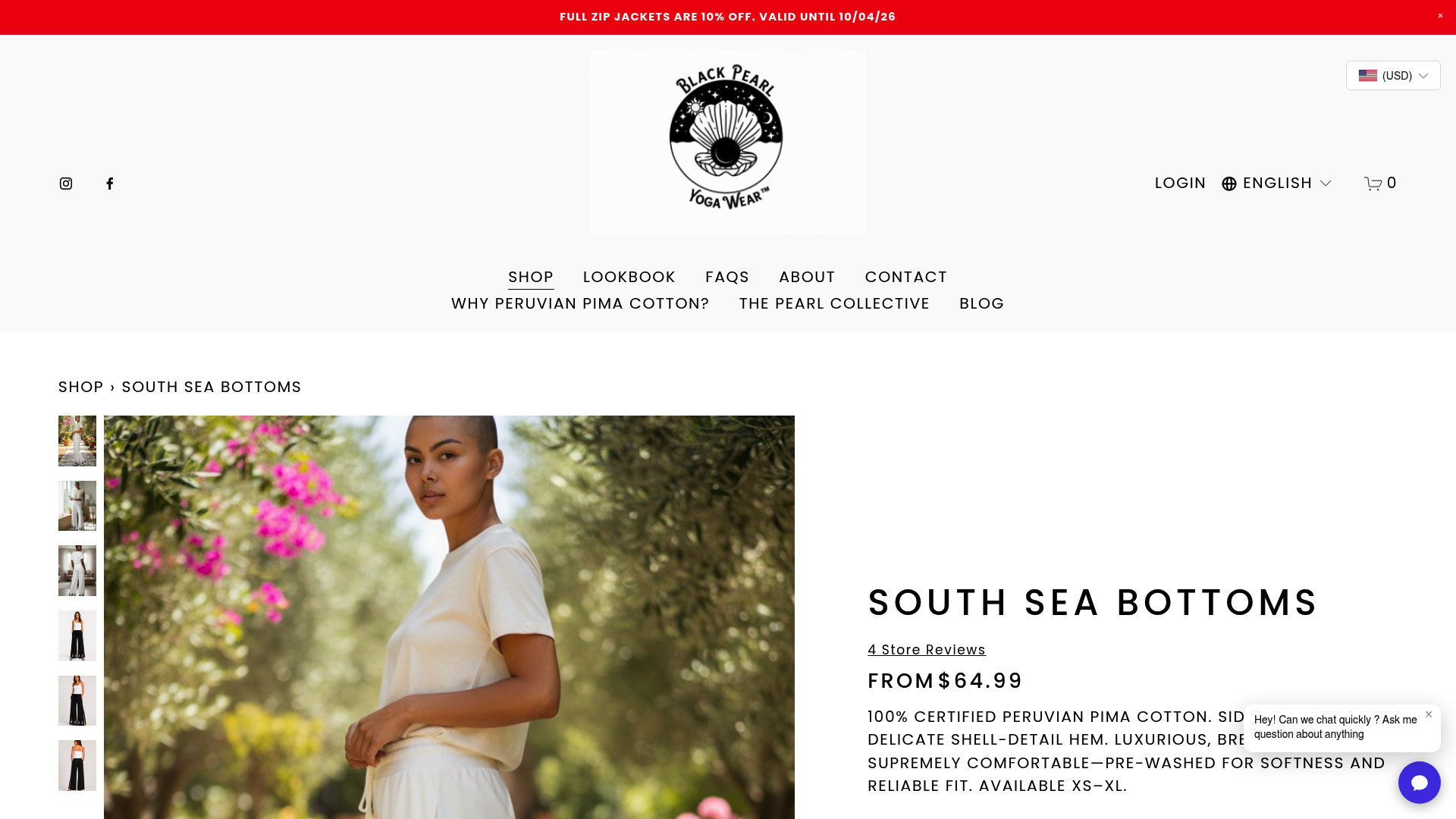
Our joggers and bottoms are 100% certified Peruvian Pima cotton, with a shirring stitch waistline that flexes with you instead of digging in. Comfort you can feel, in fabric meant to move the way you do.
What Tight Leggings Are Actually Doing to Your Body
Think about the last time your legs felt heavy halfway through a flow. Not sore. Just tired, like they wanted to sit down before class ended. That heaviness often has less to do with discipline and more to do with what you are asking your clothing to do.
Compression marketing often suggests a direct line between tightness and performance. The evidence is more restrained. Across the research, the most reliable case for compression is not that it turns an ordinary workout into a stronger one. It is that certain pressure designs may be useful in specific situations.
For everyday movement, that distinction matters. If you are doing yoga, Pilates, walking, or running errands, you probably do not need leggings that behave like training equipment. You need fabric that stays with you, lets you bend, and does not make your skin feel trapped.
The Pressure Sweet Spot Is Lower Than You Think
The pressure pattern in mature-body legging research points in a direction most activewear ignores: the waist should not be the tightest part of the garment. A waistband that digs in may feel secure in the fitting room, but it can become the first thing you notice once you sit, fold forward, twist, or move through a long class.
A barely-there hold can make more sense than a sculpting fit. When leggings are designed around movement rather than compression drama, the body gets support where it needs it without a constant reminder at the abdomen and hips.
There is still room for firmer gear when the use case is specific. If a physical therapist, trainer, or clinician is using compression to support a particular gait or alignment goal, that is a different decision. For yoga, Pilates, errands, and a slow morning, the squeeze is often solving a problem you do not have.
Where Breathable Cotton Fits
Natural fabrics designed for movement offer a useful alternative. Breathable materials like certified Pima cotton move with you instead of clamping down, which makes them better suited to long wear than many tight synthetic blends.
The feel is different from compression leggings, and that is the point. Instead of using pressure to create the idea of support, Pima cotton supports through softness, breathability, and a fit that allows the body to move without resistance. Comfort, in this context, is not the absence of function. It is the function.
Fit & Construction Details Tailored for Mature Women
The waistband matters more than the print. You can love the color and still spend all day tugging, folding, and adjusting. Comfort lives in the details: how a waistband sits, how a seam lies, and how fabric moves when you do.
Pattern design for mature women points to an important fit principle: the waist needs the gentlest treatment. That is the area most likely to register discomfort first, especially during seated poses, deep bends, travel, or all-day wear.
What waistband height actually works for women 40+?
A high, wide, flat waistband sits above the softest part of the midsection and distributes pressure instead of pinching it. Our Peruvian Pima cotton is designed to stay put without a hard elastic bite, so there is no red groove and no mid-flow readjusting.
The fabric naturally offers hold without clamping. That is the difference between leggings that feel secure and leggings that feel like they are trying to reshape you.
Why do flat seams matter more as skin thins?
Skin gets thinner and drier with age, so a bulky inner seam becomes a scratch point you feel all day. The usual culprits are the crotch seam and the inner-thigh binding, where traditional stitching rubs with every stride.
Flat-lock seams solve this by reducing the raised edge inside the garment. Instead of a stacked seam pressing into the skin, you get a smoother interior surface that is easier to forget once you start moving.
Does legging rise need to change with age?
Yes, and this is where support and comfort need to align. Some compression stockings can restrict venous return in sedentary positions, which is counterproductive for all-day wear.
Unless you are choosing compression for a specific corrective purpose, you do not need firm squeeze. You need a rise that clears the hip crease, a waistband that does not roll, and a fabric that moves with you from standing to sitting to stretching.
Styling that reads chic, not sporty
Comfort should not mean dressed-down. A longer tunic, a structured zip-up, or a draped shawl layers cleanly over our bottoms for temperature shifts between a cool studio and a warm errand run.
Grounded neutrals like charcoal, deep olive, and black carry from mat to coffee shop. If you are rebuilding a mix-and-match wardrobe around softer basics, our guide to studio-to-desk Pima pieces pairs well with these fits.
Care & Maintenance: Keeping Your Pima Leggings Fresh for Years
There is a quiet heartbreak in ruining a pair of leggings you love. One hot wash, one tumble on high, and the softness you paid for goes flat. We hear this worry often, so here is how we keep ours feeling new.
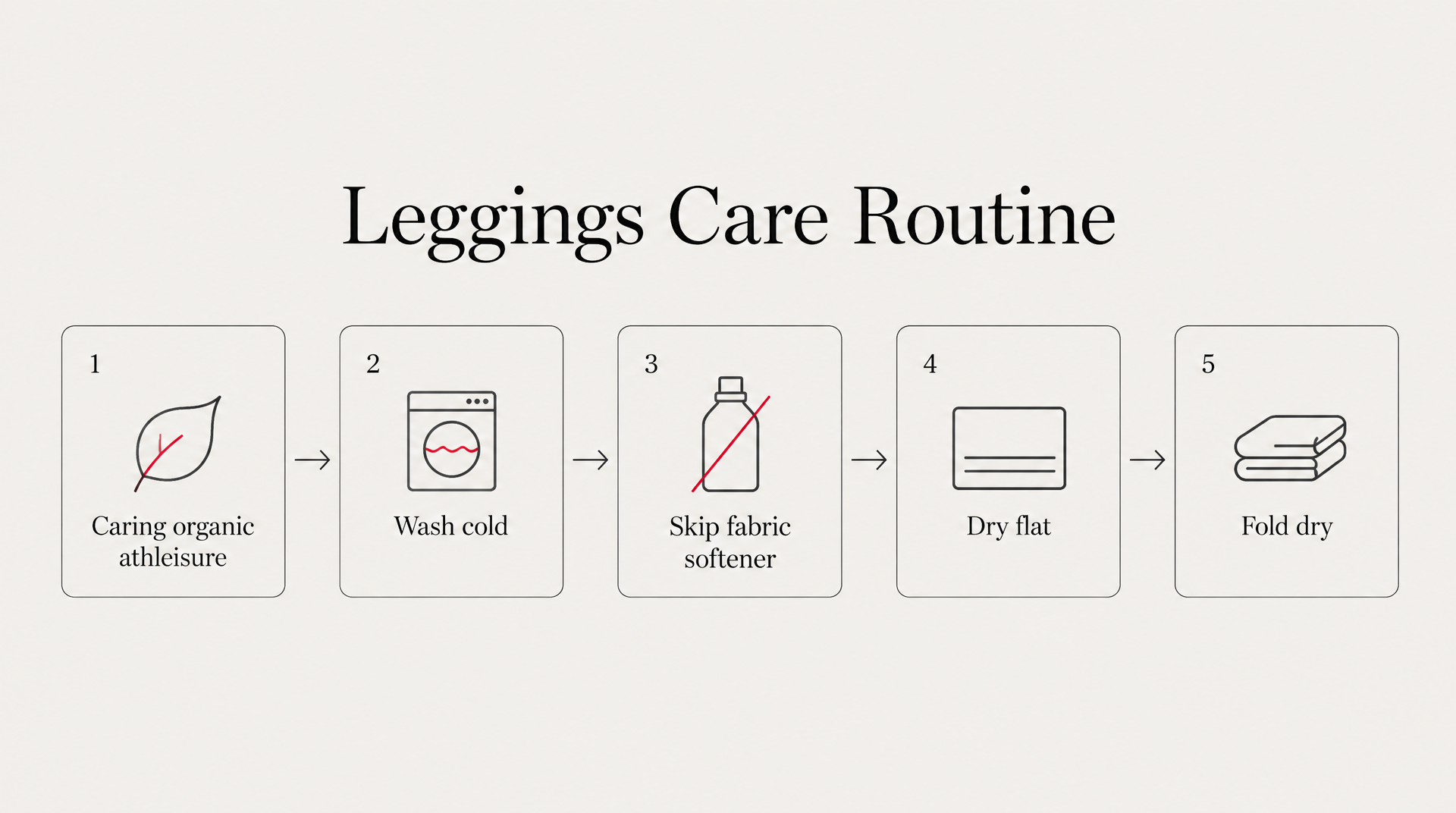
Caring for organic athleisure is simpler than most people expect. Pima cotton is a long-staple fiber, which means the individual strands are extra long. Longer strands mean fewer loose ends poking out, so the fabric resists pilling and stays smooth wash after wash. Your job is to protect that structure.
Cold Water and Gentle Cycles Do the Heavy Lifting
Wash cold. Always. Hot water relaxes cotton fibers and invites shrinkage, so a cold or cool cycle keeps your fit true to the day you first pulled them on.
Turn them inside out before they go in. This shields the outer surface from rubbing against zippers and rougher fabrics, which is where most pilling starts. A gentle or delicate cycle finishes the protection.
Reach for a mild, liquid detergent. Skip fabric softener entirely. Softener leaves a waxy coating that dulls cotton's natural breathability over time, and these leggings are meant to breathe. A plant-based, low-residue detergent pairs beautifully with a sustainable fabric and rinses clean.
Air-Drying Is Where Longevity Lives
Heat is the enemy of shape. If you want your leggings to hold their stretch and length for years, lay them flat or hang them to air-dry. No dryer, no guesswork.
Pressed for time? A low or no-heat tumble for a few minutes, then air-dry the rest of the way, keeps things soft without the shrink risk.
When they are dry, fold them. Hanging stretches the waistband over months, and that flat, high waistband is the whole point of the fit. A few small habits add up to leggings that outlast fast-fashion rivals by seasons.
Sustainable & Ethical Production of Peruvian Pima Cotton
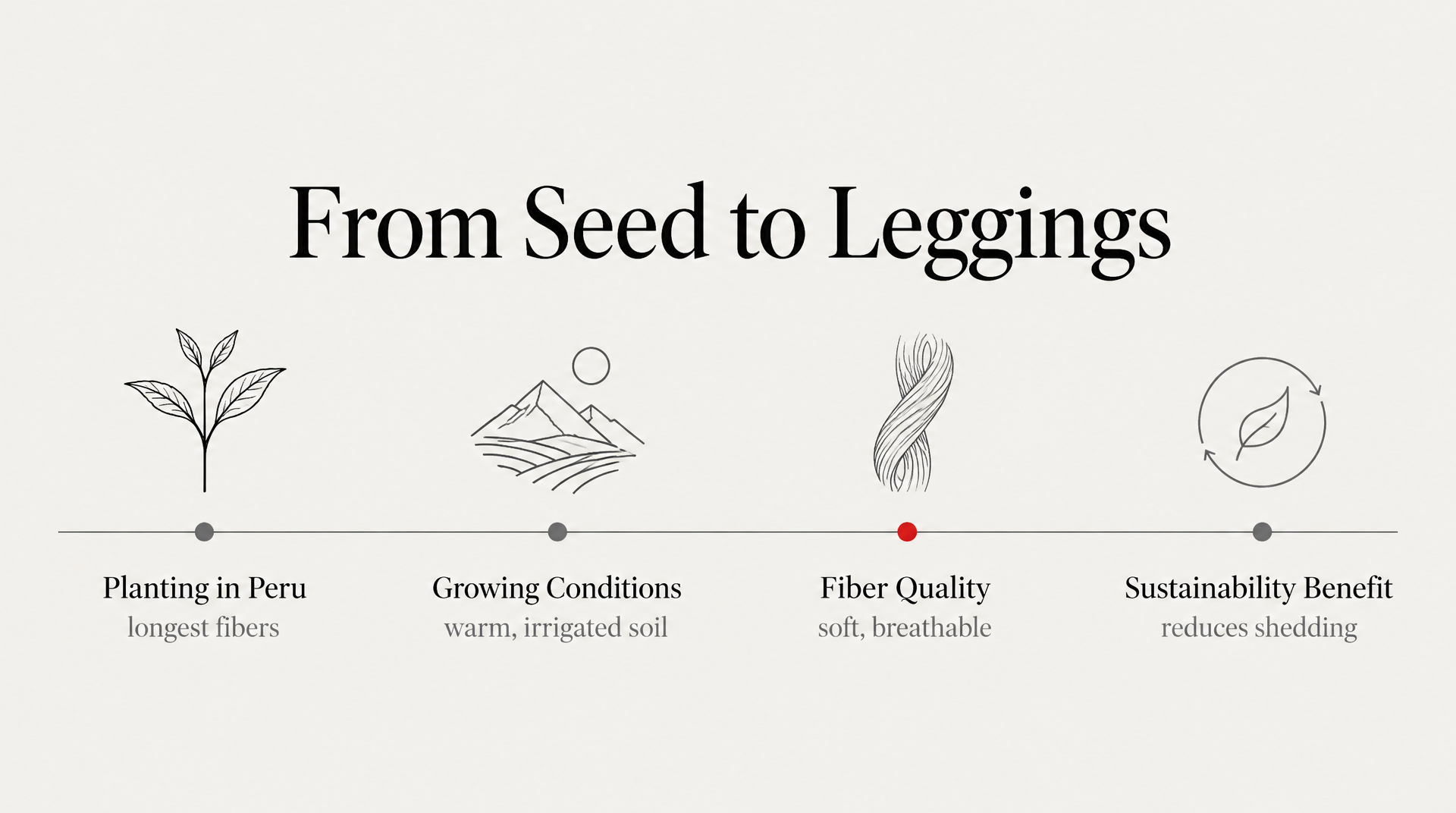
There is a quiet story behind every pair of our bottoms, and it starts long before the fabric ever reaches you. It starts in the soil of northern Peru, where Pima cotton grows in some of the longest, softest fibers in the world.
That origin point matters because the growing conditions, including consistent warmth, careful irrigation, and mineral-rich soil, produce a staple length that changes how the final cloth performs.
For women moving through their 40s and beyond, that softer fiber is part of why our bottoms feel easy instead of stifling. Peruvian Pima's long staple means the yarn spins finer and smoother, so you get that luxurious hand without the weight or cling of heavier fabrics.
Why does Peruvian Pima cotton matter here?
Peruvian Pima is prized for a reason: the longer fibers create a cloth that holds its shape, resists pilling, and feels smoother against the skin than standard cotton. When you wear joggers or culottes made from this fabric, the result is softness that still has enough structure for daily movement.
That fabric choice also helps you skip the synthetic microfibers that shed into water with every wash. Natural long-staple cotton gives you a cleaner-feeling routine without asking you to dress like you gave up on style.
Is sustainable cotton actually worth it for the fit?
In the broader athleisure market, some makers are raising the bar. Some brands sell GOTS-certified organic Peruvian Pima leggings, showing that recognized certification, covering both the growing process and working conditions, is becoming more accessible, not just a luxury myth.
Our own certified Peruvian Pima bottoms are prewashed and ready to wear. The same material quality that makes the fabric feel smooth also helps it hold up season after season, so comfort and longevity pull in the same direction.
Real-World Voices: Testimonials & Case Studies from Women 40+
You know the feeling of pulling on a pair of leggings and immediately forgetting you have them on? That quiet win is what comfort looks like when fabric meets your day without friction. When women over 40 describe switching to organic athleisure, the comfort rarely comes up as a feature. It comes up as relief.
The waistband stops being a thing you notice. The fabric stops arguing with your skin halfway through a long day. That shift from managing your clothes to just living in them is exactly what we design our Peruvian Pima bottoms to deliver.
What do women over 40 actually notice first?
Less, not more. Less tugging. Less heat. Less of that heavy-legged drag that creeps in during a slow afternoon flow.
In the differential-pressure legging research, participants did not simply put up with the garment. Their subjective evaluations were strong, especially around how suitable the design felt for exercise and how supported their muscles felt while moving.
That gap between tolerable and helpful is where our fabric lives. Breathable Pima is not trying to mimic the locked-in feel of synthetic compression. It gives you a softer kind of support that lets the day keep going.
What makes a legging you reach for first?
Comfort you can feel tends to repeat. When a legging works from a studio warm-up to a grocery run without a single adjustment, it quietly becomes the pair that moves with your day.
That is the real story behind the fabric. Soft Peruvian Pima gives you the ease your body wants after 40: fitted without pinch, smooth without slipperiness, breathable without feeling flimsy. If you are curious how the swap actually feels day to day, our take on trading synthetic activewear for Pima without losing softness walks through it.
How to Choose Your Perfect Pair
Standing at checkout with two tabs open, trying to decide. One pair looks right. The other costs less. How do you actually choose? We walk women through this all the time, and it usually comes down to five things, in this order.
When you shop organic athleisure for a body over 40, start with fit, then fabric feel, then style, then price, then the policies that protect your purchase. Get the order wrong and you end up with a bargain you never wear.
Fit And Fabric Come Before Price Every Time
Measure yourself before you fall for a color. Grab a soft tape, measure the widest part of your hips and your natural waistline, then match those numbers to the sizing chart on the product page. That is the goal: no guesswork, no return hassle.
Fabric feel tells you whether you will reach for these again next week. Touch samples if you can. Read texture descriptions closely. Words like brushed or prewashed signal a softer hand, while structured usually means firmer support. Match the feel to how you will actually wear them.
A Quick Side-By-Side Before You Buy
| What to check | What matters most | What to avoid |
|---|---|---|
| Sizing chart | Hip and waist measurements within 1 inch | Guessing between two sizes |
| Fabric description | Specific cotton type, weave details | Vague "soft cotton blend" claims |
| Waistband style | Named construction (shirring, fold-over) | Generic "comfortable elastic" |
| Return window | 30+ days, prepaid label | Restocking fees, store credit only |
The Pitfalls That Cost You The Most
Two mistakes trip women up: buying a size too tight because it will stretch, and skipping the care steps that keep the fabric true. Size for the fit you want on day one. Then follow cold-wash habits so your pair lasts.
Another trap is assuming higher thread count always means better quality. In cotton leggings, a mid-range thread count often wears better than ultra-high counts that pill or feel stiff.
One honest note: if you specifically want firm compression for sprint training, pure cotton is not your pick. For yoga, errands, and long easy days, it is.
References
[1] 100% Cotton Leggings | Organic & Sustainable - Fair Indigo - https://www.fairindigo.com/collections/100-cotton-leggings?srsltid=AU7gw4Xv-Ek2FdyrvfIZb6WqkdueYG-Ij7EbPz2GzP_nuYWxD4_cL6TM
[2] Designing differential pressure leggings for late middle age women... - https://journals.sagepub.com/doi/full/10.1177/15589250251352022
[3] Putting the Squeeze on Compression Garments: Current Evidence and... - https://pmc.ncbi.nlm.nih.gov/articles/PMC9023423/
[4] The effects of fixed and graduated application percentage-type... - https://journals.sagepub.com/doi/abs/10.1177/00405175231208022
[5] Designing differential pressure leggings for late middle age women... - https://journals.sagepub.com/doi/abs/10.1177/15589250251352022
[6] (PDF) Designing differential pressure leggings for late middle age women... - https://www.researchgate.net/publication/393610002_Designing_differential_pressure_leggings_for_late_middle_age_women_using_3D_technology_Identifying_optimal_muscle_support_levels_via_electromyography
Still Wondering?
If I usually wear medium compression leggings for yoga, will 100% cotton feel like it's not doing enough?
It may feel different at first because cotton does not create that sculpted, locked-in sensation. For yoga, that can be a benefit. You still get coverage, softness, and easy movement, but without the hard squeeze that can become distracting during folds, twists, and seated poses.
Can I machine-wash Pima cotton leggings without them shrinking or losing shape?
Yes. Use a cold or cool cycle, turn them inside out, choose a mild liquid detergent, and avoid fabric softener. Dry them flat or hang them to air-dry so the waistband and length keep their shape.
Why does the waistband height matter more after 40 than it did in my 30s?
A higher, wider waistband spreads contact across the midsection instead of concentrating it in one narrow band. That matters more when you want leggings that feel good while sitting, bending, and moving through a full day, not just while standing in front of a mirror.
Is there any situation where I'd still want firm compression instead of breathable cotton?
Yes. Firm compression can make sense when you are using it for a specific training, rehab, or gait-related purpose. For yoga, errands, travel, and long easy days, breathable cotton is usually the more comfortable choice.