5 Fabric and Fit Checks Before Buying Activewear, Including the Stretch-Recovery Test
October 15, 2026
Key Takeaways
- Stretch is easy to see; recovery is what keeps leggings from bagging out after repeated wear.
- Cotton holds moisture longer than synthetic wicking fabrics, so choose it for low-sweat wear rather than hot or sweaty workouts.
- High stretch doesn't guarantee high recovery—synthetic blends stretch far more than natural fibers, but recovery is what matters for fit.
- Strong fabric recovery springs back immediately after stretching, without slack or rippling, keeping garments from bagging out after wear.
- The side of wicking fabric that dries fastest should face your skin to move moisture away rather than trap it.
The Stretch‑Recovery Test: Feeling the Bounce‑Back
When you reach overhead or squat, you need fabric that moves and snaps back. Stretch is easy. Recovery keeps leggings from looking tired after three wears.
A Simple Home Stretch-Recovery Check
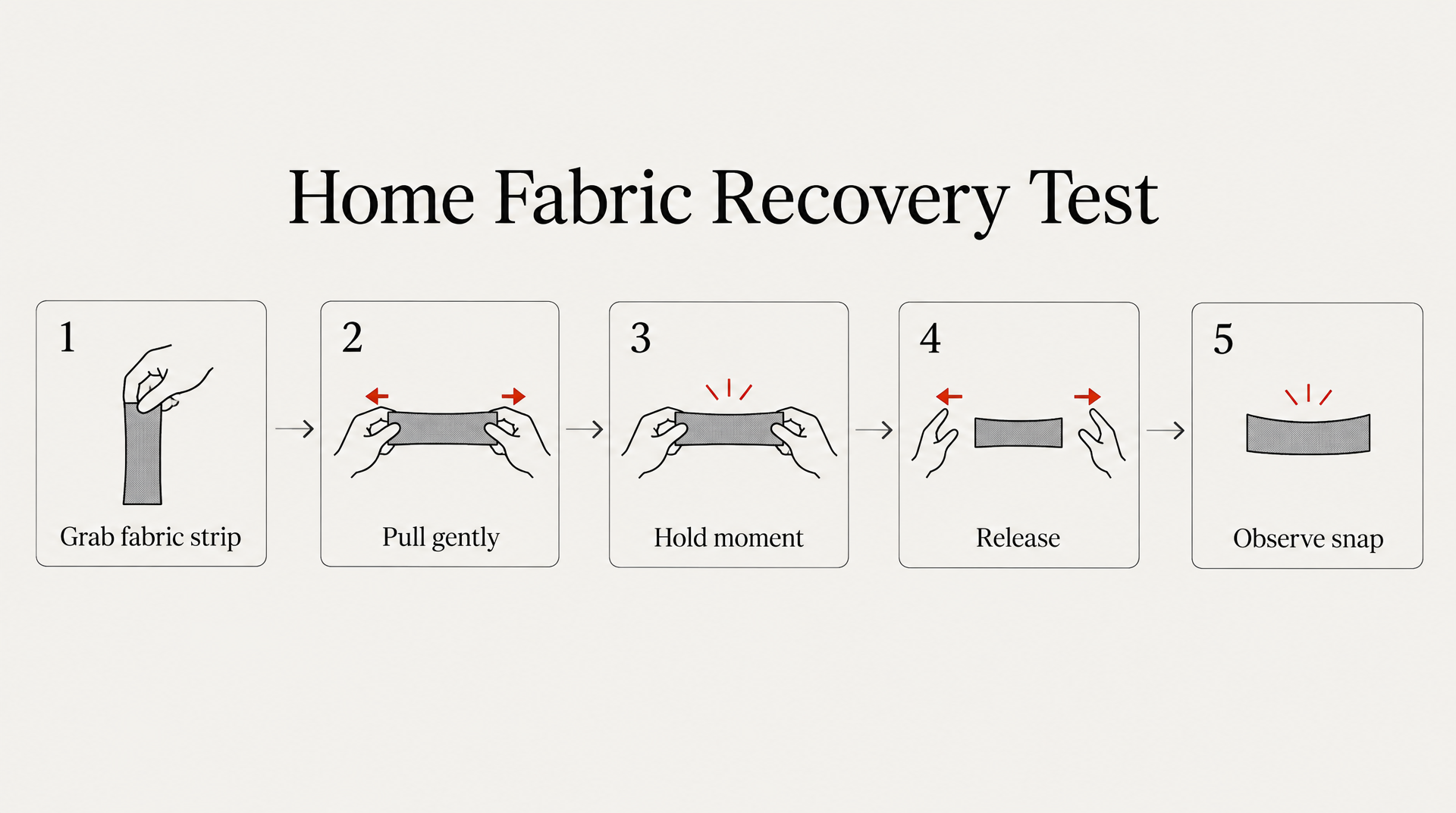
Pull a fabric section, hold briefly, release, and see if it returns to length. A pass returns quickly; a fail shows slack or rippling. Strong recovery feels supportive and springs back instantly.
Fabric recovery is what brings a fabric back to its original shape after being stretched. For fitted pieces like leggings and sports bras, good recovery is what keeps the garment comfortable and flattering through repeated wear. Easy stretch without recovery leads to bagging, sagging, or shape loss.
What Good Recovery Feels Like on Your Body
During a 20-minute movement test, watch for subtle fit shifts: a neckline that starts to dig in, an armhole that rubs after repeated overhead reaches, or a waistband that no longer sits flush. These are signs the fabric isn't recovering between movements.
Some sources cite high stretch for spandex, but we focus on whether it snaps back. Nylon‑spandex and polyester‑spandex stretch less than pure spandex but need recovery. Merino wool stretches less than spandex but can still recover well.
The Five Checks That Matter Before You Buy
Compare recovery alongside moisture management, breathability, durability, and fit retention. A fabric may stretch well but only partly return, leaving baggy knees after one session. High stretch doesn't guarantee recovery; test both before buying.
Moisture Management & Breathability Check
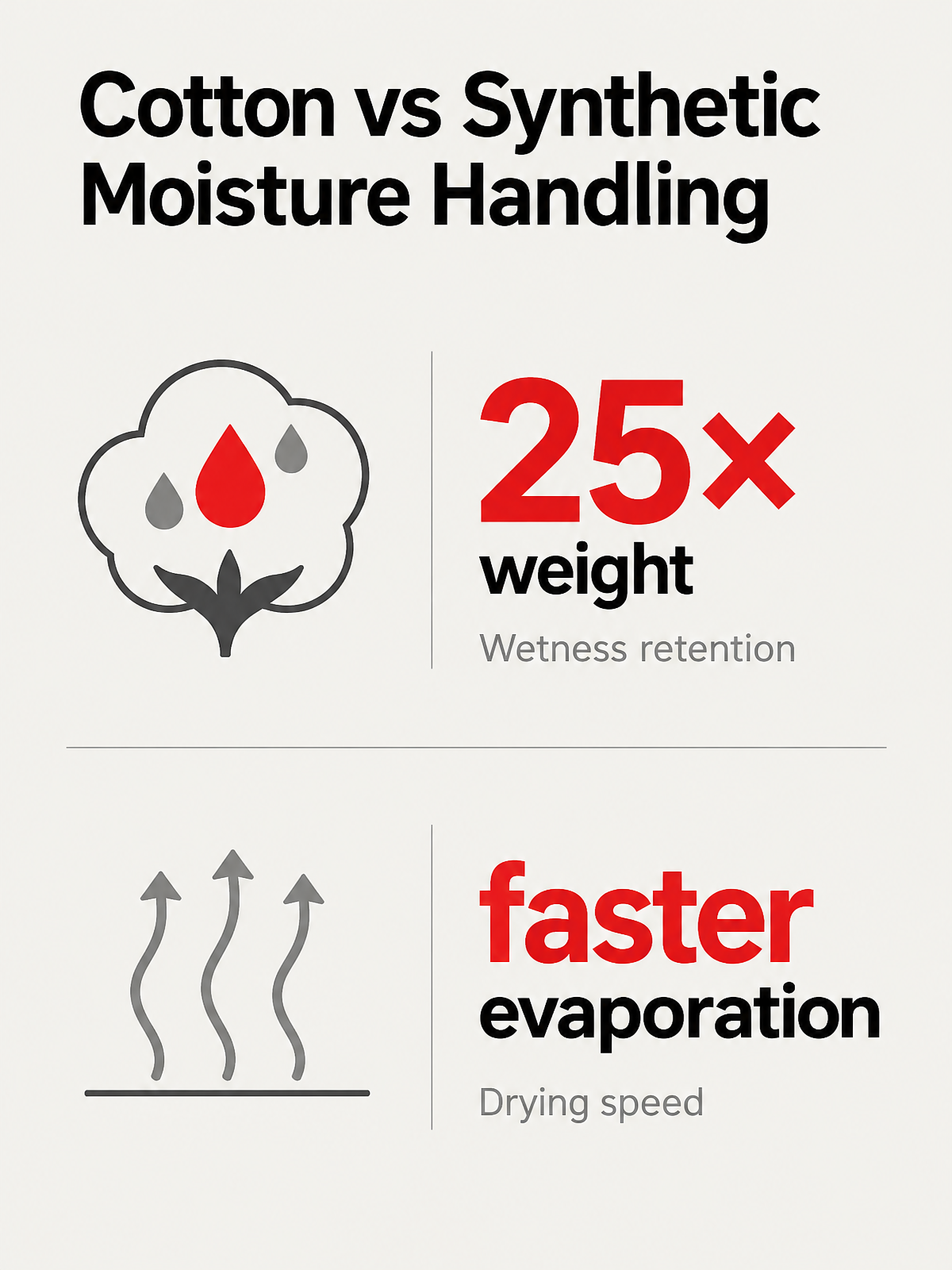
We test moisture handling because stretch won't help if soaked in five minutes of hot yoga. Cotton might feel soft on the rack, but it holds up to 25 times its weight in water and stays damp long after synthetics have dried. Thus cotton isn't recommended for sweaty wear; it's better for low‑sweat, everyday use.
A Simple Water-Drop Check at Home
You don't need lab equipment to judge moisture behavior. Lightly spray a fabric spot or press a damp hand for a few seconds. Watch what happens. Does water bead, spread, or soak through the fabric? Synthetics first repel droplets, then spread them to evaporate faster. Cotton absorbs it immediately and holds it close to your skin.
Spray both sides lightly, then time how long each takes to line‑dry. The fastest‑drying side should face your skin to move moisture away. If both sides dry at the same rate, the fabric isn't engineered for directional wicking.
Why Drying Speed Matters for Sweaty Workouts
Drying performance makes a real difference during cardio or heated classes. Performance synthetics dry faster than cotton, feeling lighter and less clingy. Wet fabric can weigh you down and cause friction.
Breathability is hard to test at home; hold fabric to light to judge. Tighter weaves block more airflow, while looser knits and mesh panels allow heat to escape. Moisture-wicking and breathability work together: wicking pulls sweat to the surface, and breathability lets it evaporate quickly.
Synthetic wicking fabrics repel water even in the washing machine. Dirt and body oils can build up over time, which is why we use sport-specific detergents to help keep them fresh.
Durability & Shape Retention Assessment
We check durability because activewear can bag, fade, or pill if it can't hold up. The real test is fit after ten washes and a month of workouts.
Lab Benchmarks vs. Home Checks
Sportswear fabrics undergo abrasion testing to ensure they hold up through wear. At home, gently rub high‑friction zones for a few seconds and inspect for fuzzing or thinning. If the fabric shows visible wear from light rubbing, it won't survive repeated movement.
This household check is not a replacement for lab testing. It's a quick filter to catch fabrics that won't make it past the first month. We use it before buying to avoid pieces that fall apart fast.
Measuring Shape Retention After Wear and Washing
Shape retention goes beyond the initial fit. After a 20‑30 minute wear test and one wash, measure chest, hem, neckline, and armhole against pre‑fit marks. Use chalk or photos of key points before wear, then check after a short workout. If the waistband has stretched a half-inch or the neckline has loosened noticeably, the recovery isn't strong enough.
Higher stretch alone is not enough—one maker tested three ponte roma fabrics all labeled as having stretch, but only one maintained fit. One fabric stretched out; another with less stretch but stronger recovery held shape. The difference wasn't stretch percentage; it was how well the fabric bounced back.
Colorfastness is part of durability too. High‑quality activewear is tested for wash, light, sweat, and rubbing resistance. If a garment bleeds or fades early, it fails standards.
Your Pre‑Purchase Checklist
You've run the home checks. Now you stand at a product page or store, deciding if checks still make you want to wear it a month later.
We recommend pulling those five checks into a single scan you can run in under two minutes.
The Five-Check Scan: What to Verify Before You Buy
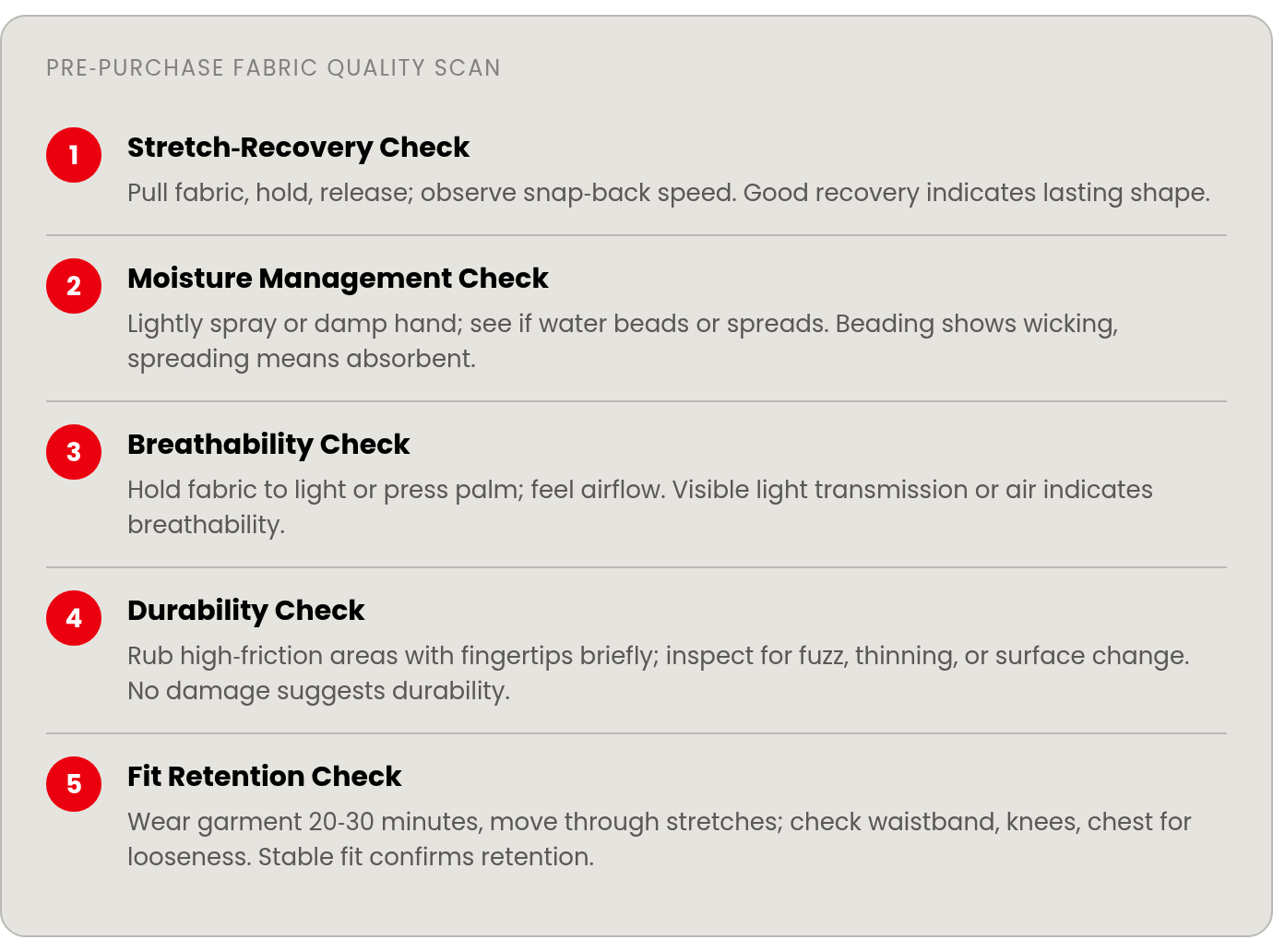
Stretch-Recovery Check: Pull a section of fabric, hold for a moment, then release. Quality spandex should snap back smoothly to near its original length. Anything that stays stretched signals the garment will likely bag out at knees, waistbands, or underarms after a few wears. Strong recovery is what keeps the fit tight through repeated movement.
Moisture Management Check: Lightly spray or press a damp hand against a small section of the fabric. Does the water bead up and sit on the surface, or does it spread and soak in immediately? The first behavior suggests a moisture-wicking finish. The second suggests plain cotton or an untreated natural fiber that will stay damp long after synthetics have dried.
Breathability Check: Hold the fabric up to a light source or press it gently against your palm. Can you feel airflow through it, or does it sit dense and still? Breathable fabrics allow vapor to escape before you feel soaked, which matters during longer sessions.
Durability Check: Rub high-friction zones—inner thighs, underarms, waistbands—with your fingertips for a few seconds. If the fabric shows fuzzing, thinning, or surface change from light rubbing, it won't hold up through repeated wear. Performance fabrics are tested to thousands of abrasion cycles, so a few seconds of fingertip friction shouldn't produce visible wear.
Fit Retention Check: If you can try the garment on, wear it for 20–30 minutes and move through a few stretches or squats. Then check whether the waistband has loosened, the knees show rippling, or the chest area feels slacker than it did initially. Compression garments should maintain stable pressure after movement and washing, not stretch out after the first wear.
Using Black Pearl Yoga Wear as a Verification Example
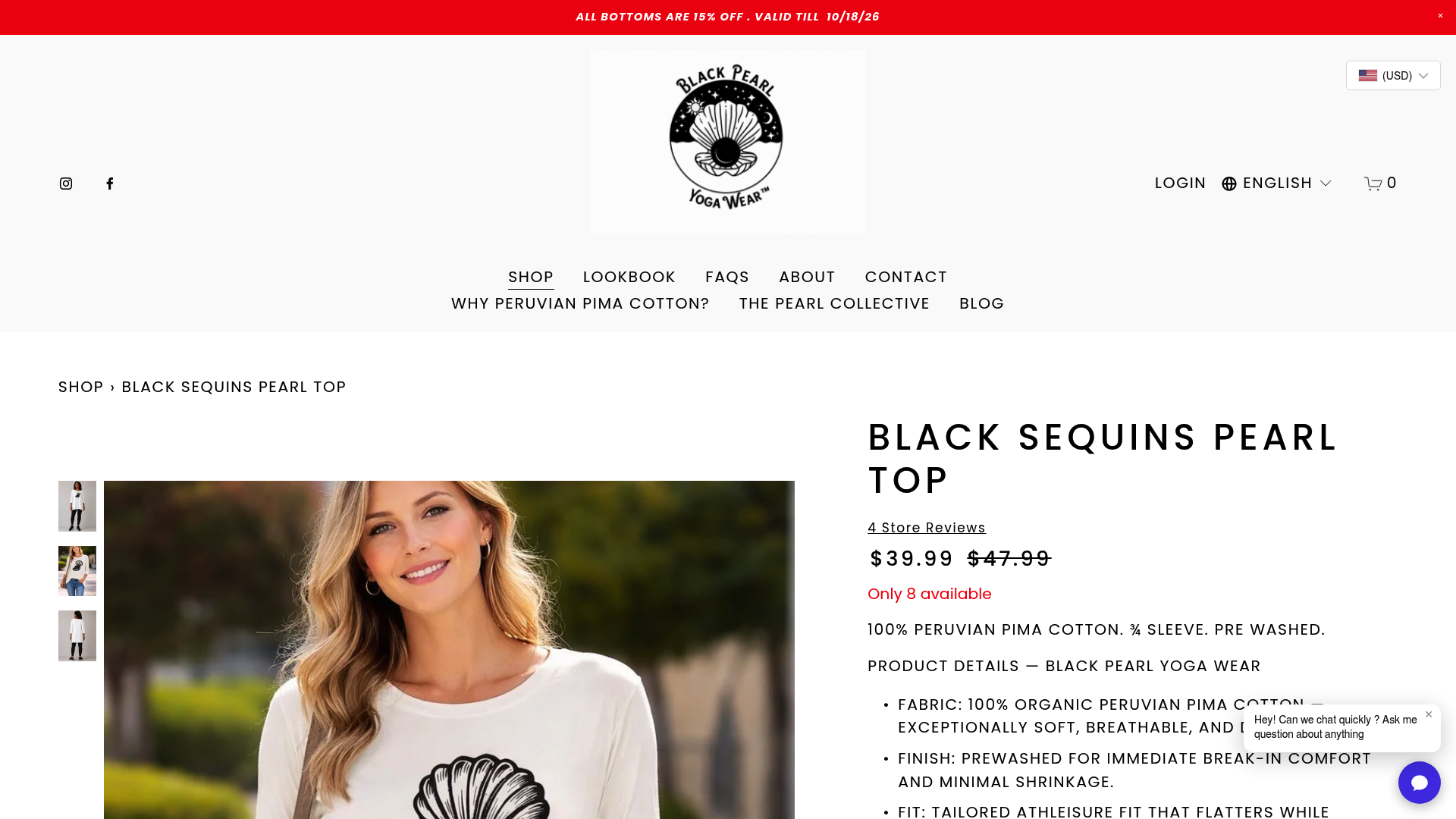
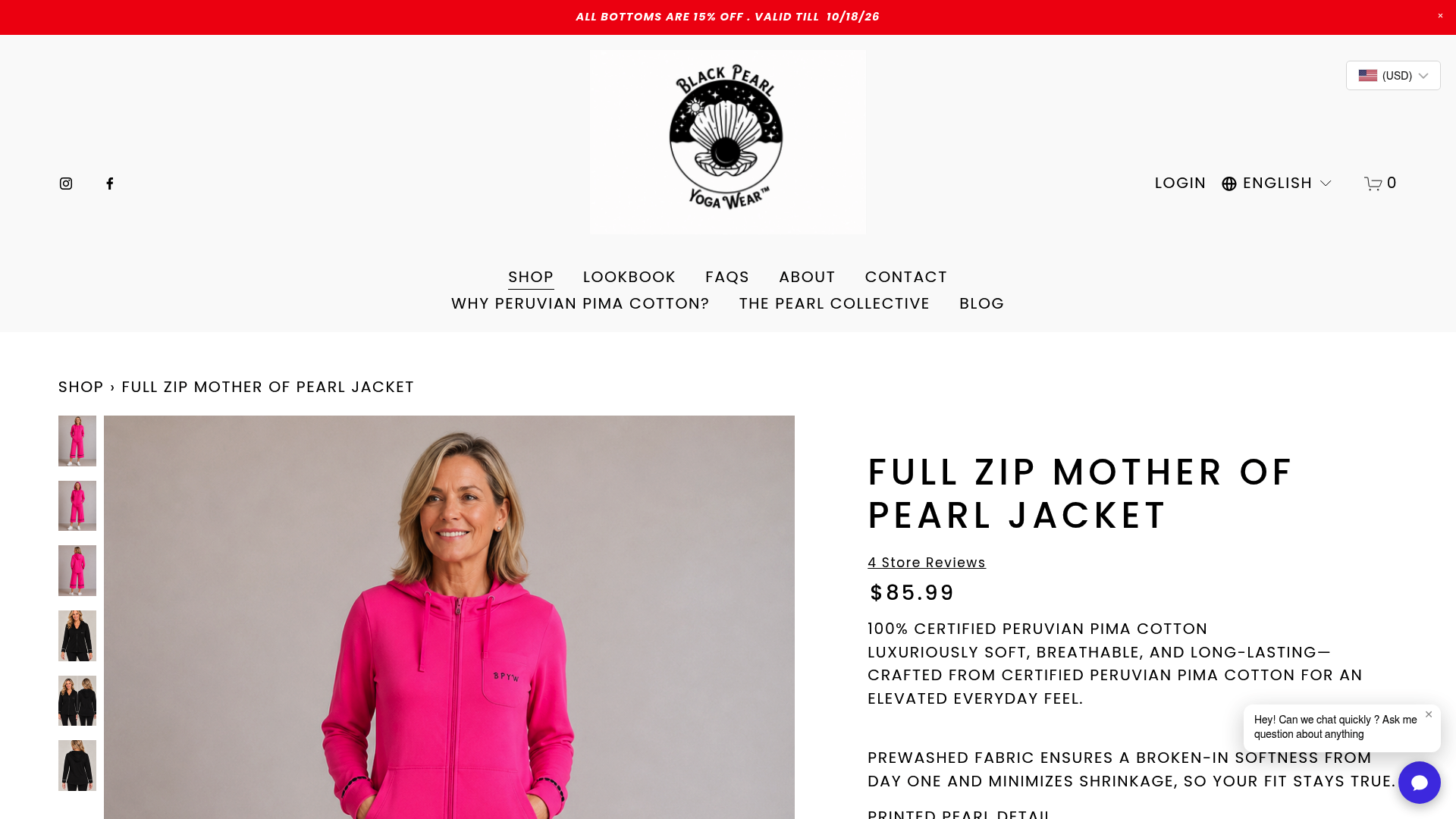
When you're checking our pieces—or any brand's product page—look for the same information you'd verify in person. Our Full Zip Mother of Pearl Jacket and Culottes are made from 100% certified Peruvian Pima cotton, which means you're getting long-staple fiber designed to feel soft and breathable. But cotton alone doesn't tell you about stretch-recovery, moisture handling, or whether the garment will hold its shape after washing.
Before you say a piece meets this checklist, check the product page for fabric composition, care instructions, certifications, stretch and recovery information, and fit guidance. If those details aren't listed, reach out and ask. A brand that's done the work will answer clearly.
We build for women who want comfort and confidence in what they wear, and we believe Pima cotton activewear works best for low-sweat, everyday movement. But the fiber is only part of the story. The five checks above help you verify whether the fabric, finish, and construction back up what the product page promises.
References
[1] What Is Fabric Recovery? Why It Matters for Stretch Fabrics - https://spandexbyyard.com/blogs/specialized-uses-trends/what-is-fabric-recovery?srsltid=AU7gw4XUs9GEN1fBBq8dJhklpsj29bmY7G3tHnSAvuz1LwuzEPyO_L3Z
[2] 5 Tests for Sportswear Fabric Quality - Wooter Apparel - https://wooter.com/articles/5-tests-for-sportswear-fabric-quality/
[3] A guide to activewear fabrics - Seamwork - https://www.seamwork.com/fabric-guides/a-guide-to-activewear-fabrics?srsltid=AU7gw4Wmw2ZipG2lOKvY_YCxW_yeCK5Xhrin-UIBsCDHW4oKCs0YsAMC
[4] how to test stretch recovery on knit fabrics - Sewing Pattern Review - https://sewing.patternreview.com/SewingDiscussions/topic/114622
[5] Compression Tank Tops: Fit, Recovery & Bulk Checks - https://diguanapparel.com/blogs/insights/compression-tank-tops-fit-recovery-bulk-checks?srsltid=AU7gw4USslhUWxNl_cCO3DcxdnwsxPoFRVu5TSEB7XS93sA0Fy_c8Imr
[6] Fabric Stretch & Recovery Explained for Outdoor Clothing - https://www.lonecreekapparel.com/blogs/news/stretch-and-recovery?srsltid=AU7gw4XV2nVeQxFzWQBoB_R6NewAVhrbQ3C6T2o91o_gMdyHuUUXmrW-
[7] Wear Testing 101: Ensuring Your Garments Stand the Test of Time - https://www.kndrsn.com/post/wear-testing-101-ensuring-your-garments-stand-the-test-of-time
[8] Best Fabrics for Stretch and Recovery | Wooter - https://wooter.com/articles/best-fabrics-stretch-recovery/
[9] Custom Sportswear Fabrics: Technical Guide for Activewear - https://sportek.com/blogs/news/custom-sportswear-fabrics-technical-guide-for-activewearcustom-sportswear-fabrics?srsltid=AU7gw4VE6nY1KfsrdNfj4oGuo2ZXiDgqB2EoY_tDyJQ8_bPFCD89Rrsq
[10] Fabric Testing: A Complete Guide - Lyons Information Systems - https://www.lyonsinfo.com/fabric-testing-a-complete-guide/
[11] Activewear Testing | United States - Eurofins - https://www.eurofins.com/en-us/consumer-product-testing/softlines-hardlines/apparel-and-fashion/activewear/
[12] Textile Performance Testing: A Complete Guide - LLMS - https://www.lyonsinfo.com/textile-performance-testing-a-complete-guide/
FAQ
1. Can I test stretch-recovery on activewear I've already worn a few times?
Yes, but the test will show current recovery rather than original quality. Pull a low-wear zone like the upper back and compare it to a high-wear zone like the waistband. If the waistband stays stretched while the back snaps back, the fabric has lost recovery where friction was highest.
2. What if my activewear passes the water-drop check but still feels damp during workouts?
The fabric may wick moisture to the surface but lacks breathability to let it evaporate. Hold it up to light and check for tight weave or missing mesh panels. Wicking pulls sweat away from your skin, but breathability determines how fast it dries once it reaches the surface.
3. Do natural fibers like Pima cotton recover as well as spandex blends?
Natural fibers stretch far less than spandex blends, but high-quality natural fibers can still recover well within their range. Pima cotton won't provide the same compression as synthetic blends with elastane, so it's better for low-sweat, everyday movement than for sweaty workouts.
4. How do I know if fading means the fabric is low-quality or just needs different care?
Run the fingertip abrasion test on an inconspicuous spot first. If the fabric shows thinning or fuzzing from light rubbing, the issue is construction quality. If the surface stays intact but color bleeds in the wash, try sport-specific detergent—synthetic wicking fabrics repel water so well that standard detergent can leave buildup.
5. Should I skip the fit-retention check if the brand has a good return policy?
No, because most return windows close before you'll notice stretch-out from repeated wear. A 20-minute movement test catches immediate slippage at the waistband or neckline, but checking the same garment after one wash cycle reveals whether the fabric holds its original measurements through the kind of use you'll actually put it through.