Yoga to Coffee Runs: Breathable Pima Cotton Leggings That Move With You
September 24, 2026
Before we get into it, the short version:
- Genuine Peruvian Pima cotton grows in the warm coastal valleys of northern Peru and gets hand-harvested, with part of every sale reaching the artisans who pick it.
- Pima's extra-long, smooth fibers knit into lighter, more breathable cloth than ordinary Upland cotton, which stretches natural-fiber comfort from low-impact up toward moderate movement.
- Cotton absorbs moisture instead of wicking it, so Pima leggings soak up sweat and fall short during high-sweat interval training.
- Longer, stronger Pima yarns resist thinning and sheerness, so you replace the pair less often.
- The price premium comes mostly from labor-intensive hand harvesting in northern Peru, which directs extra spending toward the region's skilled workers.
- PFAS exposure runs lower with cotton than with many synthetic blends, and care stays simple: cold wash, no softener, air dry.
The quick read on Pima leggings
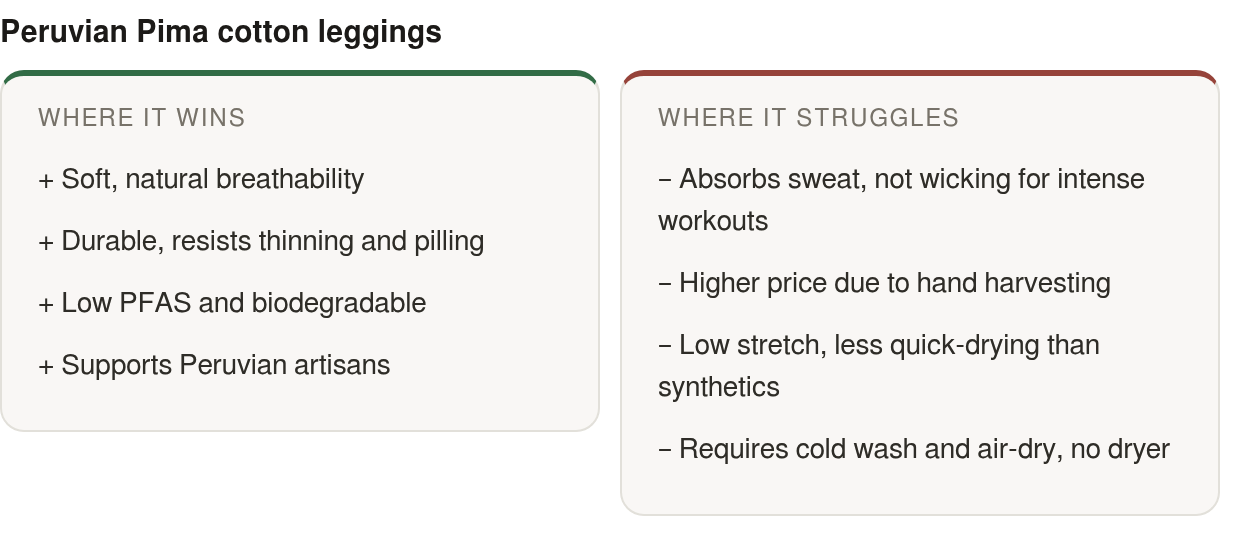
Breathable Pima cotton leggings sit between comfort and gentle movement. Buy them for yoga, barre, walking, and the café run after. Skip them for anything that leaves you drenched, because cotton absorbs sweat rather than pushing it out. For hard interval work, a synthetic blend still wins.
That is the honest scope, and it is the whole buying decision in two sentences. What separates a genuine Peruvian pair from the rest of the athleisure shelf is where your money goes after you swipe the card. A slice of the price lands in the hands of the artisans, many of them women, who hand-harvest the fiber. Most legging stories end at the fabric feel. This one keeps going.
How Does Pima Compare to Popular Legging Blends?
Pima trades raw sweat-wicking for softness, durability, and a cleaner supply chain. The table lines up 100% Peruvian Pima against three blends reviewers tend to favor, drawn from testing by Byrdie's cotton legging guide and Wirecutter's legging review.
| Model | Material | Stretch & Breathability | Price | Sustainability |
|---|---|---|---|---|
| Black Pearl Yoga Wear | 100% certified Peruvian Pima cotton | Low stretch, high breathability | Long-fiber durability, hand-harvested, community-focused | |
| Everyday cotton-spandex legging | Cotton-spandex blend | Moderate stretch, good breathability | PFAS-free natural base | |
| Recycled-poly compression tight | Recycled polyester blend | High stretch, moderate breathability | Recycled synthetic content | |
| Nylon-Lycra performance tight | Nylon-Lycra blend | High stretch, quick-drying | Synthetic, not biodegradable |
What Do Pima Leggings Cost and Why?
Pima runs more than regular cotton, and that gap is not marketing padding. It reflects hand harvesting, which is slow, skilled work. Because the fiber grows in a small band of northern Peru, the extra you pay flows disproportionately to the people doing that work.
So the price tag pulls double duty. A fabric cost quietly becomes a community investment.
The takeaways worth keeping
- Best for yoga, barre, walking, and casual wear. Skip it for high-intensity, high-sweat sessions where synthetics wick better, a point The Good Trade's testers stress.
- Core wins: softness, natural breathability, durability, and low pilling from the long, smooth fibers.
- Less see-through risk than generic cotton, since longer, stronger fibers resist thinning.
- PFAS concerns run lower with cotton than with many synthetics.
- Care is simple: cold wash, no fabric softener, air dry.
- Versatility is the standout. One pair moves from a morning flow to errands without a change.
- The community angle: buying real Pima keeps skilled Peruvian artisans working.
Why breathable Pima leggings are worth a second look
Genuine Peruvian Pima grows in the warm coastal valleys of northern Peru and gets hand-harvested with real care. That is a fiber and a process most of the world never touches. Pull on a pair and you are wearing something made to a standard ordinary cotton rarely meets.
That quality matters more than it sounds. The women's activewear market keeps pushing toward premium natural materials, and plus athleisure sits right inside that demand for pieces that feel luxurious without the plastic hand of synthetics. Our reader wants comfort she can wear from a mat to a café. Pima delivers that.
The Breathability Case, Drawn Honestly
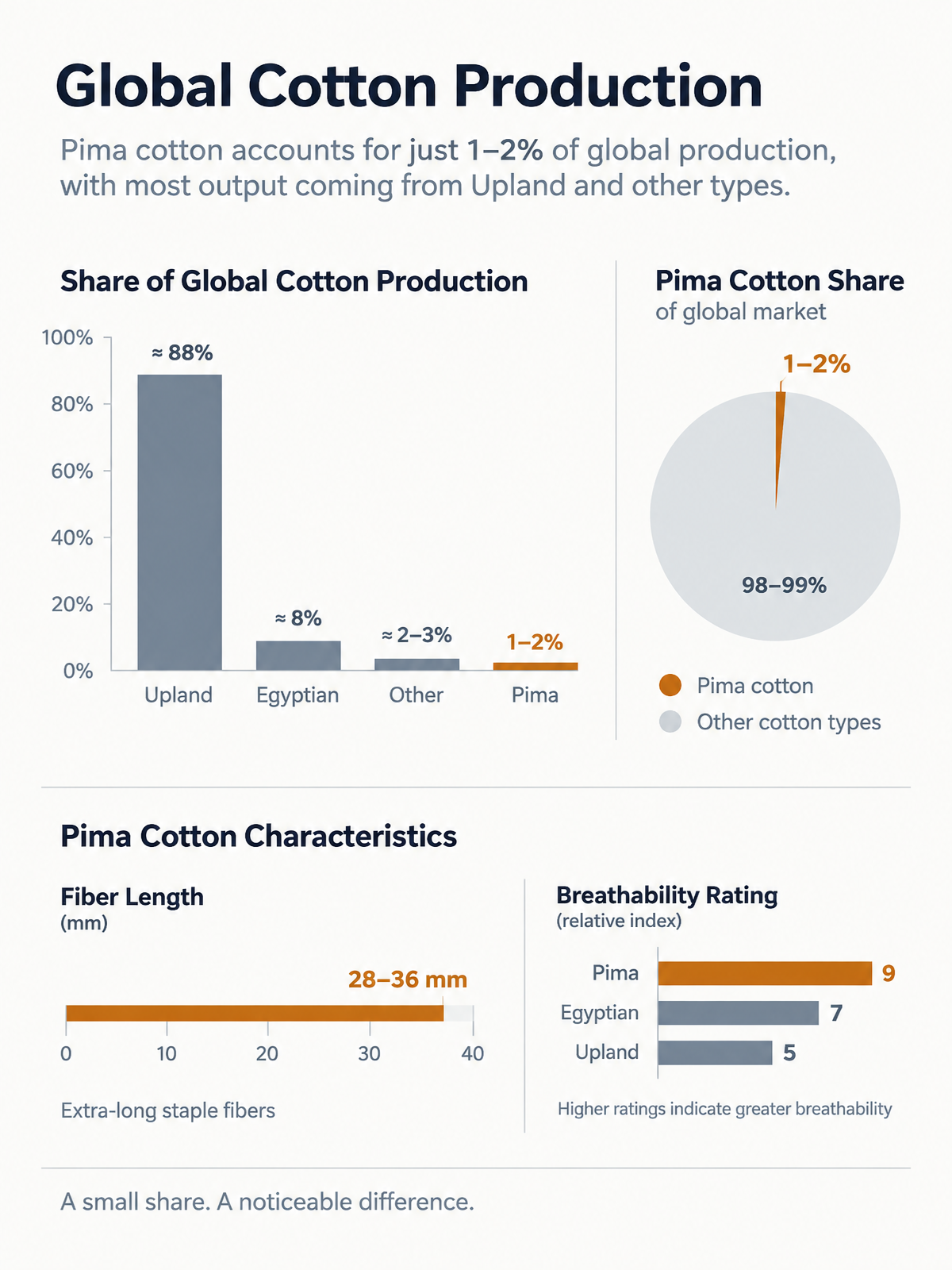
Pima's edge is physical, not marketing. Its fibers run far longer than those in ordinary Upland cotton, and they knit into lighter, more breathable cloth. That is why Pima nudges the comfortable range of natural-fiber activewear upward, from strictly low-impact toward moderate movement.
Here is where we stay honest. One review guide notes that because cotton absorbs moisture rather than wicking it, organic cotton leggings suit low-sweat activity and cooler climates, not performance. A textile market analysis, meanwhile, positions Pima's fiber length squarely in athleisure. Both are right at different intensities. Pima breathes better than standard cotton for yoga and walking. It still soaks up sweat instead of pushing it out. For a sweat-drenched interval class, reach for a synthetic blend.
Durability Answers the See-Through Worry
The common gripe about cotton leggings is that they thin out and go sheer. One legging guide warns cotton can turn see-through over time and steers shoppers toward denser weaves or "squat-proof" labels. That problem belongs to short-staple cotton.
Pima's longer fibers intertwine more tightly and spin into smoother, stronger yarns, with real resistance to pilling and fraying. The thinning that causes sheerness is far less of an issue with true Pima. You pay more up front and replace the pair less often.
What the Premium Buys You
The higher price partly reflects hand harvesting, and that care shows up in the fabric. Careful picking protects the fibers from unnecessary damage, which preserves their softness, color, and finish.
So the premium turns into something you can feel and keep. Because the fibers stay intact through picking, the color holds through repeated washing instead of fading fast, and the fabric keeps its shape instead of sagging at the knee. Fewer replacements over the years also means less waste, so the pair that costs more up front often works out cheaper per wear.
The Science of Peruvian Pima Cotton: Breathability & Comfort
Pima makes up a tiny share of global cotton production and grows in only a few countries, including Peru, according to a Fibre2Fashion market guide. Scarcity like that is not a marketing pose. It is why each pair carries the weight it does, and it feeds the plus athleisure appetite for natural fibers that feel premium without going synthetic.
Why Does Fineness Beat Length Alone?
Everyone talks about staple length. The quieter number is micronaire, a measure of how fine and mature each fiber is. Pima runs a lower micronaire than ordinary Upland cotton, as the Cotton Wire guide explains, which is exactly what lets it spin into finer, lighter yarn.
Finer fiber means more of it packs into the same weight of cloth. That density is what gives Pima its cool, airy feel against skin, and why the fabric drapes instead of sitting stiff. The comfort you notice on the mat traces straight back to a lab measurement most shoppers never see.
How Strong Is Pima, Really?
Strong enough to answer the two complaints people level at cotton leggings: thinning and going sheer. Pima resists fraying, tearing, and pilling far better than ordinary cotton, per Fibre2Fashion. Those long, tightly bound fibers hold up where short-staple cotton stretches out and goes thin.
The sheerness worry that pushes reviewers toward squat-proof labels is a real problem for generic cotton. With authentic Pima, the fiber strength itself does most of that work, so the worry eases considerably.
One honest caveat still applies: like all cotton, Pima absorbs moisture rather than moving it off the skin. Wonderful for yoga and errands. Not your fabric for a heavy sweat session.
What Does Certification Actually Verify?
The gap between a real Pima label and a hopeful one is wide. Look for GOTS, OEKO-TEX, or Supima, which verify authenticity and eco-standards, with many suppliers now adding QR-code or blockchain traceability. Supima alone tests fiber samples through DNA tracing to confirm the cotton in a finished garment matches the seed it started from.
A certification is a quality stamp, and it is also proof of where your money went. Because Pima grows in so few places and carries a premium tied to hand harvesting, that stamp is your evidence the extra you paid reached the artisan communities behind the fiber, not a middleman rebranding cheaper cotton.
Design & Construction for Unrestricted Movement
A legging can be cut from beautiful fiber and still fight your body. What makes one move with you comes down to construction: where the rise sits, how the waistband holds, where the seams fall. We design around those decisions because our Pima is too good to waste on a bad pattern, and because our plus athleisure reader needs a fit that flexes through a lunge and then relaxes over a café chair.
The sourcing shows up in the seams. The fiber is hand-harvested to protect its softness and strength, so the cut has to honor that. Reviewers keep flagging the same failures across the everyday legging market: waistbands that dig, panels that sag, fabric that thins. Good geometry fixes most of that before you ever wash the pair.

What Rise and Waistband Actually Do for Fit
High-rise is the pick for most bodies, and Byrdie's cotton legging guide backs it: a high waistline smooths the silhouette and stays put, while a wide, smooth band keeps the fabric from rolling. Mid-rise works too, but only when a broad band anchors it below the belly button.
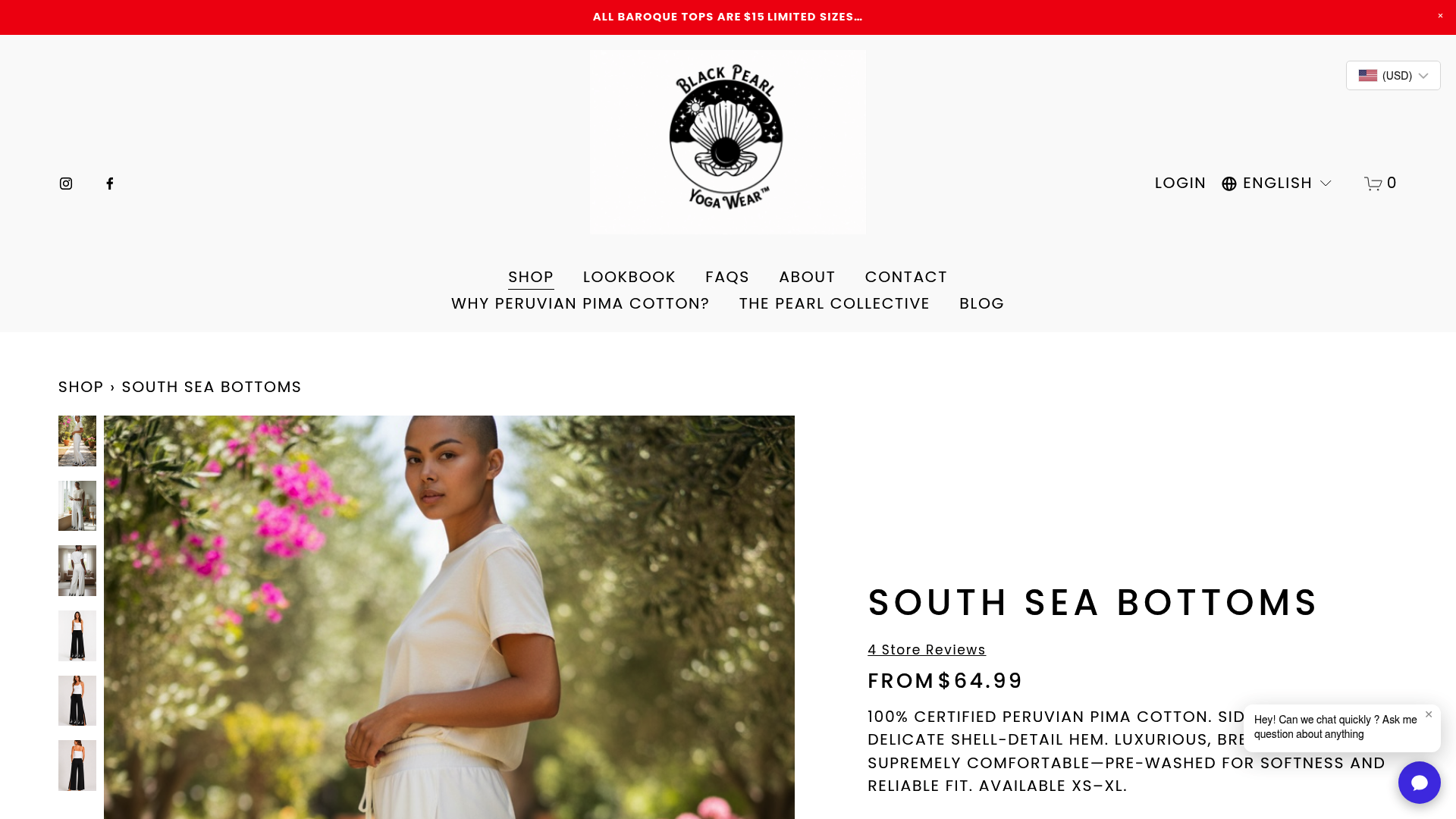
Rise numbers vary more than shoppers expect. Wirecutter narrowed 42 pairs to 19 with a three-person panel of petite, average, and plus-size testers, scoring each on fit, sagging, and versatility, and favoring designs that shape without over-compressing. The lesson we take from it: a structured waistband beats a soft one for staying in place, even when the soft pair costs more. That matters most in yoga transitions, where a seam placed to follow the body cuts the friction a flat, straight seam creates when you fold into a forward bend.
Why Does Pima Change the Seam and Stretch Math?
The see-through and sag complaints both trace back to weak, short fibers. Pima's long, smooth fibers spin into stronger yarns, per Fibre2Fashion, and that structure resists the thinning that causes them. Choosing Pima is itself a longevity play.
Pure cotton behaves differently from a blend. The everyday picks reviewers loved land between 5 and 14 percent spandex, a small share that adds four-way stretch. Our seams do the work those blends lean on elastane for: gusseted crotch panels spread tension across three seams instead of one, and a locked flatlock stitch flexes with the knit rather than fighting it. That is why a non-blended cotton can still move through deep range without straining at the seam line.
The fabric finishes the job. Pima's smooth fibers lie soft against skin and are less likely to pill, so nothing rubs through a full flow. Skip the squat-proof anxiety with real Pima. The fiber already solved it.
Caring for Your Pima Cotton Leggings: Longevity & Performance
Good care is not vanity with Pima. It protects the money that already left your wallet and traveled back to the hands that harvested the fiber. Every wash either preserves that value or throws part of it away, and with a fiber this labor-intensive, the difference adds up fast.
That matters more in plus athleisure, where leggings get worn hard: mat, café, errands, repeat. The good news is Pima is built for the rotation. Its extra-long staple fibers resist pilling and fading, and Fibre2Fashion credits it with strong color retention. Your job is to not undo that in the laundry room.
How Should You Wash Pima Cotton Leggings?
Cold water, gentle cycle, mild detergent. That is the whole rule, and it is not fussy for its own sake.
Pima absorbs moisture and swells when wet, which is part of what keeps it breathable against the skin. Hot water swells it harder and agitates the yarns, which loosens the knit and starts the sag. Cold water keeps the structure tight.
Skip the fabric softener. It coats the fiber and dulls the silky finish you paid the premium for. Turn the leggings inside out before they go in, which spares the outer face from friction against zippers and rougher fabrics.
Why Does the Dryer Do the Most Damage?
Heat is the enemy of long-staple cotton, and the tumble dryer delivers the most of it. High heat shrinks the fibers and breaks down whatever elastane is knit in for stretch, so leggings that fit at the waist one month ride down the next.
Lay them flat or hang to dry instead. Air drying costs nothing, uses no energy, and it is the single biggest thing you can do to keep the fit intact over years rather than months. If you must use the dryer, keep it on the lowest heat and pull the leggings out while still slightly damp.
One honest caveat: Pima is not wrinkle-free. It resists creasing better than regular cotton thanks to its denser weave, but air-dried pairs can hold a fold. A quick low-heat steam sorts that out without the fiber stress of ironing.
What Common Mistakes Cost You the Most?
The three that show up again and again: hot washes, high-heat drying, and overloading the machine so garments grind against each other.
When you cold-wash and air-dry, you stretch the life of a pair from a season into years. That is more than thrift. Given how much of the price reflects careful hand harvesting in Peru, it honors the work in every meter of the cloth, and it is the closest thing to a care guarantee the fiber can give you.
Sustainability & Ethical Production of Peruvian Pima Cotton
A pair of leggings usually hides its real cost. With genuine Peruvian Pima, that cost is the point. Fibre2Fashion ties the premium directly to labor-intensive harvesting, and because Peru is one of the few places growing it, that extra money lands in the hands doing the work.
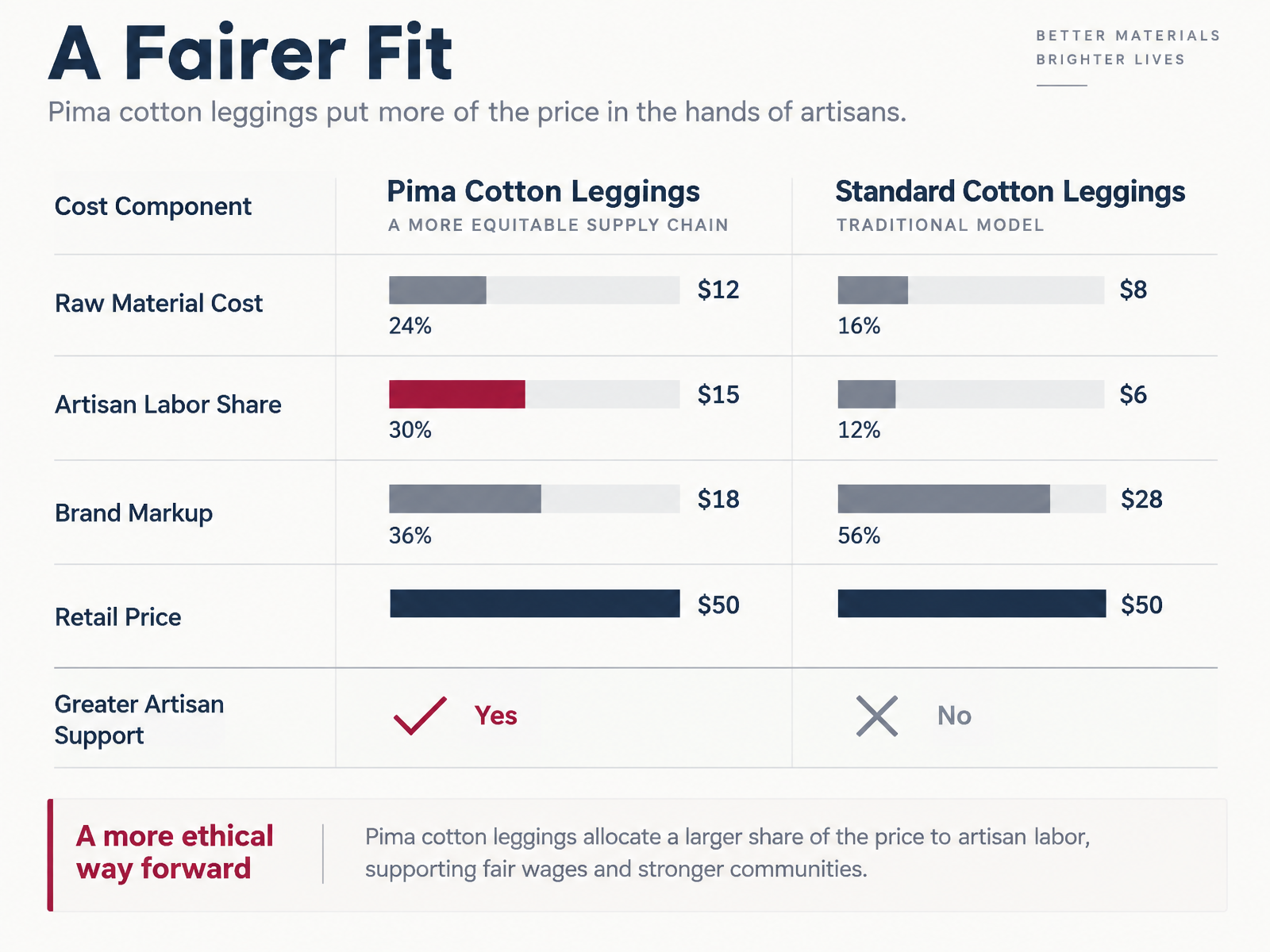
We think about that math constantly across our athleisure wear for women, where the customer wants a piece that feels honest as well as comfortable. The premium is not a markup for its own sake. It is a wage floor for skilled work machines cannot replicate.
Where Does the Money Actually Go?
When you pay more for hand-harvested fiber, you are funding people, not just fabric. Limited supply and manual harvesting drive the price. Turn that around and the social mechanism is obvious: the parts of the price that feel expensive are the parts that reach the growers.
A synthetic legging routes its cost into petroleum and machinery. A Pima legging routes a chunk of it into a coastal Peruvian community.
What Does Sustainable Cotton Actually Reduce?
The environmental case is concrete. The Good Trade's testing team points out that organic cotton farming uses crop rotation to protect soil and water-conservation practices to cut waste, with far less ecosystem impact than conventional fabric. The fiber is also biodegradable, so it does not sit in a landfill for decades.
There is a health angle too. Because leggings press against your skin all day, the same reviewers flag that organic cotton stays free of PFAS, a chemical linked to hormone and fertility problems. One brand they tested, made partly in Peru, is produced without pesticides, BPA, PFAS, or formaldehyde. Cleaner farming and cleaner fabric tend to travel together.
How Do You Verify Any of This?
Claims are cheap, so look for the marks that carry an audit behind them. Fibre2Fashion lists GOTS, OEKO-TEX, and BCI as the common certifications that confirm both authenticity and ethical, eco-friendly production, and notes that many suppliers now back sourcing with QR-code or blockchain traceability. The Good Trade tells shoppers to look for GOTS specifically, since it holds a supplier to strict environmental and labor criteria.
One scope-limiting note, honestly: a certification logo alone does not prove a single artisan was paid fairly on a single farm. It proves the supply chain passed a standard. Treat traceability as the strongest signal you can get as a buyer, not a guarantee that erases every question.
So use it as a filter. If a maker cannot name its certifications or trace its fiber, the ethical story is marketing. If it can, your purchase is doing the quiet work of supporting the growers who made the fabric possible.
References
[1] 10 Best Organic Cotton Leggings For Women (Reviewed) - The Good Trade - https://www.thegoodtrade.com/features/organic-cotton-leggings/
[2] The 12 Best Cotton Leggings for Every Style, Body, and Budget - Byrdie - https://www.byrdie.com/best-cotton-leggings-7105179
[3] The Best Leggings for Workouts and Everyday Wear - The New York Times - https://www.nytimes.com/wirecutter/reviews/best-leggings/
[4] What is Pima Cotton Fabric: Properties, Varieties, Uses & Global Market - https://www.fibre2fashion.com/market-intelligence/texpro-textile-and-apparel/textile-guide/10533/pima-cotton-fabric
[5] What Is Pima Cotton? A Comprehensive Guide to the ... - https://cottongins.org/blog/what-is-pima-cotton-a-comprehensive-guide-to-the-luxurious-fiber/
Quick Questions, Straight Answers
1. Can I wear Pima cotton leggings for running?
Pima leggings handle a light jog or brisk walk, but not a sweat-heavy run. Because cotton absorbs moisture rather than pushing it away, the fabric soaks up sweat and stays damp during sustained cardio. For interval training or hot runs, a synthetic blend wicks better.
2. Will Pima cotton leggings shrink after washing?
Pima can shrink when exposed to heat, since hot water and tumble drying make the natural fibers swell and contract. Wash cold on a gentle cycle and air-dry flat to keep the fit intact. High heat also breaks down any elastane knit in for stretch, so skip the dryer.
3. How do I know if leggings are real Pima and not ordinary cotton relabeled?
Look for certifications like GOTS, OEKO-TEX, or Supima on the label. Supima goes further, using DNA tracing to confirm the finished garment matches the seed it grew from. Many suppliers now add QR-code or blockchain traceability, the strongest buyer signal short of visiting the farm yourself.
4. Are Pima cotton leggings squat-proof?
Genuine Pima resists the thinning that makes cheap cotton go sheer, so squat-proof labels matter less here. Its long fibers bind tightly into stronger yarns, easing the see-through worry that plagues short-staple cotton. Construction helps too: gusseted panels and flatlock seams spread tension instead of straining one seam line.
5. Do Pima leggings actually save money despite the higher price?
Pima leggings often cost less per wear despite the higher sticker price. The long, smooth fibers resist pilling, fraying, and color fading, so you replace the pair far less often than generic cotton. That lower replacement rate spreads the upfront premium across years of wear.
6. Why does hand-harvesting make a difference to the fabric itself?
Hand-harvesting protects the long fibers from the damage machines cause, preserving their natural softness, color, and finish. That intact fiber is why Pima holds its color through repeated washing and keeps its shape instead of sagging at the knee. The extra care shows up directly in how the pair wears.