Why Certified Peruvian Pima Cotton Beats Synthetic Activewear Above Size 2X
September 25, 2026
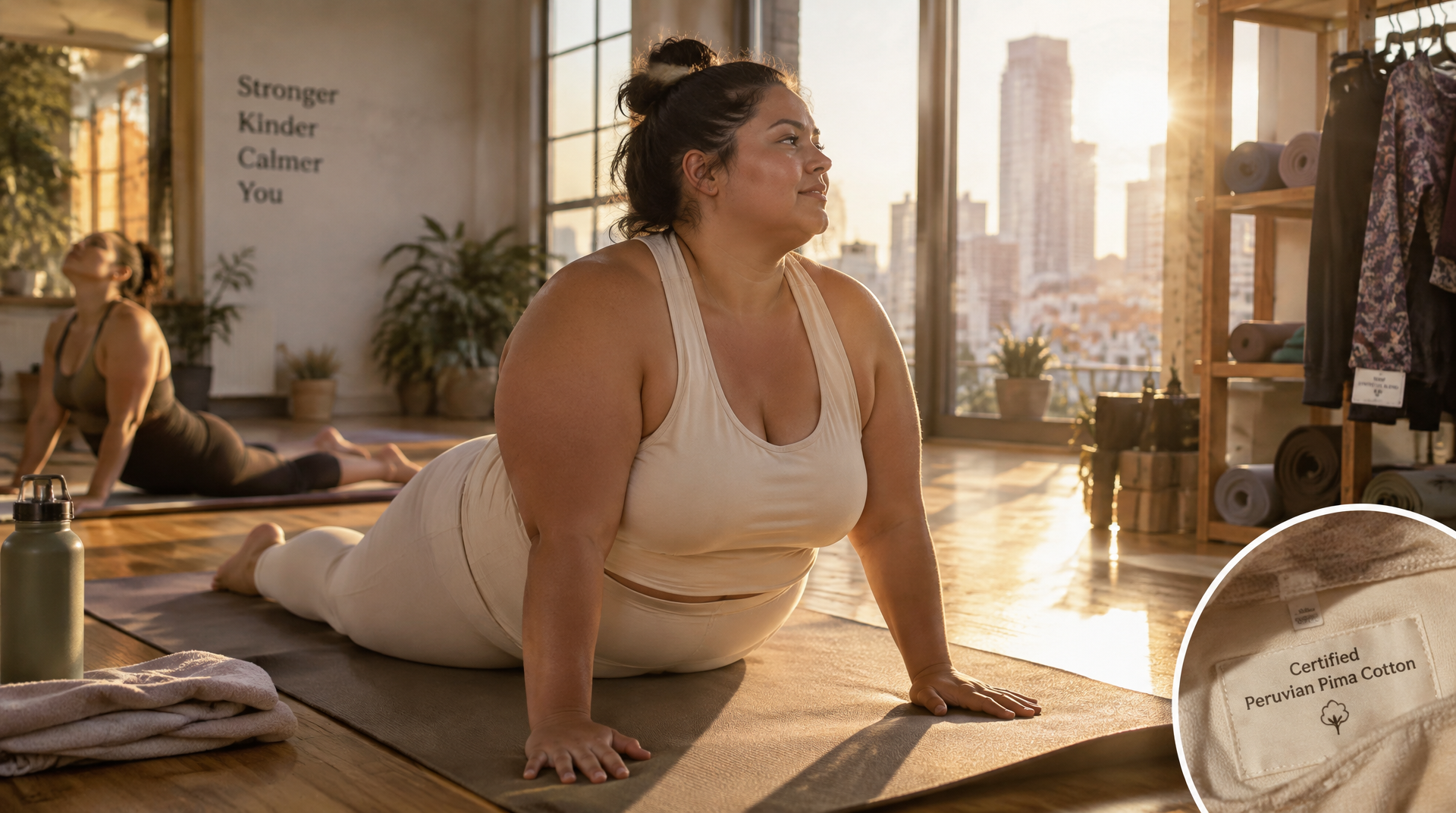
The fast read: where Pima beats synthetics
Shopping plus athleisure and want to know where certified Peruvian Pima cotton pulls ahead of synthetics? For bodies above size 2X, it often comes down to three things: how the fabric breathes during high-impact work, how it holds its shape over months of wear, and how it feels against skin that moves and sweats.
Synthetic activewear is typically designed for quick-dry wicking and stretch recovery. Pima is often chosen for next-to-skin softness, breathability, and a perception of durability through repeated washing. That trade-off can matter more as garments scale into higher size ranges, because larger pieces may carry more fabric, create more friction, and hold more heat during a hard session.
The key differences at a glance
Certified Peruvian Pima cotton: often described as having longer staple fibers, which may feel smoother and may hold up better with repeated laundering in some garments. Synthetic activewear: typically polyester or nylon blends built for moisture-wicking and stretch; wearers sometimes describe them as holding odor or feeling warmer.
| Factor | Certified Peruvian Pima Cotton | Synthetic Activewear |
|---|---|---|
| Softness against skin | Often smooth and soft from day one | Slick, can feel clammy when wet |
| Breathability | May feel more breathable; airflow depends on weave | Depends on weave, often can trap heat |
| Durability | May resist pilling and thinning in some garments | Stretches out, may hold odor over time |
| Fit for 2X+ bodies | Some wearers prefer the drape and movement | Can cling and chafe under high impact |
| Moisture handling | Absorbs, stays soft | Wicks and dries fast |
| Price range (our athleisure) | Varies by style | Varies widely |
Where the price actually lands
Our Pima pieces vary by style, with basics on one end and outerwear on the other. Synthetic activewear spreads across a much wider band, so the sticker rarely tells you much about fiber quality or how the garment will feel in month three.
One caveat: if your only priority is bone-dry wicking during sprint intervals in extreme heat, a technical synthetic may still have an edge on evaporation speed. For many wearers in a plus-size wardrobe—long flows, daily wear, and skin that reacts to scratchy weaves—Pima may be a better fit.
What the fabric decision really buys you
Black Pearl's certified Peruvian Pima cotton athleisure is positioned in a mid-range tier for premium natural-fiber activewear, not the throwaway fast-fashion lane. The value isn't softness at checkout. It's how the garment behaves after repeated wear, repeated washing, and real movement in a larger cut. Pima is often described as having longer staple fibers, which may give the fabric a smoother hand and a more stable surface. Synthetic blends are typically designed for speed: fast sweat movement, fast drying, fast stretch recovery.
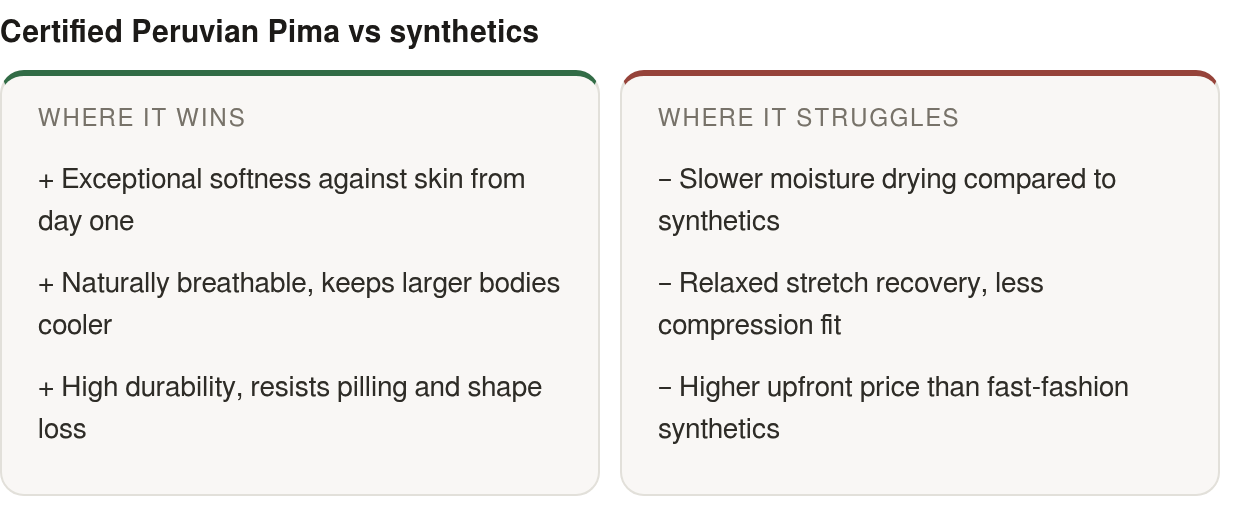
Above size 2X, that call can carry extra weight. Scaled garments may have more fabric to manage and more contact points where rubbing can turn into irritation. Synthetics may earn their place when sweat needs to leave the skin almost immediately. Pima may make more sense when comfort, breathability, and how a piece ages matter more than instant dry-down.
Why this choice trips people up
Shopping plus athleisure gets frustrating fast, because the options split into two camps that rarely talk to each other. Synthetic performance lines built for speed and sweat on one side. Cotton basics that feel great but wilt at the gym on the other. Picking between them isn't about which fabric wins on paper. It's about matching the fabric to how you actually move, sweat, and live.
That's where certified Peruvian Pima cotton may earn its place. It is often described as having a smooth fiber structure that feels gentle from the first wear, and some wearers say it breathes well through a full session and maintains its surface better than standard cotton after regular friction. For women who want comfort next to the skin without giving up durability, that combination can do real work.
Three questions before you buy
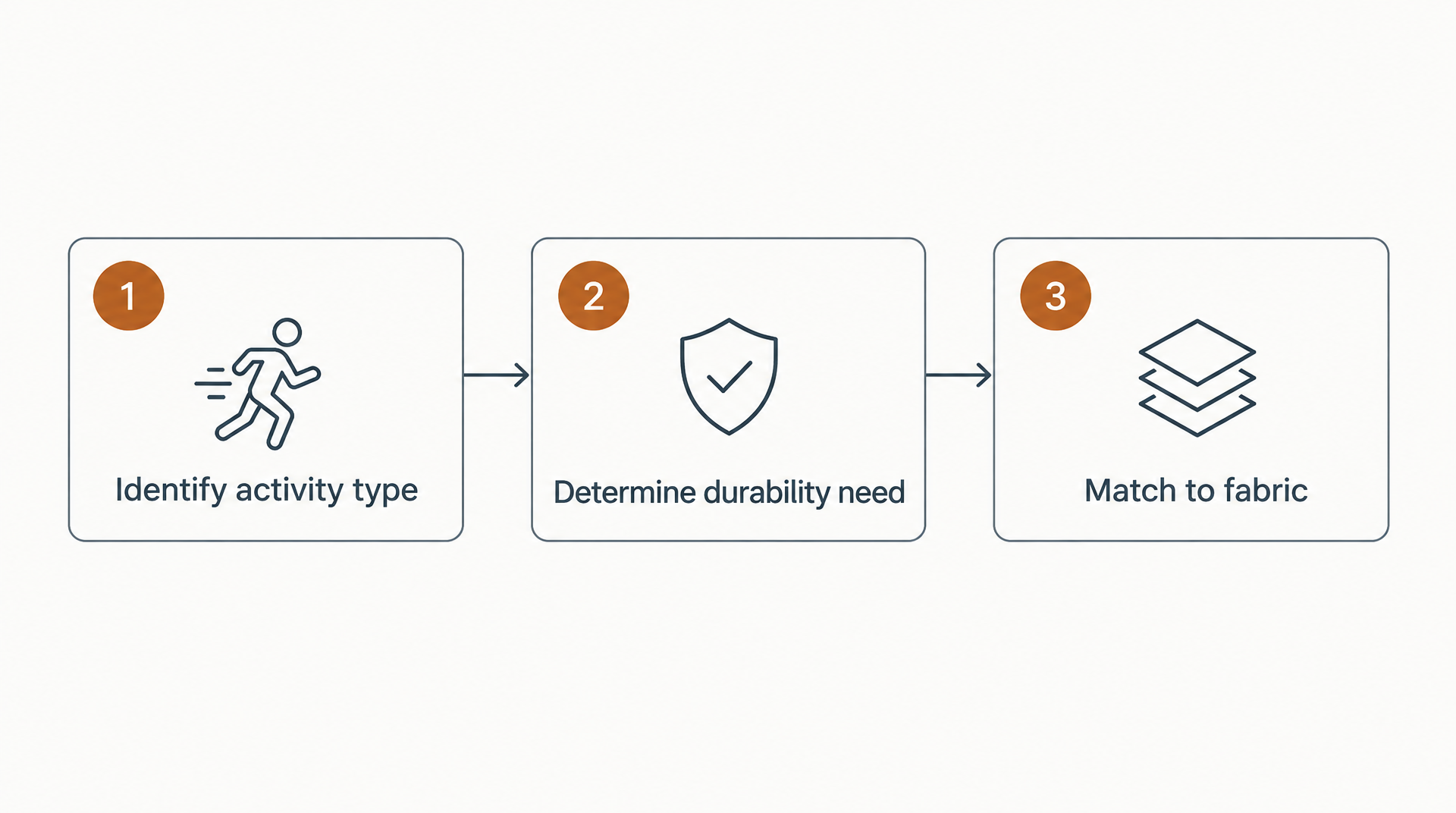
First, what's your session? Some workouts punish a garment with heat and sweat; others ask more from softness and coverage. Second, how often will this piece hit the laundry? If it's in weekly rotation, fiber quality and construction may decide whether it still feels good months later. Third, what does your skin tolerate? Chafing and irritation are the quiet reasons a lot of activewear ends up unworn.
| Selection factor | Certified Peruvian Pima cotton | Standard synthetic activewear |
|---|---|---|
| Best session type | Often preferred for yoga, strength, moderate cardio | Sprint intervals, wet-weather runs |
| Skin-sensitive wear | Often comfortable, but varies by wearer | Varies by blend |
| Softness next to skin | Often smoother; can be very soft | Often scaled up from smaller patterns |
| Wash durability | May hold shape with proper care | Can pill or thin faster |
| Fast-dry wicking | Moderate | Strong |
Where synthetics still make sense
Plainly: if you run in the rain or do repeated sprint work where sweat needs to move off your skin in seconds, a quick-dry synthetic may do that job better. That's the honest scope limit.
For most of what happens in a studio or a strength session, many shoppers find comfort and longevity more useful than marginal wicking speed. If your workouts live in that middle zone and you value soft, breathable, long-lasting fabric, natural fiber may be worth considering.
The features that actually change your workout
Put Peruvian Pima cotton next to synthetic activewear feature by feature and the differences can get sharp fast. For anyone shopping plus athleisure above size 2X, three features may carry the most weight: how a seam holds under a lunge, how heat escapes during a hard set, and how the fabric feels after months in the wash.
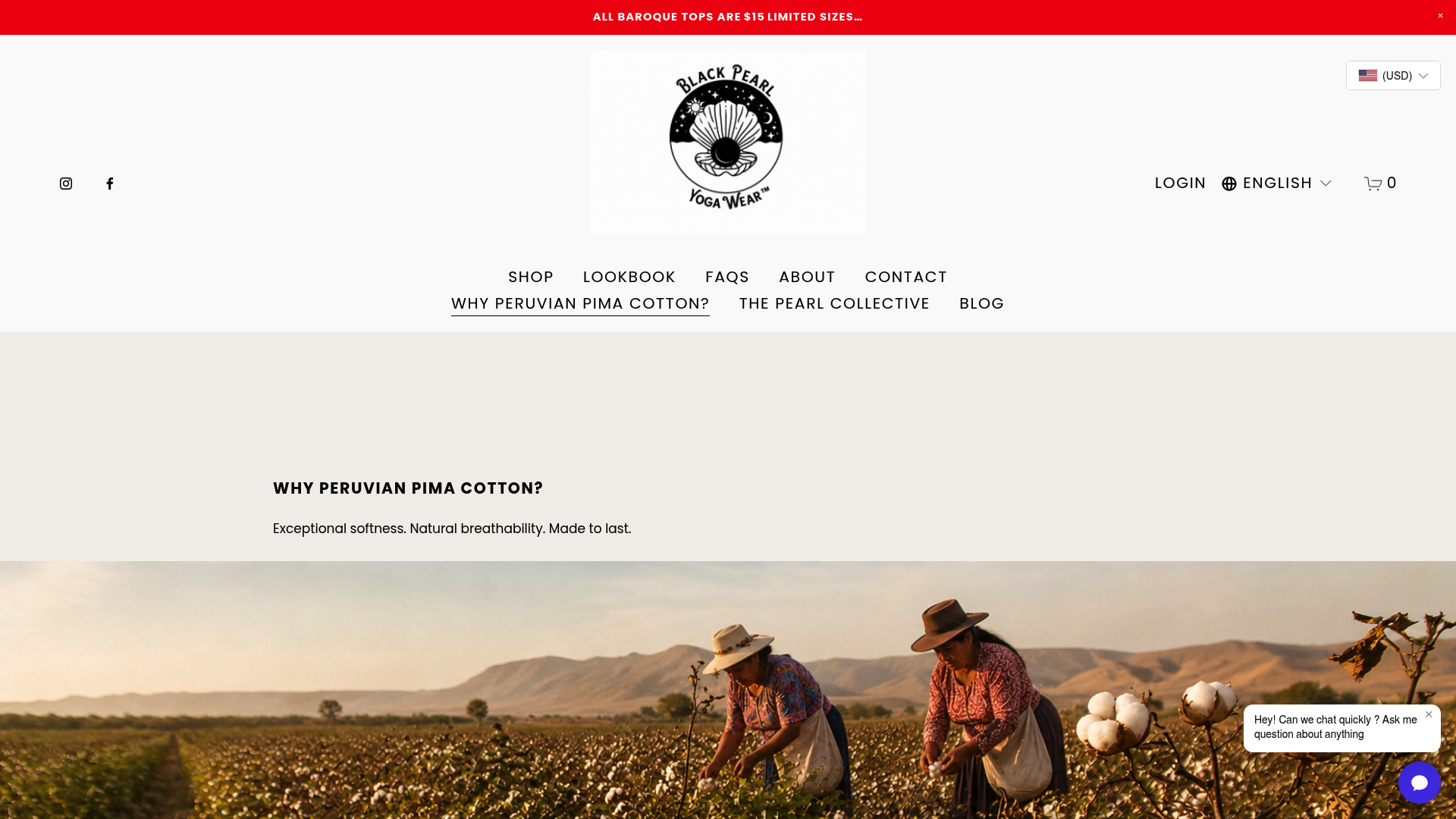
We build our line around Pima, so we're upfront about where synthetics may still win. A few construction details may matter first. Longer-staple cotton is often said to create a smoother yarn, which can help the finished fabric feel less abrasive at high-contact zones. Pima is also sometimes described as taking dye evenly, so color may stay more consistent instead of fading at seams and stress points. In plus athleisure, those aren't necessarily cosmetic extras—they may affect whether a garment still looks polished after real use.
Where Pima pulls ahead for larger bodies
Fit may decide everything else. On bodies above 2X, more fabric can mean more surface area rubbing during a burpee or a fast row. Some wearers report that Pima's smoother, longer fibers feel less likely to chafe, so a longer session may stay comfortable at the inner thigh, the underbust, and the waistband.
Breathability may be the second win. Cotton is often described as letting heat move out naturally, which may matter when a larger garment carries more warmth. Some wearers report feeling cooler through the back half of a workout instead of soaked and sticky.
The honest trade-off
Skip Pima if your priority is bone-dry fabric during sprint intervals or hot yoga. Synthetics are typically designed to wick and dry faster. For strength work, walking, and daily wear where comfort and durability may matter more than flash-drying, cotton could be the better call. If you sweat heavily and want dry in minutes, a synthetic piece may be worth keeping in rotation.
How each fabric holds up over a year
Performance in plus athleisure means three things that show up mid-workout: how fast a fabric recovers between sets, how well it holds up as garments scale into larger sizes, and how much upkeep it demands over a year of wear. These decide whether a piece stays in your rotation or gets exiled to the back of the drawer.
The scorecard often looks like this: synthetics may move faster on drying and stretch snap-back. Pima may win the long game, especially once you're shopping above 2X, where every garment can carry more fabric to manage.
| Performance metric | Certified Peruvian Pima Cotton | Synthetic Activewear |
|---|---|---|
| Recovery speed after stretch | May feel slower, relaxes gradually | Fast snap-back |
| Dry time | May air-dry more slowly | Quick-dry |
| Scaling into larger sizes | Some wearers find fibers stay softer and more stable | Compression can pinch, ride up |
| Wash cycles before wear shows | May hold shape and color longer with care | Odor buildup, faster fade |
The bigger the garment, the harder the fabric works
Scaling activewear up isn't just cutting a bigger pattern. More surface area can mean more heat to release, more friction at the thighs and underarms, and more weight pulling on seams. Synthetic pieces may compress and creep upward on some larger frames, leading to tugging during the session.
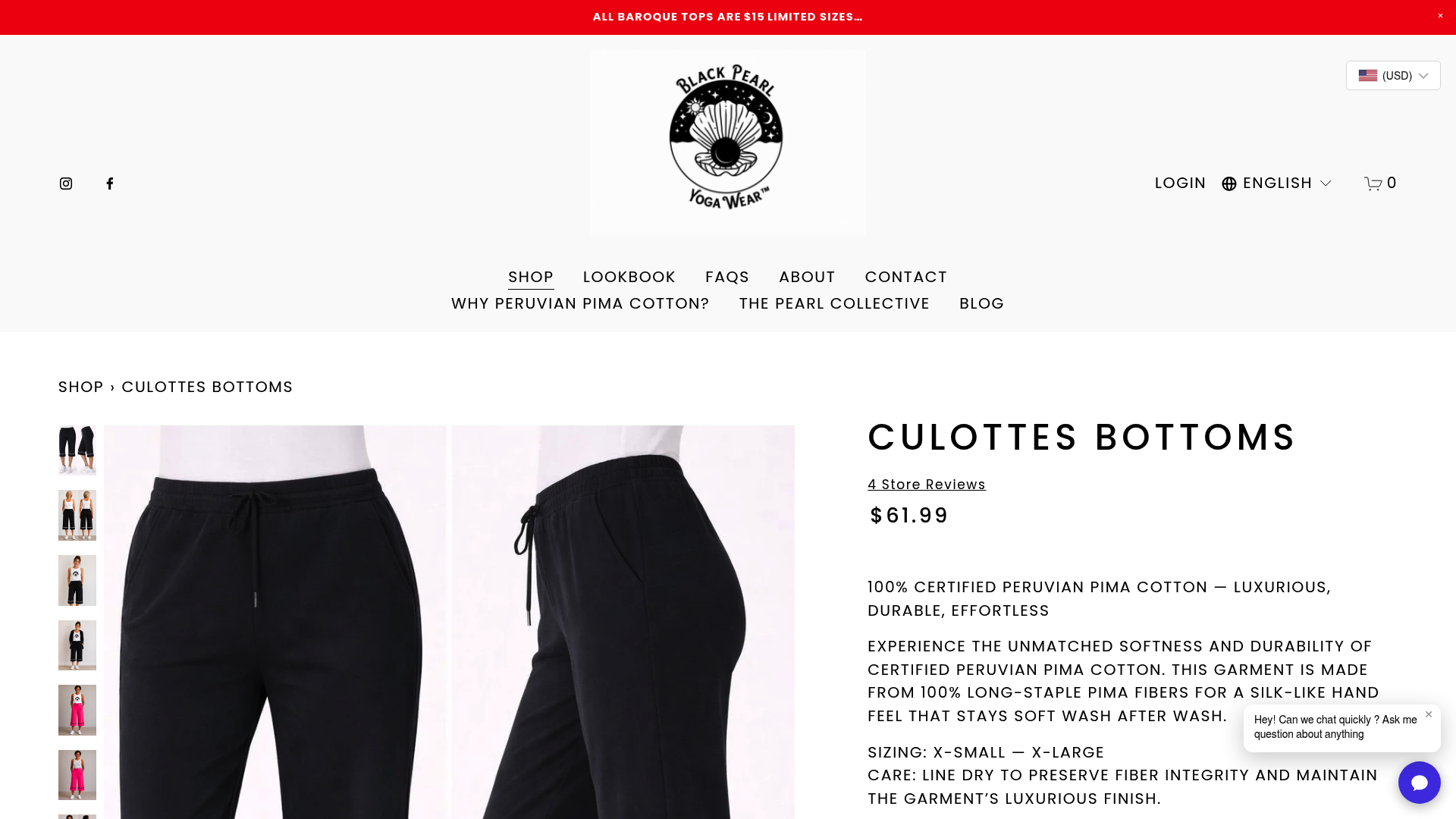
Pima may behave differently as it scales. The fiber quality that can make it smooth in a tank may also carry into a wider legging, jacket, or culotte, because the hand of the fabric may stay more consistent across the cut. That consistency is something many plus-size shoppers say is missing in some athleisure.
The real cost lives in the laundry
The running cost of activewear is often upkeep. Some synthetics may hold onto sweat odor after normal washing, which can push you toward more frequent or hotter cycles and potentially shorten the garment's life.
Pima may be easier to keep in rotation because it doesn't ask you to treat every wear like a rescue mission. When a garment keeps its surface and color, you can wash for care instead of damage control. For anyone building a wardrobe rather than churning through it, that kind of durability can change the math on what a piece actually costs you. Business Insider's roundup of plus-size workout clothes makes a related point about buying pieces that last.
The trade you're actually making
Every fabric asks you to give up something. The honest work of shopping plus athleisure is knowing which trade you're making before you're mid-burpee and regretting it. We build our line around certified Peruvian Pima cotton, so we'll be straight about where it costs you and where it pays off.
Pima may reward patience and may punish impatience. If you need a piece ready again almost immediately between all-out efforts, a synthetic may win that race. If you want something that feels good against skin from the first wear and still looks right after a season of hard sessions, some wearers say Pima's longer, hand-harvested fibers provide a softness and durability that a polyester blend may not match.
Where Pima earns its keep, and where it costs you
The strengths often cluster around comfort and longevity. Longer-staple fibers may mean less plasticky cling, better airflow when you're running hot, and a gentler surface where a scaled-up garment meets skin. Larger pieces can carry more weight and create more stress at seams, so cheaper materials may show their weaknesses sooner. Pima may give you a softer, steadier base to build a wardrobe around.
The weaknesses are real too. Cotton may dry slower. It may relax rather than snap back, so a compressive fit isn't its strong suit. And quality Pima can cost more up front than a fast-fashion synthetic set.
| Consideration | Certified Peruvian Pima Cotton | Synthetic Activewear |
|---|---|---|
| Upfront cost | Often higher | Often lower |
| Dry speed mid-session | May be slower | Typically faster |
| Comfort in larger sizes | Often comfortable | Variable |
| Odor over time | May stay fresher for some wearers | May hold smell |
| Compression fit | Usually relaxed, not tight | Often stronger snap-back |
When to skip Pima entirely
We'd rather you buy the right thing than buy from us out of loyalty. Consider skipping cotton for hot-yoga rooms and sprint-interval work where sweat volume is extreme and dry time matters. A moisture-wicking synthetic may serve you better there.
For strength training, walking, low-to-moderate cardio, and the long stretches of daily wear in between, Pima may be the pick. That's most of how many of us actually move. Match the fabric to your week, not to a single brutal session.
Who this fabric is actually for
The clearest way to choose is to match the fabric to your real week. Not the workout you fantasize about, the one you actually do. That's where most plus athleisure advice falls apart. It treats every body and every session the same.
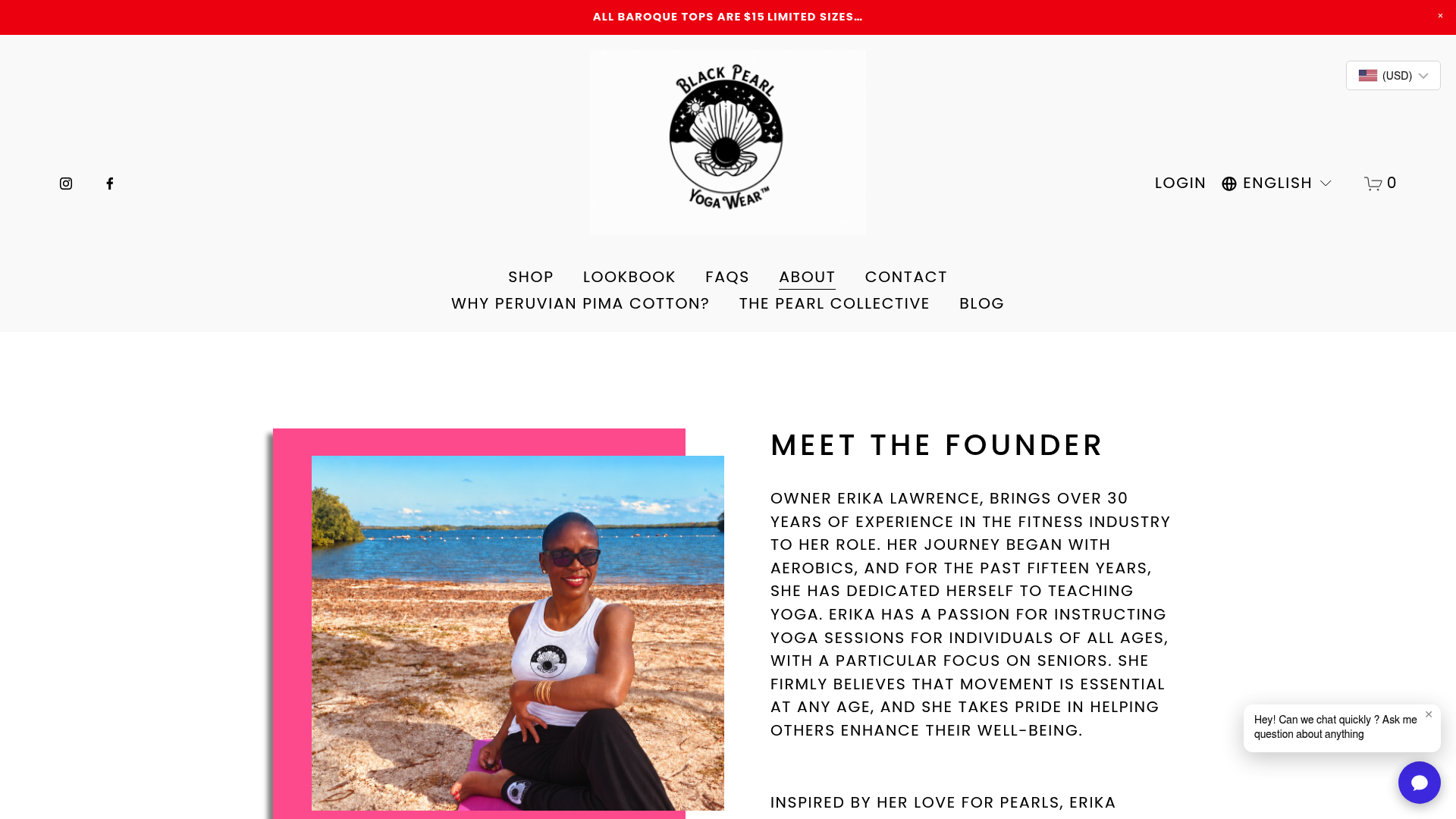
Certified Peruvian Pima cotton may fit best when your clothes need to move between activity and everyday life without feeling like gear: studio work, brisk walks, strength circuits, errands, travel days, desk hours in between. For women above size 2X, that mix can be where a breathable, soft natural fiber earns its keep.
Who should reach for Pima first
If you run warm and dislike the sealed-in feeling of slick performance fabric, Pima may be the first place to look. If your skin is sensitive where waistbands, seams, and inner thighs meet, a smoother cotton surface may make a noticeable difference. And if you want fewer pieces that work harder instead of a drawer full of almost-right leggings and tops, Pima can fit that buying philosophy.
One case sends you elsewhere. If your sport depends on rapid dry-down after intense bursts, synthetic wicking may still have the advantage.
Which fabric matches your session
| Your scenario | Better pick | Why |
|---|---|---|
| Yoga, walking, strength circuits | Pima | May breathe better through long, warm sessions |
| All-day wear plus light movement | Pima | Soft next-to-skin feel, may hold shape |
| High-friction fit above 2X | Pima | Smooth fiber may reduce chafe |
| Sprint intervals, fast-dry needs | Synthetic | Often quicker moisture wicking |
| Sweat-heavy HIIT with rapid recovery | Synthetic | Often faster stretch snap-back |
The woman our line is built for lives in her activewear. She wants pieces that handle movement, errands, lounging, and regular washing without feeling harsh or looking worn out too soon. She cares more about comfort and longevity than shaving seconds off dry time. If that's you, and you're shopping the upper end of the size range, Pima may be the honest recommendation. If your training is built around all-out speed work, keep synthetics available for those sessions.
How to pick before your next session
If you shop plus athleisure with an eye on comfort, breathability, and pieces that hold up over time, Pima cotton may be the pick we stand behind. Its longer, hand-harvested fibers may do work synthetic blends can't always replicate, especially above size 2X where heat and friction can climb with added fabric.
That doesn't mean synthetics lose every round. They still often own the quick-dry sprint. For plus athleisure built around short, sweat-drenched intervals where you need bone-dry fabric fast, a polyester blend may earn its spot. We'd rather tell you that plainly than pretend one fabric wins everything.
Which fabric fits your workout
The choice often comes down to how long your body stays in motion and how the fabric works between washes. When your clothing has to stay comfortable from the workout into the rest of the day, Pima may pull ahead. It can offer softness without the flimsy feel of basic cotton, and breathability without the slick cling of many synthetic blends. If your body chafes or reacts, that smoothness may matter even more.
The shorter and sweatier the burst, the more synthetic quick-dry may earn its place. Interval sprints that leave you soaked can call for fabric that dries between sets, and that's a race synthetics often still win. Neither answer is wrong. They may fit different bodies and different days.
What to buy first
If your week runs on flow classes, brisk walks, and everyday movement, Pima may be a good place to start. That's where our line is built, and it's the fabric we'd suggest to a friend above size 2X who wants softness that lasts.
If you live in interval sprints and need instant dry-down, keep a synthetic piece in the rotation for those days. Most closets end up mixed, and that's fine.
Buy for the sessions you actually do, not the ones you plan. Pin down your real week, and the choice makes itself.
References
[1] The Best Places to Buy Plus-Size Workout Clothes in 2026 - https://www.businessinsider.com/guides/style/best-plus-size-activewear
Questions People Ask
1. Does certified Peruvian Pima cotton need special washing to keep it soft?
No special ritual is required. Treat Pima like a quality natural fiber: avoid harsh laundering when you do not need it, give the fabric room to keep its smooth surface, and choose care habits that preserve the yarn rather than strip it. The point is not fussiness; it is letting the fiber age well.
2. How is Pima's extra-long staple fiber different from regular cotton gym basics?
Regular cotton gym basics may feel good at first but can lose polish quickly with friction, sweat, and frequent laundering. Pima starts from a longer, smoother fiber, which is often why it may feel more refined and hold together better in activewear than ordinary cotton basics.
3. Can one Pima piece handle both my yoga classes and the occasional sprint day?
It can, if the sprint day is occasional and you are not judging the garment by technical racewear standards. Many wearers find Pima comfortable for the broad middle of an active week. For the hardest sweat sessions, it may be smarter to rotate in a synthetic piece rather than force one fabric to do every job.
4. Is Pima's higher upfront price actually worth it above size 2X?
It can be, especially if you are tired of buying pieces that look tired too quickly. Above size 2X, fabric quality may show up in comfort, drape, and how the garment handles friction over time. Pima may make the most sense when you want fewer better pieces instead of constant replacement.