What 100% Peruvian Pima Cotton Feels Like After 30 Washes
September 21, 2026
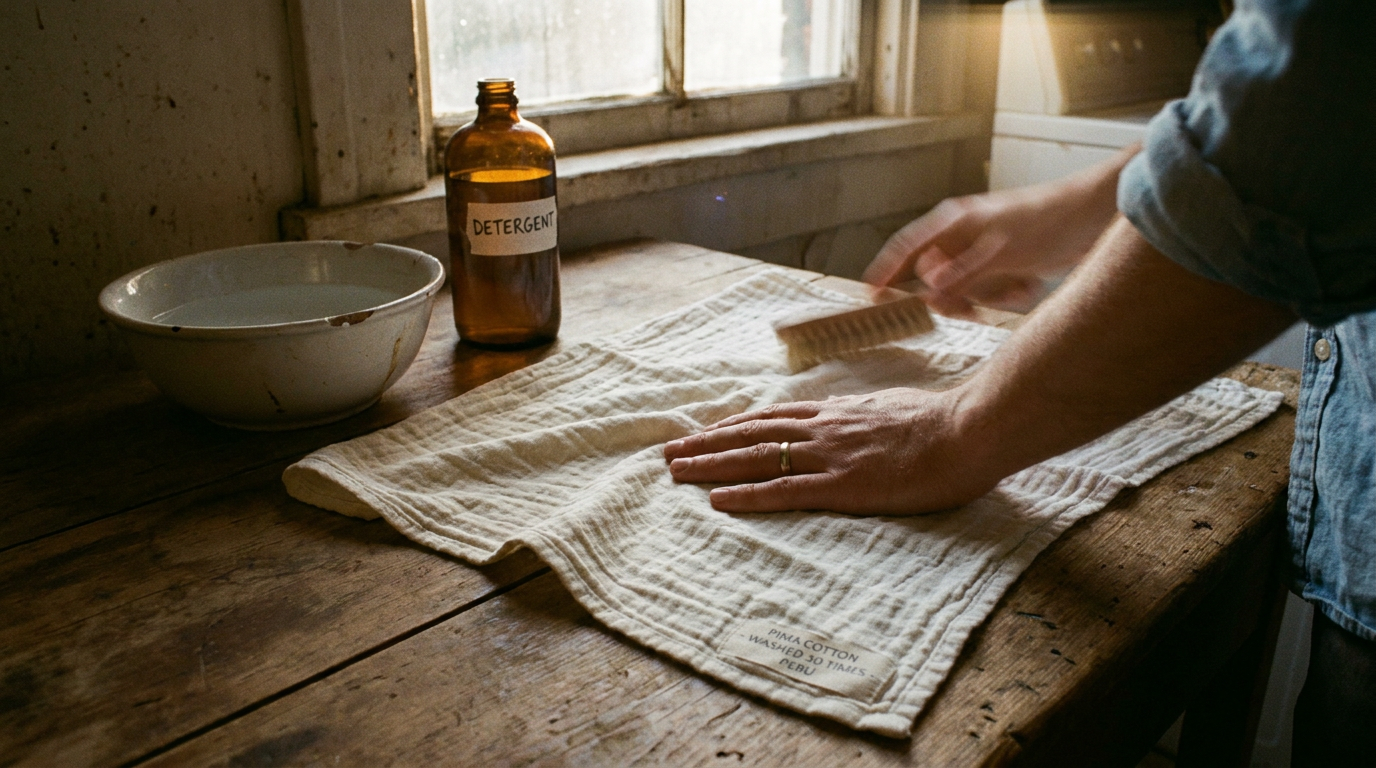
What You Need to Know
Peruvian Pima is widely described as an extra-long staple cotton, with fibers that are longer than conventional upland cotton. That length is often cited as the main reason for its softness. Surface softening finishes, the kind sprayed on to feel plush in the store, can wash out within the first several cycles. Pima's softness is generally attributed to the yarn itself, not a coating. Depending on the supplier and processor, Peruvian Pima may be hand-harvested in coastal valleys such as Piura and Chira, which can help keep the strands intact and freer of the debris machine picking can drag in. Longer staples can leave fewer fiber ends poking out, so you may get a smoother surface, stronger yarn, and less pilling over many washes. Growing conditions can influence how evenly the fiber spins, but those details vary by source and region.
The Short Version Before You Buy
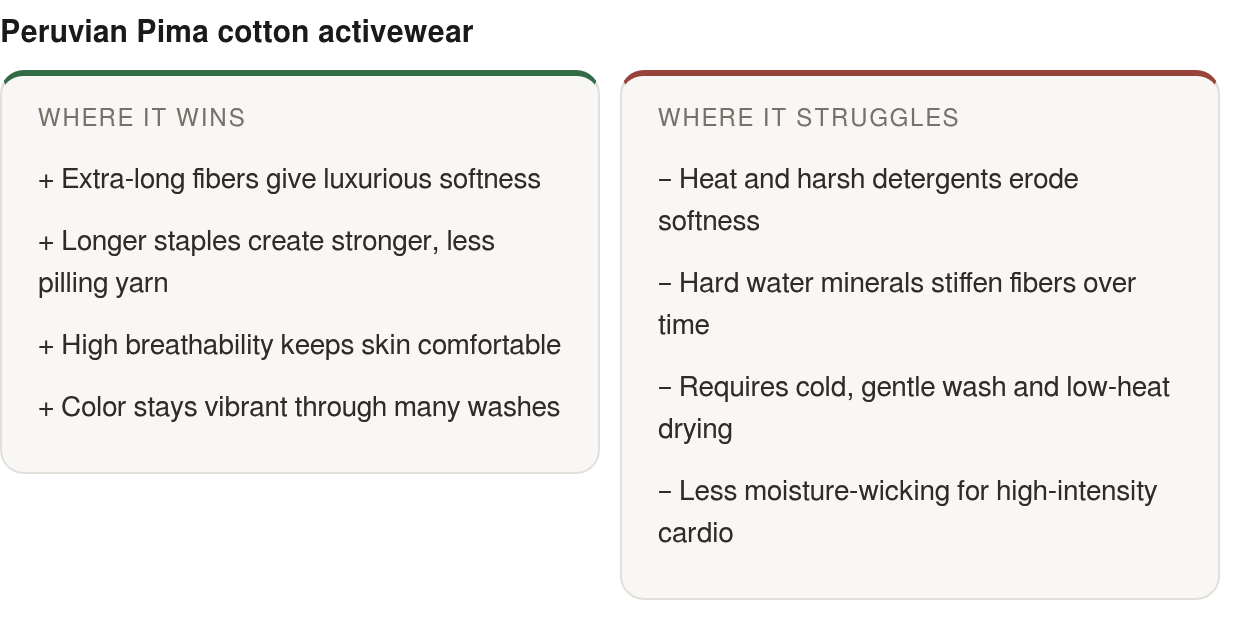
Caring for 100% certified Peruvian Pima cotton activewear comes down to protecting those long, smooth fibers. Follow the cold-water care guidance and the hand feel stays soft, the fit stays comfortable, and the surface fights off pilling. The tradeoff people expect is softness versus stretch. It isn't. The real tradeoff is softness versus the heat and detergent you throw at it.
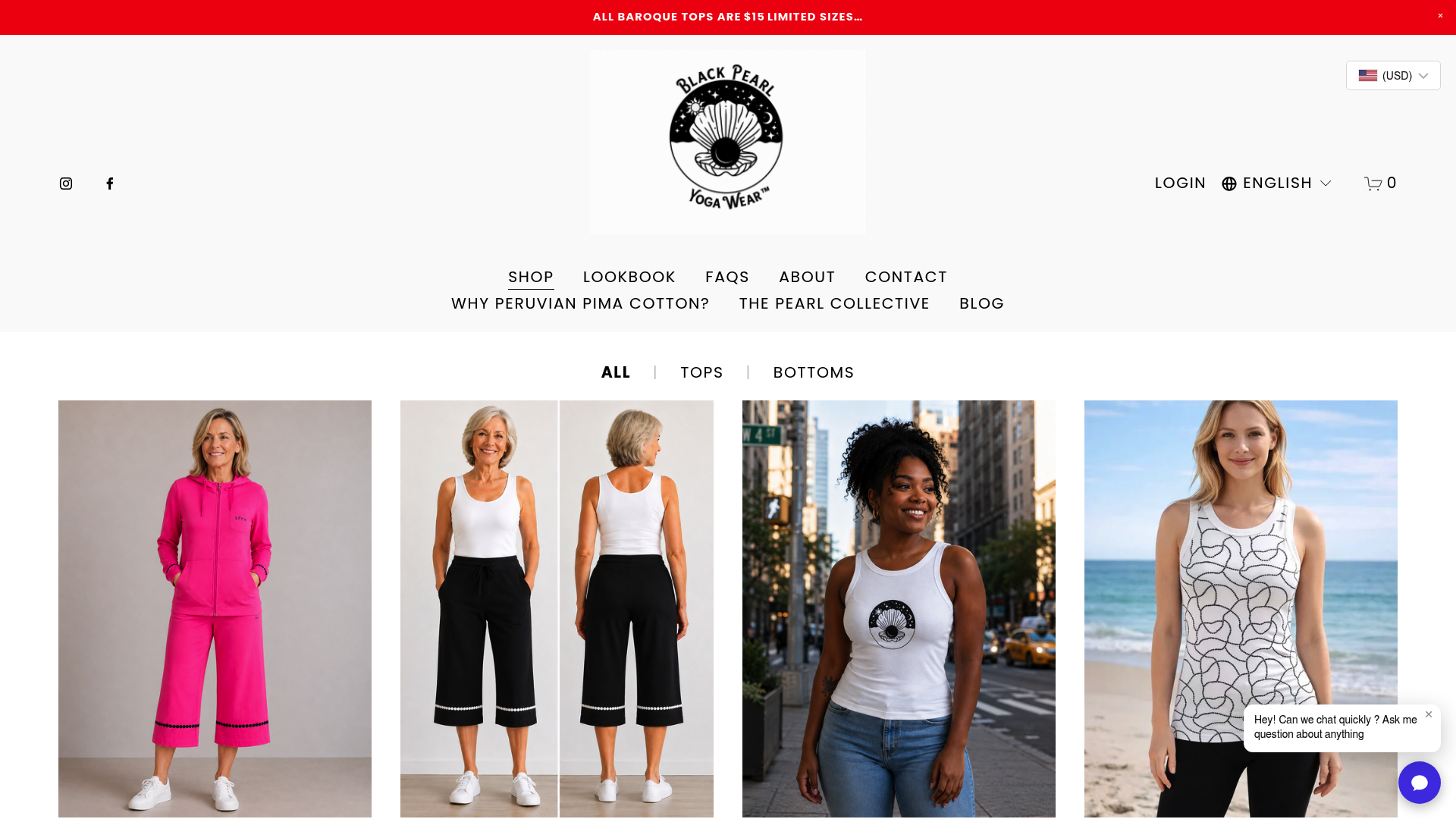
How Does Pima Cotton Hold Up With Repeated Washing?
Washed cold, 100% certified Peruvian Pima cotton is built to stay soft, breathable, and durable. The long fibers help garments hold their look and comfort as the washes stack up.
| Attribute | What the material is known for |
|---|---|
| Softness | Extra-long, smooth fibers create a soft, luxurious feel. |
| Breathability | Allows air to circulate for comfort during movement and daily wear. |
| Durability | Longer fibers produce smoother, stronger yarns that help maintain appearance. |
| Pilling | Smooth fibers are less likely to break and form pills. |
| Color | Absorbs color beautifully and keeps shades vibrant through wear. |
How Should You Wash and Dry Pima Cotton?
The routine is short: machine wash cold on a gentle cycle, then tumble dry low or lay flat. That's what keeps the fabric's integrity and soft hand intact.
What the material does well:
- Feels soft and smooth against the skin.
- Breathes, so you stay comfortable moving, resting, or running errands.
- Uses longer fibers for stronger yarns that hold their shape over time.
- Resists pilling, since smooth fibers are less likely to break and bunch.
- Absorbs color richly and keeps shades vibrant through repeated wear.
Why the Feel After 30 Washes Is the Only Test That Counts
The first wash tells you nothing. The thirtieth tells you everything. By then a garment has been through enough heat, agitation, and detergent to expose what the fabric is actually made of.
This matters because the fiber is supposed to perform over the long haul, not on day one. A pair of leggings that pills on the inner thigh after a dozen washes stops feeling like an investment. It starts feeling like a countdown. What you want is activewear that doesn't go rough, thin, or slack in the spots that take the most stress.
Store Softness Fades. Yarn Softness Doesn't.
A softener can fake a plush hand on the rack. That finish is often gone long before wash thirty, sometimes within the first several cycles. Peruvian Pima's long, smooth fibers build softness into the yarn, so there's no coating to lose. For women who launder leggings after every class, the gap shows up fast.
The best way to judge the fabric is the balance between softness and durability. A knit chasing maximum out-of-the-box softness tends to relax too much, and the waistband loses its grip. Longer fibers can make smoother, stronger yarns, which can help cuffs and waistbands keep their shape. The feel should still be smooth at wash thirty, not just at unboxing.
No cotton garment feels brand-new forever. The goal is fabric that stays pleasant and reliable through the life you give it. That's why the 30-wash mark is worth checking a few specific things: hand feel, color depth, shape at the high-stress zones, and any surface fuzz. Pass those and you've got activewear that keeps feeling soft, holding its shape, and staying colorfast. That long-term behavior is the whole reason thirty washes is the number that matters.
What Makes the Fiber Behave Differently
The reason Peruvian Pima activewear holds its feel and shape starts with the fiber. It's an extra-long staple cotton, with staple length generally described as longer than conventional upland cotton. That length gap can change how the fabric behaves at every stage.
Longer staples mean fewer fiber ends poking out of the yarn. Fewer exposed ends can give you a smoother hand and less surface fuzz. Length also means each fiber overlaps more of its neighbors when spun. That overlap can add strength without bulk, which may help garments resist thinning and shape loss through repeated stretching and washing.
Peruvian Pima is often described as hand-harvested in Peru's coastal valleys, such as Piura and Chira. Hand harvesting can keep the fibers more intact and freer of the impurities machine picking may leave behind, so the fiber may hold more of its natural length and softness. Growing conditions and processing vary by supplier, and those differences can influence how evenly the fiber spins.
Why Extra-Long Staples Feel Different on Your Skin
Extra-long staples can make a smoother, less fuzzy surface because fewer fiber ends stick out. That can cut friction against your skin and keep the fabric from turning rough after many washes. Shorter fibers may leave more ends exposed, which is where fuzz, pilling, and that tired feel often come from. Long staple is a big reason Peruvian Pima garments may keep feeling smooth with regular wear.
How Long Fibers Protect Stretch Recovery
Long fibers on their own don't create stretch. What they can do is help the yarn hold together. Stretch the fabric and the long fibers slide a little, then spring back because they overlap deeply. Short fibers can slip and stay slipped, and the fabric bags out. That structural difference is part of what supports the softness, strength, and shape retention that make Peruvian Pima a strong pick for activewear.
How Repeated Washing Chips Away at Softness
Softness in Pima activewear can fade gradually, not in one wash. It can move through several laundering forces, and they may build in a predictable order. Start with the fiber cuticle, because that's where softness often lives. Order matters here, since each force can compound the damage from the one before.
The forces, in the order they can change hand feel:
- Surfactants can strip the natural waxy cuticle.
- Agitation can flex the yarn and relax its crimp.
- Heat can set the cuticle in a rougher position.
- Hard water minerals can deposit along the fiber.
What Detergent Is Actually Doing to Your Leggings
Surfactants pull body oils and soil off the yarn. Many textile-care sources also describe how surfactants can strip small amounts of the cotton's natural waxy cuticle, the layer that can give Pima some of its initial slip. A pH-neutral liquid detergent is generally considered gentler for clearing soil without removing as much of that cuticle. Alkaline powders and oxygen bleach may erode it faster, potentially leaving a drier, rougher hand after repeated cycles.
Agitation is next. Every cycle flexes and bends the yarn, and that mechanical stress can slowly relax the fiber crimp and reduce stretch recovery. Black Pearl Yoga Wear care guidance specifies machine wash cold on a gentle cycle to hold that stress down. Fabric softener can work against you here. It can coat the fiber with a fatty layer that may trap detergent residue and hard-water minerals over time.
Why Heat and Hard Water Are the Real Culprits
Heat can set the cuticle in a raised, rougher position and speed up the loss of natural elasticity. Black Pearl Yoga Wear care instructions recommend machine wash cold, then tumble dry low or lay flat to dry to preserve fabric integrity. Hard water piles on. Minerals such as calcium and magnesium can deposit along the fiber and stiffen the hand feel even when your detergent choice is right.
Natural softening can still happen with cold-water washes. But heat may strip too much of the waxy layer before that benefit can build. Some people use a little diluted distilled white vinegar in the rinse to help lift minerals, though it isn't part of Black Pearl Yoga Wear care instructions. Hard water tends to speed up that buildup, so households on well water often notice stiffening sooner. Rinsing in the softest water you have, or adding a second cold rinse, can slow the deposit that dulls hand feel over time.
The 30-Wash Test: How We Ran It and What We Found
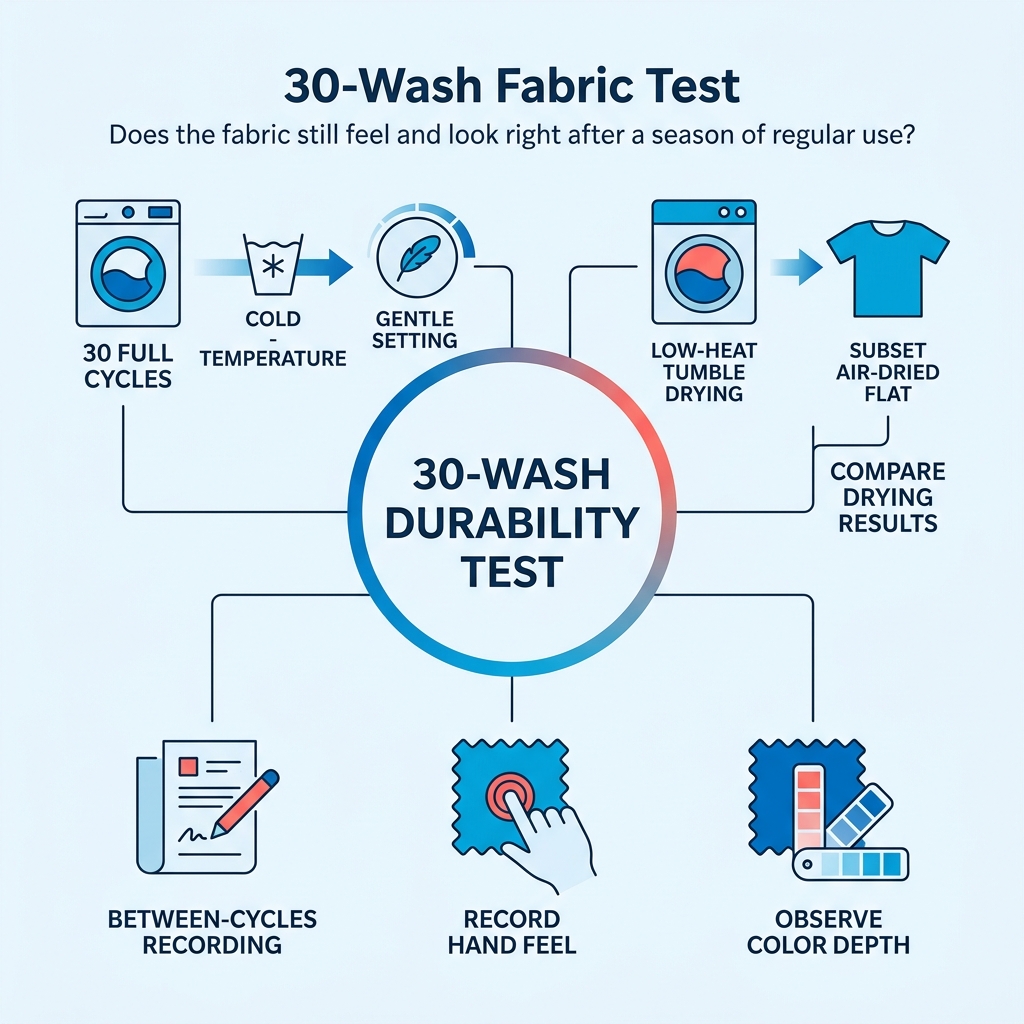
A 30-wash test can answer one plain question: does the fabric still feel and look right after a season of regular use? A practical setup would copy how most people actually launder activewear. For example, a test might run garments through 30 full cycles, cold, on a gentle setting, followed by low-heat tumble drying, with a subset air-dried flat for comparison. Between cycles, a tester could log hand feel, color depth, seam condition, and any fuzzing. Because the fabric arrives prewashed, the first cycle can act as a baseline rather than a shock. That can help keep shrinkage low and give a stable reference for everything that follows.
Softness You Can Feel. Quality You Can Keep.
Softness isn't the whole story. In a longer-term evaluation, the extra-long, smooth fibers would be expected to form yarns that resist some of the abrasion behind fading and pilling. The prewashed finish may help keep color consistent and reduce early fading, although the exact color behavior will depend on detergent, water hardness, and drying habits.
The everyday routine stays simple:
- Washing: Machine wash cold on a gentle cycle.
- Drying: Lay flat to preserve fabric integrity.
- First-wear readiness: The prewashed fabric is designed for softness and minimal shrinkage.
- Long-term upkeep: Breathable, naturally durable fibers and steady color retention keep the look clean and vibrant.
What the Numbers Backed Up
As a general rule, air-drying is often easier on knit shape than tumble drying, which is why the low-heat or flat-dry step gets called out specifically. In a hypothetical 30-wash evaluation, you could compare dimensional change and surface pilling across different drying methods. The expected pattern: flat-dried pieces may show slightly better shape retention than tumble-dried pieces, and smooth long-staple yarns should remain relatively low in pilling if they are washed cold and dried gently. Comfort and breathability are harder to measure without controlled lab equipment, but the care direction remains the same.
If you want the fabric to keep both its soft hand and its shape across a test like this, the care direction doesn't change: machine wash cold on a gentle cycle, then lay flat. No special equipment needed. Just match your wash and dry settings to the care instructions and let the low-heat step work. Over many cycles, that one choice is the clearest practical lever for separating garments that hold their look from those that soften early.
Durability and Strength After 30 Washes
The strength conversation gets interesting after 30 washes, because that's when surface treatments are gone and only the yarn is left. The proof at this point is mechanical, not tactile: whether the garment still snaps back at the knee and waistband after a month of laundry. A fabric can feel fine to the touch and still have lost the recovery that keeps activewear working through a full session.
Does Pima Cotton Activewear for Women Lose Tensile Strength After 30 Washes?
Not usually the way conventional short-staple cotton does. Short-staple cotton may lose strength as individual fibers slip and break under agitation. Pima's long staples can hold more overlap inside each yarn, so the fabric may resist the micro-tearing that leads to thinning and sagging.
What to watch for in high-stress zones after repeated washes:
- Surface pilling: minimal, since fewer short fiber ends break free.
- Stretch recovery: the yarns still return to shape instead of bagging.
- Seam flatness: stitching stays smooth when the fabric holds its density.
Where Seams Actually Give Out
Seams rarely fail because the thread snaps first. They often fail when the fabric around each needle hole weakens and lets the stitch tear through. So seam durability is really a fabric strength test. Pima's dense long-fiber yarn can keep those holes tight, and the prewashed finish may reduce some of the shrink stress that works seams loose in early washes.
One way to check this is to pull gently against the seam line after laundering. The fabric should feel firm right up to the stitch, not soft or see-through. That firm edge is what helps keep a yoga waistband from separating after years of wear.
One caveat: Pima is strong, not indestructible. High heat and aggressive detergent will degrade any cotton. If you want the 30-wash strength to stick, cold water and low or no heat drying aren't optional. They're the line between a garment that lasts and one that just feels good on day one.
Comfort Metrics: Breathability, Moisture, and Skin Feel
The real comfort question at wash thirty is whether the fabric still moves with your body during a long hold. Softness is one thing. Airflow, sweat handling, and how the material sits against your skin decide whether you reach for the piece again. We can split comfort into three metrics: airflow, moisture handling, and skin feel. Each one can shift differently after repeated cold-water washes.
How Does Breathability Change After 30 Washes?
Airflow depends on the open structure of the knit. Pima's long, smooth fibers can spin into a yarn with fewer protruding ends, so the fabric may keep its tiny air channels open. With repeated washing, less surface fuzz can actually help air pass through more consistently. The catch: hard water mineral buildup can stiffen the fiber and cut airflow slightly. Some people use a monthly rinse with diluted white vinegar to keep the fabric from feeling dense.
Does Moisture Handling Improve or Decline After Repeated Washing?
Cotton absorbs moisture. Pima tends to absorb it smoothly without saturating as fast as rougher short-staple cotton. Repeated washing may remove part of the cuticle, which can allow sweat to soak into the yarn faster—good for staying dry during yoga. Drying time stays moderate, though. This material tends to work best for low-to-moderate sweat sessions: yoga, pilates, walking. For high-impact cardio, a performance synthetic blend is often a better choice because Pima holds onto moisture longer than those fabrics.
Skin feel after many washes may settle on three words: smoother, less fuzz, plush but resilient. Black Pearl Yoga Wear prewashes its Peruvian Pima for softness and minimal shrinkage before you ever wear the garment, which may help the hand feel stay more consistent as the washes add up.
The Care Routine That Keeps the Feel
Keeping softness and shape comes down to two decisions: cold water and the gentle cycle. Everything else in your routine just supports those two.
The Two Settings That Do the Heavy Lifting
| Step | Our Rule | Why It Helps |
|---|---|---|
| Water temp | Cold only | Follows the garment's machine wash cold care guidance |
| Cycle | Gentle or delicate | Reduces agitation to help preserve fabric integrity |
| Drying | lay flat | Helps preserve fabric integrity and shape |
Cold water, gentle or delicate cycle. Turn pieces inside out before they go in, so the surface friction hits the interior instead of the outer face that shows wear first. Skip the fabric softener, too. It can coat fibers with a residue that dulls the hand feel over time and can trap odor in performance knits.
Drying matters as much as washing. The guidance is to lay flat, which lets pieces dry without extra tumbling. If you use the dryer, keep it on low and pull garments while still slightly damp to cut heat exposure.
Fold, Don't Hang
Hanging leggings by the waistband pulls on hip and waist fibers every single day. Over weeks that small, steady load can create slack that reads as worn out before the fabric actually is. Fold knit pieces flat in a drawer instead.
Fold wide-neckline tops, too. A hanger under the shoulders can stretch the collar out of shape. If you have to hang something, clip it at the hem, never at the waistband or shoulder seams. And let pieces dry completely before you fold or store them.
Peruvian Pima vs. Other Cotton After 30 Washes
Too many cotton comparisons stop at the first wash. Wrong benchmark. After 30 washes, the differences can come down to fiber length, cuticle smoothness, and how the yarn was spun. For pima cotton activewear for women, those three can decide whether the waistband still recovers and the hip panel stays smooth.
Egyptian, Supima, and standard upland all tend to show their true character by wash thirty. Standard upland is often described as having shorter, fuzzier staples that may slip and pill faster once the initial finish washes off. Supima and Egyptian are extra-long staple cottons, so they start closer to Peruvian Pima. In field observations, the difference some reviewers note is contamination from short fibers and damaged cuticles, which mechanical picking and aggressive processing can introduce. Peruvian Pima, where hand harvested, may preserve longer smooth fibers. Less short-fiber contamination can mean fewer pills in the high-friction zones after repeated cold-water cycles.

How Do Egyptian and Supima Actually Compare at Wash 30?
We treat lab softness ratings with caution. Most panels don't control for detergent type, water hardness, or drying heat, and those variables often move the outcome more than the cotton variety does. So instead of repeating a borrowed number, we compare what we observe across fabrics after the same gentle cold-water routine.
| Cotton Type | Hand Feel at Wash 30 | Pilling Tendency | Stretch Recovery in High-Friction Zones |
|---|---|---|---|
| Peruvian Pima | Tends to stay smooth with a slight lived-in softness | Low | Strong: waistbands and knees often keep their return |
| Egyptian | Can feel soft but may be more prone to fuzz when blended or over-dried | Medium | Moderate: depends heavily on yarn construction |
| Supima | Can be smooth if pure, but sometimes mechanically processed with more short fibers | Medium | Good, but less consistent garment to garment |
| Standard upland | Often rougher, thinner in stressed areas | High | Weak: may sag earlier at knees and hips |
This table is field judgement, not a lab verdict. After thirty cold-water washes, the softness gap may narrow while the durability and stretch recovery gap widens. One detail worth watching is how each fabric behaves after tumble drying. Heat can speed up cuticle damage, and shorter-staple types may lose their smoothness earlier than extra-long staple options. That drying gap is the clearest signal we track when judging which fabric holds up under real use.
What Wearers Tell Us After a Few Months
We pay closest attention to how pima cotton activewear for women holds up once someone has lived in it for a few months. Not the first-week excitement. What the fabric does after wash thirty.
What we can point to with confidence is the fiber. Peruvian Pima's extra-long, smooth fibers can build stronger yarns, so garments are made to keep their appearance and comfort over time. Our pieces are prewashed for softness and minimal shrinkage, which is a useful test of whether a fabric holds its structure through repeated cycles.
Why Long-Fiber Pima Keeps Going Wash After Wash
Star ratings miss the detail. A five-star note straight out of the package tells us nothing about how a piece wears after a season. What matters is how the fabric behaves over repeated cold-water cycles.
What the fiber structure is built to deliver over 30 or more washes:
- Softness that lasts: the extra-long, smooth fibers feel soft against the skin, and Pima is known to stay that way through repeated wear.
- Strength and durability: longer fibers can make smoother, stronger yarns, helping garments keep their shape and comfort over time.
- Less pilling: the smooth fibers are less likely to break and form small pills, so clothing looks good longer. The care guidance stays simple: machine wash cold on a gentle cycle, then lay flat.
We don't rely on a formal testing program to make this point, because the fiber structure is the main factor. The women who reach for these pieces tend to wear them for yoga and daily errands in the same day. That mix is the point. Pima's durability is what lets one piece carry from a studio session into everyday life.
Our pieces are prewashed for consistent color and less initial fading, and Pima absorbs color beautifully, keeping shades rich through repeated wear. Softness you can feel. Quality you can keep. That's what long-fiber Pima is made to hold onto.
References
[1] Pima Cotton: The Textile Jewel of the Peruvian Andes - Amano Yarns - https://amanoyarns.com/blog/pima-cotton-the-textile-jewel-of-the-peruvian-andes-n184
Frequently Asked Questions
Can I use fabric softener to keep Pima cotton feeling soft between washes?
Skip fabric softener entirely. It can coat fibers with a fatty residue that dulls the hand feel over time and can trap detergent buildup, hard-water minerals, and odor in performance knits. Pima's softness is generally attributed to the long fibers themselves, so a pH-neutral liquid detergent on a cold gentle cycle is all you need.
Is Pima cotton activewear a good choice for high-impact cardio?
For high-impact cardio, choose a performance synthetic blend instead. Pima cotton absorbs moisture smoothly and works well for low-to-moderate sweat sessions like yoga, pilates, or walking, but it holds onto moisture longer than synthetics and has moderate drying time, so it can saturate during intense workouts.
I have hard water at home. Will that ruin my Pima garments?
Hard water can deposit minerals such as calcium and magnesium along the fiber and stiffen the hand feel even with the right detergent. Some people use a monthly rinse with diluted white vinegar to help lift those minerals, though it isn't part of Black Pearl Yoga Wear's care instructions.
Why does folding beat hanging for leggings?
Hanging leggings by the waistband puts a small daily load on hip and waist fibers, creating slack that reads as worn out before the fabric actually fails. Fold knit pieces flat in a drawer instead. If you must hang something, clip it at the hem, never the waistband or shoulder seams.
How does Supima compare to Peruvian Pima since both are extra-long staple?
Both start close, but the gap can widen by wash 30. Supima is sometimes mechanically processed, which can introduce more short-fiber contamination and damaged cuticles that may raise pilling and make stretch recovery less consistent garment to garment. Hand-harvested Peruvian Pima, where that is the case, may preserve longer smooth fibers, keeping high-friction zones smoother and recovery stronger.