The Cotton Breathability Myth: What Reddit Threads Get Wrong About Pima
September 9, 2026
Key Takeaways
- Pima cotton's extra-long staple fibers produce a smoother, tighter yarn that circulates air more freely than the shorter fibers in standard cotton.
- Fiber type alone does not determine breathability — a loosely woven standard cotton can out-breathe a tightly knit Pima under certain conditions.
- For activewear and sustained movement, Pima's fiber smoothness delivers less friction and less heat buildup than standard cotton, making it the stronger performer in that category.
- Standard cotton's shorter, coarser fibers cause it to pill faster under repeated use, while Pima and Peruvian Pima both offer meaningfully better pilling resistance.
- Peruvian Pima is hand-harvested and maintains better fiber integrity than machine-processed Pima, translating to richer, longer-lasting color even after repeated washing.
- Standard cotton sits at the budget tier and suits low-intensity, low-sweat situations well, while Pima and Peruvian Pima occupy the mid-range price tier with performance advantages that justify the step up for active use.
- Reddit debates about cotton breathability typically stall at fiber type, overlooking construction and weave density — the two variables that can flip the performance ranking between cotton grades.
The Science of Breathability: What Air Permeability Tests Actually Measure
Most breathability claims in textile marketing trace back to a single lab measurement: air permeability. The test is straightforward — a fabric sample is clamped over an opening, a fan pulls air through it, and the instrument records how much air passes per second. The result is expressed as a flow rate, typically in cubic feet per square foot of fabric per minute.
What this test does not measure is how a fabric behaves against a moving, sweating human body. Air permeability is measured on dry fabric at rest. Real-world comfort involves moisture, heat, and movement. The gap between these two conditions is where the cotton breathability debate gets murky.
The Physics of Humid Air and Fabric Structure
When sweat enters the picture, the physics change. Water molecules from sweat vapor and liquid moisture occupy the spaces between yarns and within the yarn structure itself. As humidity rises, the air trapped in the fabric's interstitial spaces becomes denser with water vapor. Since water vapor molecules are lighter than the nitrogen and oxygen molecules they displace, humid air is actually less dense than dry air at the same temperature and pressure. However, the presence of liquid water in the fabric is a different matter entirely.
Liquid water wicks into the capillary spaces between fibers. As fibers absorb moisture, they swell. This swelling reduces the effective pore size within the yarn structure. The airflow path narrows, and the measured permeability drops. This is why a fabric that tests as highly breathable when dry can feel stifling and heavy during sustained exertion — the structure that allowed air to pass freely has physically closed down.
What the Lab Tests Show
Published research on air permeability has established that the parameter correlates with other moisture-management indicators only under specific conditions. One peer-reviewed study notes that while air permeability is a useful quality-control metric, it does not fully predict the comfort performance of fabrics under dynamic sweating conditions. The test measures one variable — dry airflow — in isolation.
The practical implication is that a fabric's breathability rating on a spec sheet tells you how it behaves in a controlled laboratory environment, not necessarily how it will feel during a yoga session or a long walk on a warm day.
The Structure of Pima's Long-Fiber Yarns
The reason fiber length matters for breathability is structural. Standard cotton uses short staple fibers that produce a yarn with many exposed fiber ends along its surface. These loose ends create microscopic turbulence at the fabric surface, disrupting smooth airflow. They also provide more sites for moisture to cling and for fibers to pull apart from the yarn core during washing.
Pima cotton's extra-long staple fibers spin into a yarn with fewer exposed ends and a smoother, more uniform surface. The yarn can be spun tighter without sacrificing flexibility, which means the fabric can be constructed with a more consistent pore structure. Air moves through this structure more predictably. When moisture does arrive, the smoother surface sheds it more readily than a fuzzy, short-fiber yarn.
The catch is that this advantage shows up most clearly when comparing the same knit or weave construction across cotton grades. A dense, tight knit in Pima will restrict airflow more than a loose, open weave in standard cotton. Construction and fiber quality are independent variables, and both matter.
The Economics of Textile Testing: Why Air Permeability Became the Default Metric
Understanding why brands lean on air permeability tests requires looking at the economics of textile manufacturing and retail. Full comfort testing — which involves human subjects, controlled climate chambers, and multiple wear cycles — is expensive and slow. It requires specialized facilities, trained evaluators, and weeks of data collection. Air permeability testing, by contrast, is cheap, fast, and repeatable. A fabric sample can be tested in minutes with a single instrument.
The commercial appeal is obvious. A brand sourcing fabrics from multiple mills needs a quick, objective way to compare options and maintain quality control. Air permeability provides a number that can be written into a specification sheet and verified on delivery. It is a useful tool for consistency checking — if a fabric's permeability suddenly drops, something changed in the production process.
The problem arises when this quality-control metric is repurposed as a consumer-facing comfort claim. Marketing departments take the lab number and translate it into "breathable" or "highly breathable" without acknowledging the test's limitations. The consumer never sees the conditions under which the number was generated.
Why the Proxy Fails for Real-World Comfort
Real-world comfort is a multi-factor experience. It involves how quickly sweat evaporates from the skin surface, how the fabric feels when wet, how it adheres to or releases from the skin during movement, and how it manages heat buildup. Air permeability captures only the dry airflow component.
For low-intensity activities where sweat production is minimal, the dry airflow measurement is reasonably predictive. A fabric that passes air freely will feel cooler at rest or during gentle movement. But once sweat rates increase, moisture management becomes the dominant factor, and the dry air permeability number loses predictive power.
Some fabric producers and testing laboratories have developed more comprehensive moisture-management tests that measure liquid transport, drying rate, and moisture vapor transmission. These tests are more expensive and less standardized than air permeability, which limits their adoption in routine quality control.
What This Means for the Cotton Comparison
When a brand claims its cotton is "breathable" based on air permeability data, the claim is technically accurate but incomplete. The fabric does allow air to pass through when dry. What the claim does not address is how the fabric behaves when wet, how it feels against skin during movement, or how it performs after repeated washing.
For consumers comparing standard cotton and Pima, the honest summary is that both will show measurable air permeability when dry. The differences emerge in how the fabrics handle moisture, how they feel during movement, and how they hold up over time. These are the variables that determine whether a garment feels comfortable in practice, not just in the lab.
How Fiber Quality Affects Performance
Choosing between cotton types comes down to a few honest questions: how much heat does your body generate during a workout, how long do you wear the piece before washing, and how much do you care about the garment holding its shape over time? Breathable cotton answers the first question reasonably well for moderate activity. Where things get more specific is when you start comparing fiber grades.
What Makes Pima Worth the Step Up?
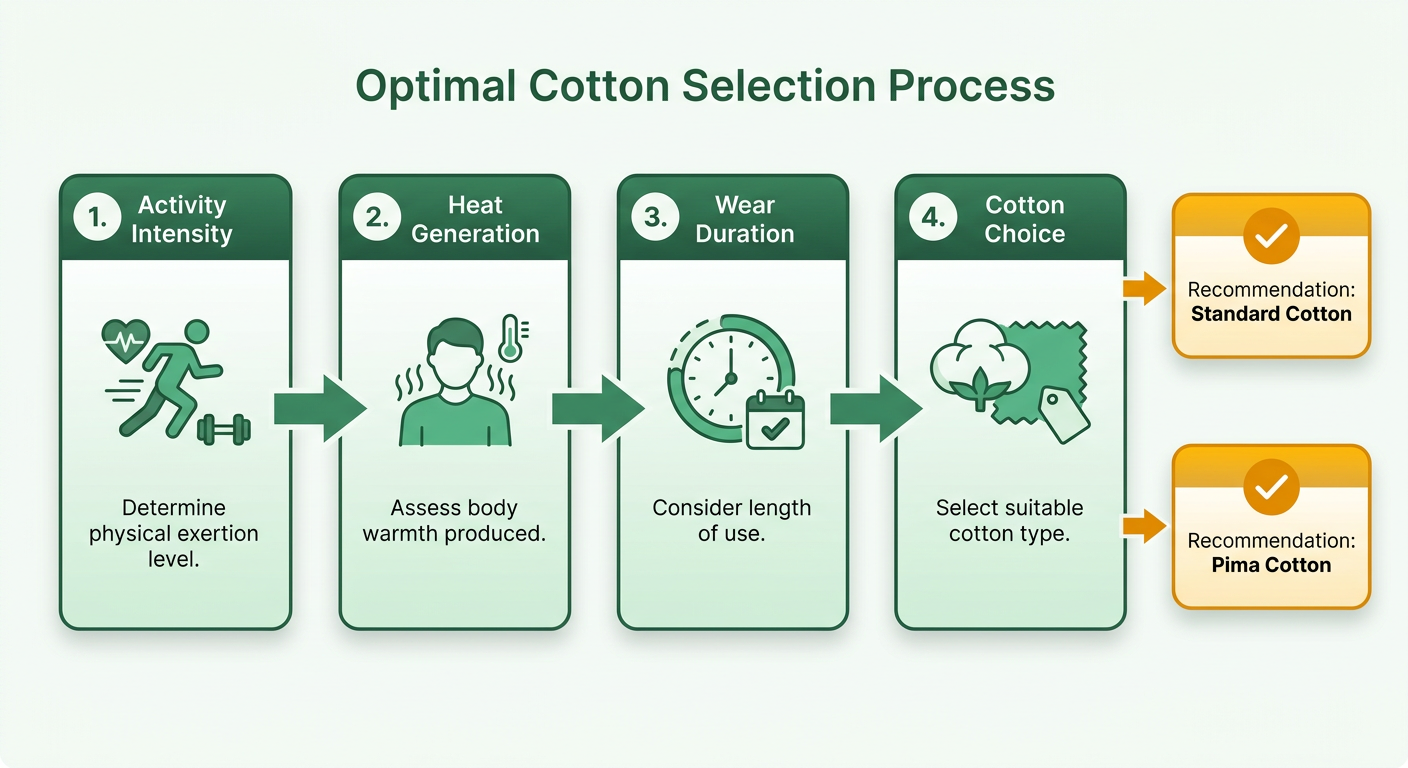
When standard cotton gets wet, the short fibers swell and collapse the tiny air pockets within the weave. The result is a heavy, cold barrier against your skin that takes hours to dry, and that disrupts your body's natural temperature regulation.
Because Pima fibers are longer, there are fewer exposed fiber ends along the yarn's length. Fewer loose ends means the yarn is less likely to unravel, and less microscopic friction means less chafing during repetitive motion.
Hand-harvesting selects only mature bolls, leaving immature fibers in the field. That selective process produces yarn with uniform strength throughout, which matters especially for form-fitting activewear that needs to hold its shape under tension.
How the Options Stack Up
| Factor | Standard Cotton | Pima Cotton | Peruvian Pima |
|---|---|---|---|
| Breathability during activity | Moderate | High | High |
| Softness after repeated washing | Decreases noticeably | Stays consistent | Stays consistent |
| Pilling resistance | Low | Medium-high | High |
| Best use case | Casual, low-sweat | Yoga, barre, daily wear | Investment pieces, sensitive skin |
| What Black Pearl carries | No | No | Yes, entire collection |
If you want to test the difference yourself, start with a fitted top. Black Pearl Yoga Wear builds every piece from 100% certified Peruvian Pima, so the gap between that and standard cotton is obvious from the first wear.
Feature Comparison
The physical behavior of premium fibers under tension determines how comfortable a garment stays during a workout. When fabric maintains its structural integrity under sweat, it keeps performing as intended.
How Do the Main Cotton Types Compare Feature by Feature?
The gap between cotton types isn't just about softness. Fiber structure affects how a garment handles heat, recovers its shape, and holds up after a season of weekly washes. Here's where each type lands across the features that matter most for activewear:
| Feature | Standard Cotton | Pima Cotton | Our Peruvian Pima (Black Pearl) |
|---|---|---|---|
| Fiber type | Short staple | Extra-long staple | Extra-long staple, hand-harvested |
| Airflow | Moderate | High | High, naturally breathable |
| Moisture recovery | Slow | Faster | Faster than standard cotton |
| Pilling resistance | Low | Good | Very good |
How Cotton Actually Holds Up During Movement
There's an honest answer about breathable cotton versus synthetic activewear, and it's: it depends entirely on what you're doing and how hard you're working.
At Moderate Intensity, Pima Delivers
For moderate-intensity movement, Pima performs well. The longer fiber structure keeps the weave tighter and smoother, which means air moves through more consistently than it does with standard cotton. Where things shift is intensity. Once you push into high-output workouts, all-cotton fabrics saturate faster than moisture-wicking synthetics. That's not a flaw in the cotton. It's physics. Cotton absorbs; synthetics shed.
During high-sweat sessions, saturated cotton fibers expand and close off the gaps in the weave, which halts air circulation. The result is a heavy, clingy layer that can cause your body temperature to spike or drop sharply during rest periods.
Cotton vs. Synthetics vs. Pima: Where Each One Wins
| Factor | Standard Cotton | Pima Cotton | Performance Synthetic |
|---|---|---|---|
| Airflow at rest | Moderate | High | High |
| Airflow under heavy sweat | Drops quickly | Drops moderately | Stays consistent |
| Feel against skin | Coarse over time | Soft, stays soft | Varies widely |
| Shape after washing | Shrinks, distorts | Holds better | Excellent retention |
| Best use case | Casual wear | Light to moderate activity | High-intensity training |
Hand-selecting fibers also preserves the natural wax coating of the cotton, which helps the fabric retain its texture and elasticity over time — something mechanical processing tends to strip away.
The trade-off is honest: if your workouts run long and intense, wear a Pima piece for warm-up and cool-down and switch mid-session. For everything below that threshold, pilates, barre, errands after class, the performance gap between Pima and technical synthetics is small enough that comfort and feel win.
Pros, Cons, and When to Skip Cotton
Every fabric choice involves trade-offs. Here's where each cotton type wins, where it falls short, and when to skip it entirely.
Where Each Cotton Type Wins (and Loses)
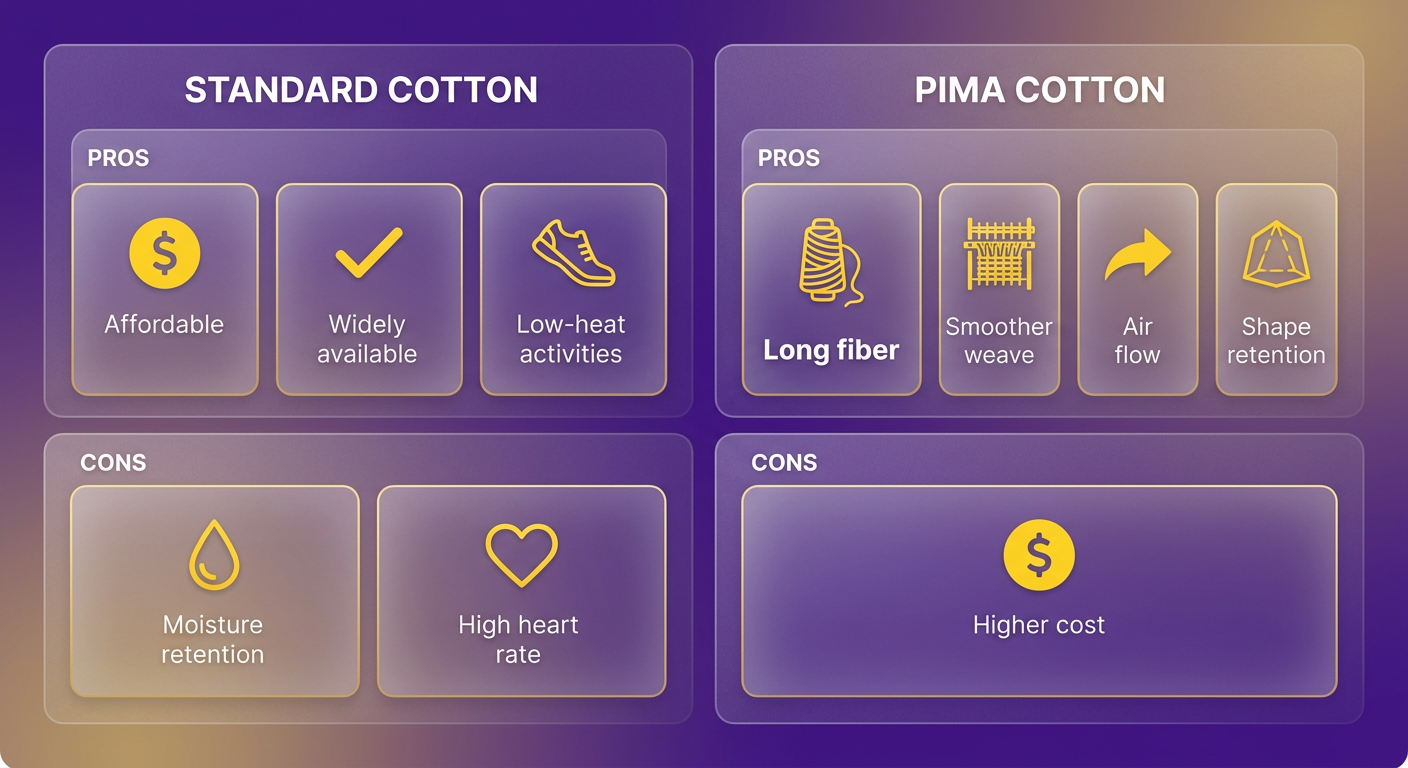
Standard cotton's structural limitations show up fast under physical stress. The short fibers lack the resilience to bounce back after stretching, which leaves garments looking misshapen after just a few active sessions.
Pima shifts the focus to longevity. Longer strands resist the friction that pulls shorter fibers out of the yarn core — the primary cause of surface pilling. The hand-harvesting process also eliminates the need for chemical defoliants often used to prepare fields for industrial machinery, which keeps the fibers free from chemical degradation and preserves their natural softness.
| Standard Cotton | Pima Cotton | Black Pearl Peruvian Pima | |
|---|---|---|---|
| Breathability | Moderate | High | High |
| Softness over time | Degrades | Holds | Holds or improves |
| Moisture recovery | Slow | Faster | Faster |
| Best for | Low-intensity, casual | Moderate activity | Moderate activity, longevity |
| Skip if | You run warm | High-output workouts | High-output workouts |
When to Skip Cotton Entirely
High-aerobic activities demand fabrics that actively repel water. Synthetics use capillary action to pull sweat to the outer surface where it evaporates quickly — a mechanical process natural fibers can't replicate.
Peruvian Pima shines at moderate activity and all-day wear: yoga, barre, pilates, a walk, errands after class. It breathes well enough for movement and looks put-together enough for everything else.
Who Gets the Most Out of Pima Cotton
The right choice depends almost entirely on how your body runs during movement and what you're asking the garment to do. The gap between cotton grades shows up fast when you match the material to the activity.
Which Scenario Fits Which Cotton?
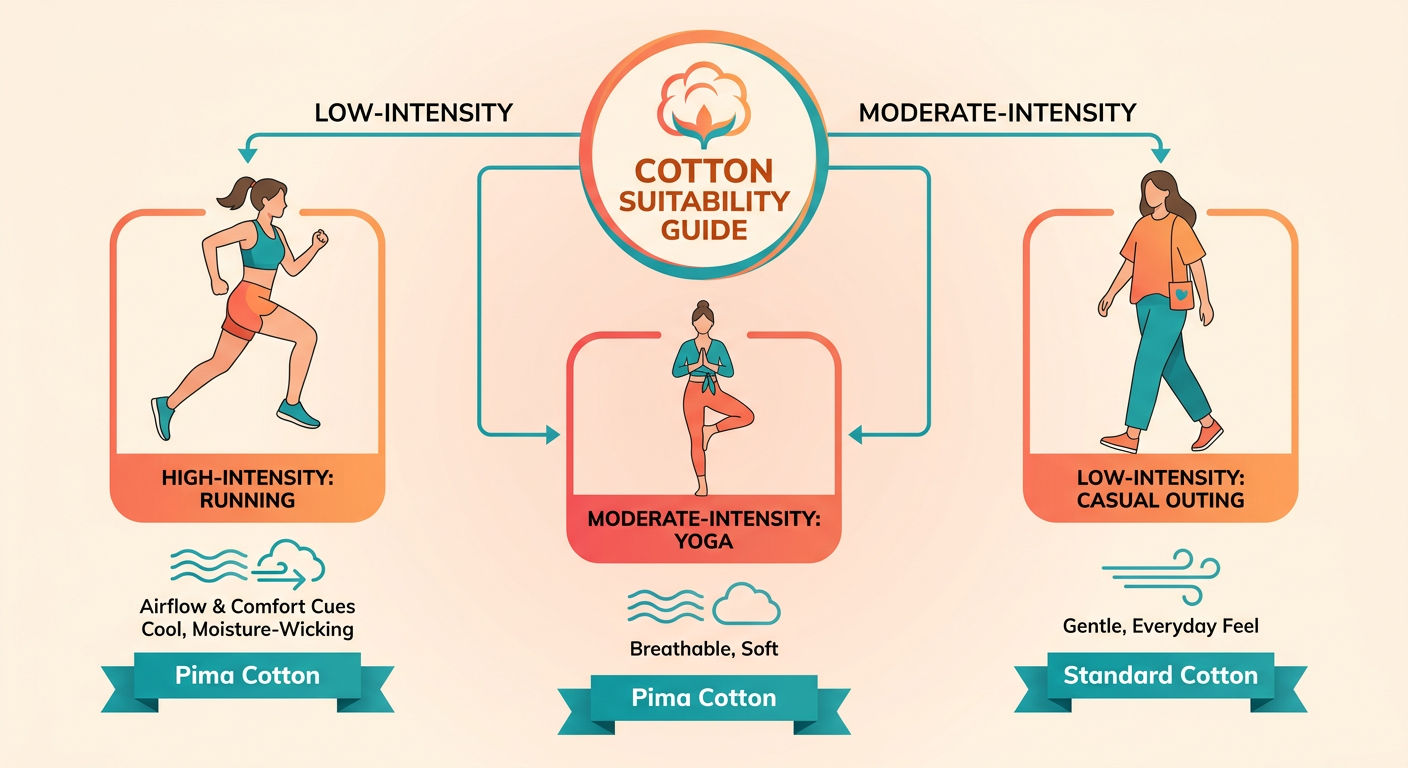
For anyone prioritizing skin comfort during low-impact routines, premium cotton offers a tactile experience synthetics rarely match. It also doesn't trap odors the way synthetic fabrics often do after repeated use.
For heavy cardiovascular training, cotton's physical limits matter more. Saturated fabric clings to the body, increases drag, and creates irritation from wet seams rubbing against skin over time.
| Scenario | Standard Cotton | Pima Cotton | Peruvian Pima (Black Pearl) |
|---|---|---|---|
| Low-intensity movement (walking, stretching) | Fine | Great | Great |
| Yoga and barre | Acceptable | Strong fit | Strong fit |
| Hot yoga / high-output cardio | Skip | Skip | Skip |
| All-day casual wear | Fine | Better comfort | Best comfort, holds shape longer |
| Sensitive skin or irritation concerns | Not ideal | Good | Best option |
| Budget priority over longevity | Best | Trade-off | Trade-off |
If you value mindful consumption and prefer owning fewer, higher-quality pieces that can carry you from a morning studio session into the rest of your day, premium cotton is worth the step up. Standard cotton is the honest choice if you're buying for occasional use and cost is the deciding factor.
What I'd Actually Recommend
Pima or Peruvian Pima for anything active. Standard cotton only for the most casual use.
For low-stakes wear, a weekend errand, a slow stretch before bed, standard cotton is fine. Once you're in a dedicated practice, fiber quality starts to matter. Longer staple fibers resist pilling across repeated wash cycles, hold their shape under tension, and stay softer against warm, moving skin. A well-made Pima piece at wear fifty feels close to wear one. A standard cotton piece at the same point often feels broken in the wrong direction: thinner, rougher, slightly misshapen.
Peruvian Pima specifically benefits from growing conditions in the Andean coastal valleys. The combination of altitude, cool nights, and slow fiber development produces a staple that is consistently among the longest and finest available commercially. That consistency matters more than it sounds. Most cotton quality problems come from variation within a bale — when fiber length varies, so does yarn tension, and so does the finished fabric's feel. A tighter fiber-length range means a more predictable, more durable result.
For high-output workouts, no cotton. Not even the best Pima keeps pace with synthetics in that zone, and it's worth owning that honestly. For everything below that threshold, the fiber quality in well-made Pima is the clearest upgrade you can make to your activewear rotation.
The Reddit debates about cotton breathability mostly miss this. They compare cotton versus cotton without accounting for fiber length, harvest method, or weave density. Once you understand those variables, the choice gets straightforward.
References
[1] The Comparison of Air Permeability Among Different Textiles - Testex - https://www.testextextile.com/the-comparison-of-air-permeability-among-different-textiles/
[2] Correlation of Air Permeability to Other Breathability Parameters of Textiles - https://pmc.ncbi.nlm.nih.gov/articles/PMC8747439/
[3] Correlation of Air Permeability to Other Breathability Parameters of Textiles - https://www.researchgate.net/publication/357456988_Correlation_of_Air_Permeability_to_Other_Breathability_Parameters_of_Textiles
Frequently Asked Questions
1. Does weave density matter more than fiber type when choosing breathable cotton?
Both factors dictate performance, but they control different aspects of comfort. While an open weave allows immediate air passage, fiber type determines how the fabric handles friction and wear over time. For active use, Pima's structural uniformity prevents the yarn from fuzzing, ensuring the fabric's built-in ventilation pathways remain unobstructed even after months of wear.
2. Why does standard cotton feel rougher after several washes, while Pima stays soft?
The degradation comes down to the number of fiber ends exposed in the yarn. Shorter fibers have thousands of tiny ends that break free from the twist during washing, tangling into rough pills. Pima's long fibers remain securely bound within the yarn core, preserving the original silky texture through dozens of laundry cycles.
3. What actually changes during harvesting that makes Peruvian Pima different from regular Pima?
Industrial harvesting machinery uses heat and aggressive stripping teeth that tear the delicate cotton fibers, creating micro-fractures. Hand-picking avoids this physical trauma entirely. This gentle collection method ensures the fibers retain their natural protective oils and full physical length, resulting in a stronger yarn that absorbs dyes more deeply and evenly.
4. Is Pima cotton a good choice for someone with sensitive skin doing moderate exercise?
Yes, because the lack of protruding fiber ends minimizes mechanical irritation against the skin barrier. During moderate movement, the fabric glides smoothly rather than scratching. However, if your workout intensity spikes to the point of heavy sweating, the fabric will retain moisture, so it is best kept for low-to-moderate sweat sessions.
5. What's the honest case for choosing standard cotton over Pima, beyond just price?
If you are purchasing a garment for infrequent, low-demand use—such as a seasonal graphic tee or loungewear that won't undergo frequent washing—standard cotton is perfectly adequate. There is no practical need to pay a premium for high-performance fibers if the garment's structural limits will never be tested by regular athletic movement.
6. Can Pima cotton keep pace with performance synthetics, or is that comparison unfair?
It is an apples-to-oranges comparison once you cross into high-aerobic training. Synthetics are engineered to repel water and dry rapidly, whereas cotton is naturally hydrophilic (water-loving). For low-to-moderate activities like yoga or pilates, Pima offers superior skin comfort and odor resistance, but it cannot match synthetics for heavy cardiovascular output.
7. Do Reddit debates about cotton breathability typically account for construction variables?
Online discussions frequently oversimplify fabric performance by focusing solely on fiber labels. They overlook how yarn thickness, knit patterns, and finishing processes alter airflow. A high-grade fiber can perform poorly if knitted too tightly, while a basic cotton can feel highly breathable in a loose, open weave, making generalized forum advice unreliable.
This article was written to help you make an informed choice about cotton grades for your activewear. At Black Pearl Yoga Wear, every piece is made from 100% certified Peruvian Pima cotton — because we believe the fabric between you and your practice should be the best there is.