Plus-Size Pima Cotton vs Synthetic Blends: Why You Need Both
September 29, 2026
You already know that feeling. A pair of leggings feels fine at 9 a.m., but by the time you've walked the dog, sat through a meeting, and stretched for ten minutes, the fabric around your thighs and underarms has turned into a damp, clingy second skin. That's not a fit problem. It's a fiber problem.
The short version
- Peruvian Pima cotton's extra-long staple fibers resist pilling and fraying at high-friction zones like seams and inner thighs.
- Plus-size bodies often need targeted heat management in underarms, thighs, and under-bust areas, so breathability becomes functional rather than optional.
- Cotton absorbs moisture into the fiber itself, which keeps skin feeling dry during moderate movement. Polyester moves sweat across the surface.
- Polyester-spandex blends hold their shape through repeated wear. Pure cotton feels softer and lets more air through.
- Black Pearl's Pima collection ranges from $32 to $86, with hand-harvested fibers from Peru's coastal valleys.
What this comparison covers
When you're choosing plus athleisure, the trade-off is real. 100% Peruvian Pima cotton gives you breathable softness, but it won't snap back the way a polyester-spandex blend will. Synthetic blends give you stretch and shape recovery, but they can trap heat and hang onto odor. Neither fabric wins at everything, and that's exactly why the choice matters.
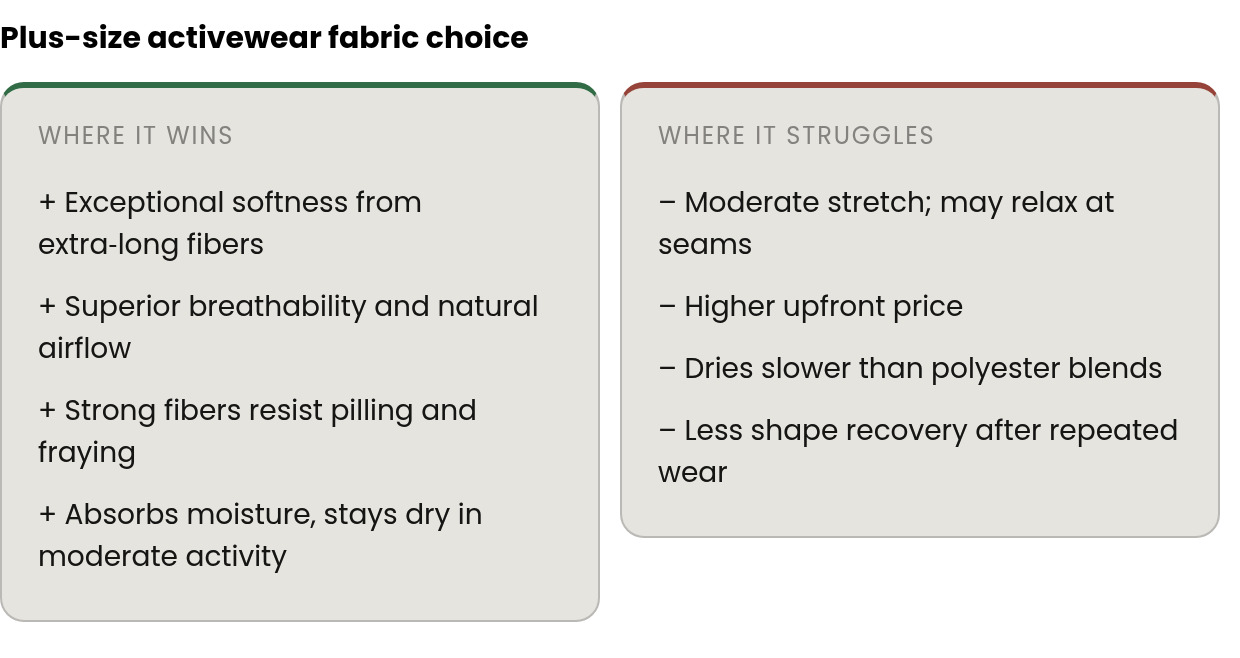
We kept this comparison to five attributes: softness, stretch, breathability, durability, and price-per-wear value. The table below shows where each option pulls ahead.
At-a-Glance: Pima Cotton vs. Synthetic Blends
| Attribute | 100% Certified Peruvian Pima Cotton | Common Synthetic Blend (Polyester-Spandex) | Black Pearl Yoga Wear (Pima Collection) |
|---|---|---|---|
| Softness | Exceptionally soft; extra-long fibers create luxurious hand-feel | Smooth but can feel slick; lacks natural texture | Hand-harvested Pima fibers from Peru's coastal valleys |
| Stretch & Recovery | Moderate natural stretch; may relax at seams over time | High mechanical stretch; snaps back consistently after repeated wear | 100% Pima construction designed for ease of movement |
| Breathability | Superior airflow; natural fibers allow air to circulate | Good with mesh knits; dense weaves can trap heat | Natural ventilation designed for yoga, Pilates, and all-day wear |
| Durability | Strong fibers resist pilling; smooth yarns reduce friction wear | Resists abrasion and holds shape through frequent washing | Long fibers produce stronger yarns that maintain appearance over time |
| Price/Value | Higher upfront cost; long-lasting quality offsets investment | Lower initial price; may need replacement sooner | $32–$86; 100% certified Peruvian Pima cotton |
The comparison draws on fabric property research and industry standards for natural and synthetic activewear materials.
What this means for plus-size fit
Plus-size bodies generate heat and friction in specific zones: underarms, thighs, and under-bust. That changes the performance threshold. Pima cotton's breathability helps air circulate during yoga or Pilates, where movement is steady but less intense. Synthetics become more useful when sweat volume spikes, usually during higher-intensity cardio.
Shape retention also matters differently across size ranges. A 1X body and a 3X body don't put the same structural demand on a fabric. Polyester-spandex blends keep a consistent fit through repeated wear. Pure cotton can soften and relax at high-tension points. Black Pearl's pieces use long-staple Pima fibers, which form smoother, stronger yarns and are designed to hold up better in those spots.
Two quick picks
Best for breathable comfort and sensitive skin: 100% Peruvian Pima cotton. It's the right call for low-to-moderate movement like yoga, walking, or a studio-to-desk day. The long-staple fibers create natural airflow, and the smoother yarns can reduce irritation in high-friction zones.
Best for high-stretch performance and quick recovery: Polyester-spandex blends. They bounce back after dynamic movement and dry faster after sweat-heavy workouts. When you need a fabric to recover quickly and stay light when damp, synthetics are the stronger option.
Why the fabric decision hits differently in plus sizes
Fabric choice isn't just about comfort. It determines whether a piece survives repeated wear in high-stress zones. Heat, friction, and how you move through the day all shape which material will actually work.
Heat and friction, not just stretch
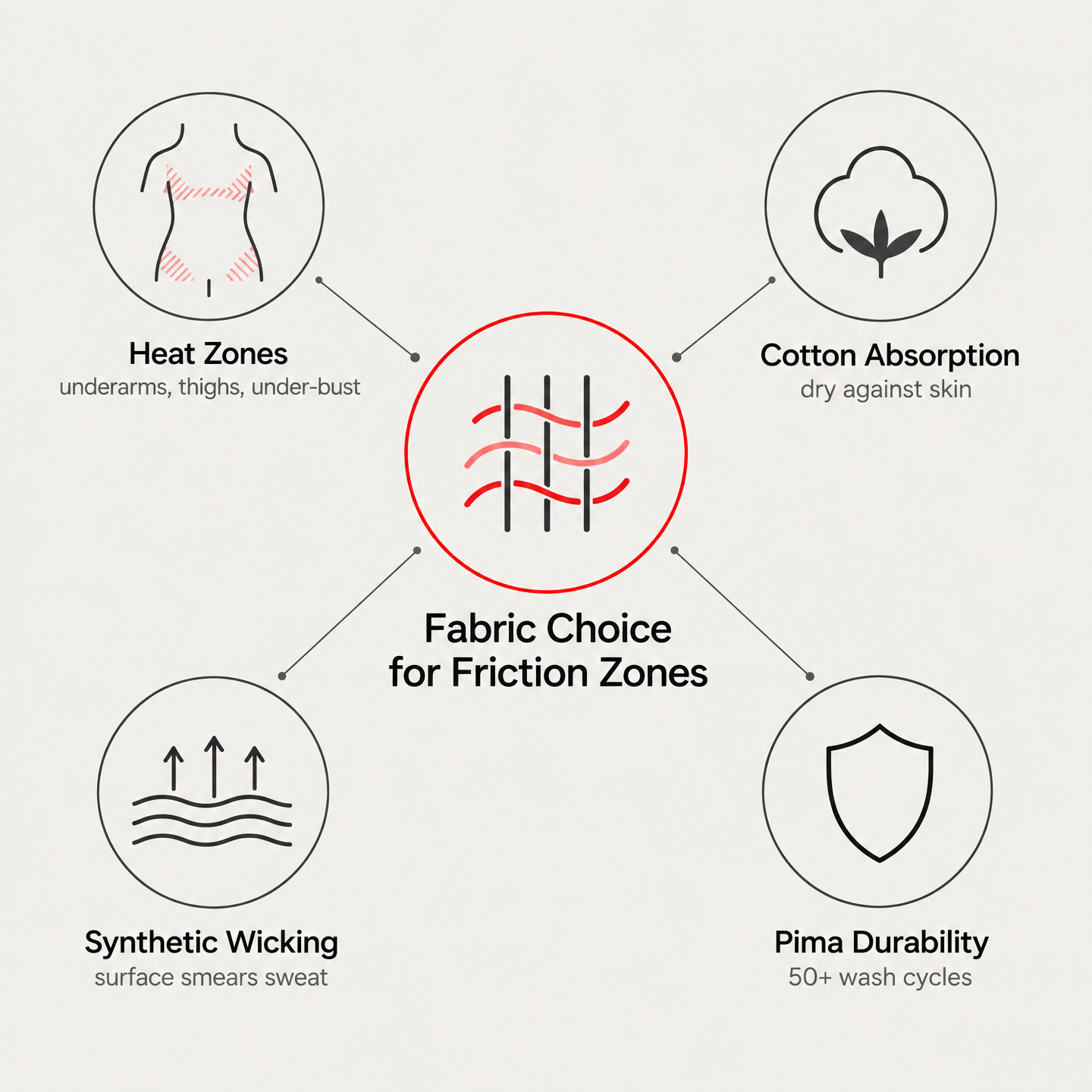
Bodies create friction where fabric is pressed, stretched, or rubbed for hours. In those areas, breathability becomes more than a nice detail. When air can't move through a high-heat zone, the fabric traps sweat and turns into a clammy barrier that no wicking finish can fully solve.
Synthetics solve a different problem: they hold their shape across bodies that vary significantly within the same size range. Cotton-spandex blends move with you and can handle daily wear, but they don't breathe as freely as pure cotton. The trade-off is real, and the better choice depends on what you're actually doing in the garment.
The absorption debate
The usual knock on cotton is that it "holds sweat." The more useful version is that cotton absorbs moisture into the fiber itself. That's why it can feel dry against your skin during moderate movement. Polyester doesn't absorb the same way. It moves moisture across the surface so it can evaporate quickly.
For a yoga class or Pilates session, cotton's absorption works in your favor. For high-intensity cardio, when sweat output outstrips cotton's capacity, polyester's surface-wicking takes over. The switch point shifts with body size, climate, and how much you sweat. That's why blanket advice like "polyester is always better for workouts" misses the mark.
Durability under stress
Peruvian Pima cotton is hand-harvested specifically to avoid fiber damage. That matters at seams, waistbands, and inner thighs, where repeated mechanical strain breaks fabric down. Pima's extra-long staple fibers resist fraying and pilling in those friction zones.
Synthetics fight back with elasticity. A polyester-spandex blend keeps its snap-back through repeated wash cycles, while cotton-spandex can gradually relax. If you want consistent compression or a fitted silhouette, synthetics win. If you want a fabric that survives repeated rubbing without thinning as quickly, Pima wins.
What shoppers are actually voting for
Shoppers tend to prioritize fabrics that move with the body and survive daily wear. That's why cotton-spandex blends are popular. The problem is that most brands use regular cotton, not Pima, and the gap shows up after months of use.
Independent wear tests show Pima cotton maintains its hand-feel softness through 50-plus wash cycles. Standard cotton can start to feel rough after 20 to 30 cycles. That longevity difference is one reason we built the collection around certified Peruvian Pima rather than standard cotton.
When to pick which fabric
Choose pure Pima for yoga, Pilates, walking, and recovery days, where breathability and softness matter more than compression. Choose polyester-spandex blends for high-intensity cardio, running, or anything where fast drying matters most. Cotton-spandex sits in the middle: some stretch, some breathability, and a friendlier price point.
We carry Pima because it fits athleisure that prioritizes breathable softness over max compression. The fabric choice isn't about what's universally better. It's about which trade-off matches how you move through your day.
100% Pima cotton: where it earns its price
Our Peruvian Pima cotton line was built for the places where seams, waistbands, and inner thighs take repeated strain. Pima cotton fibers stretch at least 1 3/8 inches, compared with about ¾ inch for regular cotton. That extra length helps the fabric stay strong and smooth over time.
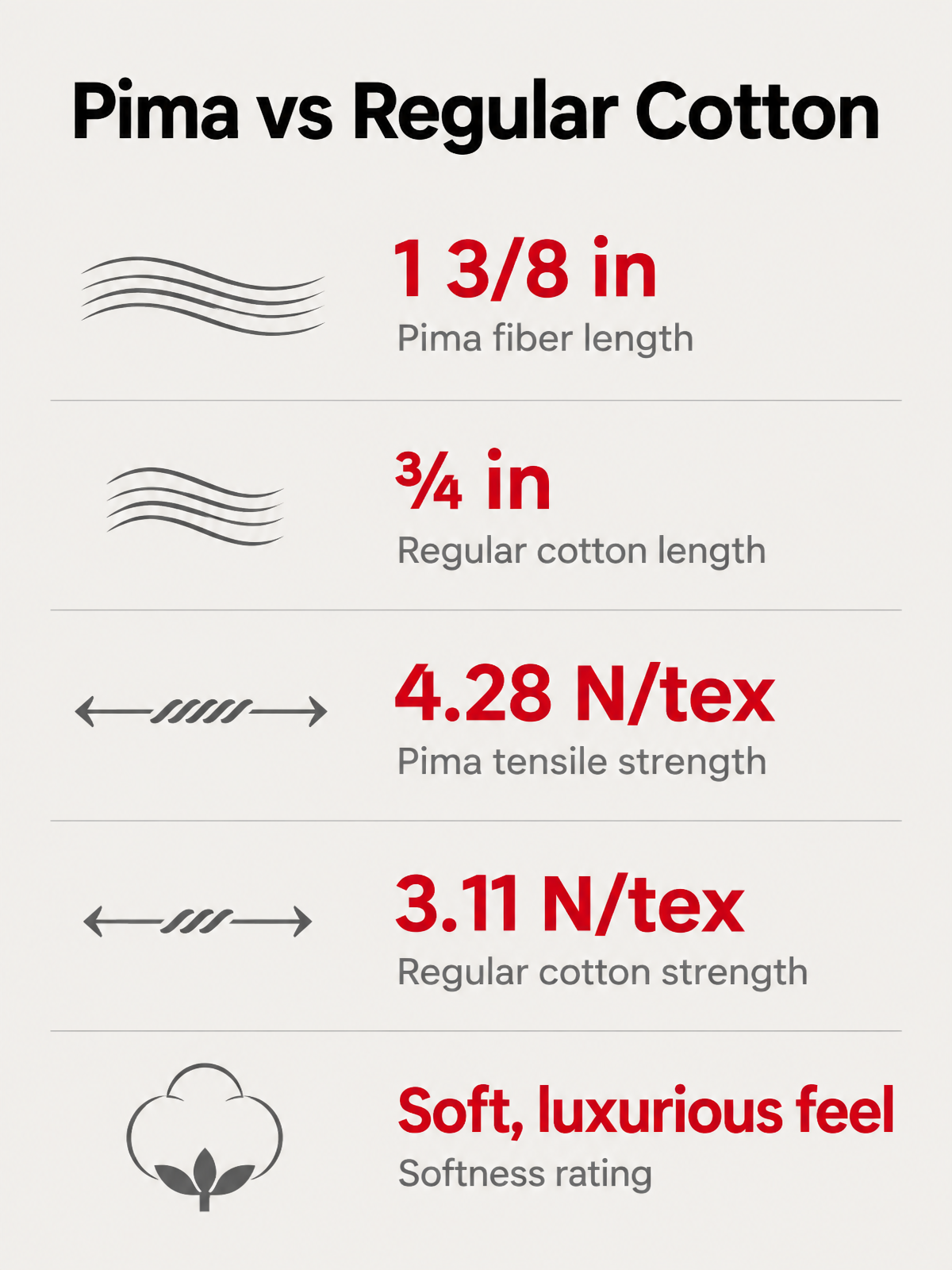
The strength advantage shows up over time because hand-harvested Peruvian fibers arrive less damaged, which helps them keep their structure through the wash. In plus-size clothing, that matters most where fabric is repeatedly pulled, warmed, and rubbed. Pima's natural moisture regain helps high-stress areas feel less clammy during moderate activity. Synthetics solve a different problem: consistent fit across bodies that vary within a size range.
How Pima handles sweat
Pima puts absorption to work differently than polyester. It can feel dry against your skin longer than marketing often suggests. Polyester wicks sweat along the surface. It spreads quickly but can cling once saturated. For a slow-flow yoga class or a Pilates session, Pima's absorption is usually a feature. For a drenching cardio session, synthetics dry faster because the moisture isn't sitting inside the fiber.
The biggest performance gap is breathability. Pima's natural airflow beats typical synthetic fabrics because its fibers allow air to move through the weave. Polyester is extruded plastic. It can be knit loosely to compensate, but the fiber itself doesn't breathe. If you've ever felt clammy ten minutes into a warmup, you've felt that difference.
Why certified Peruvian origin matters
Pima is a small share of global cotton production. It's grown primarily in Peru, the US Southwest, and Australia. Peruvian Pima is usually hand-harvested, which keeps the fibers intact compared with machine-harvested alternatives. Fewer damaged fibers mean fewer weak points in the yarn, and that matters at stress points.
The extra-long, smooth fibers also create a softer feel against skin and are less likely to break and form pills. The difference shows up after repeated laundering. Regular cotton starts to look worn; Pima keeps more of its original texture. You'll pay 30–50% more for Pima because supply is limited and harvesting is labor-intensive. That cost is really a durability premium.
The cotton-spandex balance
Cotton-spandex blends offer a balance between breathability and recovery. The spandex gives stretch without giving up the softness and skin-friendly feel people reach for. That mix is why these blends move with the body and hold up to daily wear.
By comparison, polyester-spandex blends often give more compression and shape hold, which helps if you want a garment to keep a consistent line through movement. The downside is less natural breathability, more odor management, and microplastic shedding.
Stretch fabrics with spandex need gentle cycles and low-heat drying to keep their elasticity. Cotton-spandex blends built on higher-quality base fibers start ahead because the cotton isn't breaking down as fast from short, frayed fibers. For studio-to-desk days where you move between temperature zones, Pima adapts well. It regulates body heat without the trapped warmth that dense polyester knits can cause.
Synthetic blends: what they actually do well
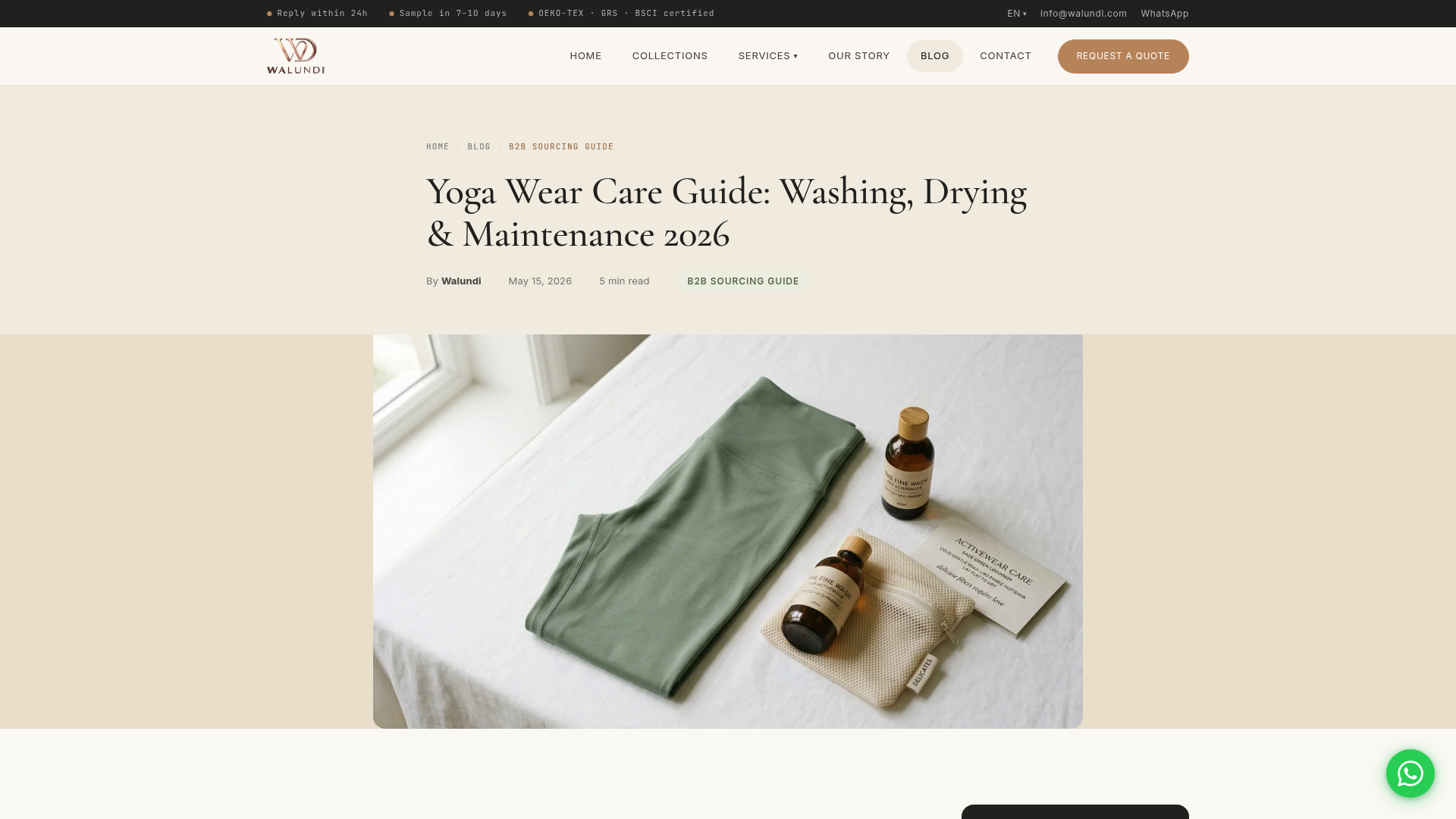
Synthetics solve a mechanical problem natural fibers can't handle alone. They stretch under stress and return to their original shape without permanent deformation. Polyester-spandex and nylon-elastane blends deliver shape recovery that matters when fabric spans wider dimensions and takes more load at waistbands, thigh zones, and under-bust seams. The cost is often trapped heat, stubborn odor, and chemical treatments sitting against skin for hours.
Engineered stretch and shape recovery
Nylon-spandex is a strong option for activewear. Nylon adds abrasion resistance in high-friction areas, while spandex delivers four-way stretch and elastic recovery. That recovery matters more in plus-size wear because fabric keeps getting pulled, stretched, and released at stress points. Cotton-spandex may relax in those spots; synthetics tend to snap back.
Polyester-spandex costs less to produce and resists wrinkles and shrinking better than nylon. The breathability gap is real, though. Brands compensate with mesh panels and open knits, but those details only work when the garment is intentionally designed. Cotton's comfort advantage shows up during steadier activities. Polyester's quick-dry edge shows up when sweat volume climbs.
Abrasion resistance vs. odor
Synthetics resist surface wear better than cotton. Nylon leads for abrasion resistance, which matters when fabric rubs against yoga mats, gym equipment, or itself. Polyester holds color through repeated washing, resists pilling, and keeps its structure longer in high-wear applications.
The durability story stops at odor. Research on textile microbiology shows odor-causing bacteria thrive on polyester in ways they don't on cotton. Body oils cling to synthetic fibers, and regular detergent doesn't always pull them out. That's why many synthetic activewear pieces rely on antimicrobial finishes like Polygiene, Sanitized, or silver ion treatments. Those finishes wear down over time, which leaves your wash routine doing more of the work.
Shape retention vs. breathable comfort
High-intensity training asks a lot of fabric. Nylon-spandex holds compression through burpees and box jumps. Polyester-spandex dries faster between sessions. Both can feel less forgiving than cotton, but synthetic recovery means leggings worn three times a week can still fit the same in month six. Cotton softens beautifully over time. Synthetics keep their original tension, which can read as reliable support or unforgiving rigidity, depending on the day.
Blended cotton-spandex splits the difference. It moves and breathes, but the spandex breaks down before the cotton, so waistbands may lose their snap while the fabric still looks fine. That's why our Pima line uses minimal spandex by design. You get natural breathability and moderate stretch, and you replace the piece when it's genuinely worn out rather than when the elastic fails first.
The environmental cost
Every wash of synthetic activewear sheds plastic microfibers. Those fibers don't biodegrade; they accumulate in waterways and marine life. Cotton fibers biodegrade, and organic Pima goes further when it's grown without synthetic pesticides or fertilizers.
Recycled polyester, or rPET, performs a lot like virgin polyester in stretch, moisture-wicking, and durability, while reducing the need for new petroleum. The microfiber shedding doesn't go away. Recycled plastic is still plastic. Blended fibers are an attempt to balance ecology with practicality, but synthetic performance still leaves a waste trail cotton avoids.
What our certified Pima does (and doesn't) do
Underarms, thighs, and under-bust areas need fabric that can breathe while you move, sit, stretch, and warm up over the day. When fabric can't release heat, even a "wicking" garment can feel sticky where skin meets skin. Our certified Peruvian Pima is chosen for softness, airflow, and longevity because bodies in high-heat zones need a fabric that feels as good at 6 p.m. as it did at 8 a.m.
Why hand harvesting matters
Machine harvesting can damage fibers at the root, creating micro-tears that weaken the yarn before it becomes a garment. Hand-harvested Pima preserves fiber integrity from field to finished piece. That matters when inner thigh seams take friction during walking, stretching, and sitting, and when waistbands stretch and compress repeatedly in a single class.
Long-staple construction resists the kind of progressive breakdown that can turn regular cotton leggings thin and rough with frequent wear.
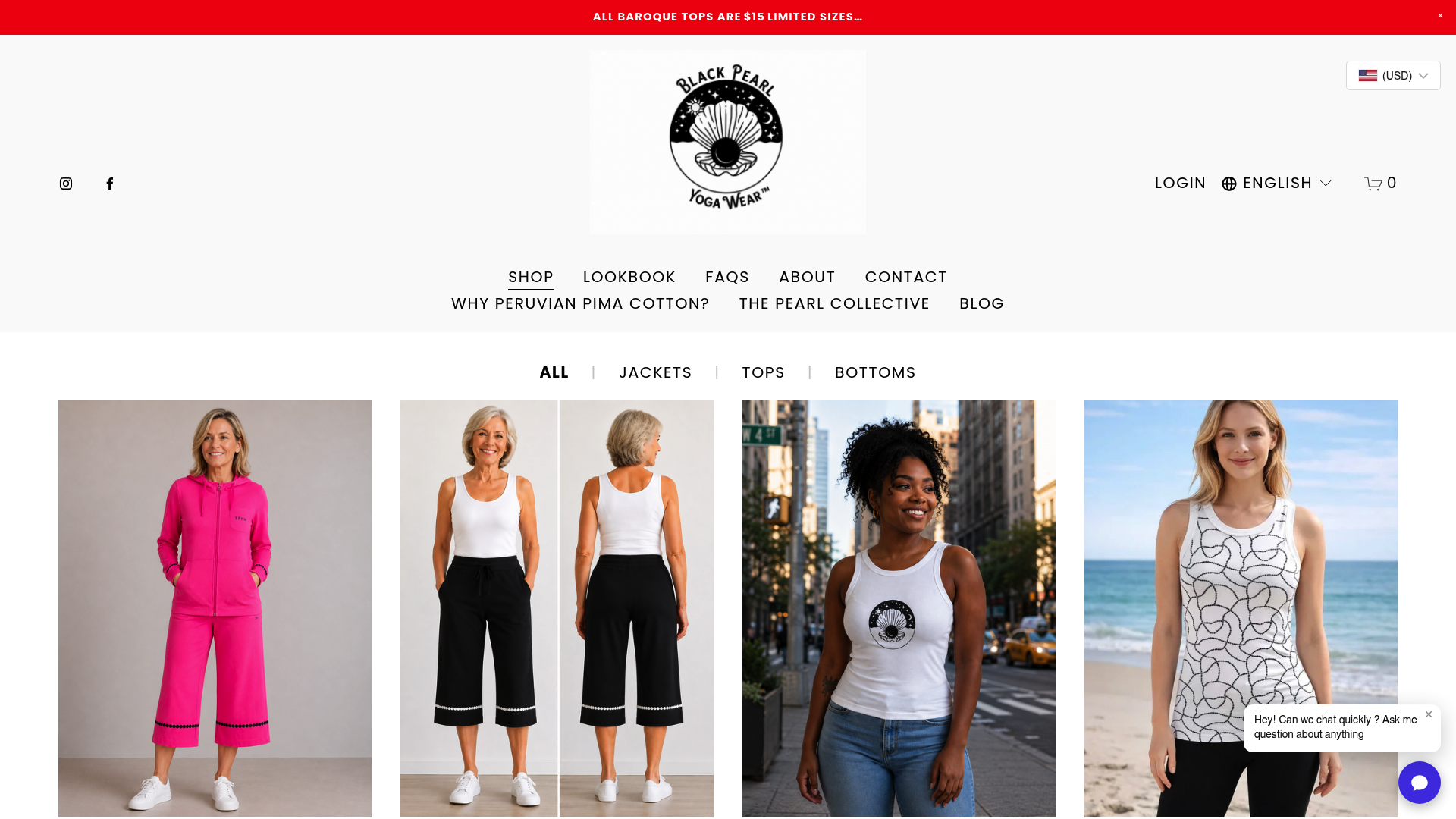
The natural stretch in long-staple Pima moves with you without the heavy synthetic content that can trap heat.
The breathability trade-off
Synthetic blends solve shape retention across bodies that vary within a size range. They snap back after stretching. But polyester and nylon fibers don't breathe at the fiber level the way cotton does, so synthetics can trap heat.
Pima cotton manages moisture through absorption, evaporation, and cooling rather than surface transport alone. During a yoga flow or an August afternoon of errands, that slower release can feel calmer against the skin. Cotton absorbs moisture into the fiber, then releases it as conditions allow, drawing heat away in the process.
The trade-off is that Pima doesn't have the snap-back of nylon-spandex. Its natural give comes from the knit structure, not chemical elasticity. Garments may relax slightly during extended wear and then return to shape after washing.
| Attribute | Hand-Harvested Peruvian Pima | Nylon-Spandex Athletic Blend |
|---|---|---|
| Fiber Length | Extra-long, manually selected | N/A; extruded synthetic |
| Air Circulation | Inter-fiber gaps allow natural airflow | Surface wicking only |
| Stress Point Performance | Strong long-staple yarns | High snap-back, lower breathability |
| Heat Management | Evaporative cooling through absorption | Moisture transport to exterior surface |
| Shape Memory | Natural give, returns after washing | Immediate recovery, heat retention |
Natural fibers on real bodies
Bodies vary inside the plus-size range. One size 18 customer might need more length through the torso. Another might need reinforced inner-thigh seams. Natural stretch in Pima knits can adapt to those variations without the compression feel of synthetics engineered for maximum shape retention.
Pima's longer fibers also mean fewer yarn splices per inch of fabric. Each splice is a potential failure point. In high-flex zones like the hip socket during warrior pose or the inner thighs during a long walk, fewer splices mean fewer chances for breakdown. Pima holds its quality through repeated washing because its long fibers resist pilling and structural breakdown better than regular cotton and many synthetic alternatives. The fabric gives where you need it to give, then recovers in the wash instead of holding constant tension against your body all day.
Care & maintenance: keep both fabrics working longer
Washing Pima cotton without losing the softness
Cold water and low-heat drying preserve Pima cotton's fiber structure. That's not a tag suggestion; it's what keeps the yarn stable and the surface smooth.
Pima's long staple length makes it stronger than regular cotton, but hot water can still cause shrinkage because heat relaxes the yarn twist. Cold water preserves the fiber. Air-drying works, but low-heat tumbling is faster and does minimal damage if you pull pieces out while they're slightly damp.
Skip fabric softener on plus athleisure. It coats fibers and reduces breathability, exactly what you don't want in underarm or thigh zones. Liquid detergent rinses cleaner than powder, which matters in larger garments where fabric layers can trap residue.
Turn pieces inside-out before washing. It protects the outer surface from abrasion in the drum. That's even more important for plus-size wear because high-friction zones like inner thighs already take repeated rubbing during the day.
Synthetic blends need a different routine
Polyester-spandex pieces tolerate warm water better than cotton, but skip fabric softener entirely. Softener clogs the spaces between fibers that allow moisture-wicking. That slick feeling is a coating, and it blocks performance.
High heat damages elastane. Stretch fabrics with spandex need gentle cycles and low-heat drying to preserve elastic recovery. If you remove synthetic pieces when they're about 80% dry and hang them to finish, the waistband and leg openings keep their snap-back longer.
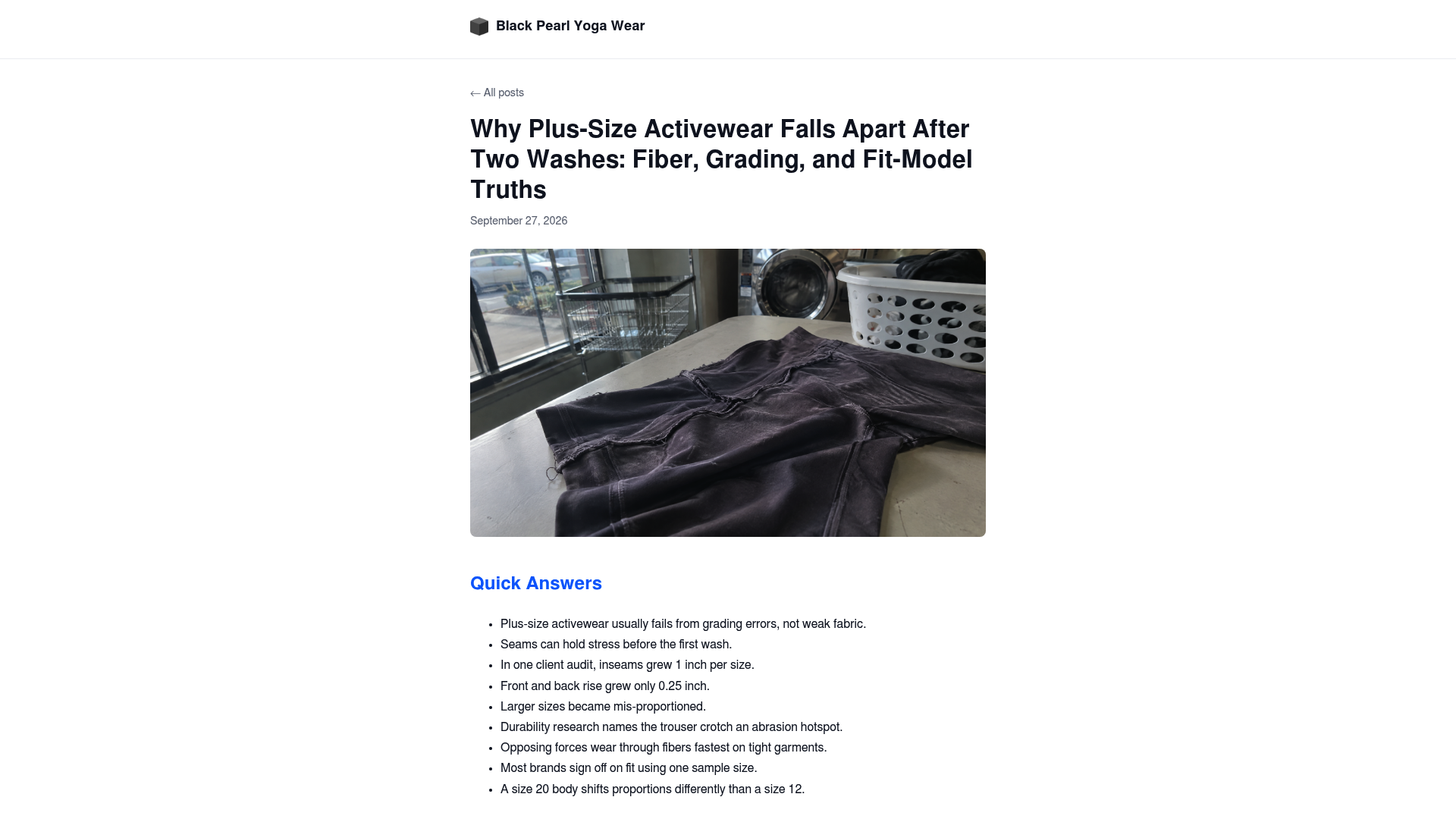
Odor is a known weak point in polyester. Bacteria colonize synthetic fibers and don't always release with standard detergent. Sport-specific detergents that target oils work better than standard formulas. A vinegar rinse can also help break down the compounds that trap smell.
Storage: fold, don't stretch
Fold knit pieces instead of hanging them. Hangers stretch shoulder seams and waistbands on heavier garments. That's a bigger problem in plus-size pieces because the fabric weight pulls more.
Stack folded pieces flat rather than rolling them. Rolling can create pressure lines that weaken elastane over time, especially in synthetic blends. When you travel, lay pieces flat in your luggage instead of stuffing them into compression cubes.
Keep activewear out of direct sunlight. UV exposure degrades both natural and synthetic fibers, and it fades darker dyes faster. A drawer or shelf works better than an open rack by a window.
Care at a glance
| Care Step | Pima Cotton | Polyester-Spandex |
|---|---|---|
| Wash Temperature | Cold only | Warm acceptable, cold better |
| Drying Method | Low heat or air-dry | Low heat, remove early |
| Fabric Softener | Skip; reduces breathability | Never; clogs wicking |
| Detergent Type | Liquid, standard formula | Sport-specific for odor control |
| Storage | Fold flat, avoid hangers | Fold flat, avoid compression |
The care difference comes down to fiber behavior. Cotton absorbs water into the fiber, so heat makes the yarn contract. Polyester moves moisture along the surface, but the elastane in the blend breaks down under sustained heat.
Pilling and abrasion: prevention beats repair
Inner-thigh wear is the usual failure point for plus athleisure. Friction between the legs during walking creates mechanical abrasion that no fabric fully resists.
Turning pieces inside-out before washing protects high-friction zones and keeps the outer surface smoother longer. Wash similar weights together; heavy denim or towels in the same load can speed up pilling on lighter activewear.
Nylon-spandex blends resist abrasion better than polyester-spandex, which is why premium activewear often uses nylon in high-stress zones. Pima cotton resists pilling because long-staple fibers are less likely to break and form surface fuzz, though friction zones may still show wear over time. If pills do form, a fabric shaver removes surface fuzz without damaging the base fabric. Prevention still works better: wash less often when a piece isn't visibly soiled or smelly, and spot-clean small marks.
Mix & match: build a wardrobe that can do both
A closet that only knows Pima or only knows polyester leaves you stuck with the wrong fabric for half your day. Cotton tops can handle yoga and brunch but may feel too absorbent for a spin class. Synthetic leggings can power through HIIT but feel clammy on errands. The answer isn't picking a side. It's having both, so you can swap based on what your body needs that hour.
Pair breathable tops with stretch-recovery bottoms
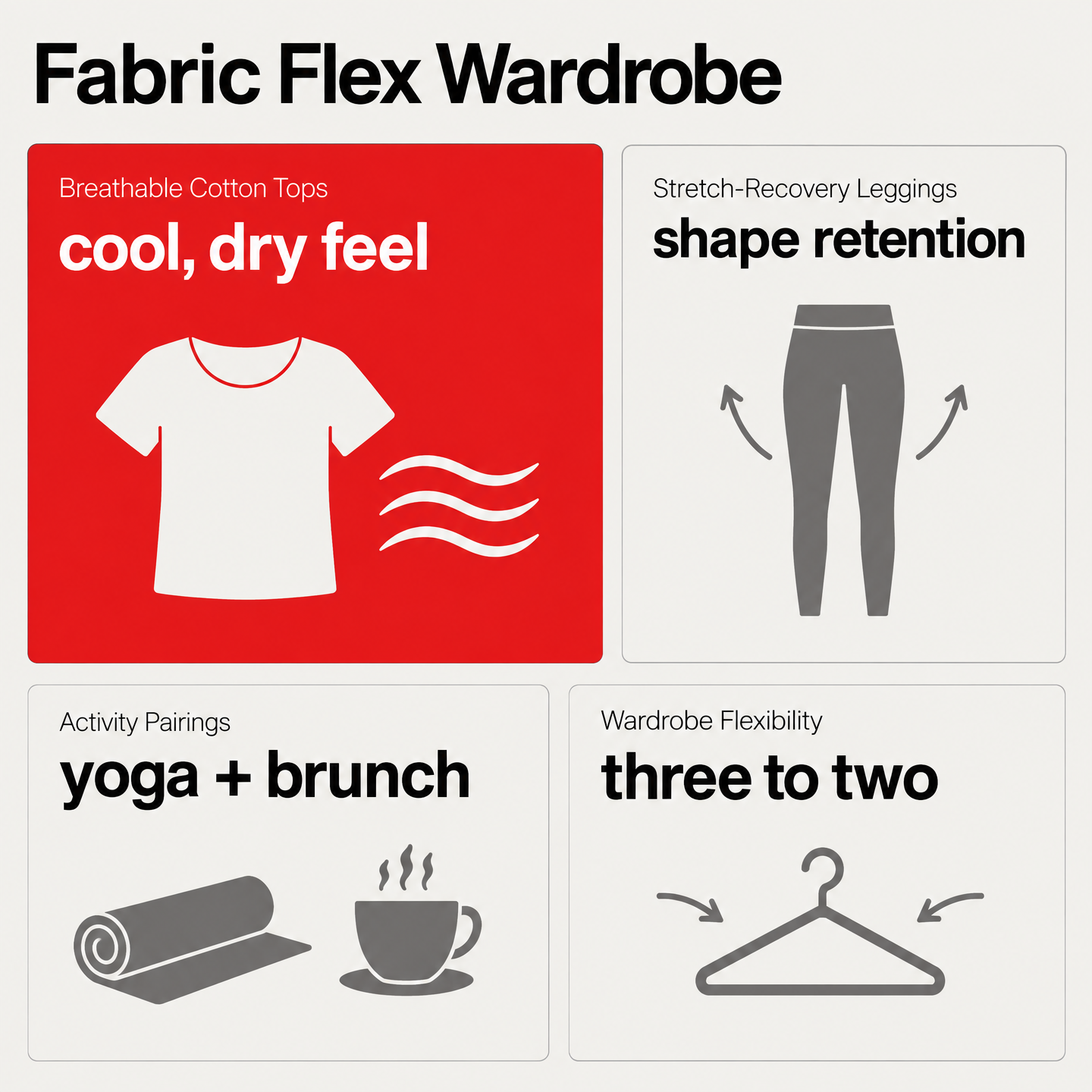
Cotton tops with a little stretch move air through high-heat zones, while synthetic leggings hold their shape through squats and lunges. This is the combination that keeps showing up in plus-size styling guides because it solves the main trade-off: your torso stays cool and dry-feeling, and your legs get the compression and recovery synthetics provide.
We've found this pairing works from studio to street without a costume change. A Pima cotton tee breathes during walking intervals, then layers under a jacket for coffee. The synthetic leggings underneath don't sag or lose their line by midday, which matters when waistbands and inner thighs take repeated stress.
Layer cotton over synthetic base layers
Cotton absorbs moisture into the fiber. Synthetics move sweat toward the surface for quick evaporation. Stack them carefully and each fabric can do what it's best at.
A moisture-wicking synthetic tank under a Pima cotton pullover lets you strip a layer when heat builds and add it back during cooldown. The synthetic base handles sweat volume during hard intervals. The cotton outer stays soft and non-clingy for the rest of your day.
Texture and proportion
Structured textures like ponte knit add form without bulk. That's useful when you're balancing fitted synthetic leggings with flowing cotton tops. Pima tops drape and skim. High-compression leggings hold and shape.
Avoid matching identical fabric weights top and bottom. A heavy cotton hoodie over heavy ponte leggings can read stiff. A lightweight cotton tank over compression tights can look unbalanced. Pair draping cotton, like jersey or soft knits, with structured synthetics, like ponte or compression mesh. The contrast tends to flatter larger silhouettes better than uniform fabric weight.
Build around pieces you'll actually reach for
Start with three cotton tops and two synthetic bottoms. That gives you enough breathable options for moderate days while keeping performance pieces ready for high-sweat sessions. Add a second pair of compression leggings only after you've worn the first pair twice a week for a month. Most people overestimate how often they'll hit that intensity.
Choose pieces that solve specific friction points in your current rotation. If your cotton tops bunch under sports bras, size up or move to a longer hemline. If your synthetic leggings dig into your waist after an hour, look for a wider, softer waistband. The best starter wardrobe isn't five perfect pieces. It's five pieces that fix the five most annoying problems in what you already own.
Use synthetics intentionally
Synthetic pieces earn their place when they compress, dry quickly, or support high-impact movement. Reserve them for those conditions instead of wearing them for every casual outing.
Mixing fabrics means you're not in head-to-toe synthetic for every workout. Keep polyester leggings for high-sweat sessions where their performance matters. Reach for cotton tops when breathability and freshness matter more than drying speed. That limits how much synthetic surface area sits against your skin on moderate days, which can directly reduce odor buildup over time.
Our Pima cotton pieces handle the top half of this mix-and-match strategy: breathable, soft, and designed to pair with whatever synthetic bottoms you already own. You're building a wardrobe that works across activities, not swapping one material monopoly for another.
How to choose this week
If you've been going back and forth on the breathability-versus-stretch question, the practical answer is that you may need both fabrics in your rotation. Pima cotton tops can get you through yoga and coffee runs without the sticky buildup synthetics can create in high-heat zones. Polyester-spandex leggings hold their shape through weighted squats and lunges where cotton feels less structured. The question isn't which fabric wins. It's which piece belongs in which part of your day.
Quick-pick guide
Choose certified Peruvian Pima cotton when:
- You're layering for variable indoor temperatures and need a base that regulates heat without trapping it.
- Recovery days call for gentle movement without compression: restorative yoga, stretching, walking.
- You care more about fabric longevity than quick-dry claims, especially if you wash frequently.
- Evening plans matter and you want pieces that move from studio to dinner without looking like gym clothes.
- You want natural-fiber performance that still looks polished in wellness spaces.
- Skin irritation from synthetic waistbands or seams has you hunting for alternatives that still move well.
- You value knowing where your cotton comes from and how it's grown.
Choose polyester-spandex blends when:
- You train in humid climates or heated studios where quick evaporation matters more than absorption.
- High-rep circuits demand fabric that bounces back between sets instead of stretching out.
- You need gear that packs light and dries overnight in a hotel bathroom.
- Reflective details or technical features like hidden pockets and seamless construction matter for early-morning or late-night workouts.
Why Peruvian Pima works for movement and all-day wear
Our line is built on certified Peruvian Pima cotton, known for long, smooth fibers that make a fabric soft and breathable. Hand-harvesting helps preserve that natural softness and structural integrity, which means the pieces are designed to keep their comfort and appearance over time.
Pima is comfortable enough for all-day wear and stronger than ordinary cotton, so it can handle the repeated bending, sitting, stretching, and washing active wardrobes require. Odor is another reason many people prefer cotton-rich pieces for moderate activity. Natural fibers are easier to freshen with straightforward care, so you're not relying on coatings or special finishes to keep daily-wear pieces pleasant.
Try one piece
Start with one Pima piece and wear it through a full day. A yoga class, errands, lunch. Notice whether the fabric stays comfortable in the places where synthetics usually feel sticky or tight.
Our designs are meant to offer breathable luxury and easy movement, and to transition from wellness activities into everyday life. The brand's larger focus is supporting women through community and connection.
Use both fabric types intentionally. Cotton tops with synthetic leggings solve the core tension: your torso stays comfortable while your legs get the shape retention they need through squats, lunges, and long days on the move. That's the real value of a mixed-fabric wardrobe.
References
[1] The Natural Comfort of PurePima Fabric - DUER - https://duer.com/blogs/uncuffed/the-natural-comfort-of-purepima-fabric?srsltid=AU7gw4Xu3_rZukMrxfbl_3fkyX9Teh-54JPCaPvW7wt-KsVyOXdKsq-1
[2] What is Pima cotton and how is it different? - Fair Indigo - https://www.fairindigo.com/blogs/news/what-is-pima-cotton-and-how-is-it-different?srsltid=AU7gw4U2wg7T8E4XnASN_DdpCwtBRcsmo5fnXW03b5Syg1aulmCzEc5m
[3] Cotton vs Polyester for Activewear: Which Fabric Is Better? - https://fabricandflow.com/blogs/news/cotton-vs-polyester-for-activewear?srsltid=AU7gw4VyRBBS5no2Np7zObu9CwubGIQ-kd9-UuUI5L5CLNb2MssNw4ES
[4] Best Fabric for Activewear, Gym & Yoga (Spandex Guide) - https://spandexbyyard.com/pages/activewear-fabric-guide?srsltid=AU7gw4V1nkgzi3ZbnJhLV6LEJSPmyASugsPHjVy3tJlaghLYxU0WLnDb
[5] Best Clothing Fabrics Compared: Buy & Wash Smarter - Careonova - https://careonova.com/compare-fabrics/
[6] Cotton vs Polyester: The Key Differences - Olaben - https://olaben.com/blogs/olaben-blog/cotton-vs-polyester?srsltid=AU7gw4X8Gu5i5Fxbxjt4PRTjdcoLi8zrTvCnBs8FCky34ybet6SUoHUj
[7] Cotton vs Polyester Gym T-Shirts: What's Better for First Responders? - https://deemedfit.co/blogs/news/cotton-vs-polyester-gym-t-shirts-which-is-better?srsltid=AU7gw4UTPX57ygWOqfYph09mOrI9_MBxbRPo40pf862KOrRsWGtMTa6D
[8] Polyester vs Cotton vs Blends: How To Choose The Best T-Shirt Fabric - https://www.rushordertees.com/blog/cotton-polyester-5050-blend-which-better-you/?srsltid=AU7gw4VXmCBNnnBYadVN2ovBMzxBNp-d5RID_bPHa1-DJaRcOKDPo6Mu
[9] Cotton Workout Clothes vs. Synthetic Activewear: An Honest Comparison - https://purakai.com/blogs/threads-of-change/organic-cotton-vs-synthetic-workout-clothes-best-for-performance-health?srsltid=AU7gw4WA6Z0jyYBunxaeNVtevSIHOvmsyJCsi2Ev-ud6vsVdwRdeqW4e
[10] Best Fabrics for Comfort and Fit in Plus-Size Clothing - https://thecurvyfashionista.com/best-fabrics-for-comfort-and-fit-in-plus-size-clothing/
[11] What is Pima Cotton Fabric: Properties, Varieties, Uses & Global Market - https://www.fibre2fashion.com/market-intelligence/texpro-textile-and-apparel/textile-guide/10533/pima-cotton-fabric
[12] Natural VS Synthetic Fibers: Exploring The Differences | Veetrends - https://www.veetrends.com/blog/natural-vs-synthetic-fibers-showdown?srsltid=AU7gw4UTiPPEQ-eDsbq_f6zPpK3ILL0bdhzjvEXvJjjvaOgTi3EOMElL
Questions People Ask
Does Pima cotton shrink more than synthetic blends after washing?
Pima cotton can shrink if exposed to high heat, while polyester-spandex blends resist shrinkage more strongly. To protect Pima pieces, wash in cold water and air-dry or use low heat. Once the garment has stabilized through early wash cycles, careful laundering helps it hold its dimensions and surface softness.
Can I wear 100% Pima cotton for high-intensity cardio workouts?
Pima cotton is best for low-to-moderate intensity movement where comfort and breathability matter most. For running, HIIT, cycling, or other sweat-heavy workouts, polyester-spandex blends usually feel lighter because they dry faster. If you love cotton, reserve it for warmups, walking, yoga, Pilates, cooldowns, and all-day wear.
Why do my synthetic workout clothes still smell even after washing?
Synthetic fibers can hold onto body oils more stubbornly than cotton, so regular detergent may not remove the residue completely. Use a sport-specific detergent, avoid fabric softener, and let pieces dry fully before putting them in a hamper. Cotton-rich pieces are generally easier to refresh with a standard wash routine.
How long does Pima cotton last compared to polyester-spandex blends?
They age differently. Pima cotton is valued for softness, pilling resistance, and fiber strength, while polyester-spandex is valued for elastic recovery and compression. If your priority is a smooth natural hand-feel, Pima has the advantage. If your priority is a firm, sculpted fit that rebounds immediately, synthetics have the advantage.
Is the higher price of Pima cotton worth it for everyday athleisure?
For everyday athleisure, yes, if you care about breathability, softness, and long-term appearance. The higher upfront cost reflects the quality of the fiber and the hand-harvested Peruvian origin. It is especially worthwhile for pieces you wear from studio to desk, where comfort and polish both matter.
Can I mix Pima cotton tops with synthetic blend bottoms?
Yes. This is often the most practical plus-size athleisure strategy. Wear a Pima cotton top where breathability and softness matter, then pair it with synthetic leggings when you want compression and shape retention through the hips and thighs. You get comfort on top and support below without committing fully to one fabric type.
Do cotton-spandex blends offer a middle ground between Pima and synthetics?
Yes. Cotton-spandex blends add moderate stretch while keeping much of cotton's softness and airflow. The limitation is that elastane can wear out before the cotton itself, especially if exposed to high heat. If you want natural-fiber comfort with a little more give, cotton-spandex is a useful compromise.