Peruvian Pima Cotton Leggings That Skip PFAS and Plastic Fibers
September 22, 2026

Key Takeaways
- Black Pearl Yoga Wear's 100% certified Peruvian Pima cotton leggings contain no synthetic or plastic fibers and retail around $58–65.
- Girlfriend Collective's recycled-polyester leggings fall under a 2026 PFAS exemption for recycled content, so PFAS absence isn't guaranteed.
- Friction, heat, and sweat during exercise speed up how fast clothing chemicals cross the skin barrier, per Minderoo's activewear reporting.
- Cotton absorbs sweat rather than wicking it, which makes it a poor fit for hot yoga or heavy cardio, according to The Good Trade's testing.
- GOTS certification confirms fabric meets strict environmental and chemical criteria, and it's the best shortcut when a brand won't disclose exact elastane percentages.
The Fast Comparison
If you're weighing pima cotton activewear for women against the other PFAS-free options out there, start here. Not every "natural" or "sustainable" legging is actually plastic-free, and the distance between the marketing and the material shows up in what sits against your skin all day.
We built this table from published testing and product specs. Where a brand hasn't disclosed a figure, we flagged it instead of guessing.
PFAS-Free Leggings At A Glance
| Brand | Fiber Type | PFAS/Plastic Status | Certified Sustainability | Price Range | Fit & Stretch | Ideal Use-Case |
|---|---|---|---|---|---|---|
| Black Pearl Yoga Wear | 100% Peruvian Pima cotton | 100% cotton. No synthetic or plastic fibers | 100% certified Peruvian Pima | ~$58–65 | Shirring stitch waistline, natural give | Yoga, wellness, gym-to-street |
| MATE the Label | Organic cotton/elastane blend | No PFAS, BPA, or formaldehyde (per The Good Trade) | GOTS certified | Not disclosed in reviews | ★★★★☆ | Lounge, low-sweat movement |
| Girlfriend Collective | Recycled polyester (plastic) | Plastic-based; recycled-content exemption means PFAS not guaranteed absent (The Filtery) | Recycled content | Not disclosed | ★★★★★ (squat-proof) | High-intensity training |
| All-natural cotton category | Organic/Pima cotton, minimal spandex | PFAS-free when GOTS certified | GOTS varies | Varies | ★★★☆☆ | Daily wear, gentle exercise |
| Other tested roundup brands | Mixed natural/semi-synthetic | Marketed PFAS-free; specs incomplete | Varies | Gap in public data | Varies | Depends on fiber |
Fit and stretch notes are qualitative here, not benchmark scores. Cotton earns less stretch by design, not by defect.
Where Natural Fiber Wins, And Where It Doesn't
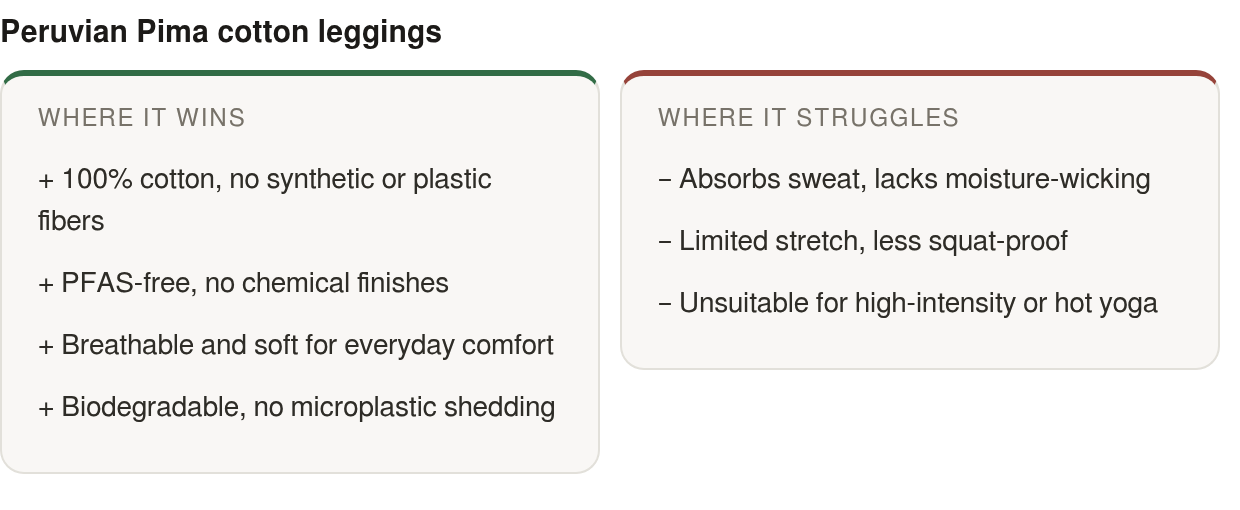
Pima and other organic cottons are the safer pick for daily wear and gentle movement. PFAS-free, breathable, and they skip the microplastic shedding that plastic-based leggings leave behind in your wash water.
The limit is honest and simple: cotton absorbs sweat instead of wicking it, so The Good Trade's testing notes it isn't built for high-intensity work. Skip cotton for hot yoga or heavy cardio. Reach for it for flow classes, walks, errands, and lounging.
Recycled-plastic options like Girlfriend Collective do perform better in squat tests and last for years. But recycled-content textiles sit in a regulatory gray zone that the current rules exempt, which is why a certified natural fiber gives you a chemical-safety certainty that "recycled bottle" leggings can't promise.
The Data Gaps Worth Closing Before You Buy
Two things kept us from filling every cell. Most PFAS-free brands don't publish exact elastane percentages, and few list third-party lab results for PFAS specifically. GOTS certification is your best shortcut, since it confirms the fabric meets strict environmental and chemical criteria.
Our read across all of it: for stylish everyday pima cotton activewear, a 100% certified Peruvian Pima piece gives you comfort, breathability, and a look that carries from yoga to the rest of your day. For sweat-heavy performance, you'll still trade some fiber purity for stretch, and that tradeoff is real until fabric-construction alternatives catch up.
Why Plastic-Free Leggings Actually Matter
When we started sourcing pima cotton activewear for women, one fact reshaped how we think about what touches skin during a workout. The chemical isn't the whole story. The delivery system is.
Synthetic leggings sit tight against your largest organ while your pores open and you sweat. As Minderoo's reporting on activewear explains, friction, heat, and perspiration speed up how fast clothing chemicals cross the skin barrier. That's the part most "clean legging" lists skip. PFAS-coated fabric is risky because exercise turns your own sweat into a carrier.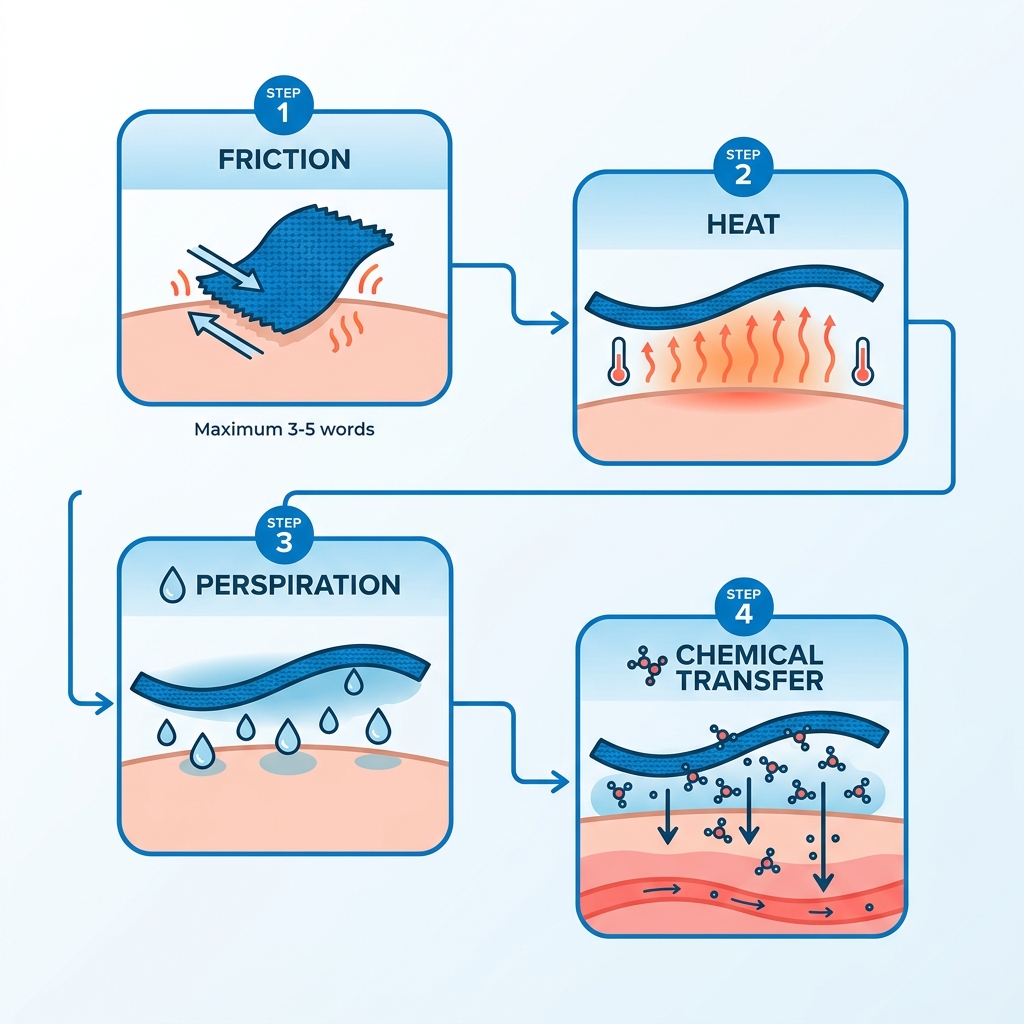
The Sweat-Driven Path Cotton Sidesteps
PFAS get flagged as endocrine disruptors, and The Good Trade's PFAS guide points to the health concerns tied to these chemicals in clothing. In activewear, the danger comes specifically from heat plus friction plus moisture pressing chemicals inward.
Pima cotton absorbs moisture instead of pushing it through a chemical finish. That single property removes the mechanism. No repellent coating, no "moisture-wicking" treatment that, as the same guide notes, is often just marketing language for a water-repellent chemical layer. The long-staple fiber breathes on its own, so the fabric handles sweat through structure rather than a lab-applied film.
The Recycled-Bottle Loophole Nobody Reads
This is where the sustainability story gets uncomfortable. A lot of "eco" leggings are spun from recycled plastic bottles. The Filtery's tester has worn her recycled-bottle pair through more than a decade of squats, and they still hold up. Durable, yes. Plastic-free, no.
Now layer on the 2026 regulations. France, Denmark, and Sweden all set hard PFAS limits, but as bluesign's regulatory breakdown documents, they carve out exemptions for recycled-content textiles. That's the catch buyers rarely notice. A recycled-synthetic legging can legally still contain forever chemicals under these bans, while a natural pima fiber gives you a certainty the recycled-bottle option cannot.
There's a second cost synthetics carry. Every wash cycle sheds microplastic fibers into wastewater, and those particles don't break down. A recycled bottle spun into fabric keeps shedding plastic long after it leaves the store, so "recycled" describes where the material came from, not where it ends up. Cotton returns to the soil instead.
Where Natural Fiber Falls Short
We won't oversell it. The Filtery's testing found plant-based and semi-synthetic fabrics still beat all-natural options on raw compression and stretch. If your priority is maximum squat-proof compression for heavy lifting, that gap is real today.
But Première Vision's coverage shows fabric-construction innovation is closing it fast. For everyday movement, yoga, walking, errands, and the "school pick-up pants" life so much activewear now serves, breathable cotton wins on comfort and safety. That trade-off is worth naming plainly, and it's exactly why we built our fiber choice around the women who wear these all day.
Material Comparison: Pima Cotton vs Synthetic & Blended Leggings
Line pima up against the synthetic and blended options filling most legging racks, and the split is clear. Pure cotton wins on what touches your skin. Synthetic blends win on stretch and drying speed. The honest answer depends on what you're actually doing in them.
Peruvian Pima absorbs moisture instead of pushing it away, which makes it a poor pick for high-sweat interval training. That same trait keeps it soft and chemical-free against your skin. Recycled synthetics move sweat faster, but they're plastic, and as The Filtery's testing notes, the best-performing "sustainable" pairs are often recycled bottles that still shed microplastics.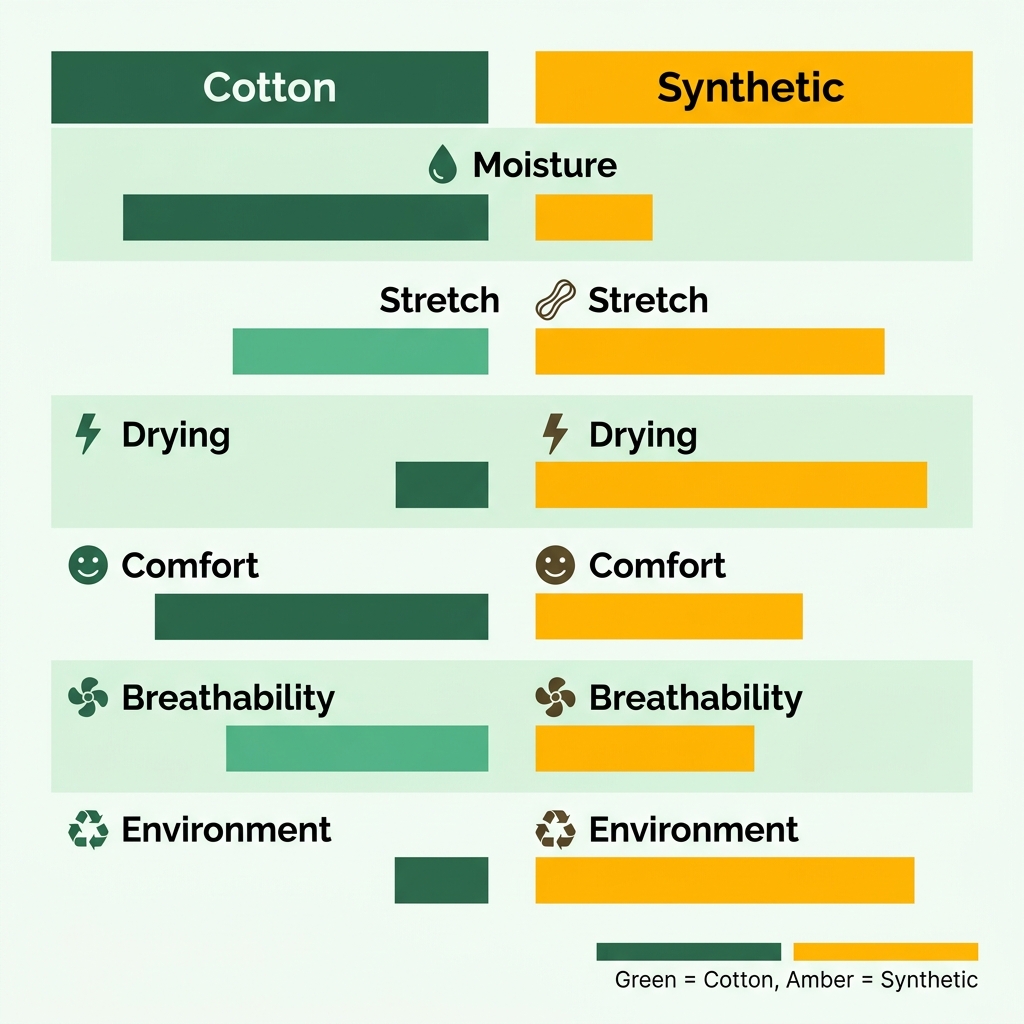
Which Material Actually Blocks PFAS?
Pure cotton is the safest bet for PFAS avoidance because there's no synthetic fiber to carry a durable water-repellent finish. Recycled synthetics are the riskiest, and not for the reason most shoppers assume.
The catch is the fiber itself. A recycled-bottle legging is still plastic, and recycled content alone says nothing about whether a chemical finish was applied. PFAS-free confidence is hardest to guarantee where synthetic fabric and water-repellent finishes are both in play. Natural fiber sidesteps that whole question.
If you're reading a label, the tell is usually in the finishing claims, not the fiber name. Watch for "water-repellent," "stain-resistant," or "moisture-shield" on a synthetic pair. Those coatings are where PFAS most often hides. A cotton pair with no performance finish gives you nothing to worry about. A quick smell test helps too: a strong chemical odor out of the package is a signal to check the finishing details before you wear it.
Does the Spandex in Cotton Leggings Cancel Out "Plastic-Free"?
A trace of spandex doesn't undo the benefits of a cotton pair. The sources disagree here, and it's worth weighing honestly.
Minderoo's activewear reporting treats elastane as another plastic that can release chemicals. The Filtery's author isn't concerned about the small amount of spandex in natural leggings. We side with the second view for one reason: a few percent elastane is what keeps a waistband from sagging, and The Good Trade's editors found the best organic pairs balance mostly-cotton fabric with minimal stretch fiber. Purity at the cost of a bagging, stiff legging helps no one.
When Should You Skip Cotton?
Skip pure Pima for sprint intervals, hot yoga, or anything that soaks you through. Cotton holds that moisture, and you'll feel it.
For everything else, gentle flows, long walks, travel, the all-day desk-to-errands stretch, it's the material we reach for. Editor testing rated the top organic cotton pairs at least 8 out of 10 on comfort, with no pinching or sagging. That's the sweet spot where hand-picked Peruvian fiber earns its place, and where the careful hand harvesting behind it turns a daily wardrobe choice into softness you can feel.
The PFAS-Free Legging Field, And Where We Sit
Compare pima against the rest of the PFAS-free field and the brands split into two camps fast. One builds from recycled synthetics and leans on certifications to prove the plastic is at least clean. The other builds from natural fiber and skips the plastic question entirely. That second camp is where we sit.
Here's the detail most roundups miss. A PFAS-free label does not mean plastic-free. As The Good Trade's PFAS guide points out, high-quality synthetics certified by OEKO-TEX Standard 100 and bluesign can be genuinely PFAS-free while still shedding microplastics in every wash. So when you shop pima cotton leggings, you're clearing two hurdles at once, not one.
Which PFAS-Free Legging Brands Actually Lead?
We built the table below from published testing and product specs.
| Brand | Fiber | Certification | Community Angle | Best Use-Case |
|---|---|---|---|---|
| Pact | Organic cotton | GOTS-certified | Fair Trade Certified factories | Daily wear, gentle flow |
| Boody | Bamboo viscose | OEKO-TEX Standard 100 | B Corp sourcing | Low-sweat movement |
| Girlfriend Collective | Recycled polyester | OEKO-TEX (recycled content) | Recycled-bottle sourcing | High-stretch, compression |
Pact earns its spot honestly. The Good Trade's tested picks describe GOTS-certified organic cotton leggings as nontoxic and PFAS-free, farmed without the harmful chemicals that cling to conventional fabrics. If you want an organic cotton pair with Fair Trade sourcing behind it, that's where we'd point you.
Girlfriend Collective is the recycled-synthetic benchmark. Impressive durability, proven over years of testing. But the pairs are spun from recycled plastic bottles, so the plastic never leaves the equation.
Why Recycled-Content Leggings Still Carry Plastic
This is where the leaders separate. The 2026 regulatory wave against PFAS is real, and coverage of these bans tracks how the rules and safer alternatives keep evolving. But a PFAS-free rating only settles the chemical question, not the plastic one.
A recycled-bottle legging can be certified PFAS-free and still be plastic, still capable of shedding microplastics in the wash. A natural-fiber pair carries no such asterisk. That certainty is the quiet advantage of building from cotton instead of retooling plastic.
What Sets Our Approach Apart?
Our difference isn't just the fiber, it's the standard behind it. The Peruvian pima we start with runs an extra-long staple past 34 millimeters, which is what gives the fabric its smooth hand and resistance to pilling over repeated washes. That choice sits inside a women-focused mission built on community, support, and collective growth. The softness traces straight back to those longer fibers, the same trait that helps each pair keep its shape season after season.
One honest caveat. Skip pure cotton for high-intensity interval work. It absorbs sweat instead of moving it, so for hot, heavy sessions a certified synthetic still wins on dry-time. For daily wear, gentle flow, and all-day comfort, natural fiber is the pick.
Care, Longevity & End-of-Life: Keeping PFAS-Free Leggings Eco-Friendly
The best thing about caring for pima is how little the fabric asks of you. No special detergents, no fabric-softener bans to protect a coating, no worry about stripping a chemical finish. You're washing a natural fiber, so the rules are simple and the fibers last longer for it.
That simplicity is also where cotton pulls ahead environmentally. Every wash of a synthetic legging sheds plastic, and the PFAS review in the textile literature traces chemical release across the whole garment lifecycle, from production through washing and disposal. Pure Peruvian Pima skips that entirely. Nothing plastic goes down your drain.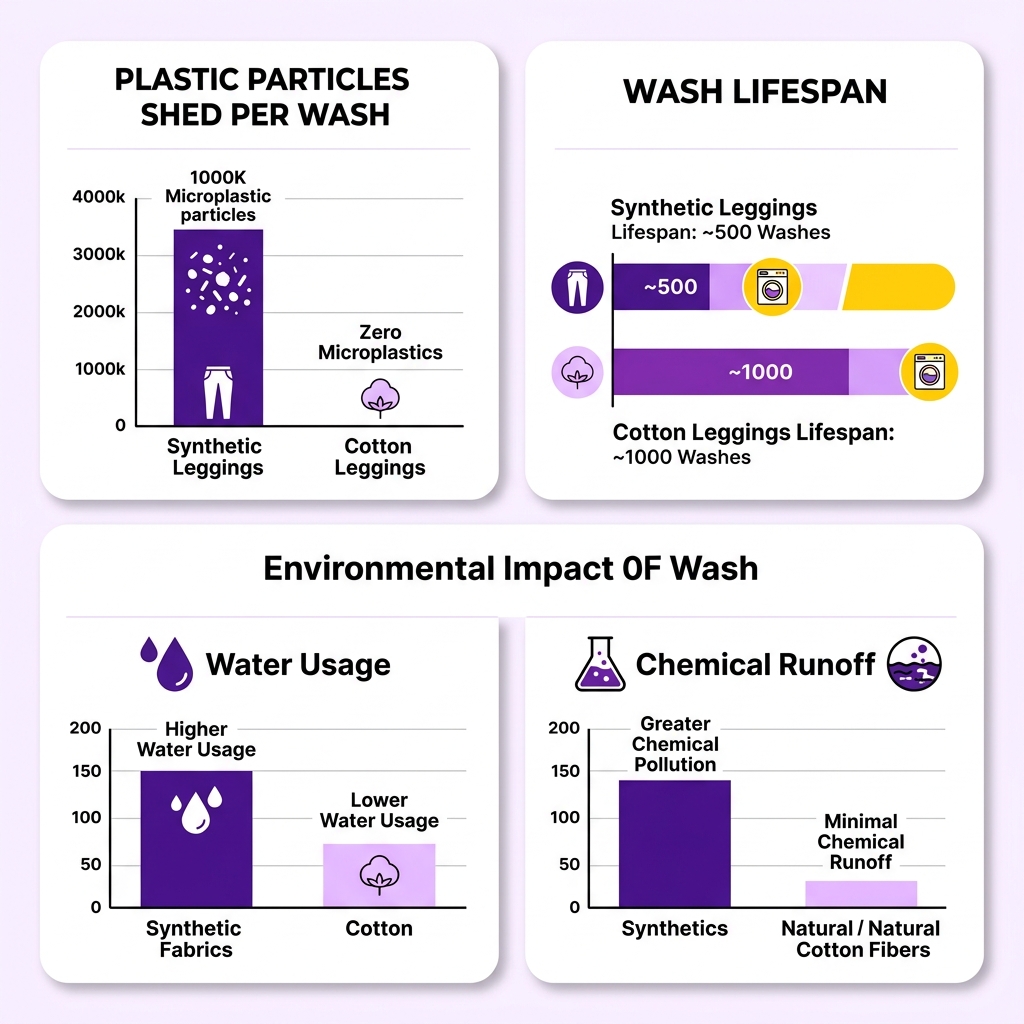
How Should You Wash And Dry Pima Cotton Leggings?
Cold or warm water is your friend. Hot water is the main thing that shortens cotton's life, since heat weakens fibers and sets stains before you can treat them. Wash inside out on a gentle cycle, spot-treat stains with a little soap before they dry, and skip the high-heat dryer.
Line-drying is the single highest-impact habit we recommend. It preserves the hand-harvested fiber structure that makes these leggings soft, and it cuts drying energy to zero. Tumble-drying on low works in a pinch, but air-drying keeps a pair looking new far longer.
What Happens At The End Of Their Life?
Here's the honest split between the two material camps.
| End-of-life factor | Peruvian Pima cotton | Synthetic / blend |
|---|---|---|
| Landfill breakdown | Biodegrades as a natural fiber | Persists; plastics don't break down |
| Compost potential | Suitable if fully cotton | Not compostable |
| Microplastic release | None | Sheds in wash and after disposal |
| Take-back fit | Textile recycling or upcycling | Limited by blended plastics |
A worn-out pure cotton pair can head to a textile recycling drop-off, get cut into cleaning cloths, or, if truly unusable, break down instead of lingering for decades. Blended leggings can't offer any of that cleanly, because the plastic content follows them wherever they go.
Timing matters too. A cotton fiber can take a few months to break down in the right conditions, while a polyester blend may sit intact for hundreds of years. Extending the life of what you already own is the greenest move of all, so mend small holes, re-hem worn cuffs, and rotate pairs to spread the wear. When the fiber starts clean, it can finish clean too.
How To Pick Your Pair
If you've read this far, here's where we land. No single legging wins every category, and anyone who tells you otherwise is selling. The right pick depends on what you weigh most: pure comfort, certified sustainability, price, or where your money goes.
We'll say the quiet part plainly. If you do daily hot-yoga intervals dripping in sweat, pima cotton activewear is the wrong tool. Cotton absorbs moisture, which The Good Trade's testing confirms makes it a poor match for high-intensity performance. For that, a certified synthetic serves you better. For everything else, natural fiber wins.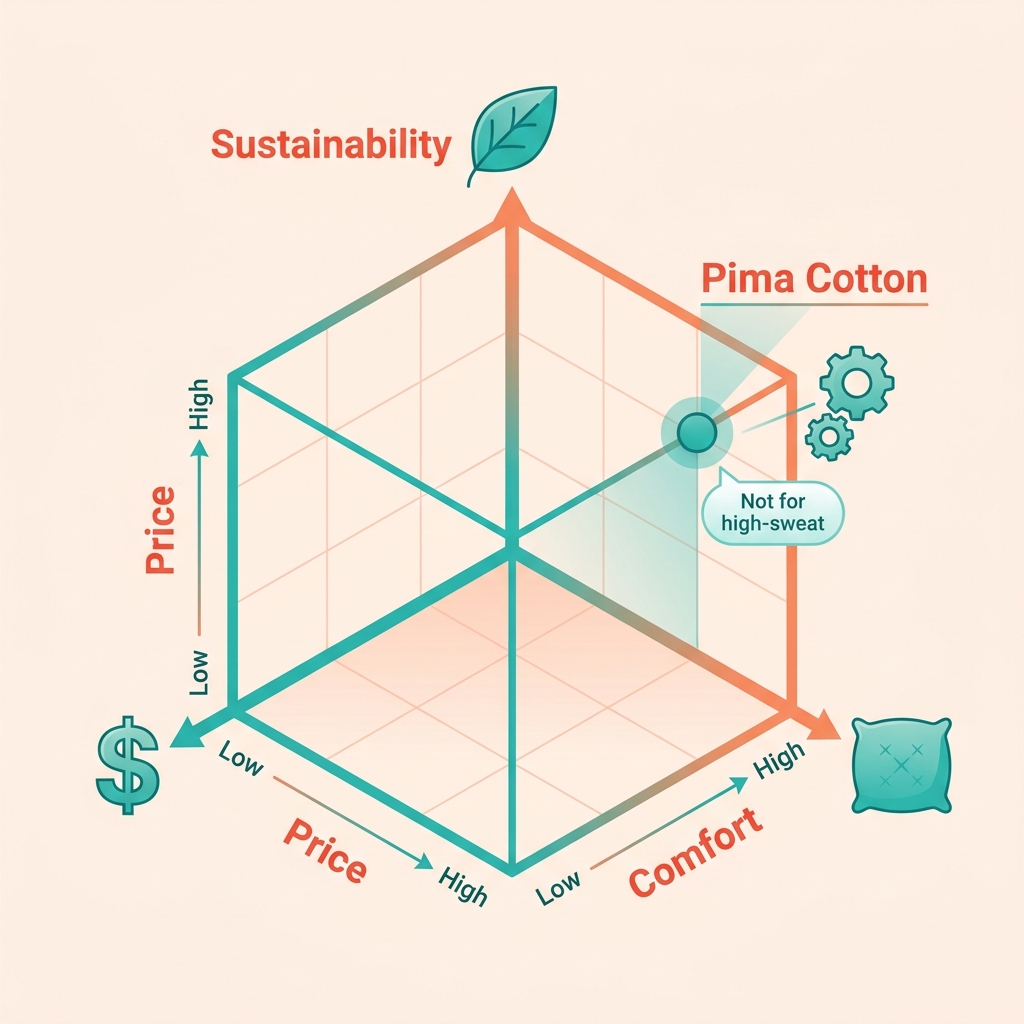
Where Each Brand Actually Wins
The field splits cleanly once you stop treating "PFAS-free" as the finish line. A certified synthetic can be genuinely PFAS-free and still shed plastic every wash, so the plastic-free promise only holds with natural fiber. That distinction decides most of these categories.
| Priority | What to Look For | Why |
|---|---|---|
| Lowest microfiber shedding | Long-staple natural fiber | No synthetic strands to slough into wash water |
| Independent supply-chain proof | GOTS certification | Audits both environmental practice and labor conditions |
| High-sweat performance | Recycled synthetics (Girlfriend Collective) | Wicks moisture fast instead of absorbing it like cotton |
| Squat-proof stretch | Semi-synthetic blends | Higher elastane holds opacity under stretch |
One caveat on that recycled-synthetic row. The 2026 regulatory patchwork across the EU and US often exempts recycled-content textiles from PFAS restrictions, as bluesign's clothing guide details. A "recycled bottle" legging can legally still carry PFAS. A natural-fiber pair sidesteps that loophole entirely.
Where We Fit Best
Our lane is narrow and we like it that way. We build for the reader who wants her everyday layer to be honest against her skin, not the one chasing personal records on the track. The textile industry is a meaningful contributor to PFAS demand (per the textile PFAS review), and a pure-cotton piece removes your wardrobe from that demand altogether. Peru's hand-harvest tradition also keeps fibers longer and less broken than machine picking, which gives the finished garment its soft hand.
We're not the pick for your sprint sessions. We're the pick for the reader who lives in her athleisure and wants what touches her skin all day to hold up to scrutiny.
Your Next Move
We'd rather flag the unknowns than bury them. Long-term durability data for natural-fiber activewear is still thinner than what exists for established synthetics. Independent third-party audits of the full carbon footprint across the Pima supply chain aren't yet standardized industry-wide.
So before you buy: verify any brand's claims against a real label like GOTS rather than vague "eco" marketing. Check the fiber content tag for the word "spandex" or "elastane" and how much. Then come see how our mission to help women through community and connection shapes what we make.
References
[1] 10 Best Organic Cotton Leggings For Women (Reviewed) - The Good Trade - https://www.thegoodtrade.com/features/organic-cotton-leggings/
[2] I Tested 9 Non-Toxic, Plastic-Free, & Squat-Proof Leggings - The Filtery - https://thefiltery.com/plastic-free-non-toxic-workout-leggings/
[3] 10 PFAS-Free Apparel Brands For Nontoxic Clothing (2026) - https://www.thegoodtrade.com/features/pfas-free-clothing/
[4] PFAS in Clothing: 2026 Bans, Health Risks, and Safer Alternatives - https://www.bluesign.com/pfas-in-clothing
[5] Association between outdoor clothing use and serum perfluoroalkyl ... - PMC - https://pmc.ncbi.nlm.nih.gov/articles/PMC12991404/
[6] PFAS and Fashion: A guide to risks, regulations and safer solutions - https://www.premierevision.com/articles/cb0e8fa3-f23a-f011-a5f1-000d3a204d71/pfas-and-fashion-a-guide-to-risks-regulations-and-safer-solutions
[7] Could your activewear be making you sick? It may contain PFAS. - https://www.minderoo.org/stories/pfas-activewear/
[8] (PDF) Per-and Polyfluoroalkyl Substances (PFAS) in the Textile ... - https://www.researchgate.net/publication/405343256_Per-and_Polyfluoroalkyl_Substances_PFAS_in_the_Textile_and_Fashion_Industry_Sources_Health_Impacts_Environmental_Concerns_Regulatory_Responses_and_Sustainable_Alternatives
FAQ
1. How can I tell from a label whether a legging might contain PFAS?
Check the finishing claims, not the fiber name. Terms like "water-repellent," "stain-resistant," or "moisture-shield" on a synthetic pair signal where PFAS most often hides. A strong chemical odor out of the package is another flag. A cotton pair with no performance finish gives you nothing to worry about.
2. Can I compost my Peruvian Pima cotton leggings when they wear out?
Only fully cotton pairs compost cleanly. A 100% Peruvian Pima piece biodegrades in the right conditions within a few months, but any elastane or spandex blend won't break down and can't be composted. Check the fiber content tag first, since even a few percent stretch fiber rules out composting.
3. Why does heat matter so much when washing and drying cotton leggings?
Hot water shortens cotton's life. Heat weakens the fibers and sets stains before you can treat them, so wash cold or warm, inside out, on a gentle cycle. Skip the high-heat dryer and line-dry when possible. Air-drying preserves the hand-harvested fiber structure and keeps a pair looking new far longer.
4. If a legging is made from recycled bottles, doesn't that make it plastic-free?
Recycled describes where the material came from, not what it's made of. A recycled-bottle legging is still plastic, sheds microplastics every wash, and under 2026 rules can legally still contain PFAS through recycled-content exemptions. "Recycled" and "plastic-free" are separate claims, and only natural fiber clears both.