Organic Cotton vs Poly-Spandex Athleisure: Breathability or Stretch?
October 4, 2026
Some leggings feel like a second skin in child’s pose. Others feel soaked by the third interval. The difference usually comes down to how the main fabric handles sweat.
Six Fabric Facts That Matter Most
- Cotton-spandex absorbs sweat into the yarn before your skin feels wet, so it works for low-intensity yoga and Pilates. Knit structure and fabric weight still need to allow airflow.
- Polyester-spandex pushes moisture to the surface and lets it evaporate, keeping the fabric lighter through cardio and interval work.
- Cotton-dominant blends weaken and cling once sweat volume gets high. That limit matters in intense sessions.
- Nylon-spandex feels silkier and stronger, but dries a little slower than polyester. Polyester-spandex offers faster wicking and usually costs less.
- Synthetic blends trap odor-causing bacteria faster than cotton, so they often need antimicrobial treatments or quicker wash cycles.
- Spandex provides stretch and snap-back in both fabric families. The majority fiber decides moisture control and skin feel.
Breathability is a construction effect, not a fiber guarantee. Knit openness and fabric weight determine airflow. Dense cotton-spandex leggings may not breathe better than a mesh poly-spandex pair. Without those specs, a “breathable cotton” label is not a measurable result.
The At-a-Glance Verdict
When you’re choosing between cotton-spandex and poly-spandex, the real question is whether you sweat more or stretch more. Cotton blends absorb sweat into the fiber before your skin feels damp. Polyester and nylon blends barely absorb water, so sweat spreads across the surface and evaporates fast. That comparison only holds when the knit structures are comparable; dense fabric changes the picture.
| Criterion | Generic Cotton | Cotton-Spandex | Poly-/Nylon-Spandex |
|---|---|---|---|
| Breathable, Absorbent Feel | Soft hand feel; holds sweat in fiber, but airflow depends on knit | Very good; adds light stretch. Breathability still depends on knit | Varies by knit; mesh improves airflow |
| Stretch & Recovery | Minimal; bags out quickly | Good with added spandex for studio wear | Excellent; strong stretch, snaps back |
| Moisture Management / Drying Speed | Slow; holds moisture, feels damp | Moderate; still cotton-dominant | Fast; spreads and evaporates |
| Comfort & Skin Feel | Soft, gentle, hypoallergenic | Soft with more cling | Nylon “buttery”; poly improves with brushing |
| Odor Tendency | Low; washes clean | Low; cotton base resists biofilm | Higher; poly holds oils, needs antimicrobial treatment |
| Durability / Longevity | Thins and sags over time | Better, but still weakens when wet | Strong; resists pilling, abrasion |
Spandex gives you stretch, but it doesn’t change what the majority fiber does with water. Once sweat passes cotton’s absorption limit, the fabric weakens and loses snap-back faster than synthetics. That’s why cotton-dominant blends are best for low-to-moderate intensity studio sessions, not high-sweat cardio. Nylon-spandex is the premium choice: silkier, stronger, and slightly slower to dry. Polyester-spandex is the workhorse for runners and HIIT fans who want fast wicking at a lower cost.
Why Sweat Level, Not Stretch, Should Drive Your Choice
After a restorative yoga class, a cotton-spandex top still feels dry and soft. Run intervals in the same top, and it will stick to your back. The difference isn’t how much it stretches. It’s how much sweat the fabric has to manage.
Cotton holds moisture inside the fiber before you feel dampness on the surface. That is why it keeps your skin comfortable during light movement: walking to the café after Pilates, slow flows, or restorative sessions where you barely sweat. Once you push into higher intensity, that absorbency turns into weight. Polyester flips the story. It absorbs almost no water, so sweat spreads across the surface and evaporates. You stay lighter when the workout heats up.
Spandex Adds Stretch, But the Majority Fiber Sets the Rules
Spandex gives you the elastic freedom to lunge deep and reach overhead. Cotton-spandex can match poly-spandex on stretch for many studio classes, but the majority fiber still controls moisture, breathability, and how the fabric feels against your skin. A cotton-dominant blend absorbs sweat into the fiber. A poly-dominant blend wicks it to the surface. That difference matters more than the stretch percentage on the tag.
Lifestyle Crossover: Where Each Fabric Works Best
Cotton athleisure is the softer option for low-to-moderate movement and casual wear. Studio classes, neighborhood walks, errands: this is where natural softness and a non-compressive feel work. It doesn’t trap heat when you sit at a desk after class. Poly-spandex is the better call for high-sweat, high-mobility days: running, HIIT, and gym sessions where quick drying and compression matter more than cotton’s softer hand.
What Happens When You Sweat: Low-Intensity vs. High-Intensity
At low sweat levels, cotton’s absorbency is an advantage. Cotton fibers hold moisture inside the yarn before your skin feels wet. During restorative yoga or slow Pilates, that buffering effect keeps your skin drier than polyester does. In activewear for gentle movement, that translates to soft, absorbent comfort without the clammy feeling synthetics can bring.
Push into cardio, and the script changes. Cotton saturates, then sits heavy and damp. Polyester-spandex sidesteps this. Polyester takes in very little water, so sweat spreads across the fabric and evaporates. During intervals or HIIT, polyester dries noticeably faster under the same conditions. That gap matters when you’re layering afterward or tossing gear in a gym bag.
Drying Time and Moisture Handling: What Changes
Cotton naturally holds more moisture even when dry, so it releases sweat slowly. Polyester sheds water much more aggressively. This is a directional comparison, not a lab benchmark: without knit and weight specs, precise percentages shouldn’t be quoted from fiber type alone. Cotton-spandex works for studio sessions and crossover days; for running tights or high-sweat training tops, polyester-spandex is the stronger moisture manager.
Adding spandex to cotton helps stretch but doesn’t fix cotton’s moisture weakness. If you sweat heavily enough to saturate cotton’s absorption capacity, the fabric weakens and loses shape faster than nylon- or polyester-spandex. Think of this as an intensity ceiling: cotton-spandex activewear is comfortable up to moderate sweat. High-output work asks for synthetic wicking.
Stretch Feels Good, Recovery Is the Real Test
Stretch feels good in the fitting room. Recovery is what tells you how those leggings behave after an hour of chaturanga or squats. Spandex, also called elastane or Lycra, is the fiber that flexes and returns. It can make up anywhere from 5% to 20% of the blend. It decides whether fabric stays put during a deep lunge or bags out at the knees.
How Much Spandex Makes a Difference?
Cotton-spandex blends usually run 90–95% cotton with 5–10% spandex. Pure cotton has little give and would sag quickly. Adding 6–10% spandex gives enough flex for most studio training. Polyester-spandex and nylon-spandex often use 80–90% base fiber with 10–20% spandex. That higher percentage supports stronger snap-back for compression work.
The catch is recovery. Cotton-spandex loses shape faster than synthetics once sweat saturates the fabric. Cotton weakens when wet, so pants may stretch out during a sweaty interval and not fully return. Polyester and nylon keep their structure under moisture because the base fiber stays intact.
Stretch Versus Recovery
Spandex can stretch many times its original length and snap back without permanent distortion. But the base fiber controls how well that recovery holds over time. A fabric that stretches easily and then sags after wear isn’t an asset; it’s a fit problem.
For gentle movement like restorative yoga, Pilates, or walking, cotton-spandex gives enough flex without the slick hand-feel of synthetics. For compression and sweaty training, poly-spandex and nylon-spandex hold shape better because they don’t absorb moisture into the fiber. Nylon-spandex gets praised for its buttery feel in premium yoga leggings. Polyester-spandex dominates running tights for faster drying and lower cost.
How the Fabric Feels and Why Your Laundry Tells the Truth
Cotton-spandex gets described as soft and comfortable. That softness is physical, not marketing. Cotton absorbs a little moisture into the fiber, creating a cushioned feel. Add spandex and you keep that softness while gaining stretch. Cotton-dominant pieces work well for restorative yoga, walking, and studio-to-street wear.
Polyester-spandex sits closer to the skin because polyester doesn’t absorb moisture; it spreads sweat to the surface. During low-sweat activity, that can feel clammy or slightly plasticky. Brushed and microfiber finishes have softened modern polyester, but cotton still wins on first touch for gentle movement.
Post-Workout Odor: Where Synthetics Struggle
Odor is where cotton has a clear advantage. Polyester is oleophilic, meaning it holds onto oils and traps odor. That’s why poly-spandex leggings can smell sour after washing. Cotton doesn’t build the same biofilm, so it usually washes out more cleanly.
A polyester top left in a gym bag goes rank. A cotton-spandex top releases odor more completely in the wash. If you train several times a week, that difference compounds. For odor-sensitive days, cotton-dominant blends are easier to keep fresh without antimicrobial finishes.
Matching Fabric to Your Actual Sweat Rate
Choosing between cotton-spandex and poly-spandex is less about label claims and more about sweat rate. The practical grid below keeps it simple.
Where Each Fabric Earns Its Place
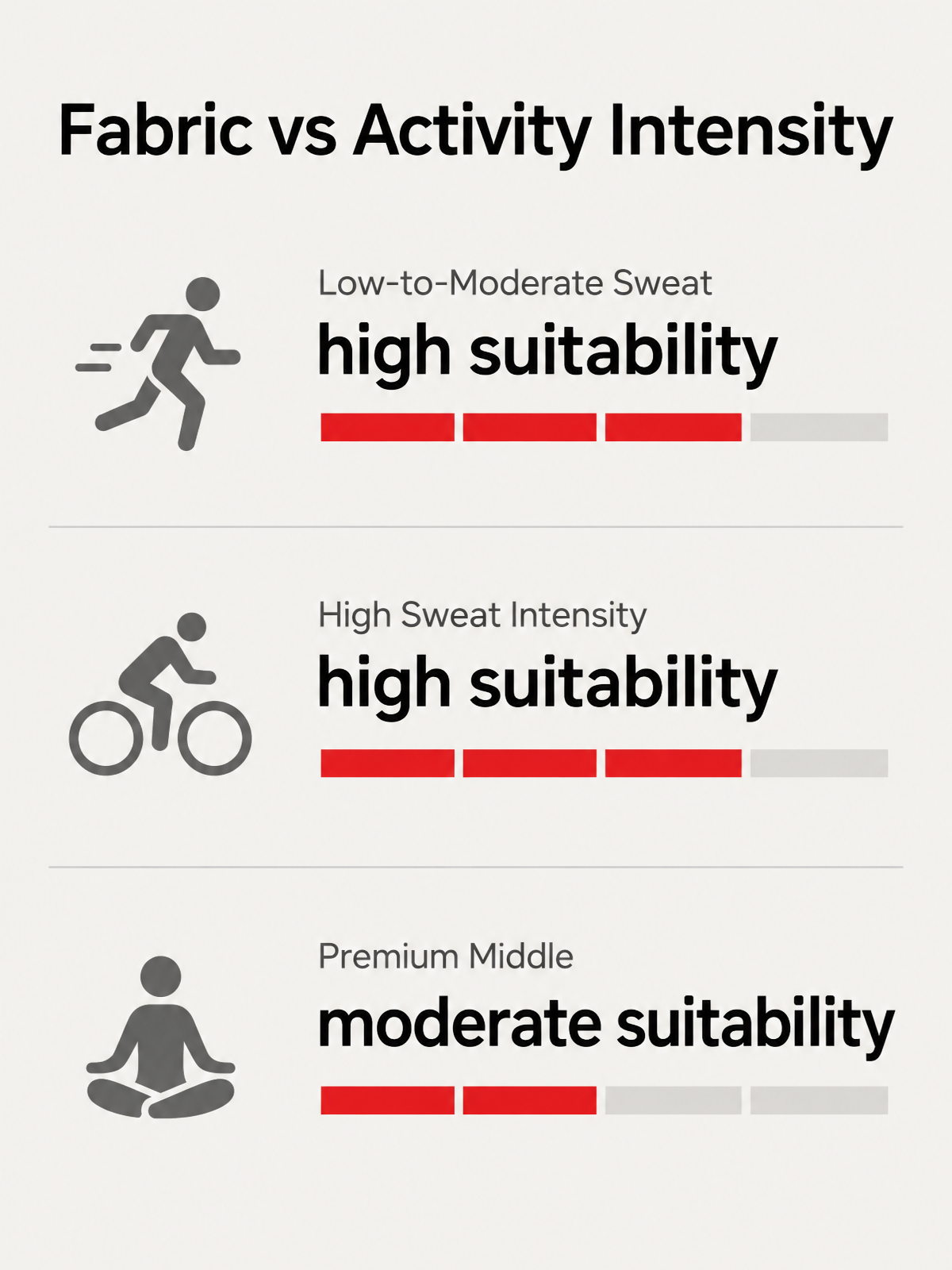
Cotton and cotton-spandex blends work well in low-to-moderate sweat zones. Cotton fibers absorb moisture before you feel surface wetness, so your skin stays drier longer in restorative yoga, Pilates, walking, or studio-to-street days. Add spandex and you get enough stretch for most studio training. Polyester is more prone to odor-causing bacteria after workouts, which gives cotton another edge in low-odor situations.
Polyester-spandex blends own high-sweat, high-intensity training. Polyester absorbs very little water, so sweat spreads across the fabric and evaporates fast during running, gym circuits, HIIT, and spin. It dries significantly faster than cotton, which matters for back-to-back sessions or travel. It also holds its shape wash after wash, resists UV damage, and costs less than nylon.
Nylon-spandex blends sit in the premium middle. They feel buttery and strong, with more stretch and abrasion resistance than polyester. Nylon works well for compression-heavy yoga, dance, and gym wear. It dries slower than polyester but faster than cotton, and the smooth hand looks sleeker.
The Trade-Off at a Glance
Cotton absorbs moisture into the fiber and feels naturally soft, but it saturates during cardio and dries slowly. Polyester wicks surface sweat and dries fastest, but can trap odor without antimicrobial help. Spandex drives stretch and recovery across all blends, and higher percentages deliver stronger compression. Cotton-spandex handles most studio training, but it won’t match synthetics for ultra-high compression or the fastest drying. No cotton fabric should be called more breathable without stating its knit openness and weight.
If you want breathable softness for gentle movement and casual wear, cotton-spandex gives you absorbent comfort that works as street style. If you sweat hard or train multiple times in one day, polyester-spandex keeps you lighter and drier. Nylon-spandex splits the difference for premium feel with stronger stretch.
References
[1] Nylon Spandex vs. Polyester Spandex vs. Cotton Spandex: Which Blend Is - https://sportek.com/blogs/news/nylon-spandex-vs-polyester-spandex-vs-cotton-spandex-which-blend-is-best-nylon-spandex-vs-polyester-spandex-vs-cotton-spandex-best-blend-you?srsltid=AU7gw4UY-RDQWd3YHPDkRc2L9kLi-yoH3q5VwcdEBSqK8GM7KicuQgHw
[2] Cotton vs Polyester for Activewear: Which Fabric Is Better? - https://fabricandflow.com/blogs/news/cotton-vs-polyester-for-activewear?srsltid=AU7gw4V3iLZpd-TFHEp5PFe6ngt26IJET7twAkpZUBjOyeJpqkwZI_bU
[3] Cotton vs Polyester: The Key Differences - Olaben - https://olaben.com/blogs/olaben-blog/cotton-vs-polyester?srsltid=AU7gw4XpmuwatKxND0xmB0TIdNUwgqKw8y1i5tNr_MqA56yqNi478-ny
[4] Cotton vs polyester for fitness, head to head | LAINE HILL - https://lainehill.com/blogs/journal/cotton-vs-polyester-fitness?srsltid=AU7gw4VsTX-Z1iaJYzeIkCe40KnrutdkwIJM85IXPVXriS95WHS_leJa
[5] Which Is Better, Cotton Or Cotton Spandex? - Szoneier Fabrics - https://szoneierfabrics.com/which-is-better-cotton-or-cotton-spandex/
[6] How to Select the Best Spandex Blend for Your Workout Clothes - https://sportek.com/blogs/news/choosing-right-spandex-fabric-for-activewear?srsltid=AU7gw4XHFsJqHPPg_9lrm49CsGzx36JRilgLvb8xFDvSTZCSoFl4Uy5-
[7] Best Fabric for Activewear | Performance & Comfort Guide - https://mfgmerch.com/best-fabric-for-activewear/
[8] Breathable and Chic: The Best Fabrics for Women's Running Clothes - https://www.twentyonerun.com/blogs/breathable-and-chic-the-best-fabrics-for-womens-running-clothes
[9] Guide to Choosing the Best Spandex Blend for Different Activities - https://sportek.com/blogs/news/guide-to-choosing-the-best-spandex-blend-for-different-activitiesbest-spandex-blend-for-different-activities?srsltid=AU7gw4XasOR9rRge7MOs6Ke_sGFPfaiK7SsZtwez2VA4hDPbkontq2Gx
[10] Cotton vs Polyester Fabric Guide | OEM Clothing Selection - https://szoneierfabrics.com/cotton-vs-polyester-fabric-selection-guide-for-oem-clothing-manufacturers/
Frequently Asked Questions
Will cotton-spandex leggings stretch out and lose their shape faster than polyester blends?
Cotton-spandex loses recovery faster once sweat saturates the fabric, because cotton weakens when wet. Polyester and nylon hold their shape under moisture load because the base fiber stays structurally intact, making them better for compression-focused training where you need consistent fit across multiple wears.
Can I wear polyester-spandex athleisure all day without it feeling uncomfortable or clammy?
Polyester sits closer to the skin surface and can feel clammy during low-sweat activities, since it doesn't absorb moisture into the fiber the way cotton does. Modern polyester blends use brushing and microfiber techniques to soften the hand feel, but cotton-spandex still wins on initial softness for gentle movement and casual crossover wear.
How do I prevent my polyester workout clothes from smelling sour after washing?
Polyester is oleophilic and traps oils and bacteria that create odor, even after washing. Look for polyester-spandex blends with antimicrobial treatments, or choose cotton-dominant athleisure for odor-sensitive situations. Cotton washes out cleanly because it doesn't build the same biofilm that synthetic fibers develop from body oils.
Does adding more spandex to cotton fix the drying speed problem for high-intensity workouts?
Adding spandex to cotton improves stretch but doesn’t fix cotton’s core moisture weakness. Cotton-spandex blends still hold water in the fiber and dry slowly, making them ideal for low-to-moderate intensity studio sessions but not high-sweat cardio. For fast drying during interval runs or HIIT, polyester-spandex delivers the moisture control you need.
Match the fabric to your sweat rate and movement intensity, not seasonal marketing claims that ignore how hard you train.