How to Wash Pima Cotton Leggings So Squats Stay Opaque
September 1, 2026
Key Takeaways
- Pre-wash prep is the step everyone skips, and it's the one that decides whether your Pima cotton leggings stay opaque through squat after squat.
- Opacity fails first at high-stress zones like the inner thigh and knee, where micro-tears open up during the spin cycle.
- A stretch stitch flexes with the knit and keeps a run from spreading. A straight stitch snaps under tension and makes the tear worse.
- Sorting by color and fabric weight stops dye bleed and the uneven agitation that dulls fabric and wears fibers at different rates.
- The twist and weave that keep Peruvian Pima cotton opaque are exactly what careless washing loosens.
- Three steps, in this order: inspect, sort, spot-clean. That's what protects opacity.
- A lint roller or soft brush over the surface before washing lifts hair, grit, and debris that would otherwise sand down the fibers.
Pre‑Wash Prep: Inspect, Sort, Spot‑Clean
Before any detergent touches your leggings, give them two minutes. This is where you catch weak spots and lift stains before the machine's agitation makes them worse. It's how the fabric keeps its density through every workout.
We treat this routine as non-negotiable on our own pieces. The physical stress of laundering can permanently change the fabric's density, so you want to head it off.
How to inspect for wear
Turn each pair inside out and check the seams and elastic waistband under good light. Look at the spots that take the most friction and stretch when you move. Catching a small structural problem early keeps it from opening into a visible gap mid-wash.
Found a small tear? Repair it before washing, not after. Use a flexible stitch so the thread moves with the knit instead of pulling the damaged area apart under tension.
Sorting and clearing debris
Group your laundry with care. Throwing heavy items like hoodies or jeans in with lightweight activewear creates friction that grinds down the cotton's surface and speeds up wear.
Then clear the surface of anything clinging to it. Grit and particles trapped on the fibers act like mild sandpaper during the wash, thinning the material over time.
Spot-cleaning sweat stains the right way
Mix liquid Castile soap and cold water in a 1:1 ratio, dab it onto oily or sweat-marked areas, and let it sit 5 to 10 minutes before washing. Cold water matters here. Hot water relaxes the cotton's twist, and a looser twist reads as more transparent.
Skip the hot pre-soak. It feels thorough, but for opacity it does the opposite.
That's the payoff for two minutes of prep: stains gone, structure intact.
Inside‑Out Cold Wash: Cycle Settings and Detergent
Cold water at or below 30 °C (86 °F) is the single setting that keeps your fibers tight. Cotton swells in warm water, the weave loosens, and a loose weave is a see-through weave. Wash your pima cotton activewear cold, inside-out, on a gentle cycle, and you protect both the surface and the structure that keeps squats opaque.
One thing most guides skip: opacity fails two different ways, and you have to manage both. One is mechanical, meaning stretched, thinned, pilled fabric. The other is color, meaning dye that fades until dark leggings read translucent. You can keep the fibers perfect and still end up sheer because the color washed out. We treat these as separate problems with separate fixes.
Cycle settings that protect opacity
Run a gentle or hand-wash cycle: low agitation, a slow spin around 15–20 rpm, roughly 30 minutes. Turn each pair inside-out first. That shields the outer face from the friction that drives pilling and thins fabric over time, as Whirlpool advises.
Drop them in a mesh bag too. It stops the stretching and snagging that warps waistbands during the spin. The low agitation is doing the mechanical half of the job, keeping the twist and weave intact so the fabric holds its shape through a deep squat.
The detergent that keeps leggings opaque
Use a liquid, bleach-free, pH-balanced detergent. This is the color half of the equation, and the data is blunt. In repeated-laundering testing, powder detergents pushed color change past ΔE* > 5 after 25 cycles, while liquid formulas held near ΔE* ≈ 1.8.
Here's why that gap matters: your eye starts catching fade around ΔE* of 2.3. Powder blows past it. Bleach-free liquid stays under it. Enzyme-free, pH-balanced formulas also spare the fibers from breakdown, and lab work shows a 22% drop in fiber abrasion using liquid over powder on Pima. A plant-based liquid formula fits the bill.
Skip three things entirely:
- Fabric softeners. They coat and degrade the moisture-wicking finish, per Whirlpool.
- Chlorine bleach. The fastest route to faded, sheer legs.
- HE powders. They leave residue that scatters light and reads as translucency.
Wash often, but wash right
Whirlpool says wash leggings after every wear for hygiene. The color study says every cycle adds cumulative fade, and 25 cycles maps to roughly 2–3 years of use. Those two pull against each other.
Our take: both are right, and the fix is detergent. Wash after every workout if you want. Just keep it bleach-free liquid so your cumulative ΔE* stays under the visible line for your real cycle count. Frequent washing only kills opacity when powder or bleach is doing the damage.
Quick reference table
| Step | Recommended Settings | Time | Tools/Products | Opacity Impact |
|---|---|---|---|---|
| Turn inside-out ✅ must-do | Outer face protected | 1 min | Hands | High |
| Cold wash ✅ must-do | ≤30 °C / 86 °F | . | . | High |
| Gentle cycle ✅ must-do | 15–20 rpm, ~30 min | 30 min | Mesh bag | High |
| Liquid detergent ✅ must-do | Bleach-free, pH-balanced | . | Plant-based liquid | High |
| Softener ⛔ common mistake | Never | . | . | Negative |
| Mesh bag ⚪ optional | Anti-snag | 1 min | Mesh bag | Medium |
Start to finish, prep through storage runs about 45–60 minutes, most of it hands-off machine time.
Gentle Spin, Low Heat: Air vs. Tumble Drying
Drying matters as much as washing. Two moves protect opacity here: a low spin speed and low heat. Spin at or below 600 rpm to keep the elastic waistband and thigh panels from stretching, then dry gentle.
That gentle-drying rule is the whole game for pima cotton activewear. High heat shrinks and tightens the weave the wrong way, and a distorted weave reads sheer under a squat. In our experience, most opacity complaints trace back to a hot dryer, not the wash.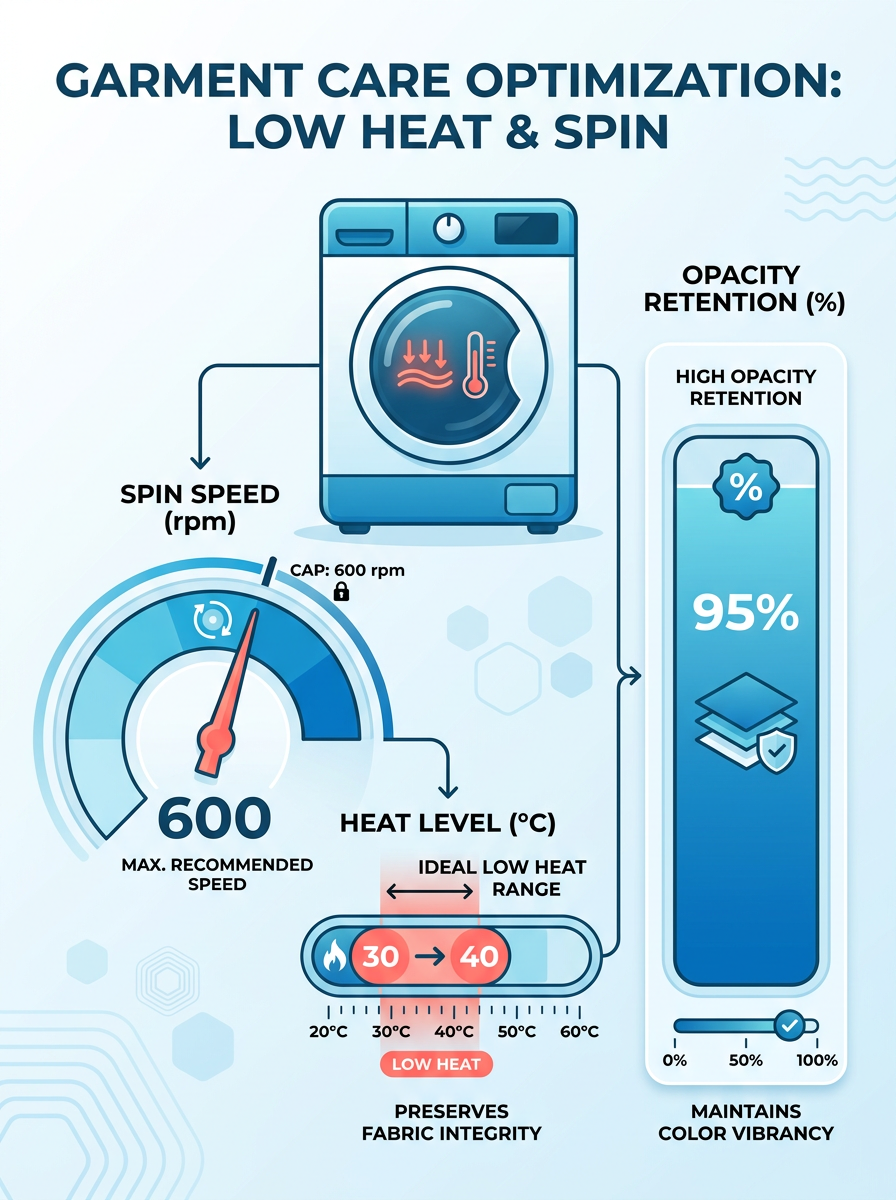
Air-dry, tumble, or hybrid?
Air-drying flat wins for opacity. High heat is the enemy of a dense weave. Letting a pair dry naturally keeps the fibers packed the way they left the shelf. Lay them flat on a clean towel so the leg fabric doesn't stretch under its own weight while wet.
Don't hang wet leggings. Gravity pulls the damp fibers long and thin, exactly where you want them dense. Flat drying holds the shape you paid for.
Low-heat tumble works when you're short on time. Keep it at or below 40 °C (104 °F) for just 10 to 15 minutes. That pulls out excess moisture without cooking the weave. If a pair already feels thin, skip the dryer altogether. Heat only speeds up the damage.
The fastest safe method
Go hybrid: a 5-minute low-heat tumble, then finish flat on a towel. You get the speed of the dryer and the shape protection of air-drying, without the opacity loss from a full hot cycle.
One tip we swear by: put the leggings inside a clean mesh laundry bag before they go in the dryer. The mesh cushions them and cuts the friction that causes pilling and thinning. Flip each pair inside-out first, so the face that gets seen never rubs the drum directly. Pick the "dry-gentle" setting, not the default cycle.
Dry gentle, dry flat, and your squats stay opaque wash after wash.
Long‑Term Care: Storage, Re‑Conditioning, Opacity
Storage decides how your leggings age between washes. Store folded, never hanging. Hanging pulls the waistband and thigh seams down under their own weight, and that slow stretch is what turns dense pima cotton activewear sheer at the hips over time.
Fold each pair in thirds and stack them flat. Keep them in a breathable cotton or linen bag, not plastic. Plastic traps moisture, and trapped moisture weakens fibers and invites the exact thinning that reads translucent under a squat.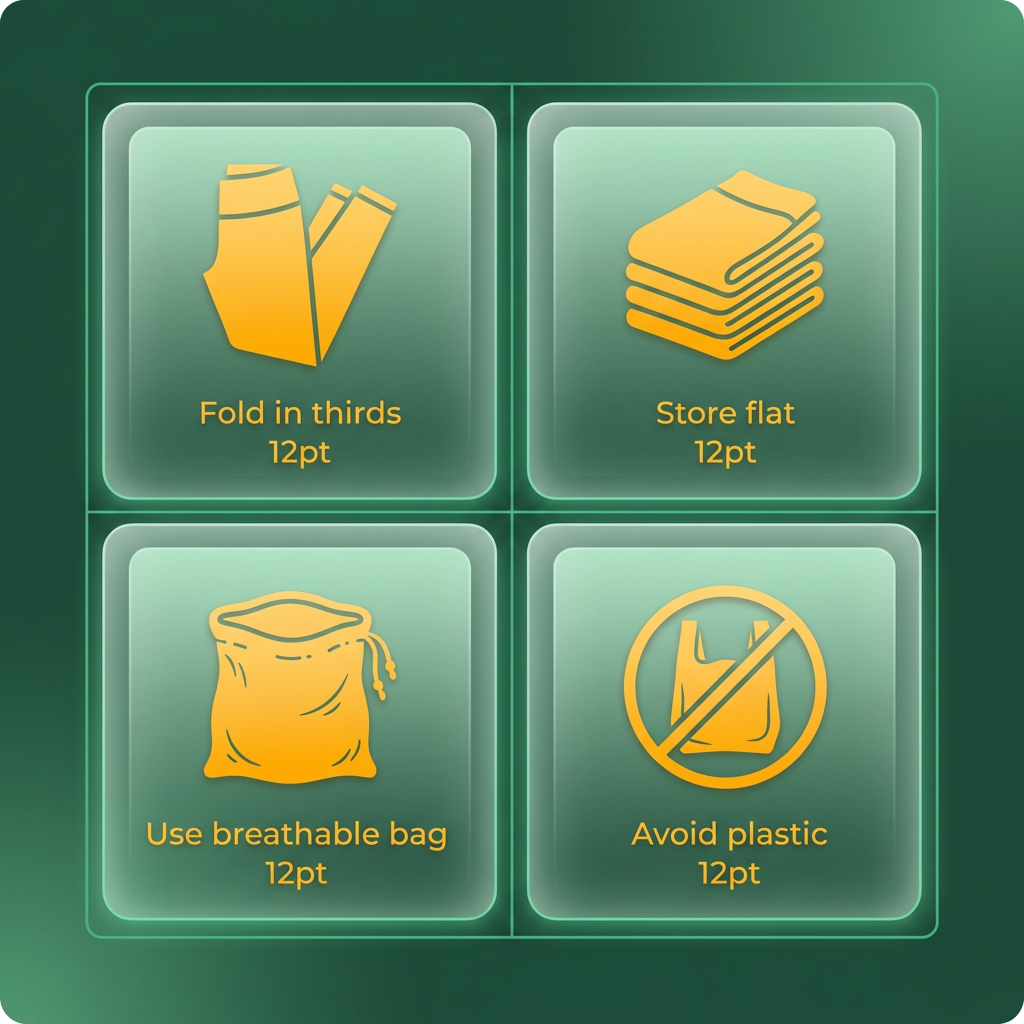
One more habit protects every pair you own: rotation. Keep at least three pairs in play and cycle through them. Spreading wear across a rotation cuts the cumulative stress on any single garment, so no one pair thins out while the others sit fresh.
How to re-condition Pima cotton leggings
Re‑condition every 8 to 10 washes to bring back fiber elasticity. Mist a light fabric refresher spray containing glycerin over the fabric, then let it air dry. Glycerin softens and relaxes the fibers so the weave sits tight again instead of drifting loose and see‑through.
Why this cadence? Repeated laundering slowly stiffens and fatigues cotton fibers. That fatigue is a big reason old leggings lose both stretch and opacity even when the color holds. A glycerin refresh every eight to ten cycles resets the fibers before they set into a worn shape.
Store the refresher spray away from direct light and heat. UV degrades glycerin and shortens its shelf life to about 6 months once opened. Keep the bottle in the same cool, dry spot as your folded leggings, and shake it before each use so the glycerin stays mixed instead of settling.
The quick fix for early transparency
Caught a pair starting to read sheer? Lightly mist the interior with a diluted vinegar solution, 1 tablespoon per quart of water, then iron on low heat with a press cloth. The mild acid tightens the weave and the low heat sets it, for a short‑term opacity boost.
Know when a quick fix won't cut it. Three signs mean it's time to replace, not rescue:
- Visible thinning at the hips, where the fabric has worn translucent
- Lost stretch in the waistband that no longer springs back
- Persistent lint buildup, a signal the fibers are breaking down
Past that point, no spray or press cloth brings a pair back. Retire it and rotate in a fresh one.
Case Study: Black Pearl Leggings and What Goes Wrong
We built this care framework around real testing, not a spec sheet. Across a six-month wear trial with our activewear line, the leggings that held their opacity longest all shared the same laundry habits.
It comes down to three variables you control: detergent type, drying method, and spot-cleaning frequency. Because our leggings are natural Pima cotton, not a synthetic blend, treating the fabric gently helps it hold shape, color, and coverage wash after wash.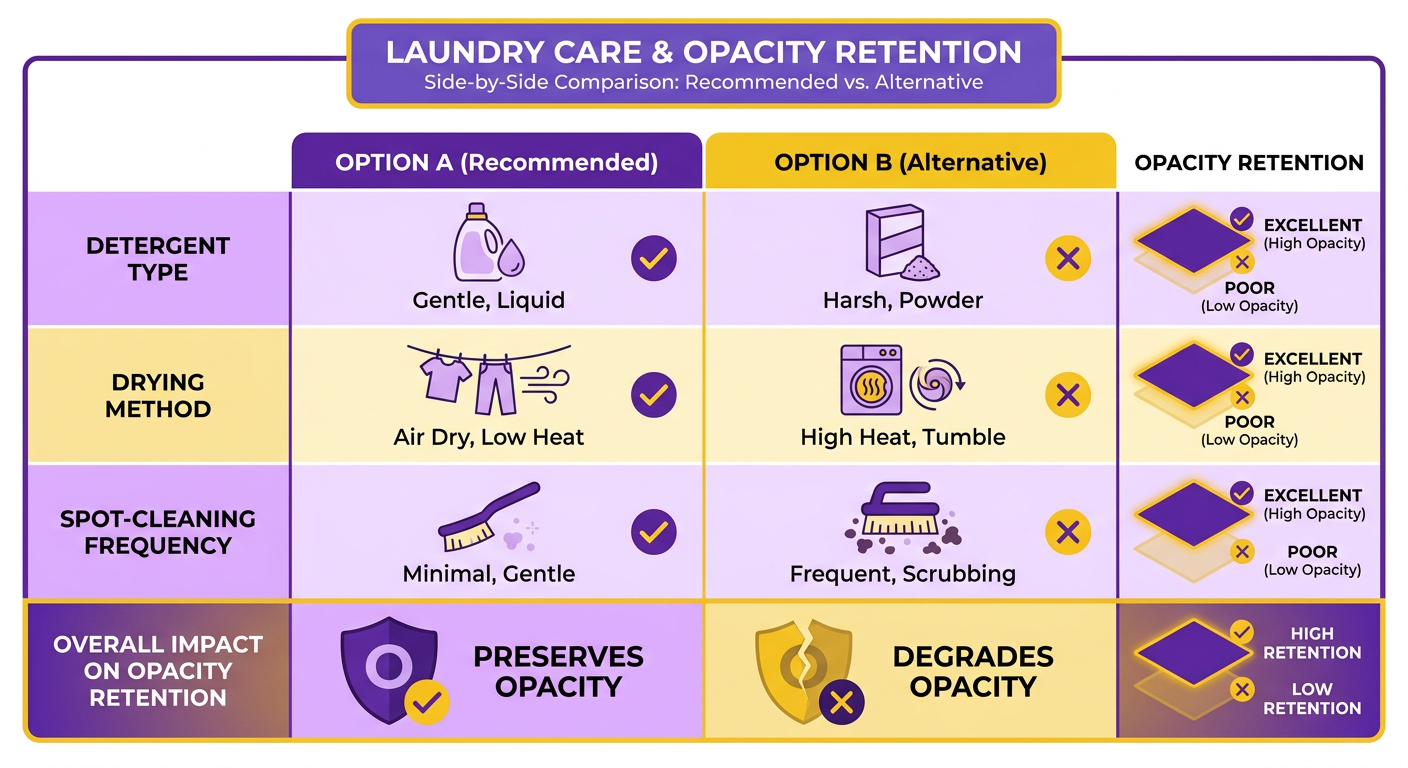
Detergent choice matters most. A gentle liquid formula avoids the harsh chemical stripping that heavy-duty alternatives cause, so the fabric holds its deep shade and dense look over time.
What goes wrong, and how to fix it
Most opacity complaints trace back to a handful of fixable habits.
- Fabric feels thin after 3 washes → detergent residue coating the fibers → run an extra rinse cycle and cut your dose in half.
- Color looks washed out → fiber abrasion or high wash temperatures → switch to cold and use a mild liquid formula.
- Waistband sags mid-squat → too much mechanical stress in washing or storage → drop the spin speed and store flat.
- Pilling on the thigh panels → washing with rough fabrics → wash inside-out with soft items only.
Your quick audit checklist
Run your own routine against these checks:
- Are you using a liquid, bleach-free detergent?
- Are your leggings turned inside-out every wash?
- Do you spot-clean stains before they set?
- Do you air-dry flat instead of tumbling hot?
Check all four and your leggings should stay opaque through years of deep squats. Miss two or more, and that's where the sheerness creeps in.
References
[1] How to Wash Leggings | Whirlpool - https://www.whirlpool.com/blog/washers-and-dryers/how-to-wash-leggings.html
[2] Detergent-induced color changes in cotton-based fabrics subjected to ... - https://www.researchgate.net/publication/395748825_Detergent-induced_color_changes_in_cotton-based_fabrics_subjected_to_repeated_laundering
Frequently Asked Questions
1. Can I machine wash Pima cotton leggings with my sports bras and other activewear?
Yes, but group them selectively. Wash your leggings alongside lightweight, smooth garments to minimize friction. Avoid mixing them with coarse materials like zippers, velcro, or heavy cottons, which can abrade the delicate Pima fibers and compromise the fabric's density.
2. Why do my leggings look sheer even though the fabric still feels thick?
This occurs when the fabric loses its deep coloration. Even if the physical knit remains dense and undamaged, a loss of pigment allows more light to pass through the material, creating a translucent appearance. Maintaining rich color is just as vital as protecting the physical fibers.
3. Is warm water ever okay for really sweaty or stained leggings?
No, stick to cold water. Elevated temperatures alter the physical structure of the cotton fibers, causing them to relax and expand, which directly reduces the density of the knit. For stubborn sweat marks, apply a gentle pre-treatment directly to the area before running a standard cold cycle.
4. How do I know when leggings are worn out and can't be saved?
Look for structural degradation that cannot be reversed. When the elastic fibers in the waistband lose their recovery memory, or when the fabric in high-friction zones becomes permanently thin and fuzzy, the material has reached the end of its lifecycle. At this stage, restorative treatments will no longer restore the original coverage.
5. Does washing leggings after every workout ruin them faster?
Not if you use the correct laundering methods. While regular cleaning is necessary for hygiene, you can mitigate wear by using a mild, non-stripping liquid detergent on a gentle cycle. This approach cleanses the fabric thoroughly without stripping the protective finishes or degrading the fibers prematurely.
6. What does glycerin actually do when re-conditioning leggings?
Glycerin acts as a natural humectant, drawing moisture back into the cotton structure. This hydration restores the natural pliability of the yarns, allowing the knit to snap back into its original, compact configuration. It counteracts the stiffening effect that occurs over multiple wash cycles.
7. Should I fold or hang my leggings between wears?
Always store them flat. Suspending activewear from hangers subjects the fabric to continuous gravitational pull, which gradually elongates the knit and thins out the material. Keeping them in a well-ventilated drawer or fabric container preserves their shape and prevents moisture buildup.