How to Wash Organic Athleisure Without Losing Softness or Shape
October 3, 2026
TL;DR
- Cold water on a gentle cycle with mild detergent and no dryer heat protects Pima cotton’s softness and elastane’s stretch.
- Hot water can shrink Pima cotton, even preshrunk pieces, because heat stresses the fibers.
- Fabric softener and dryer sheets can leave residue that interferes with the breathable surface of organic cotton.
- Use a light hand with detergent; too much can leave residue that traps oils and odor in natural fibers.
- White vinegar pre-soaks and baking soda help tackle sweat odor without harsh settings.
Quick Summary
Your organic athleisure should feel soft against your skin. It should hold its shape through every flow and walk. Use this table when you need the care steps without the extra reading.
| Step | What to Do | Time & Details | Ease |
|---|---|---|---|
| Pre-Wash | Sort by color, flip garments inside out | Before loading | ✓ Simple |
| Detergent | Use mild or baby-friendly detergent; skip fabric softener and bleach | As needed | ✓ Simple |
| Wash | Machine wash cold on gentle/delicate cycle with like colors | Full cycle | ✓ Simple |
| Dry | Lay flat to dry or tumble dry without heat; remove promptly | Until fully dry | ✓✓ Moderate |
| Store | Fold neatly or hang on sturdy hanger in dry place | Between wears | ✓ Simple |
Follow the same rhythm each time. Your pieces keep their soft feel, clean drape, and easy movement.
Why Care Matters for Organic Athleisure
One hot wash can change the fit of your organic athleisure. Hot water shrinks Pima cotton, and even preshrunk cotton can change size when it meets heat. That is the line between a legging that moves with you and one that pulls at the waist after two washes.
Peruvian Pima cotton brings softness and breathability that synthetic blends can’t match. Those long, smooth fibers also need gentler treatment than the polyester workout gear next to them in your hamper.
Three risks stack up when you treat natural-fiber activewear like synthetics. Heat breaks down the elastane that gives your set its stretch. Strong agitation from a normal wash cycle stresses seams and pills the fabric surface. Fabric softener residue coats the surfaces that keep the fabric breathable.
The useful baseline is simple: cold water, a gentle cycle with mild detergent, and no dryer heat.
Pre-Wash: Sorting and Spot-Treating
For a piece that truly holds odor, pre-soak it in enough diluted white distilled vinegar and cold water to fully submerge the garment. Let it sit briefly before washing. The acid helps loosen the film that clings to fibers after a workout, so your detergent has less residue to carry away.
Sort each load by color. Wash whites, lights, and darks separately to keep dyes from migrating.
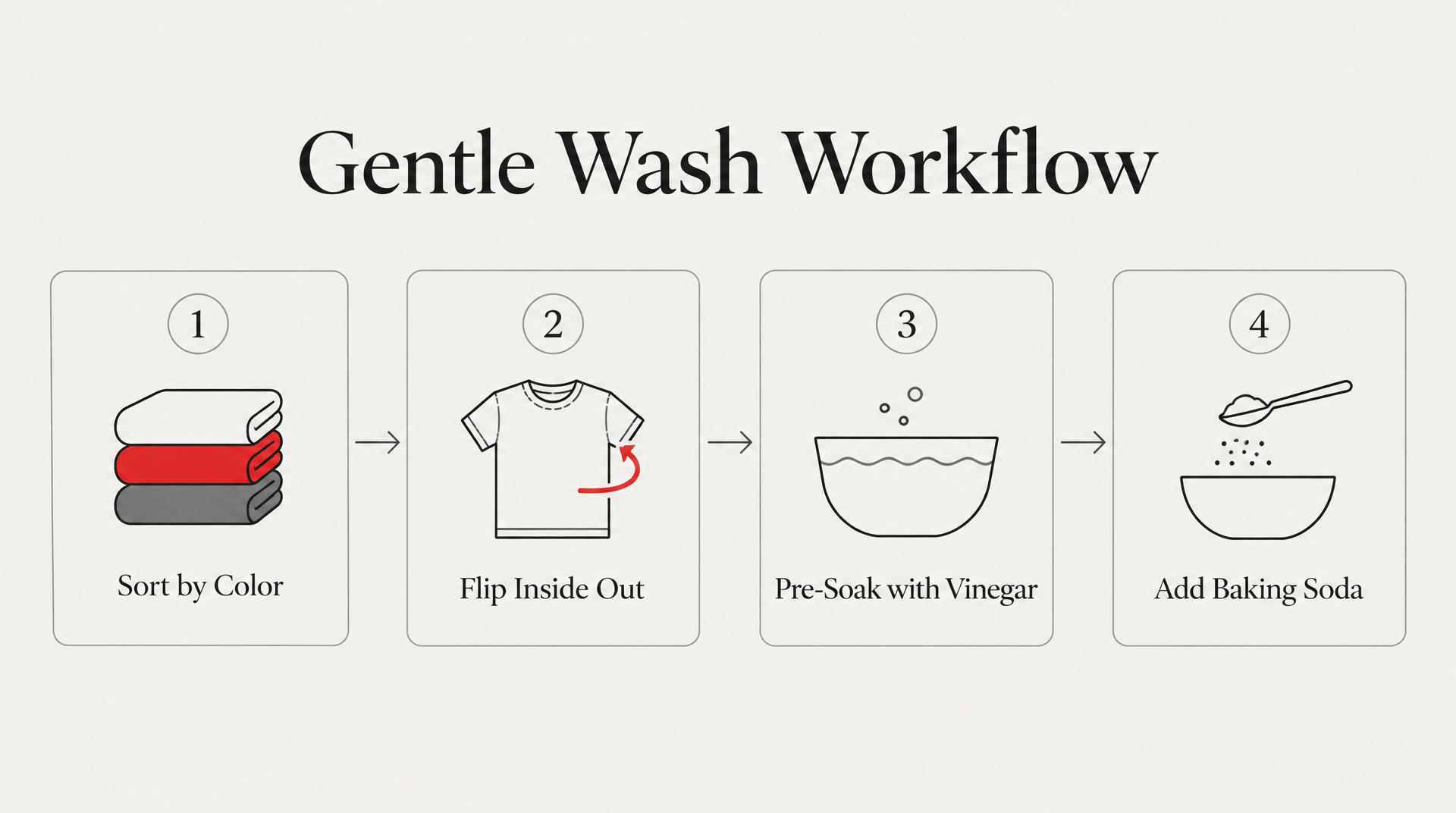
Flip every piece inside out before it goes in the machine. This gives the wash cycle direct access to the fabric surfaces that touched your skin, where oils and sweat build up most. It also protects exterior detailing from abrasion.
Add baking soda directly to the wash load when a garment needs extra deodorizing support.
Mesh laundry bags work well for lighter pieces or anything with delicate seams.
Choosing Detergent and Additives
Less detergent is better. Excess soap does not rinse clean from natural fibers, and leftover residue can trap oils and sweat odor in your leggings instead of letting them release.
Peruvian Pima cotton’s long fibers respond best to gentle cleansers. Baby-friendly formulas skip the dyes, fragrances, and optical brighteners that can dull natural cotton’s luster over time. A mild detergent protects the softness you are washing your athleisure to preserve.
Odor Control That Works
A pre-soak in white distilled vinegar and cold water before washing helps break down oils and bacteria from fabric that a standard wash cycle misses. Adding baking soda to your wash load neutralizes the acids that bacteria produce when they break down sweat. Your pieces come out fresher without adding fragrance.
This step matters more for natural cotton than synthetics because you cannot use hot water to sanitize. The warm, damp environment inside a gym bag gives odor time to build before you get the piece into the machine.
Skip fabric softener and dryer sheets entirely. Both can leave residue that interferes with the breathable structure that makes Pima cotton feel good against your skin during a flow. That residue may also make odor cling between washes.
Gentle Wash Settings: Cycle, Temperature, Load Size
Set the machine to cold and delicate every time. Cold washing on a gentle cycle keeps the fabric soft and protects the natural fibers in your Peruvian Pima cotton pieces.
Hot water shrinks Pima cotton. If a waistband feels tighter or a hem sits higher after laundering, the wash temperature is usually the first place to look.
The gentle cycle matters as much as the temperature. Standard wash cycles agitate fabric hard enough to stress seams and break down the long Pima cotton fibers that give your pieces their softness. A delicate cycle reduces unnecessary friction, and a mesh laundry bag adds extra protection if your pieces have delicate details or gathered seams.
High-speed spinning adds extra friction, so keeping the machine on its lowest agitation setting is safer for the fibers.
For most sweaty pieces, the machine’s gentle cycle is the right choice. It cleans with controlled agitation. Load size still matters. Overloading the machine traps garments against each other, so water and detergent cannot circulate properly. Wash athleisure with like colors in a load sized so pieces can move freely. Avoid washing cotton with denim or anything with exposed zippers that can snag the soft fibers.
Drying and Shaping: Preserve Softness and Fit
Lay flat to dry as the default. Use a no-heat tumble cycle only if you need the dryer. Heat damages the elastane that gives organic athleisure its stretch, so the drying method matters as much as the wash.
Hang pieces or lay them flat after washing. If you use the dryer, run it without heat — a fluff setting works for most machines. Air drying takes longer, but it helps waistbands, cuffs, and seams relax back into place instead of being baked into a tighter shape.
Pull athleisure from the wash while it is still damp and smooth it by hand to reduce wrinkles and reset the shape. Gently tug seams back into alignment and lay the garment flat on a clean surface. Skip aggressive pulling — damp fibers stretch easily, and you do not want to warp the silhouette.
Long-Term Care: Storage, Refreshing, and Common Mistakes
Store organic athleisure clean, fully dry, and away from heat. Fold pieces in a cool, dry drawer or hang them on sturdy hangers that match shoulder width. Damp or dirty fabric invites odor that cold washing cannot fully reverse later.
Between washes, air pieces out instead of tossing them straight into the hamper. Hang leggings and tops after a light session so moisture evaporates before odor takes hold. For pieces you wore but did not sweat through, a quick steam refresh removes wrinkles and surface odor without a full wash cycle.
Mistakes That Shorten Garment Life
Hot water is the most common mistake. Washing in hot water can shrink Pima cotton noticeably, and even preshrunk cotton can change size with heat. That is the difference between leggings that fit and ones that pull after a few washes.
Standard agitation stresses the structure that keeps Peruvian Pima cotton soft and durable. The other easy-to-miss mistake is treating softening products as harmless. On natural-fiber athleisure, they interfere with the clean, breathable surface you want to preserve.
What This All Means for Your Pieces
Cold water, a gentle cycle, mild detergent, and air drying keep every piece soft, stretchy, and ready to move. Skip fabric softener and hot water, and the natural fibers and stretch that make these pieces worth caring for will last longer.
References
[1] How to Wash and Care for Activewear (So It Lasts) - ACTA - https://actawear.com/blogs/news/how-to-wash-and-care-for-activewear-so-it-lasts?srsltid=AU7gw4XYWOhDuHvTgJg73nQlAPX5q_P__ISEtRNDeziYVBav2QYMGFNo
[2] How to Care for Organic Cotton Activewear - Florence Active - https://www.florenceactive.com/wellness/organic-cotton-care
[3] Taking care of your Pima cotton - Psycho Bunny Help Desk - https://help.psychobunny.com/en-US/taking-care-of-your-pima-cotton-197910
[4] How to Care for Activewear: 10 Simple Tips to Make It Last Longer - aurola - https://www.aurolaus.com/en-sg/blogs/blog/how-to-care-for-activewear-10-simple-tips-to-make-it-last-longer?srsltid=AU7gw4Vjt2F6qJfXPZCj2tLZONoU3SFEEM9INq0xNM4r_sX6x76AiJyC
[5] Pima Cotton Care Instructions – Milly Marie - https://millymariepima.com/pages/pima-cotton-care-instructions?srsltid=AU7gw4UMzHUKKJWYgmVHsKGKiAbmaz0kZ8mT-VhdhFdLEkesRUU_P7e1
[6] WAK Pima Cotton Care - The Blog - US/UK - We Are Knitters - https://blog.weareknitters.com/knitters-life/wak-pima-cotton-care/
[7] How to care for your Pima Cotton Tees. - Theo + George - https://theoandgeorge.com/blogs/blog/how-to-care-for-your-pima-cotton-tees?srsltid=AU7gw4XhVQ9Ok5rJzbT46PBBaOEIwFJ3ByhtTbjtemRTb_7KHPPt0R4s
[8] Pima Fabric + Care Instructions - Petite Plume - https://www.petite-plume.com/pages/pima-fabric-care-instructions?srsltid=AU7gw4XwuSbSXjQudsxrQ3AHERNcrl_XnIOvJA3y5dzxRn2aUUP1pY_Y
[9] How to Wash and Care for Dirty Workout Clothes - Nike - https://www.nike.com/a/take-care-workout-clothes
FAQ
1. Can I wash organic athleisure with my regular workout clothes?
Sometimes, but be selective. Keep organic cotton away from denim, exposed zippers, hooks, and rough technical fabrics that can abrade the surface. If you do combine items, choose similar colors and similarly soft fabrics so your athleisure is not rubbing against anything coarse during the cycle.
2. How much vinegar should I use for a pre-soak, and how long should pieces sit?
Use enough diluted white distilled vinegar and cold water to fully submerge the garment. Let it sit briefly before washing. Keep this for sweaty or odor-prone pieces rather than making it an every-load habit; most lightly worn athleisure only needs the standard cold, gentle wash.
3. Will air drying leave my leggings stiff or wrinkled?
Not if you reshape them before they dry. After washing, smooth the fabric with your hands, align the seams, and place the piece where air can move around it. Avoid bunching damp leggings over a narrow rail, which can leave creases and slow the drying process.
4. What if my organic athleisure still smells after washing?
Check the basics first. The load may be too full, the garment may have sat damp too long, or the detergent may not be rinsing out completely. Wash the next load with more room in the drum and use a lighter hand with soap. If odor lingers, treat that piece separately instead of running the whole load through a harsher cycle.