Check GSM, Weave, and Finish Before You Buy Summer Fabric
September 11, 2026
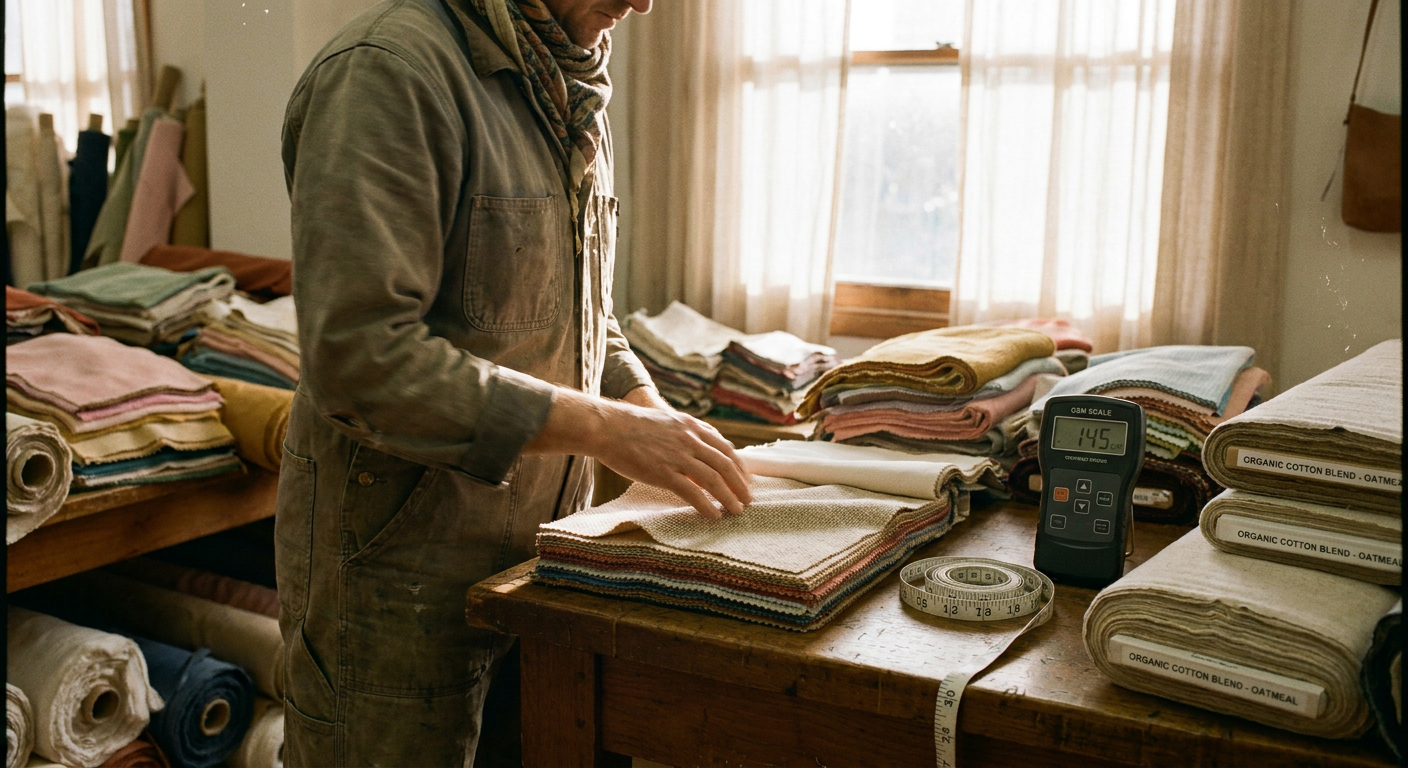
Key Takeaways
- The most breathable summer fabric isn't the one with the lowest weight number. It's the one where GSM, weave, and finish all pull in the same direction.
- A 200 GSM cotton can outlast a 320 GSM one when the fiber and weave are better.
- Yoga wear that needs both opacity and stretch tends to work best in the 120–180 g/m² range for summer.
- Satin and sateen breathe best at the same GSM, but they snag more easily, so they trade away some durability.
- Lightweight twill at 150–200 GSM gives you good drape and holds up to wear.
- Jersey knits feel soft and stretchy and are easy to spot by touch, though they tend to pill over time.
- Finishes like mercerization, anti-pilling, and moisture-wicking are hard to verify, especially online.
Quick Summary
For summer yoga wear, the most breathable fabric isn't the lightest one on the rack. It is the one where GSM, weave, and finish work together. Chase a low weight number by itself and you can end up with see-through leggings, or fabric that pills after a month.
Here's a quick-reference table to keep handy when you're comparing Peruvian Pima cotton against other warm-weather fabrics. Use it on any summer fabric before you buy.
What to compare before you buy summer fabric
Check five things at once: GSM, weave, finish, breathability, and durability. No single metric tells the whole story. A 200 GSM cotton can outlast a 320 GSM one if the fiber and weave are better, as this GSM myth guide explains.
| Attribute | Summer-Friendly Range / Type | Breathability | Durability | Easy to Verify? |
|---|---|---|---|---|
| GSM | 120–180 g/m² for yoga wear needing opacity + stretch (world-collective) | Lower = cooler | Weight ≠ strength | Hard online, easy in-store |
| Plain weave | Crisp, stable, airy | Good | High | Medium |
| Jersey knit | Soft, stretchy, relaxed feel | Good | Medium (can pill) | Easy by touch |
| Satin/sateen | Smooth, cool hand | Highest at same GSM | Lower (snags) | Medium |
| Twill (lightweight) | 150–200 GSM, durable, drapes | Moderate | High | Medium |
| Finish | Mercerized, anti-pilling, moisture-wicking | Varies | Anti-pilling helps | Hard to verify |
The right GSM range for summer shifts by fabric. Fabriclore's per-fabric ranges put cotton voile at 80–120 and lightweight twill at 150–200. Sources don't agree on one universal band, and they shouldn't. The right number depends on your weave and the garment.
Which weaves and finishes keep you cool
The weave, not the weight, is your real lever for coolness. Weave structure shapes how well a fabric breathes, so a smoother, cooler-handed weave can feel more comfortable than a heavier one at the same GSM. Look at weave alongside weight instead of fixating on the number.
The three lightweight weaves worth knowing:
- Plain weave gives a crisp, airy hand and holds its shape. Good for structured tanks that shouldn't cling.
- Jersey knit gives soft stretch and a relaxed drape. Best for leggings and tees where movement matters most.
- Lightweight twill drapes beautifully and resists wear. Reach for it when you want durable culottes or a light jacket.
Finishes matter too. Mercerization boosts dye uptake and softness on cotton. But watch the trade-off: softening finishes like brushing raise pilling risk, as the technical fabric guide warns.
The deal-breakers
Watch for these before buying any summer piece:
- Don't chase low GSM alone. A loosely knit lightweight fabric shrinks and goes sheer. Pima's long-staple fibers change this math, so weight fails as a durability shortcut when fiber quality varies.
- Match the weave to the job. Satin for coolness, jersey for stretch, twill for durability. The cool-and-luxurious goal carries a built-in snagging penalty. You manage it with fiber quality, not by pretending it isn't there.
- Verify what you can't feel online. GSM and finish are hard to check on a screen. Ask for the spec sheet with fiber content, GSM, and shrinkage before you commit.
- Watch for transparency. The wrong weight loses customers through discomfort and see-through fabric. For yoga wear, the 120–180 band stays safer than going ultra-light.
Why GSM, weave, and finish decide your summer comfort
Here's the mistake we watch shoppers make every summer: they hunt for the lowest number on the tag, figuring a featherweight fabric guarantees a cool workout. It doesn't. The most breathable fabric for summer isn't decided by weight alone. GSM, weave, and finish work as a trio, and the weave often does more of the heavy lifting than the weight.
GSM only tells you grams per square meter. As the technical properties guide puts it, GSM "is not a guarantee of thickness, warmth, or quality by itself." Chase a lower weight without checking the weave and finish and you're guessing at comfort.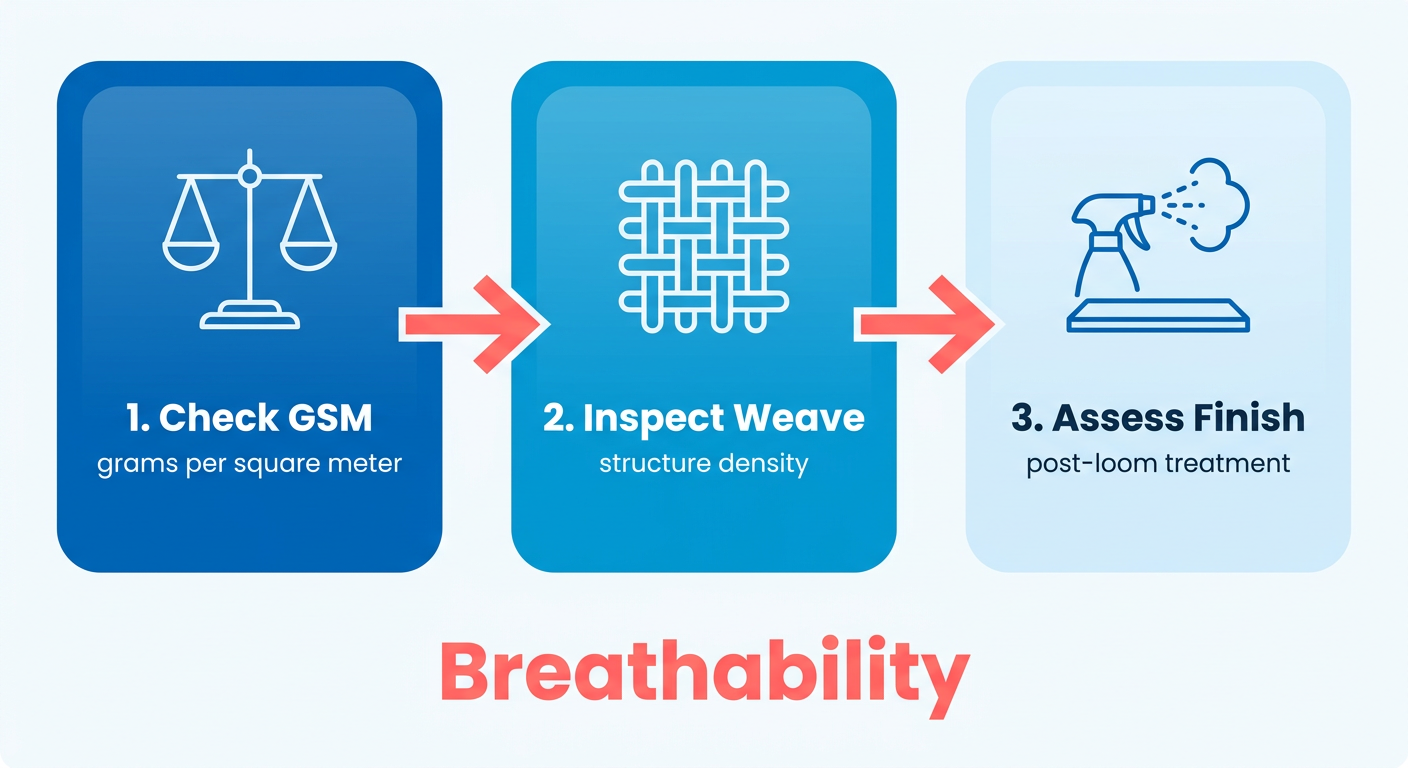
Why lower GSM doesn't always mean cooler
Weave, not weight, is the real lever here. Research on weave structure and comfort shows fabrics at nearly identical weights can breathe very differently depending on how they're woven. Plain weave, the one people assume is the cool choice, actually tends to hold the most thermal resistance.
That's worth remembering when you shop by number alone. If the weave changes airflow at the same weight, two garments with matching GSM can feel worlds apart on the mat.
Our take: the natural breathability of the fabric matters more than a single number. Black Pearl Yoga Wear uses 100% certified Peruvian Pima cotton, whose extra-long, smooth fibers let air circulate so you stay comfortable through movement, rest, and everyday wear. Yoga poses expose thin, flimsy fabric fast, so we lean toward a fabric that stays breathable without giving up structure.
Does higher GSM mean more durable?
Not automatically. A lighter 200 GSM fabric can outlast a heavier 320 GSM one if the fibers are stronger and the weave is tighter, as the GSM myth breakdown explains. Weight only predicts durability when the fiber and weave stay constant.
This is where certified Pima earns its keep. Longer fibers make smoother, stronger yarns, so a lighter, cooler fabric can hold up through repeated washes. You don't trade breathability for a garment that pills in a month.
- Check the weave before the GSM number. How a fabric is woven affects how cool you feel, so the weave matters as much as the weight.
- Don't shop by the lowest number alone. A featherweight tag doesn't guarantee comfort or opacity. Fiber and weave decide how it wears through deep poses.
- Confirm long-staple fiber quality. A lighter Pima fabric can outlast a heavier generic one, so fiber strength matters more than the number on the tag.
The catch with cool, luxurious fabric
The finishes that make a fabric feel exceptional can carry trade-offs. Soft, smooth weaves breathe well, but softening treatments can raise pilling risk, according to the technical properties guide.
This is why we rely on the natural strength of Peruvian Pima. Its long, smooth fibers are less likely to break and form little pills, so your clothing looks good for longer. The goal stays the same: cool, soft, and built to last a full season of practice.
Decoding weave types for warm-weather wear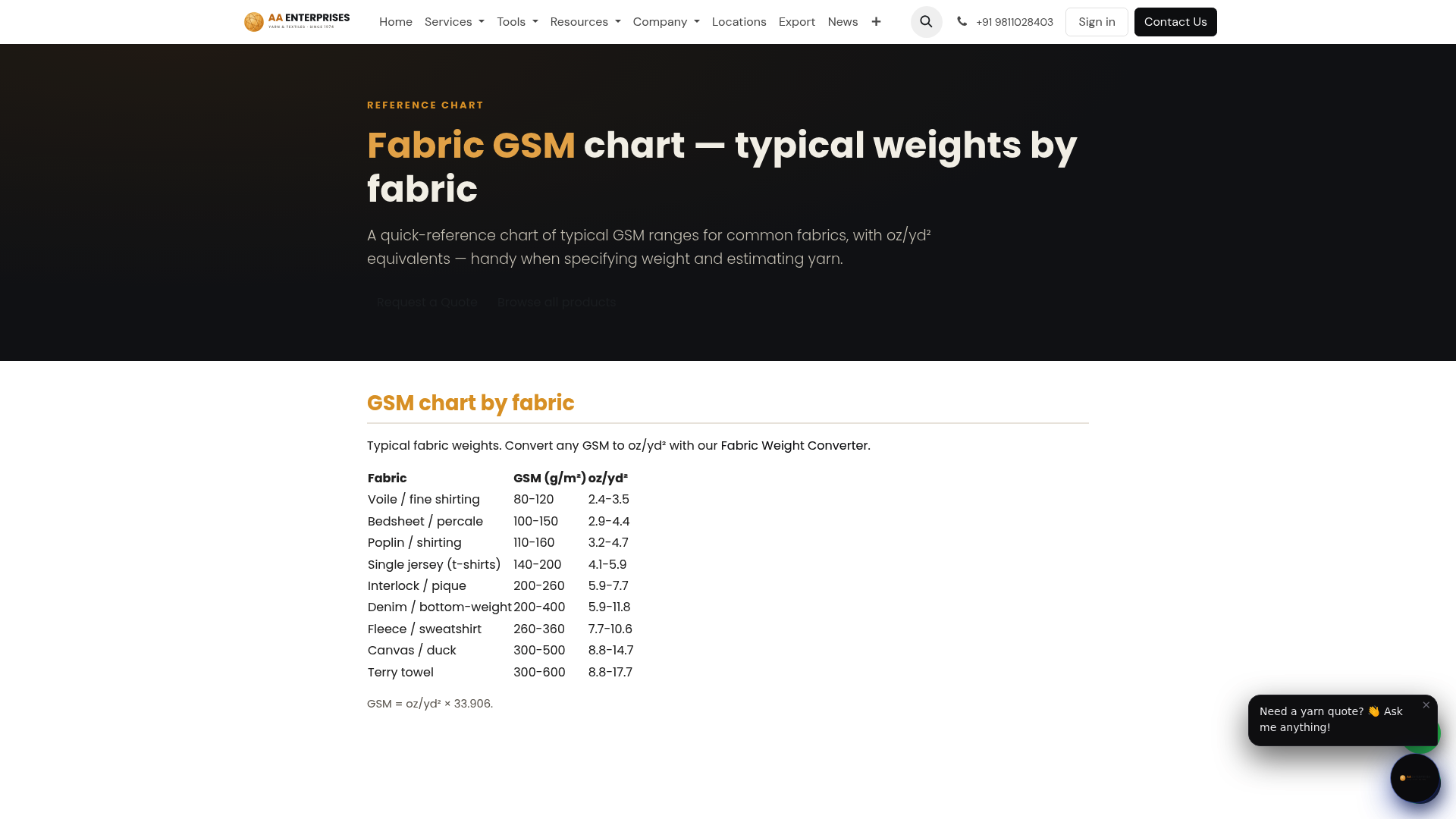
The weave is what decides coolness in summer yoga wear, not the weight. A controlled study that held GSM nearly constant across three weaves still measured different comfort results. That isolates the structure itself as the thing changing airflow.
And here's the surprise that reframes how you shop: satin and sateen breathe best at the same GSM. Plain weave, the one most people assume is light and cool, posted the highest thermal resistance and stiffness. So the "safe crisp cotton" instinct works against you in July.
What plain, twill, and jersey weaves feel like
Plain weave: yarns cross one over one, giving a stable, crisp hand that holds its shape but traps more heat. Twill: look for a diagonal rib running across the surface. It drapes well and resists wear, which is why it lands on chinos and denim, per the fabric properties guide. Jersey: a soft knit built from loops that stretches and curls at the edges.
You can spot the weave without a microscope. Run your fingers across the face. Feel a diagonal ridge? That's twill. Smooth, slightly sheeny, cool to the touch? Satin or sateen. Soft, stretchy, curling at a cut edge? Jersey knit.
- Check for a diagonal rib with your fingertip. If you feel one, it's twill, which trades some airflow for durability.
- Look for surface sheen and a slick hand. A satin or sateen face signals the best breathability for hot-weather sessions.
- Tug the fabric and watch the edge. Curl and give mean jersey knit, the go-to for soft, stretchy yoga tops.
Why the coolest weave also wears fastest
Satin buys you coolness but pays for it in durability. The same guide notes satin and sateen are more prone to snagging and seam marks, and softening finishes like brushing raise pilling risk. For yoga wear that stretches and rubs, that's a real trade-off, not a footnote.
Our take: don't chase a rock-bottom GSM number and call it cool. Specify a satin or sateen weave in certified Peruvian Pima, then let the long, strong Pima staple absorb the snag-and-pill penalty a lesser cotton couldn't survive.
That's the whole argument for spending on fiber quality. A short-staple cotton in a satin weave would fuzz and snag within a season. Pima's extra-long, smooth fibers give you the breathable weave and the lifespan.
- Confirm the weave is satin or sateen if summer coolness is your priority, and accept the higher care needs.
- Pair a breathable weave with a premium long-staple fiber so the durability penalty stays manageable.
- Skip heavy softening finishes. They boost the plush hand but add pilling risk you don't need.
One caveat on the numbers. For lighter, more breathable summer fabrics, the fabric properties guide points to a lower GSM band around 120–180 g/m². For yoga wear that needs opacity and stretch, we lean to the higher end of that band and let the weave, not the weight, do the cooling.
Finishes that shape feel, performance, and lifespan
Finishes are where a fabric's real personality gets decided. The same Peruvian Pima base can end up silky and cool or sticky and hot depending on what happens after the weave comes off the loom. And here's the catch we keep running into: the finishes that make cotton feel most luxurious are often the same ones that shorten its life.
For summer, finish choice matters as much as GSM. The technical properties guide puts it plainly: finishing processes can improve performance but may also introduce new problems, like higher pilling risk. Every finish is a trade, not a free upgrade.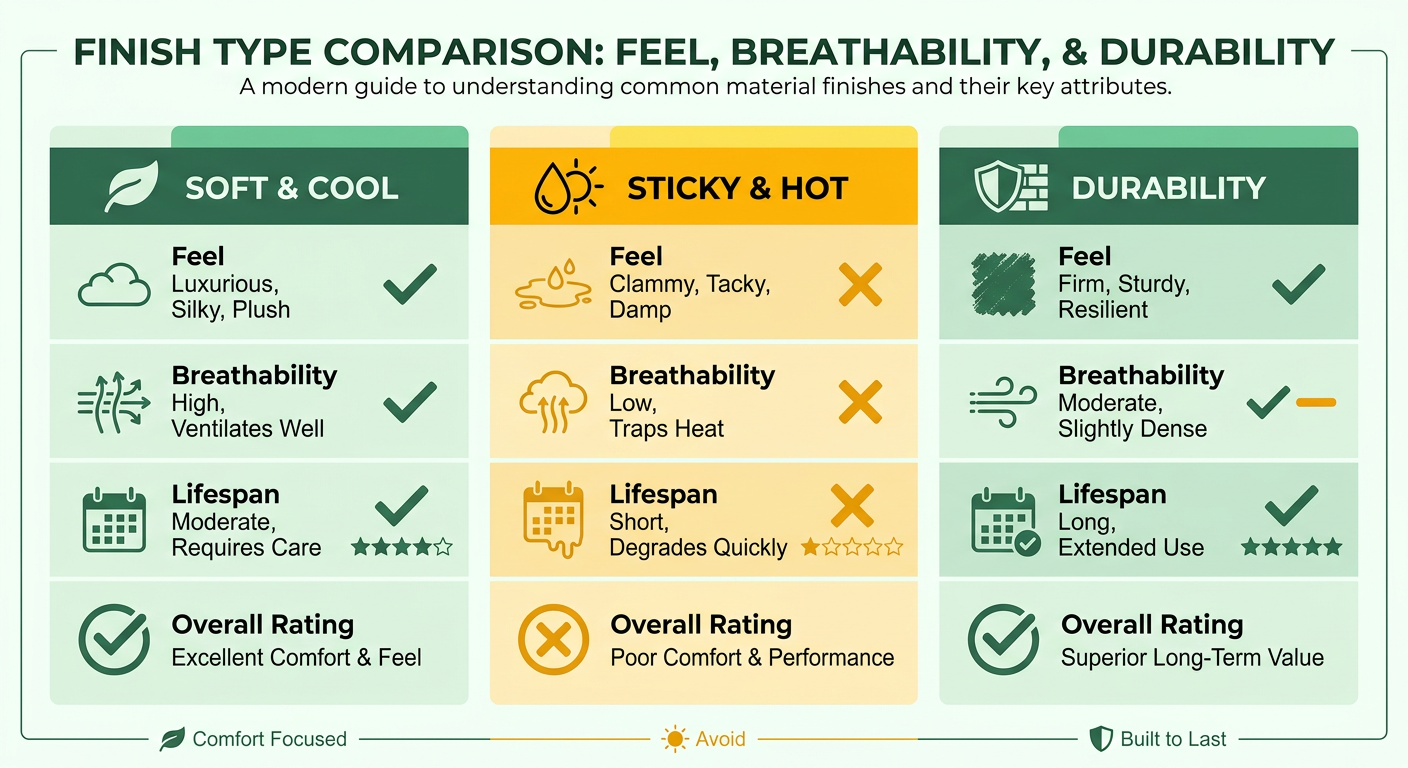
Which cotton finishes actually matter for yoga wear
The finishes worth checking on summer Pima fall into four buckets: softening, stability, moisture, and protection. Each one interacts with Pima's long, smooth fibers differently, and a few work against the coolness you're paying for.
- Mercerization improves dye uptake and adds a subtle sheen, per the same finishes breakdown. It plays to Pima's strength, giving richer summer colors that hold up to repeat washing.
- Sanforization controls shrinkage, so your leggings still fit after a season of hot washes. Skip it and your carefully chosen GSM shifts the first time you wash warm.
- Anti-pilling cuts surface fuzz, which matters because the stretch and abrasion of yoga are exactly what triggers pilling.
- DWR repels water but doesn't waterproof the fabric. Useful for a morning-dew outdoor flow, but avoid heavy coatings that trap heat and kill breathability.
Why softening finishes carry a durability cost
Brushing and suede finishes make cotton softer and warmer to the touch, but they raise pilling risk, according to the technical guide. That silky-soft hand you love on day one is often the finish that fuzzes up by month three.
Our take: this is where fiber quality earns its price. Long-staple Peruvian Pima resists pilling better at the fiber level, so a light softening finish gives you the luxurious feel without the fast breakdown a cheaper cotton would show.
The same logic applies to weave. A satin or sateen weave stays cooler but snags more easily. Pair that airy weave with a softening finish and you compound the fragility. Manage it by starting with better fiber, not by piling on finishes.
- Check for stickiness or heavy sheen. A tacky or overly glossy surface often signals a chemical coating that traps heat and feels worse as you sweat.
- Test for static. Excess static usually points to a finish sitting on top of the fibers rather than working with them.
- Confirm colorfastness and abrasion test results on the spec sheet. High air permeability plus solid Martindale scores means the finish boosted feel without gutting summer breathability or lifespan.
Our rule for Pima yoga wear: choose finishes that support the cotton, not mask it.
In-store and online checklist: what to inspect before buying
Before you tap "add to cart" or hand your card to a store associate, run a quick inspection. The goal is to confirm GSM, weave, and finish all work together for your climate. Below is a checklist you can screenshot or print and carry into any fitting room.
For summer yoga wear, a piece has to pass all three checks at once, not just the weight tag. A garment that clears one and fails two will still feel hot on a July mat.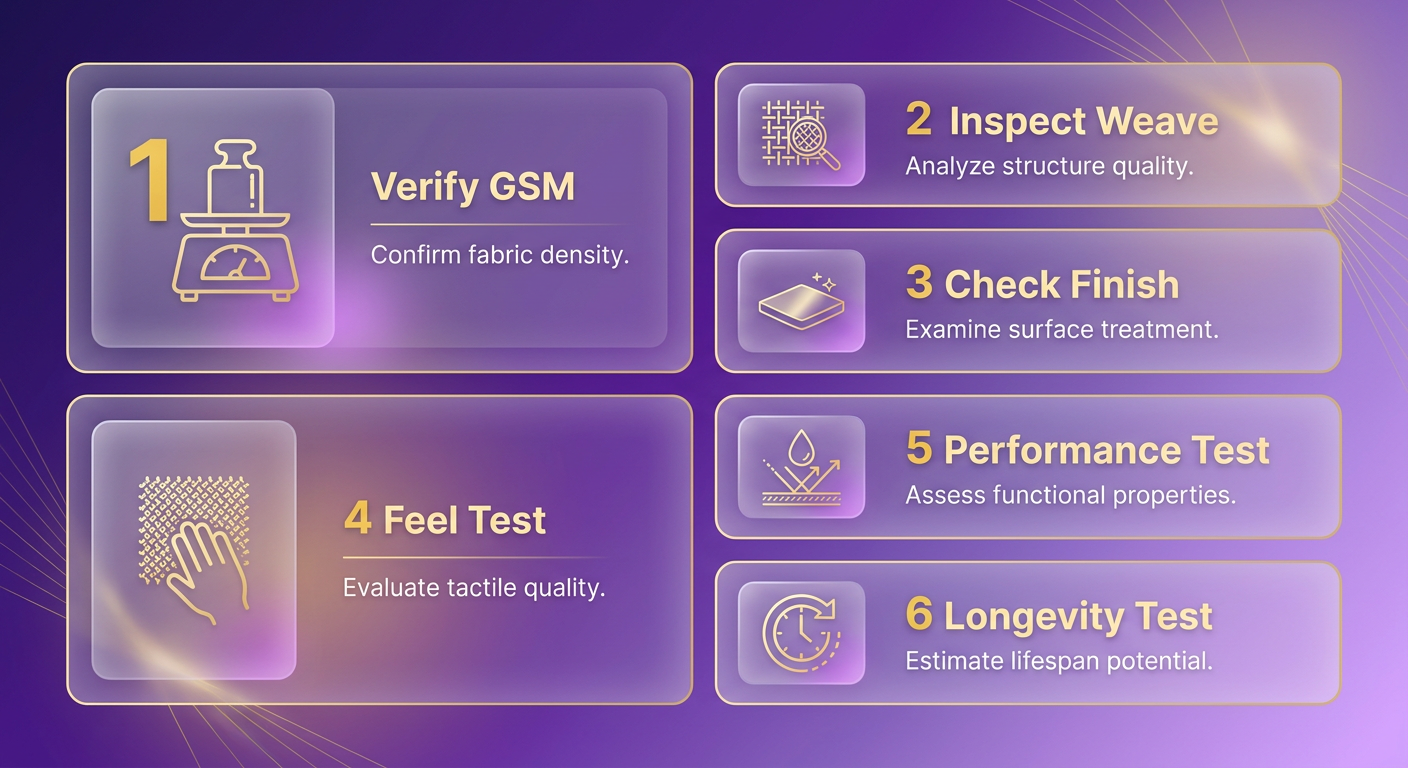
How to verify GSM before buying
Start with the number, then treat it as a starting point rather than a verdict. For Pima yoga wear you want some opacity and stretch, so the safer band sits in the 120 to 180 GSM range, per the technical properties guide. Go lighter and you risk see-through leggings.
- Check the spec tag or product page for a stated GSM. Lightweight summer pieces usually sit in the 120 to 160 GSM band for tees and dresses, according to the GSM myths guide. No number listed is a yellow flag worth a question.
- Ask staff directly: "What's the GSM of this piece?" A trained associate should know or find it fast. GSM measures weight per area, not thickness or warmth, as this weight-range breakdown explains, so don't assume a low number guarantees coolness.
- Hold the fabric to a light source. Heavy backlight bleed on a supposedly opaque legging means the GSM claim doesn't match the garment it's on.
Our take: don't let a single low number sell you. A lighter 200 GSM fabric can outlast a heavier 320 GSM one when the fiber and weave are better, which is exactly why long-staple Pima changes the math.
Which weave and finish cues to feel for
The weave decides coolness more than the weight does, so identify it by hand and eye. Rub the surface and watch how it drapes. A smoother, more reflective face signals a satin or sateen, which airs out better than a crisp plain weave at the same GSM.
- Run your thumb across the surface under bright light. A soft, brushed hand often means a softening finish, which boosts luxury but raises pilling risk, per the technical guide.
- Stretch a corner and release it. Good recovery points to a stable knit or tighter weave; sloppy recovery means shape loss after a few washes.
- Snag-test gently on a fingernail. Satin weaves feel cooler but catch more easily, so confirm the fiber quality justifies the trade.
- Ask if there's a DWR or coating. DWR is water-repellent, not waterproof, and heavy coatings trap heat. For a mat session, skip coated finishes entirely.
What to confirm online before checkout
Online buying strips away hand-feel, so lean on the spec data instead. Look for a fabric-detail tab that lists fiber content, construction, GSM, and finishes together. A macro shot lets you judge weave tightness on your phone screen.
- Open the fabric-detail tab and confirm all four specs are listed. A spec sheet is your single source of truth, per the properties guide. Missing data means you're guessing.
- Zoom the product photos to inspect weave density. Loose, gappy weaves read as transparent and pill-prone.
- Cross-check the GSM against garment type. A structured shirt sits fine at 130 to 180 GSM, notes the summer GSM guide, but leggings need enough weight for full opacity.
Avoiding mislabeling and the common traps
The dirtiest trick in summer fabric marketing is a big GSM number with nothing behind it. A tag can claim heft and still hide weak fibers or a loose weave that quits after a month. As the seven GSM myths guide puts it plainly, "GSM does not automatically equal strength or comfort."
Here's the pattern we watch shoppers fall for. A page brags about weight, stays silent on fiber and weave, and the buyer assumes the two missing pieces must be fine. They usually aren't. The common trap is a synthetic blend hiding under a high GSM figure, where polyester content bulks up the number while cutting the breathability you actually paid for. So a bare GSM number is a starting point, not proof.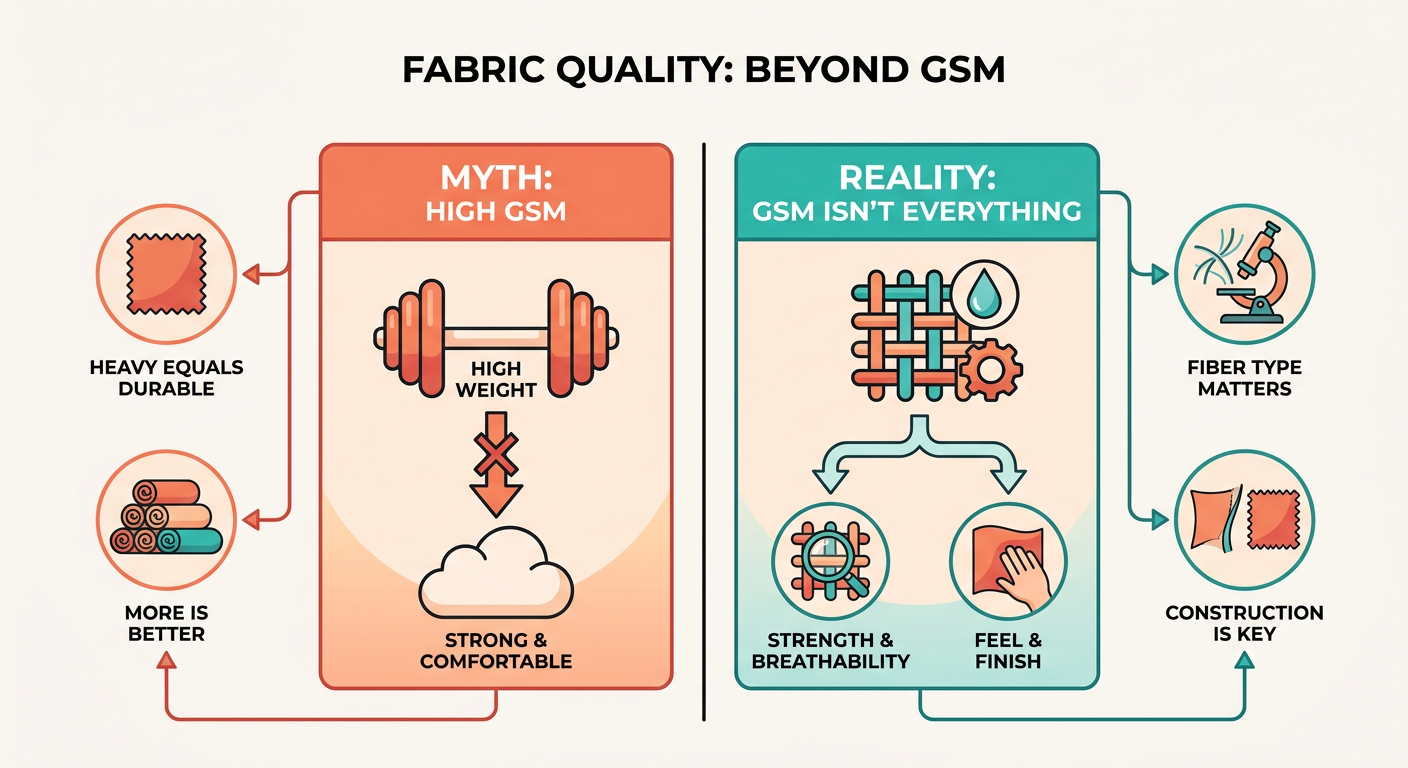
Which product-page words should raise a red flag
Vague adjectives standing in for hard specs are the clearest warning sign. When a listing sells feel without numbers, treat the gap as intentional. The technical properties guide treats the spec sheet as the single source of truth, so any missing spec is a question you're owed an answer to.
- Flag "lightweight" with no GSM number. The word means nothing without the figure behind it. A real number lets you judge whether the weight fits the piece, since lightweight fabrics typically run 120 to 160 GSM.
- Flag "soft finish" with no finish type named. Brushing softens cotton but raises pilling risk, so an unnamed finish hides a durability trade you'd want disclosed.
- Flag "breathable" with no weave stated. Weave drives airflow more than weight, and a page that skips the weave is skipping the thing that keeps you cool.
- Flag "Pima" with no certification or origin. Long-staple Peruvian Pima is what changes the durability math. A generic "Pima" claim with no seal is just a word.
How to verify a Pima or organic claim
Ask for documentation, not adjectives. A genuine claim comes with a spec sheet and third-party test data. A fake one comes with feelings. The technical guide recommends requesting fiber content, construction, GSM, shrinkage, finishes, and test results before you commit, which is exactly the paper trail a mislabeled fabric can't produce.
- Request the spec sheet. It should list fiber content, weave, GSM, and finish in one place. A seller who can't produce one is guessing about their own product.
- Look for air permeability or MVTR test results. These measure real breathability, which matters far more than the "most breathable fabric" tag lines competitors paste on lightweight items with no data.
- Confirm the certification names the fiber origin. "Peruvian Pima" backed by a seal is a claim you can check. "Pima" alone leaves you trusting the marketing.
Our take: the "cool and luxurious" promise carries a built-in durability penalty. The satin weave that breathes best also snags easiest, and the finish that feels most silky pushes up pilling. That's not a reason to walk away. It's the reason to demand the spec sheet, because managing that trade needs long-staple fiber quality and an honest finish description, not a hidden one.
One thing you can skip the fear on: a slightly lower GSM isn't automatically a scam. The Fabriclore summer guide puts voile as low as 80 GSM for good reason. The problem is never a low number stated honestly. It's a number stated with no fiber, weave, or finish to back it up.
References
[1] Fabric Weight Guide: 7 Must-Know GSM Myths in Apparel Manufacturing - https://trisapparel.com/fabric-weight-guide-gsm-durability/
[2] How to Choose the Right Fabric GSM for Summer Clothing - Fabriclore - https://fabriclore.com/blogs/gsm-guide-choosing-the-right-fabric-weight-for-summer-clothing?srsltid=AfmBOopgenBfSsb3mFQeBl2uHqLouBSxA2yqJ4gM2jwpNCt1AW1Uy9S2
[3] Understanding Fabric Weight in Order to Choose the Right Fabric - https://blog.fabricuk.com/understanding-fabric-weight/
[4] Technical Fabric Properties Guide: GSM, Weaves, Finishes, and Testing - https://world-collective.com/blogs/news/technical-fabric-properties-guide-gsm-weaves-finishes-and-testing?srsltid=AfmBOoq8Kh2tUSAgEpZ95aJ_HBM0gJvq8r7zjiqPh0AjjMPXxQ_gzPsa
[5] What is GSM in Fabric? 4 Weight Ranges Explained - https://fabric-fabric.com/blog/what-is-gsm-in-fabric?srsltid=AfmBOoolbsnTLRc7mTpxIm6BQXQ9Fr7ROvwmM1jW_gNCTZpyq9B8ohzR
[8] (PDF) Effect of Weave Structure on Comfort Property of Fabric - https://www.researchgate.net/publication/347557396_Effect_of_Weave_Structure_on_Comfort_Property_of_Fabric
Frequently Asked Questions
1. Can I use the same GSM range for both leggings and summer tops?
No single band fits both. Leggings need enough weight for full opacity and stretch, so the 120–180 GSM range works safely. Structured tops and dresses can sit lighter, around 120–160 GSM, since they don't stretch across the body during deep poses where sheerness shows.
2. How can I tell if a "breathable" fabric is actually a synthetic blend?
Check the fiber content on the spec sheet, not the GSM number. Polyester blends bulk up the weight figure while cutting breathability. A high GSM with no stated fiber content or weave is a warning sign that synthetic content is padding the number without adding comfort.
3. Does mercerized cotton pill more than untreated cotton?
Mercerization itself improves dye uptake and adds subtle sheen without raising pilling risk. Brushing and suading finishes cause pilling, not mercerization. Long-staple Peruvian Pima resists pilling at the fiber level, so mercerized Pima keeps richer color through repeated washes while staying durable.
4. Should I avoid satin weave entirely for summer yoga wear?
Satin weave offers the highest breathability at equal GSM, making it attractive for hot sessions, but it snags and marks more easily. Pair it with a long-staple fiber like Peruvian Pima, whose strong, smooth fibers absorb the snagging penalty a cheaper cotton couldn't survive through repeated stretching.
5. What test results should I look for to confirm real breathability?
Request air permeability or MVTR (moisture vapor transmission rate) results, which measure actual airflow and moisture movement. Pair these with Martindale abrasion scores. High air permeability plus solid abrasion numbers confirms the finish improved feel without gutting breathability or lifespan, unlike vague "most breathable" marketing claims.
6. Why does DWR appear on some yoga wear, and should I want it?
DWR (durable water repellent) repels surface water but does not waterproof fabric. It suits morning outdoor flows with dew, but heavy coatings trap heat and reduce breathability. For indoor mat sessions where you sweat, skip coated finishes entirely to keep airflow working for you.
7. What single question should I ask staff before buying in-store?
Ask "What is the GSM of this piece?" A trained associate should know or find it quickly, and no listed number is a yellow flag. Then hold the fabric to a light source. Heavy backlight bleed on supposedly opaque leggings means the claimed weight doesn't match the garment's purpose.