Certified Peruvian Pima Cotton Outlasts Synthetic Blends When Summer Heat Peaks
September 12, 2026
Key Takeaways
- Peruvian Pima cotton is a long-staple natural fiber that resists pilling and holds its shape through repeated washes.
- Synthetic blends dry faster after a wash, but some travelers find they trap heat and odor when the air is thick.
- Pima's durability may mean fewer replacements over a season, which can reduce wardrobe costs and suitcase space.
- Some synthetic blends, such as polyester and nylon mixes, may pill and thin faster than long-staple cotton.
- Depending on the fabric and the wearer, synthetic blends may hold onto odor and require more frequent washing.
- Pima tends to feel soft against the skin, while some synthetics feel slick and sometimes cling.
- For hot-weather travelers packing light, the trade-off may favor Pima because its durability advantages repeat across a whole summer.
The Short Version
Here's how Peruvian Pima cotton stacks up against synthetic blends when you're packing light for a hot trip. If you want a breathable fabric for summer travel that may also trim your replacement costs, natural long-fiber cotton is worth weighing on the numbers that matter over a season.
Synthetics dry faster after a wash. Pima is a long-staple natural fiber that resists pilling and keeps its shape wash after wash. That durability is a potential money-saver. Fewer replacements can mean fewer suitcase spots and fewer laundry cycles on the road.
How the two fabrics stack up
Pima cotton: a long-staple natural fiber that resists pilling and keeps its shape wash after wash. Synthetic blends: polyester or nylon mixes that dry quickly and wick sweat, but some travelers find they trap heat and odor in humid conditions.
| Factor | Peruvian Pima Cotton | Synthetic Blends |
|---|---|---|
| Breathability in humid heat | Natural fibers | Wicks fast, but can trap heat |
| Pilling / wear over time | Low pilling, long fibers | May pill and thin faster |
| Odor retention | Minimal | May hold odor, needs frequent washing |
| Drying speed after wash | Slower | Faster |
| Replacements per year | Fewer | More frequent |
| Feel against skin | Soft | Slick, sometimes clingy |
Look at the trade-off. Synthetics win drying speed. Pima wins the categories that repeat all summer: fewer washes, fewer replacements, and comfort when the air is thick and still.
What it costs you over time
Pima costs more per piece up front. But the math can flip over a season. A synthetic tank you replace twice can cost more than one Pima tank you keep for years.
For reference, tops in this category run roughly $32 to $48, with jackets and bottoms in the $60 to $86 range. You buy fewer pieces, so cost-per-wear drops.
Skip Pima if your priority is fast overnight drying on a multi-day trek with no laundry access. Synthetics still edge it there. For everything else in hot, humid travel, Pima earns its keep.
What you're actually weighing
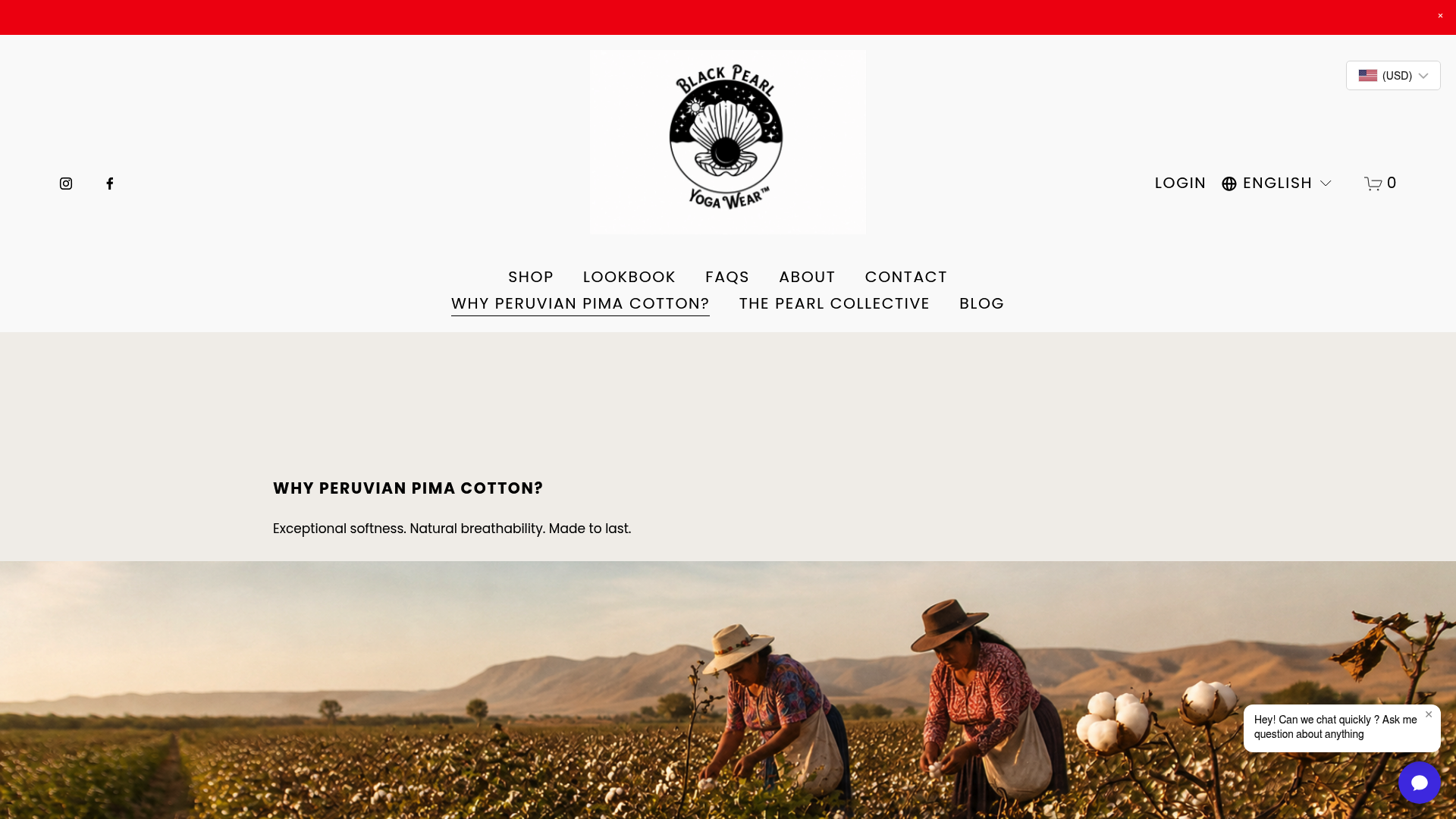
Picking summer travel wear comes down to two questions. What keeps you cool in the heat, and what survives months of packing, washing, and re-wearing without falling apart. For hot-weather trips, we lean toward natural long-fiber cotton. It tends to stay comfortable in humid air and it lasts, which may save you the money you'd otherwise spend replacing worn-out pieces.
The best material for hot weather is the one that moves air across your skin when conditions are still and sticky. Synthetic fibers are extruded plastics. Cotton fibers have a hollow core that can circulate air even when there's no breeze at all. That's the trade-off you're really weighing.
What to look for when choosing
Three things matter most: breathability in humid heat, durability across repeated washes, and packability for light travel. Weigh those against how you actually travel. If you're washing in hotel sinks and re-wearing pieces for weeks, durability quietly becomes the biggest cost driver.
Here's how the main options line up for a hot-climate trip:
| Factor | Peruvian Pima Cotton | Synthetic Blends |
|---|---|---|
| Breathability in humid heat | Excellent | Fair |
| Dry time after washing | Slower | Fast |
| Pilling resistance | High | Moderate |
| Odor control over re-wears | Strong | Weaker |
| Replacement frequency | Low | Higher |
We build our pieces from certified Peruvian Pima, the long-staple fiber that resists pilling and holds its shape wash after wash. That longevity can mean a lighter packing list. You don't need backup garments to cover for pieces that wore out.
When to skip cotton
Skip Pima for high-sweat, fast-turnaround activity where you need pieces dry by morning. If you're doing hot vinyasa twice a day and washing every night, synthetics dry faster and that speed wins.
For everything else on a hot-weather trip, our take is clear. Long-fiber cotton tends to keep you cooler in humid stillness and lasts long enough to pay for itself over a season. That's the quiet financial edge synthetics rarely match.
Feature by feature
Let's break down the features that matter when you're living out of a carry-on in hot weather. This is where you see how long a piece lasts and what it costs you over a season.
Durability is where Pima earns its keep. Long-staple fibers resist pilling and thinning, so a top holds its shape and look through repeated washes. Synthetics dry faster, but they may break down sooner and start holding odor. Fewer pieces that last longer means you optimize your luggage instead of stuffing it with backups.
Which fabric wins, feature by feature
Pima cotton wins on longevity, humid-heat comfort, and odor resistance. Synthetic blends win on dry time and starting weight. For a woman moving between hot, sticky destinations, the durability edge may outweigh the faster dry cycle over months.
| Feature | Pima Cotton | Synthetic Blend |
|---|---|---|
| Airflow in still, humid heat | Excellent | Moderate (traps heat) |
| Dry time after washing | Slower | Fast |
| Pilling resistance | High | Lower |
| Odor control over re-wears | Strong | Weak (holds smell) |
| Lifespan before replacement | Long | Shorter |
| Laundry frequency on the road | Lower | Higher |
The laundry line matters more than most travelers expect. Synthetics that hold odor may need washing after nearly every wear. Pima lets you re-wear a piece before it needs a rinse. That's fewer hotel-sink washes and fewer coin-laundry runs on a two-week trip.
When to skip Pima cotton
If you're heading out for a rainy-day run or a hard cardio session and you have to wash and dry your gear in a tight window, synthetics are the logical pick. When fast evaporation is the whole point, natural cotton just can't turn around that quickly.
For everything else in hot-weather travel, our take is clear. The cost of replacing worn synthetics adds up quietly across a season. Pima's longer lifespan keeps that money in your pocket and keeps your bag lighter.
How they hold up over a season
Here's the performance question that actually matters on the road. How does each fabric hold up over a full season of hot-weather travel, not just one wear? Pima wins on staying power. Synthetics win on speed. That trade decides how much you spend and how much you pack.
Speed is the one clear synthetic advantage. Polyester blends dry faster after a rinse in a hotel sink, so you can wash tonight and wear tomorrow. But in still, sticky air, some travelers find they trap heat against the skin. The fabric that manages oppressive heat best is the one that moves air when there's no breeze. Long-fiber cotton does that job better in dead humidity.
Speed, longevity, and packing
Pima scales better across a season because it survives more wash cycles before it thins or pills. Synthetics evaporate moisture fast, but their structure may break down quicker under heat and agitation, which can lead to early thinning.
| Performance Factor | Pima Cotton | Synthetic Blends |
|---|---|---|
| Dry time after wash | Slower | Faster |
| Comfort in still, humid heat | Better airflow | Traps heat |
| Wash cycles before wearing out | High | Lower |
| Odor buildup over re-wears | Resists longer | Holds odor sooner |
| Suitcase space over a trip | Fewer backups needed | More backups needed |
What this means for your time and money
The real resource math is time and money, not grams in your bag. A piece that lasts more seasons means fewer purchases and fewer laundry runs. That frees up both your budget and your travel days.
Synthetics may ask you to wash more often to manage odor. Pima lets you re-wear between washes without smelling stale. Fewer laundry cycles in a hot climate is a genuine time saver.
Our take: pack synthetics only when quick overnight drying is non-negotiable, like a fast itinerary with no drying window. For everything else across a hot-weather trip, long-fiber cotton costs you less over the season and takes up less of your carry-on.
Pros and cons
Every fabric has a catch. Pima and synthetics each solve part of the summer travel problem, and neither wins on everything. Here's the honest breakdown of what you gain and what you give up.
We lean toward Pima for most hot-weather trips because its long-term savings may outweigh its slower dry time. But if your itinerary revolves around sink-washing and same-day re-wearing, synthetics earn their spot in your bag.
The trade-offs at a glance
| Factor | Pima Cotton | Synthetic Blends |
|---|---|---|
| Humid-heat breathability | Strong airflow in still air | Traps heat when air is still |
| Dry time after washing | Slower | Fast |
| Durability over a season | Resists pilling, holds shape | Breaks down sooner |
| Odor over multiple wears | Holds up | Retains odor |
| Replacement cost over time | Lower (fewer buys) | Higher (more buys) |
| Initial pack weight | Slightly heavier | Lighter |
The pattern is clear. Synthetics win the sprint. Cotton wins the season.
Where Pima costs you
Pima's biggest weakness is patience. It takes longer to dry, so a rinse before bed might still feel damp at breakfast. On a trip built around fast turnarounds, that lag frustrates.
It also packs slightly heavier than a paper-thin poly tee. If you count grams for ultralight travel, that matters.
Our stance: for the traveling yoga-woman moving between hot, sticky cities over weeks, those two downsides shrink next to the upside. You buy fewer replacements. You wash less often because odor doesn't set in. That's real money and real time back.
Where synthetics cost you
Synthetics feel great on day one and may betray you by week three. They may hold smell after repeated wears, so you wash more, which speeds their breakdown further. Pilling and thinning follow.
In dead, humid heat, some travelers find they trap warmth against the skin instead of moving air. That's the comfort tax you pay for fast drying.
Skip synthetics if your trip runs long and laundry access is limited. Skip Pima if you need a piece dry in two hours flat. Match the fabric to how you actually travel, not the spec sheet.
Who each fabric is for
Pima wins for the woman who travels slow and packs light. If your trips run a week or longer through humid heat, and you'd rather wash less and replace less, natural long-fiber cotton is the better buy. Synthetics fit a narrower job: fast turnaround when you're sink-washing every night.
The call really comes down to your itinerary and your laundry habits. Pima earns its price over months, not one weekend. So the more trips you take in a season, the more its durability pays you back.
Who gets the most out of Pima
Best for: the frequent hot-weather traveler who wants fewer pieces that last longer. If you're moving between sticky destinations and living out of a carry-on, Pima holds its shape wash after wash. That's an efficient wardrobe that needs less maintenance and fewer emergency shopping trips.
Our team designs for exactly this woman. She's often between 30 and well past 60, active, and tired of activewear that pills after a season. She wants pieces that breathe in dead humid air and still look right after fifty wears. That's where long-staple cotton beats a blend that thins out by month three.
When to choose synthetics instead
Skip Pima if your whole trip depends on same-day drying. Backpackers doing overnight rinses in a hostel sink need the fast dry time synthetics give. In that case, cotton's slower dry becomes a real headache.
| Traveler Type | Best Fabric | Why |
|---|---|---|
| Week-plus humid-heat trips | Pima cotton | Breathes in still air, lasts a full season |
| Nightly sink-wash backpacker | Synthetic blend | Dries by morning |
| Season-long frequent flyer | Pima cotton | Fewer replacements, lower cost per wear |
| Single weekend, wash-and-go | Synthetic blend | Speed over longevity |
Match the fabric to how you actually move. For most women taking repeated hot-weather trips, we'd point you to Pima without hesitation. The savings show up in your closet and your suitcase both.
What I'd actually pack
For hot-weather travel, Pima beats synthetic blends. It handles still, humid air better, and its durability is where the real savings show up. Fewer replacements. Fewer laundry cycles. More room in your carry-on.
Synthetics still have a job. If your trip runs on nightly sink-washes and same-day re-wearing, their fast dry time earns a spot in your bag. That's the one scenario where we'd tell you to skip the cotton and reach for a poly blend instead.
For everyone else moving between sticky destinations for a week or more, natural long-fiber cotton pays you back over the season. That's the whole point of this comparison.
Which fabric should you pack?
Pima cotton: the better buy for frequent, slow travel in humid heat where pieces need to last. Synthetic blends: the better buy for fast-turnaround trips built around washing every night.
The final call by scenario:
| Your Trip | Best Choice | Why |
|---|---|---|
| Week-plus in humid heat | Pima cotton | Breathes in still air, lasts the season |
| Nightly sink-wash routine | Synthetic blends | Dries by morning |
| Packing light, few backups | Pima cotton | Holds shape, needs fewer replacements |
| One-weekend fast trip | Either | Durability gap barely shows |
The money math is simple. A synthetic blend is convenient the night you wash it, but rapid wear and clingy odor eat its long-term value. Good natural fibers stay in rotation far longer, which lowers your overall travel wardrobe spend.
Our take: buy fewer, better pieces. For the woman who travels often through hot, sticky climates, Pima wins on comfort where it counts and quietly saves you money every trip. That's the advantage synthetics can't match once you look past the first wash.
References
[1] Is cotton best in hot weather? - Backpacking Light - https://backpackinglight.com/forums/topic/57816/
[3] Clothing - National Collaborating Centre for Environmental Health - https://ncceh.ca/node/36950
Frequently Asked Questions
1. Does Pima cotton shrink or lose its shape after many washes like regular cotton?
Pima cotton keeps its shape wash after wash, unlike lower-grade cotton. Its long-staple fibers resist thinning and pilling through repeated laundering, so a top holds its form after dozens of wash cycles. This shape retention is a core reason it outlasts synthetic blends over a full travel season.
2. How long does Pima cotton actually take to dry compared to synthetics?
The article doesn't give exact drying times, but confirms Pima cotton dries slower than synthetic blends. An evening wash may require additional drying time before it is ready to wear the next morning. Synthetics dry fast enough to wash tonight and wear tomorrow, which is their single clearest advantage over cotton.
3. Is Pima cotton worth the higher price if I only travel occasionally?
For occasional single-weekend trips, the durability gap barely shows, so either fabric works. Pima cotton pays back most for frequent travelers taking repeated hot-weather trips across a season. The more trips you take, the more its longer lifespan lowers your cost per wear.
4. Why does Pima cotton hold odor less than polyester or nylon?
Pima cotton resists odor buildup over repeated wears, letting you re-wear pieces before washing. Synthetic blends may retain smell after nearly every wear, forcing frequent laundering that speeds their breakdown. Fewer washes means fewer hotel-sink rinses and coin-laundry runs on a multi-week journey.
5. What price range should I expect for Pima cotton travel pieces?
While certified long-staple cotton commands a higher initial price than basic synthetics, the cost-per-wear is significantly lower. Because the fabric resists degradation, a single high-quality piece will outlast multiple synthetic alternatives, saving you money over several seasons.
6. Which fabric packs lighter for carry-on travel?
Synthetic blends pack slightly lighter, since a lightweight polyester shirt weighs less than Pima cotton initially. However, Pima's durability means fewer backup pieces are needed, freeing suitcase space over a full trip. For ultralight travelers counting grams per item, synthetics hold a narrow packing edge.
7. Should I choose synthetics for hot yoga or high-sweat activities?
Choose synthetics for competitive athletics or high-intensity interval training where rapid moisture evaporation is the primary requirement. Their faster dry time wins that narrow window. For general hot-weather travel between humid destinations, Pima cotton's breathability in still air and longer lifespan make it the better overall pick.