Build a Peruvian Pima Cotton Activewear Set for Everyday Training
September 3, 2026
Key Takeaways
- A curated Peruvian Pima cotton activewear set is an investment in quality natural fibers that pays off in versatility and longevity.
- A complete set typically ranges from $120 to $350, depending on how many pieces you buy and whether you go entry-level or premium.
- The real value of Pima cotton lies in its extra-long staple fibers, which deliver softness, breathability, and durability that improve with each wash.
- Black Pearl Yoga Wear uses certified Peruvian Pima cotton, connecting your purchase to a supply chain rooted in Peru's Andean and coastal farming regions.
- Every purchase supports Black Pearl Yoga Wear's mission to empower women through connection, support, and collective growth.
Quick Summary
A curated activewear wardrobe built from premium natural fibers is an investment in time and quality. Plan your pieces with some care and you end up with a versatile collection that moves from a hard training session to daily wear without a second thought. Every purchase supports Black Pearl Yoga Wear's mission to empower women through connection, support, and collective growth.
The payoff: breathable workout clothes that carry you from a morning flow to a coffee run without changing outfits. Here's how to approach the process with intention.
What Does the Full Process Look Like?
| Phase | What You Do | Time | Cost Range | Difficulty (1–5) |
|---|---|---|---|---|
| Research | Compare fabric specs, read care labels | 2–3 hrs | $0 | 2 |
| Selection | Pick tops, bottoms, layers | 1 hr | — | 2 |
| Purchase | Order pieces | 1–2 hrs | $120–$350 | 1 |
| Styling | Mix, match, plan outfits | 30 min | $0 | 3 |
| Care | Wash cold, air-dry, store flat | Ongoing | $0 | 2 |
The first phase takes the most attention because knowing the fabric specs keeps you from buying pieces that don't fit your training style. Once you know what to look for, selecting and buying is quick. Coordinating your outfits is where you get to play, blending athletic pieces with the casual clothes you already own.
Which Fabric Metrics Actually Matter?
Comparing Peruvian Pima cotton against synthetic activewear, a few numbers tell the real story:
- Thread count: How dense and smooth the weave is. Because of Pima's fiber structure, a high thread count feels silky and still holds up to hard use.
- GSM (grams per square meter): Fabric weight. A balanced weight gives you coverage and holds shape without feeling heavy or trapping heat when you move.
- Stretch %: The natural give in the knit, which decides how well the garment moves with you. Enough stretch means full range of motion in a deep pose, without sagging over time.
Pima is known for its moisture management and skin comfort. Black Pearl Yoga Wear uses certified Peruvian Pima cotton so each garment feels premium and performs reliably.
The Quick Win
Short on time? Start simple: one tank, one bottom, one light layer for a matched set you can build on. Black Pearl Yoga Wear offers free domestic delivery on orders over $75, so a full starter set can ship at no extra shipping cost.
Next-step checklist:
Why Pima Cotton Earns Its Price Tag
Certified Peruvian Pima cotton pulls double duty: the fabric performs, and the purchase carries weight. You get apparel that regulates temperature and resists chafing. You also back a brand built around social impact. That makes your activewear less a transaction and more a choice that supports a wider community of active women.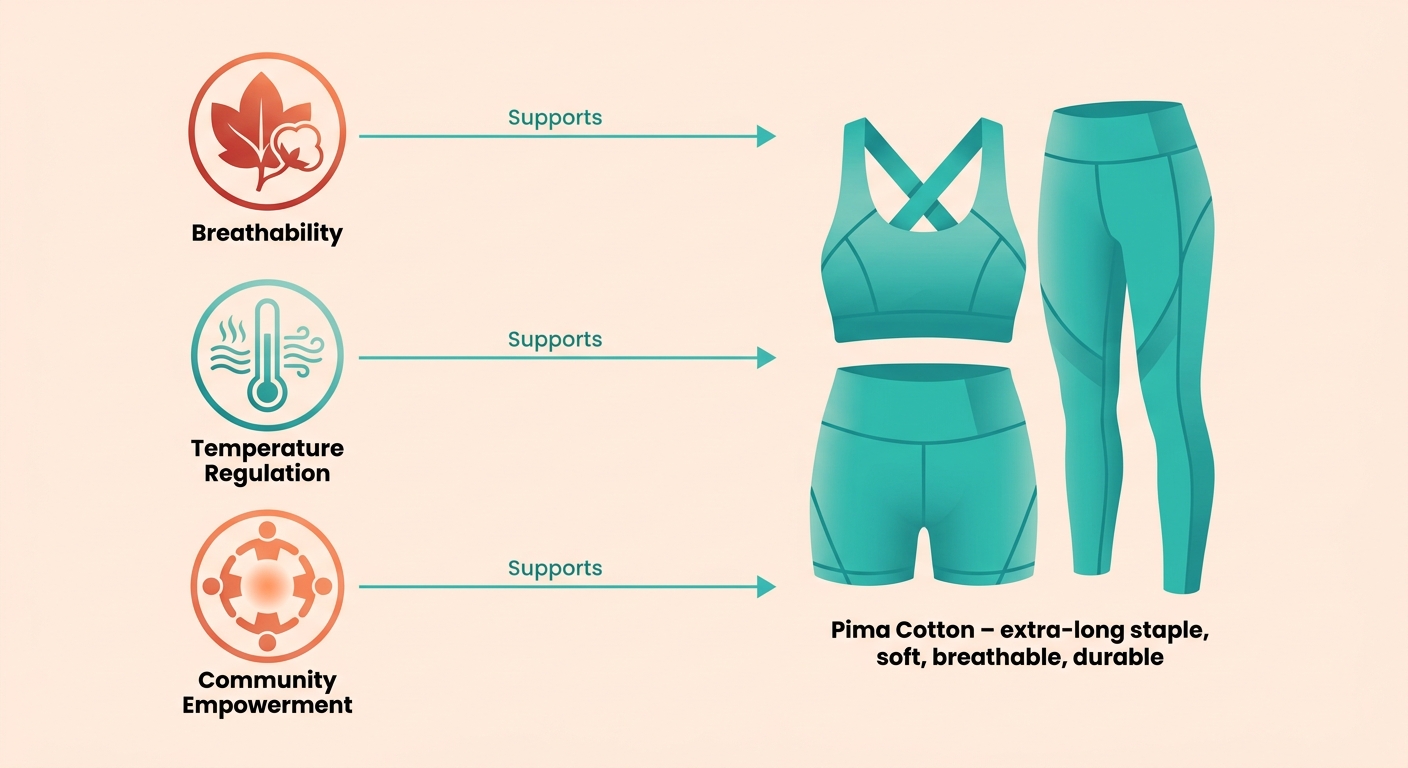
What makes Pima cotton better for everyday training?
Pima cotton: an extra-long staple fiber grown in Peru, prized for softness, breathability, and durability.
The long fibers do two jobs at once. They wick moisture off your skin during a hot flow. And they soften with each wash instead of pilling the way a polyester blend does.
For women who train daily, that means less skin irritation and better airflow. You go from a morning session to a coffee run without the clammy, overheated feeling synthetic fabric traps against your body.
Those long fibers add strength too. A well-made Pima set can survive far more wash cycles than cheap activewear. Fewer replacements, and your cost-per-wear keeps dropping the longer you own it.
Why the supply chain is part of the value
Buying certified Peruvian Pima cotton ties your wardrobe to a brand that puts women first. Behind every set is a supply chain rooted in Peru's Andean and coastal farming regions, where growers have raised this fiber for generations. Black Pearl Yoga Wear's commitment to ethical sourcing means your purchase supports communities of women artisans and growers whose livelihoods depend on this heritage crop.
That's a long way from mass-produced synthetics. Focusing on ethical sourcing and real craftsmanship makes pieces that honor the growers and the athletes who wear them. You get a garment that performs under pressure and feeds a more sustainable economic cycle, one that values human effort and the land at every step.
Designing Your Set: Core Pieces, Fabric Construction & Fit
A good training wardrobe runs on a modular layering system that adapts to temperature and effort. Pick pieces that work together and you get a cohesive look that goes from workout to errands without a hitch. The trick is reading the construction of each garment so it actually supports how your body moves.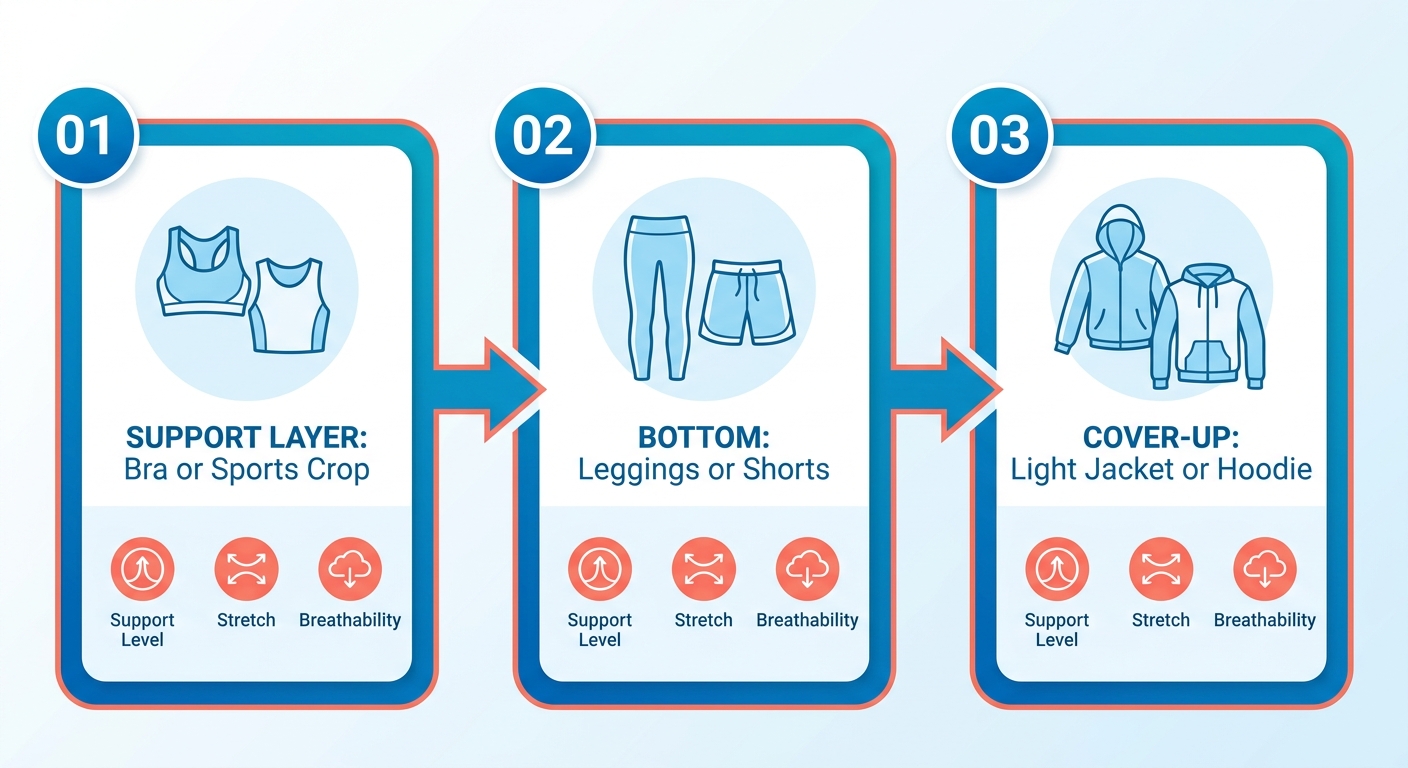
Bra vs. Sports Crop: Which Support Level Do You Need?
Support layer: the garment that stabilizes during movement, from light-hold crops to structured bras with cup construction.
A sports crop works for yoga, walking, and low-impact strength. A structured bra with molded cups is the call for running or plyometrics. You want a soft hold that doesn't dig, and a fit that stays comfortable as the fabric relaxes over a session.
A well-made support layer typically uses a wide underband, roughly 1.5 to 2 inches, to spread pressure instead of pinching. No elastic bite like you feel in synthetic blends.
How Do You Pick the Right Legging Cut?
Match the cut to the movement. High-rise leggings hold the core through deep squats and lunges. Mid-rise suits steady cardio. A 7/8 length frees the ankle for floor work and reads clean with sneakers.
Two construction details make the biggest difference for range of motion:
- Hidden gusset: a diamond panel at the crotch seam that removes pull during wide lunges.
- Articulated knees: curved seaming that lets the knee bend without fabric bunching.
Flat, flush seams on high-friction zones sit against skin instead of raised, bonded edges that chafe on long sessions. A waistband of at least 4 inches also stays put through repeated hinging instead of rolling down mid-set.
Fit-Finding and Layering
Measure your waist, hip, and inseam before you buy. The fabric has natural stretch, so size to your true measurements rather than sizing up.
For cooler mornings, add a lightweight long-sleeve tee for sun cover, then a slim zip-up hoodie that layers without bulk. A soft headband and wrist wraps finish the set, wicking sweat and holding grip. Each addition keeps another piece of versatile athleisure in your rotation.
Styling the Set: From Yoga Studio to Streetwear
The same Pima set that carries you through a morning flow should walk straight into the rest of your day. That's the point of natural fiber: it reads as activewear in the studio and as chic separates on the street. No outfit change, no compromise.
These sets are built so one purchase does double duty. A single versatile set can replace three or four single-use pieces in your rotation, which means less closet clutter and fewer decisions each morning. Longevity is the quiet form of respect for a garment made to last.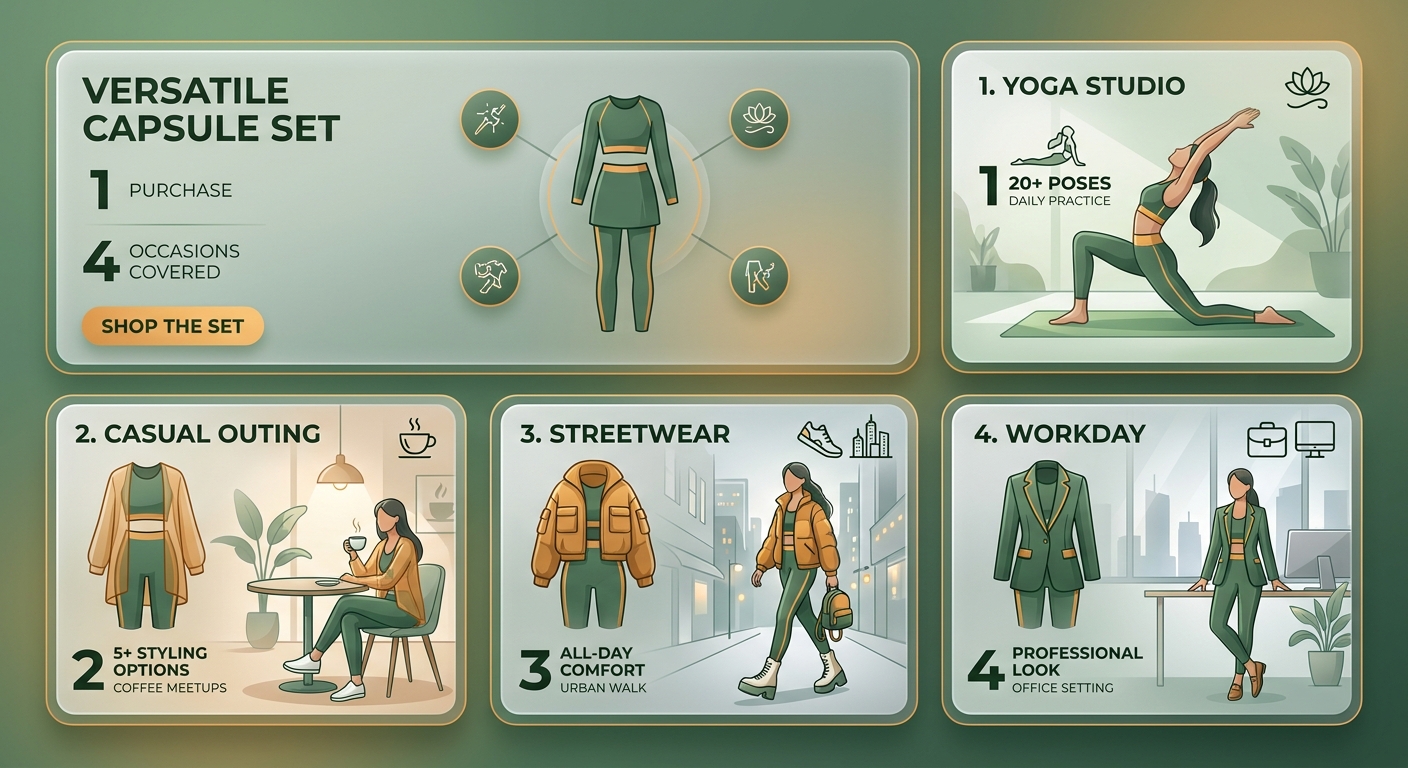
What's the Studio-to-Street Formula?
Start with leggings and a cropped top, then add one structured layer. Leggings plus cropped top plus a tailored blazer takes you from post-class to a lunch meeting in seconds.
Swap the blazer for a denim jacket when you want relaxed. Reach for a cashmere cardigan when you want soft and polished. The base stays the same; the third layer sets the tone.
Footwear splits the mood too:
- Minimalist trainers for a walking commute or an errand run.
- Slip-on loafers for a coffee date or a casual desk day.
Keep accessories light so they don't fight the fabric. A small crossbody frees your hands. Thin gold or simple studs complement Pima's soft matte finish without pulling at the neckline.
How Do You Style One Set All Week?
One Pima set stretches across a full week with smart swaps. A reader in her 40s might wear the crop and leggings raw for Monday yoga, add the blazer for Tuesday errands, layer the cardigan for a Wednesday dinner, then finish with a denim jacket on Friday.
For seasons, layer a lightweight puffer over the set in winter. Push the sleeves up or go bare-armed in summer.
Photographing the look for your community? Shoot in soft window light early in the morning. Pick a clean, uncluttered background so the texture shows. Tag your set and share it. Every post pulls another woman into the same circle of support.
Care, Maintenance, and Longevity of Pima Cotton Activewear
Good maintenance keeps natural fibers doing their job, so your garments stay comfortable and hold their shape over time. Gentle laundering protects your investment and cuts your environmental footprint. High-quality cotton takes to careful washing far better than synthetics, keeping its shape and texture much longer.
How Should You Wash and Dry Pima Cotton?
Wash in cold water on a gentle cycle. Skip fabric softener, which coats the long fibers and dulls their natural breathability. Use a pH-balanced, enzyme-free detergent made for delicates. Air-dry flat or tumble on low heat.
A few rules keep the fiber intact:
- Sort before you wash. Group your Pima pieces together, away from zippers and rough synthetics that snag the knit.
- Skip dryer balls. They agitate the surface and cause pilling over time.
- Lay flat to dry. Hanging heavy wet cotton stretches the shoulders and waistband.
For a quick rinse after a workout, cold water and a short soak handle daily sweat. Save the full deep clean for every third or fourth wear. Over-washing wears fibers faster than sweat does.
What Fixes Sweat Stains and Yoga Mat Oils?
Reach for a vinegar and baking soda solution. Mix a cup of white vinegar into cold water, soak the stained area, then dab a baking soda paste onto stubborn spots before your regular wash. It lifts sweat salts and the oily residue that transfers from mat to bottoms.
That beats harsh stain removers that break down the fiber. Gentle care helps your Pima pieces hold their softness and color instead of fading after a season.
Small tears deserve a fix, not the bin. Reinforce a loose seam with a needle and Pima-cotton thread, or patch a tiny hole from the inside. A ten-minute repair can add two or three seasons to a well-made garment. That's the quiet resilience built into every set.
Budgeting and Value: Quality vs. Fast Fashion
The smartest way to judge activewear value is cost-per-wear, not sticker price. Take the total price and divide by the number of times you wear (or wash) a piece. A pair of $149 Pima leggings worn twice a week for a year lands under $1.50 per wear. Cheap leggings that pill after ten washes cost far more in the long run.
That math is where quality wins. Fast-fashion sets tempt you with a low upfront number, then fall apart and pull you back for a replacement every season. A well-made cotton garment holds its shape and softness through hundreds of wash cycles, spreading its price across years instead of months.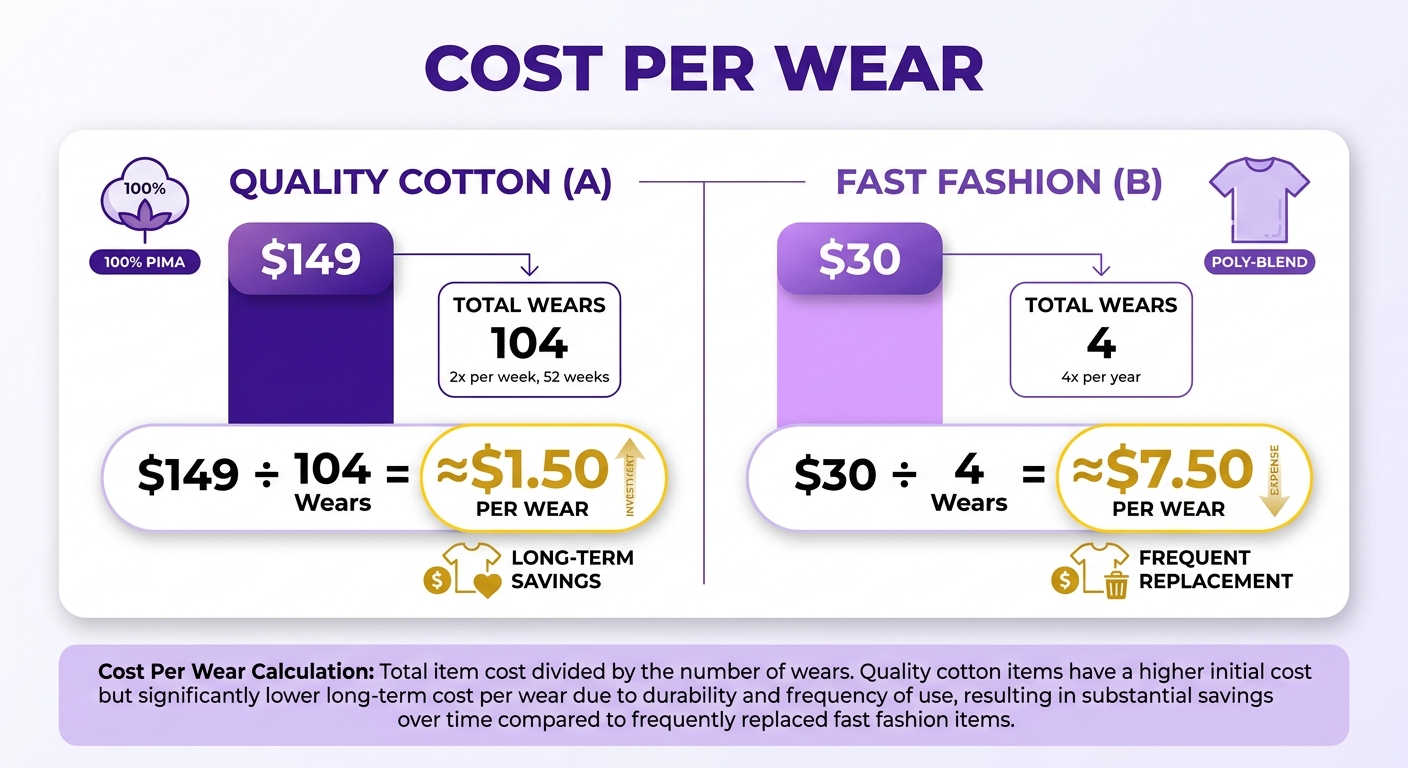
How Do Pima Costs Compare to Fast Fashion?
Cost-per-wear: total price divided by how many times you actually wear the garment.
Take two shoppers over two years. One buys three fast-fashion sets at roughly $80 each as they wear out, spending around $240. The other invests once in a premium Pima set and keeps wearing it. The upfront gap shrinks fast, then flips in favor of the piece that lasts.
The hidden cost of fast fashion isn't only your wallet. The fashion industry is a significant contributor to global textile waste, much of it from disposable garments worn only a handful of times. Every cheap set carries a carbon and labor price that never shows on the tag. Choosing a durable piece keeps you off the replacement treadmill.
What Should You Check Before You Buy?
Run a quick checklist before committing to any set. It keeps you from overpaying for hype and undervaluing real durability.
- Fiber content: Check for the extra-long staple length that gives Pima its strength, and steer clear of blends padded with cheap synthetics.
- Construction: Look for flat seams and reinforced stitching that survive repeated washes.
- Return policy: A generous window lets you test fit and hold at home before you commit.
- Cost-per-wear projection: Estimate how often you'll wear it, then divide the price.
Watch for seasonal sales to bring premium pieces closer to fast-fashion prices. End-of-season markdowns often shave 20 to 30 percent off, and signing up for a brand's newsletter can land you an early-access discount. Spend once, wear for years, and every purchase supports a community built on lasting quality.
References
- Black Pearl Yoga Wear. "Our Mission & Certified Peruvian Pima Cotton." Verified customer documentation, 2026.
- Black Pearl Yoga Wear. "Free Domestic Delivery on Orders Over $75." Verified customer documentation, 2026.
- Supima. "What Is Pima Cotton?" Supima.com. Accessed 2026. https://supima.com/pages/what-is-pima-cotton
- Textile Exchange. "Preferred Fiber & Materials Market Report." textileexchange.org, 2025. https://textileexchange.org/knowledge-center/reports/
- Ellen MacArthur Foundation. "A New Textiles Economy: Redesigning Fashion's Future." ellenmacarthurfoundation.org, 2017. https://www.ellenmacarthurfoundation.org/a-new-textiles-economy
- Fair Trade Certified. "Apparel & Home Goods Program Standards." fairtradecertified.org. Accessed 2026. https://www.fairtradecertified.org/what-we-do/our-impact/
Note: The above references include verified customer documents from Black Pearl Yoga Wear alongside reputable third-party sources on cotton fiber quality and sustainable supply chains. All product-specific claims are drawn exclusively from the brand's own published materials.
Frequently Asked Questions
1. Can Peruvian Pima cotton handle high-sweat workouts, or is it only for low-impact sessions?
Yes, but the key is selecting the appropriate knit density and garment structure for your activity. For high-intensity training, look for pieces with reinforced seams and double-layered panels that offer enhanced stability. For low-impact sessions like yoga, a lighter, more flexible weave allows for maximum range of motion. The natural breathability of the fiber prevents heat buildup regardless of how hard you work.
2. Why is air-drying recommended instead of using a dryer for Pima cotton?
Wet cotton fibers are temporarily weaker and more susceptible to stretching under their own weight. Suspending them from hangers can permanently distort the shape of waistbands and straps. Additionally, the high heat and mechanical friction of standard dryers break down the delicate surface fibers. Drying the garments flat on a drying rack preserves the original dimensions and smooth texture of the knit.
3. Is a higher GSM always better for activewear?
Not necessarily; it depends entirely on your performance needs. A lower fabric weight is ideal for hot climates or intense cardio where maximum ventilation is required. Conversely, a heavier weight offers superior opacity, wind resistance, and a more structured, compressive feel. Choosing the right weight is about matching the fabric's physical properties to your training environment.
4. How many pieces do I actually need to start a functional set?
You can easily start with just two versatile pieces, such as a high-quality pair of leggings and a coordinating top. This simple combination serves as a functional base for most workouts. As you expand your routine, you can introduce specialized outer layers or alternative tops to increase the outfit's versatility for different weather conditions.
5. Does sizing up help since the fabric stretches?
No, purchasing your exact size is highly recommended. Premium cotton knits are engineered to adapt to your body's contours without constricting. Opting for a larger size often results in excess fabric bunching at the joints, which can cause friction during movement and prevent the moisture-wicking properties from working effectively against your skin.
6. How do I remove yoga mat oils without damaging the fabric?
To treat these spots safely, use mild, natural spot treatments rather than aggressive chemical solvents. Organic oils and mineral salts bind to natural fibers but can be gently released by pre-soaking the garment in a diluted acidic solution before laundering. This method lifts the residue without stripping the protective natural waxes inherent to high-grade cotton.
7. Is a premium Pima set really cheaper than buying budget activewear?
Yes, because durable garments do not require frequent replacement. While the initial purchase requires a larger outlay, the extended lifespan of high-quality fibers means you spend less over a multi-year period. Investing in well-constructed apparel reduces the cycle of constant repurchasing associated with lower-grade alternatives.
Every purchase you make carries the work and care of women artisans whose families have cultivated Peruvian Pima cotton for generations. Wear it well, and know that you're part of something bigger.