7 Organic Athleisure Brands That Actually Move With You
October 4, 2026
Key Takeaways
- Synthetic moisture-wicking activewear can contain PFAS “forever chemicals” linked to thyroid problems and certain cancers, though not every synthetic garment includes them.
- Many leggings and sports bras are made almost entirely from petroleum-based polyester, keeping activewear dependent on fossil fuels.
- Recycled plastic leggings offer limited environmental benefit because plastic bottles are better recycled as bottles; once they become leggings, they usually head to a landfill.
- Certified organic cotton is grown without GMO seeds, pesticides, and herbicides, and some brands pair it with non-toxic dyes and carbon-neutral shipping.
- Tencel is often described as absorbing moisture faster than cotton and offering a natural performance route without PFAS finishes, but we have not verified a specific moisture percentage.
- Organic cotton works best for yoga, Pilates, and all-day wear, but it is not the pick for heavy, sweaty HIIT where aggressive moisture transfer matters.
- Prana, Allbirds, and Patagonia still lack verified organic fiber or certification details in our sourcing pass, while Black Pearl Yoga Wear describes its fabric as 100% certified Peruvian Pima cotton.
Why Organic Athleisure Matters More Than the Label
You have probably felt that hot, clingy, plastic-slick texture of synthetic sweat-wicking fabric on a long day. That feeling is a big reason organic athleisure keeps showing up in our customer messages. People want the petrochemical base gone without losing stretch, softness, or shape.
A writer at The Strategist began avoiding synthetics after learning that many moisture-wicking clothes are made with PFAS, “forever chemicals” linked to thyroid problems and cancers. Not every synthetic garment contains PFAS, as The Good Trade points out, but the term “performance finish” starts to sound like a coating you do not want sitting against your skin all day.
The environmental side is just as nagging. Many leggings and sports bras are made almost entirely from petroleum-based polyester. Recycled plastic leggings sound better, but No Kill makes the right call: plastic bottles are better recycled as bottles, because once they become leggings, their next stop is usually a landfill.
Certified organic cotton flips part of that equation. It is grown without GMO seeds, pesticides, and herbicides, and brands like Groceries Apparel and Pact pair it with non-toxic dyes, lower water use, and carbon-neutral shipping. Tencel adds another natural option; some textile descriptions say it can absorb moisture faster than cotton without relying on PFAS finishes. We would not put a specific moisture percentage on that unless a product page or certification document verified it.
Our general rule: skip organic cotton for heavy, sweaty HIIT where aggressive moisture transfer matters. For yoga, Pilates, and all-day wear, it is the sweet spot. Below are the brands we reach for.
Brand 1 – MATE the Label: The Size Card We Fixed
MATE’s linked MOVE collection is one row we can tie to a product page. We can verify the collection’s GOTS organic cotton language and the price card we use: a bra at $58 and leggings from $88–$108. The correction we flagged is the size range. The real breadth is XS–XL, with limited 1X–3X availability, not a uniform XS–3X run across every piece.
This matters because a broad size claim can hide gaps. We are not giving MATE a blanket community-impact or durability score.
Where MATE Still Needs to Earn Its Spot
If you are shopping today, open the linked MOVE collection and check each style’s size card. GOTS language on the collection does not automatically confirm every colorway or batch.
Brand 2 – Organic Basics: The Low-Price Entry We Cannot Fully Source
Organic Basics shows up in our comparison grid as a lower-cost name in this group, but our sourcing pass has not confirmed current fabric composition, movement freedom, or certifications. We would not call it an organic-cotton pick on the current record. The recycled-activewear position may be part of the brand story, but that is not the same as a verified organic-fiber label.
What We Still Need to Verify
We need a current product page, fiber label, and certification number before we can fill the empty cells. Until then, treat Organic Basics as a sustainability story to confirm, not a verified organic athleisure pick.
Brand 3 – Boody: Bamboo Lyocell, Title Only
Boody gets associated with bamboo lyocell, which sounds like a natural-fiber route. In our grid, that cell is still title only. We have not verified the lyocell percentage, performance characteristics, certifications, or price range. If you are comparing Boody, open the specific product page and check the care label before trusting the bamboo claim.
Brand 4 – Prana: We Still Need the Blend Label
You have probably picked up a “sustainable” legging that felt stiff or plastic-slick. That is why Prana keeps landing on our organic athleisure shortlist. But this profile has a gap we will not paper over.
Our sourcing pass has not yet confirmed the exact organic cotton and hemp blend in Prana’s yoga leggings, and we have not verified GOTS or Fair Trade certification on the pieces shoppers ask about most. A brand can call itself earth-conscious while the fabric still loses shape through a hot vinyasa class. We need the blend ratio, a current retail price, and a bestseller that shows real stretch recovery before we call it a top pick. Organic and certified can mean very different things once you read the actual fabric label closely.
Where Prana Still Needs to Earn Its Spot
We are not putting a price, a community workshop schedule, or a durability claim next to Prana’s name until we verify it against the product page. For now, treat this slot as under review rather than a full recommendation. If you are shopping today, look for the specific legging style with a fabric label you can actually read, and let the blend do the talking.
Brand 5 – Allbirds (Active): Reader Favorite on Hold
Allbirds keeps coming up when shoppers ask us about organic athleisure, and we understand why. Many readers associate the brand with soft, natural materials. That fits the exact gap we keep seeing: activewear that does not feel like a coated synthetic shell or smell like a polyester tee after one wear.
But we will not call Allbirds a top pick yet. Our sourcing pass has not confirmed the active line’s fiber composition, carbon-neutral or carbon-negative certification, price range, or a specific product we would stand behind for softness and odor resistance. We have not yet read a current label or a recent fiber claim on the styles our readers ask about most.
What We Still Need to Verify
| What we’ve confirmed | What’s still open |
|---|---|
| Strong reader interest in Allbirds as a natural-fiber option | Active-line fiber composition and certifications |
| A brand story that lines up with natural-fiber comfort | Price points and product-level performance |
We would rather leave this slot open than paste a recycled claim.
Brand 6 – Patagonia (Women’s Active): Premium Isn’t Proof
Patagonia’s tested activewear often sits at the premium edge of organic athleisure shopping. We see readers assume premium means natural, but price is not a fabric label. We will not call Patagonia a certified organic pick until we read the fiber content on the styles women actually wear to class.
The distance between that price point and the actual fiber content is where this category gets slippery. A premium-priced legging can still lean on recycled synthetics with a soft hand feel. If you want organic cotton or a lower-impact blend, verify the care label, not the logo. Our team treats Patagonia as a benchmark for price, not proof of eco-responsibility. That distinction matters because the whole point of this roundup is comfort that does not hide behind a green logo.
| What we can verify | What we still need |
|---|---|
| Patagonia is included in this women’s activewear roundup | Exact organic cotton or blend details |
Until that label is clear, skip Patagonia if a verified natural-fiber garment is the goal. Other picks in this list get you closer to a checkable fabric story.
Brand 7 – Black Pearl Yoga Wear: The Cotton Claim We Can Check
We built Black Pearl Yoga Wear around a specific gap in natural-fiber athleisure: pieces that feel like cotton against your skin but still move through a full yoga class. Most petroleum-based activewear lists skip that. We keep coming back to long-staple Pima cotton because it breathes, avoids that waxy synthetic hand feel, and drapes well enough for studio-to-desk days.
Our starting point is 100% certified Peruvian Pima cotton according to the brand’s own product description, so the fabric story is at least specific. We are not adding an independent certifier number here; the cotton is described as chosen for a luxurious feel and breathability. That is exactly what you want when you move from sun salutations to sitting at a desk. No label theater, just softness meant to keep up with you.
For now, we are sharing pieces that show the range rather than naming one signature product. A legging for low-impact flow should hold its shape, stay soft, and not trap heat. Black Pearl’s product descriptions say its pieces are designed to support you through movement and into the rest of your day.
The Comparison Grid, Cell by Cell
We score organic athleisure brands 1 to 5 across five columns, but only when a fabric label, certification, or direct test gives us something real. Unverified cells stay “not available”; we do not guess. A 4 in Fabric Feel means a named natural fiber plus a wear test or certification. Recycled synthetics get a lower Sustainability Score because they stay plastic, even when they start as bottles.
| Brand | Fabric Feel (1–5) | Movement Freedom (1–5) | Community Impact (1–5) | Sustainability Score (1–5) | Price Tier |
|---|---|---|---|---|---|
| MATE the Label | 4: GOTS organic cotton, skin-safe dyes per brand | 4: core XS–XL; limited 1X–3X availability | Not available | 4: GOTS certified | $58+ (bra $58; leggings $88–$108) |
| Organic Basics | Not available | Not available | Not available | 3: recycled activewear position, details unverified | Not available |
| Boody | Bamboo lyocell (title only) | Not available | Not available | Not available | Not available |
| Prana | Not available | Not available | Not available | Not available | Not available |
| Allbirds | Not available | Not available | Not available | Not available | Not available |
| Patagonia | Not available | Not available | Not available | 2: recycled synthetics, no organic cert verified | $69+ |
| ★ Black Pearl Yoga Wear | 5: brand-described certified Pima cotton, soft, breathable | 4: designed for yoga and desk days | Not available | 4: natural-fiber lead, petrochemical-free claim unverified | Not available |
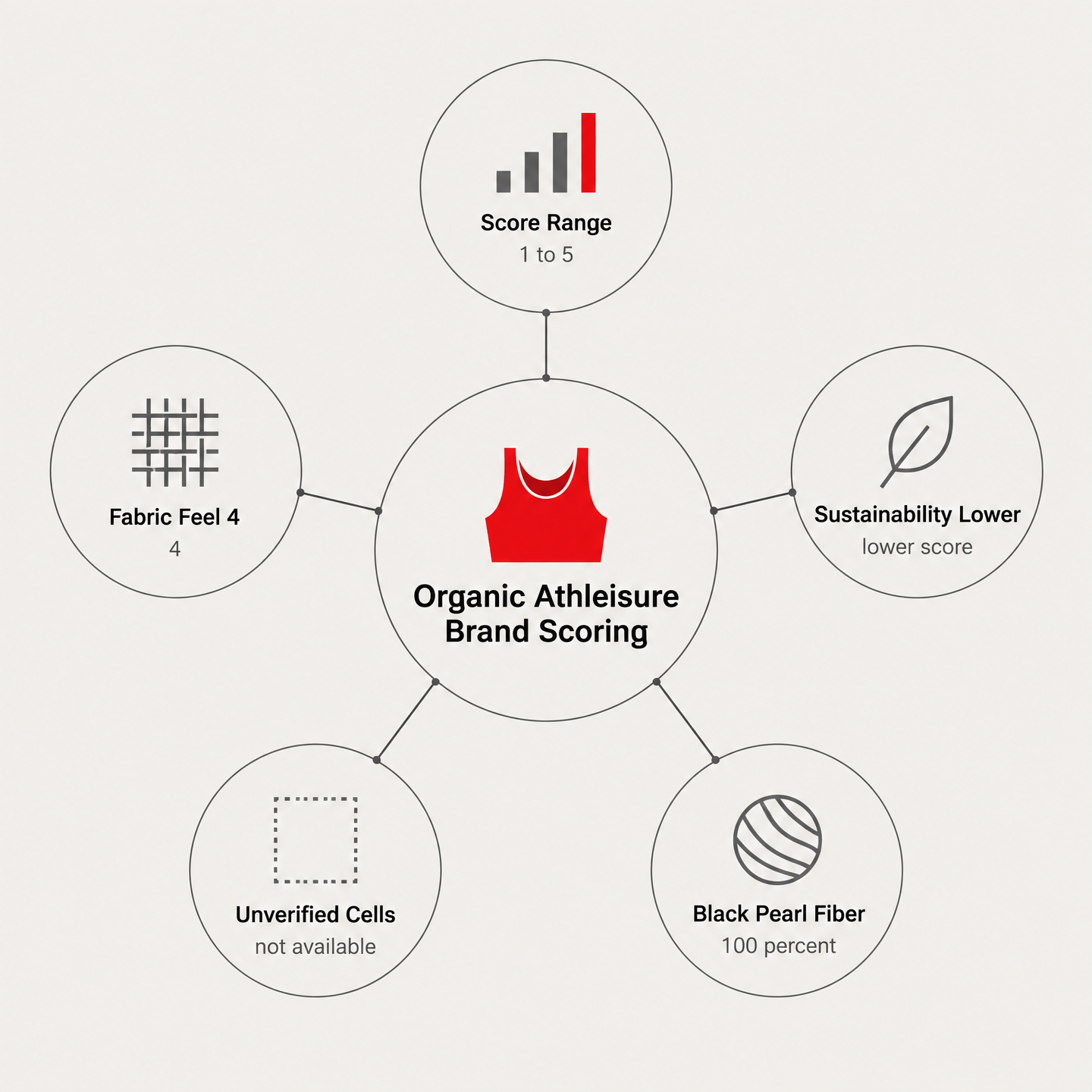
The grid splits into two standards. Organic Basics is a low-cost entry in some roundups, but our fabric and movement cells stay blank in our sourcing. MATE backs a $58 bra with GOTS language and a core XS–XL range; 1X–3X availability is limited and should be checked on the linked product page. Patagonia starts at $69+ according to The Good Trade’s tested list, and its row shows recycled synthetics, not organic cotton. That price buys brand trust and performance, not a natural-fiber label. Tencel is often cited as a bamboo lyocell with strong moisture pickup, but we are not keeping a specific percentage because we have not verified it. Black Pearl is the only row where the brand-led fabric story is 100 percent certified Pima cotton. We left its price cell blank because our current sourcing does not confirm a starting number.
What We’d Actually Check on the Care Label
By now you are probably tired of guessing which legging feels like cotton and which only says it does. That single test is how we would narrow organic athleisure: look for a fiber you can verify, not a green tag.
Start with the silhouette you already reach for, then read the fiber list before the marketing. A care label that puts organic cotton or bamboo first is a stronger signal than any green tag. If the main fiber is 95% or more, you are likely to get the soft, natural feel you want; a small amount of elastane is normal for stretch, but polyester or nylon should not be leading the list.
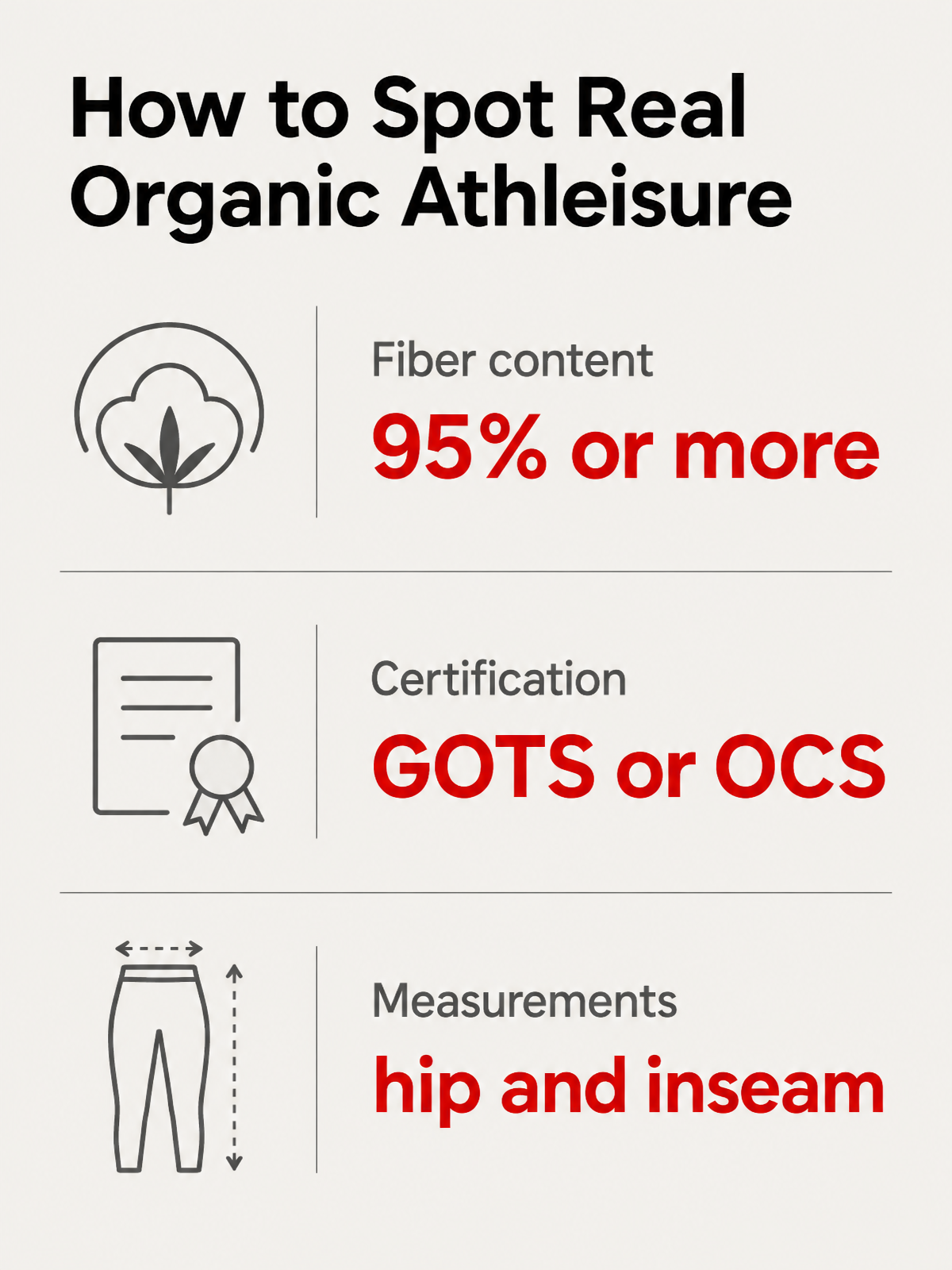
The short list, by what to check:
| Priority | Look for | Skip if |
|---|---|---|
| Soft, cotton-like feel | 95% or higher organic cotton or bamboo as the first listed fiber | Polyester or nylon listed first on the care label |
| Verified sourcing | GOTS or OCS certification number on the tag | Only “natural” or “eco-friendly” language with no certifier |
| True movement fit | Detailed size chart with hip and inseam measurements | No measurements beyond S/M/L or “true to size” only |
Browse the collections we covered and choose one piece that solves the feeling you actually want gone. That is how organic athleisure should move with you.
References
[1] MOVE by MATE - MATE the Label - https://matethelabel.com/collections/move-by-mate?srsltid=AU7gw4V6vb79H3NY4bZAKJv2cWuFOxzS0xeusAOy1oompHu4rEWKUC5D
[2] I Tried All the Non-Synthetic Activewear I Could Find - https://nymag.com/strategist/article/i-tried-all-the-non-synthetic-activewear-i-could-find.html
[3] I Tried The Best Sustainable Activewear Brands For 2026 - https://www.thegoodtrade.com/features/best-sustainable-activewear/
[4] Fossil-free Activewear: Our favorite (almost) plastic free brands - https://www.nokillmag.com/articles/fossil-free-activewear-how-to-go-from-oil-based-to-natural-fiber/
[5] 8 Sustainable Activewear Brands - Destination Deluxe - https://destinationdeluxe.com/sustainable-activewear/
Frequently Asked Questions
1. Can I wear organic cotton leggings for HIIT or other high-sweat workouts?
Organic cotton works best for yoga, Pilates, and all-day wear. It is not recommended for heavy, sweaty HIIT, where aggressive moisture transfer matters more than softness. If you want a plant-based option for higher-sweat sessions, some descriptions say Tencel or bamboo lyocell may move moisture better without PFAS finishes; verify the fiber share and finish on the product page.
2. Does paying more for activewear mean I’m getting organic or natural fibers?
A higher price often buys brand recognition, not a natural-fiber label. Patagonia starts around $69 but shows recycled synthetics with no organic certification; Prana and Allbirds still need verified fiber details. Check the care label rather than assuming premium pricing equals organic cotton or bamboo.
3. What should I look for on a label when a brand calls itself “natural” or “eco-friendly”?
Flip to the care label and look for a named fiber at 95% or more, plus a GOTS or OCS certification number. Vague “eco-friendly” wording means little on its own. Black Pearl Yoga Wear, for example, describes its fabric as 100% certified Peruvian Pima cotton, so the fabric story is checkable.