6 Breathable Panties That Survive Heat, Sweat, and Long Training Days
September 4, 2026
Key Takeaways
- Nylon dries fastest for drenching HIIT sessions. Natural Peruvian Pima cotton fits yoga and moderate‑sweat days.
- Six picks come from independent guides logging thousands of wear‑hours, including Women's Health's 17,000 hours across workout conditions.
- The Natori Bliss French Cut blends 94% pima cotton with 6% lycra, costs about $28, and flatters during moderate‑sweat yoga.
- Woolly's Hipster Brief uses 95% merino wool for odor control and no panty lines, priced near $34 for long training days.
- GAP's Organic High‑Rise Bikini, 92% organic cotton, held up through squats and costs roughly $13, the cheapest option tested.
- Alo's Airbrush Thong pairs 87% nylon with 13% elastane, resists rolling, and dries fast during hot yoga and HIIT.
- InStyle tested nearly 20 workout underwear styles across 1,156 hours of hot yoga and cardio.
The Short Version
The best breathable panty depends on sweat level and priorities.
Drenching HIIT? Synthetics win on drying speed.
Yoga and moderate‑sweat sessions favor premium natural fibers like Peruvian Pima cotton, which feel better on skin.
We pulled the top picks from six independent testing guides that logged thousands of wear‑hours. That includes InStyle's multi‑week trials for hot yoga and cardio and Women's Health's workout underwear review. Here’s how the standouts compare.
Which Breathable Panty Fits Your Workout?
| Pick | Best For | Material | Sizes | Starting Price | Key Strength |
|---|---|---|---|---|---|
| Natori Bliss French Cut | Yoga & moderate‑sweat days | 94% pima cotton, 6% lycra | XS–2XL | ~$28 | Pima softness, flattering cut |
| Alo Airbrush Thong | Hot yoga & HIIT cardio | 87% nylon, 13% elastane | XS–XL | ~$18 | No rolling, quick‑drying |
| GAP Organic High‑Rise Bikini | Budget natural fiber | 92% organic cotton, 8% elastane | XS–XXL | ~$13 | Held up through squats |
| Lululemon Underease Thong | Under leggings | 88% modal, 12% elastane | XS–XXL | ~$18 | Shape retention |
| Under Armour Pure Stretch | Cardio & light jogs | 76% polyamide, 24% elastane | S–XL | ~$15 | Feels like nothing |
| Woolly Hipster Brief | Long training days & travel | 95% merino wool, 5% elastane | XS–3X | ~$34 | Odor control, no panty lines |
Prices are approximate and shift with sales. Sizes and materials come straight from each tester’s specs.
Synthetic or Natural Fibers?
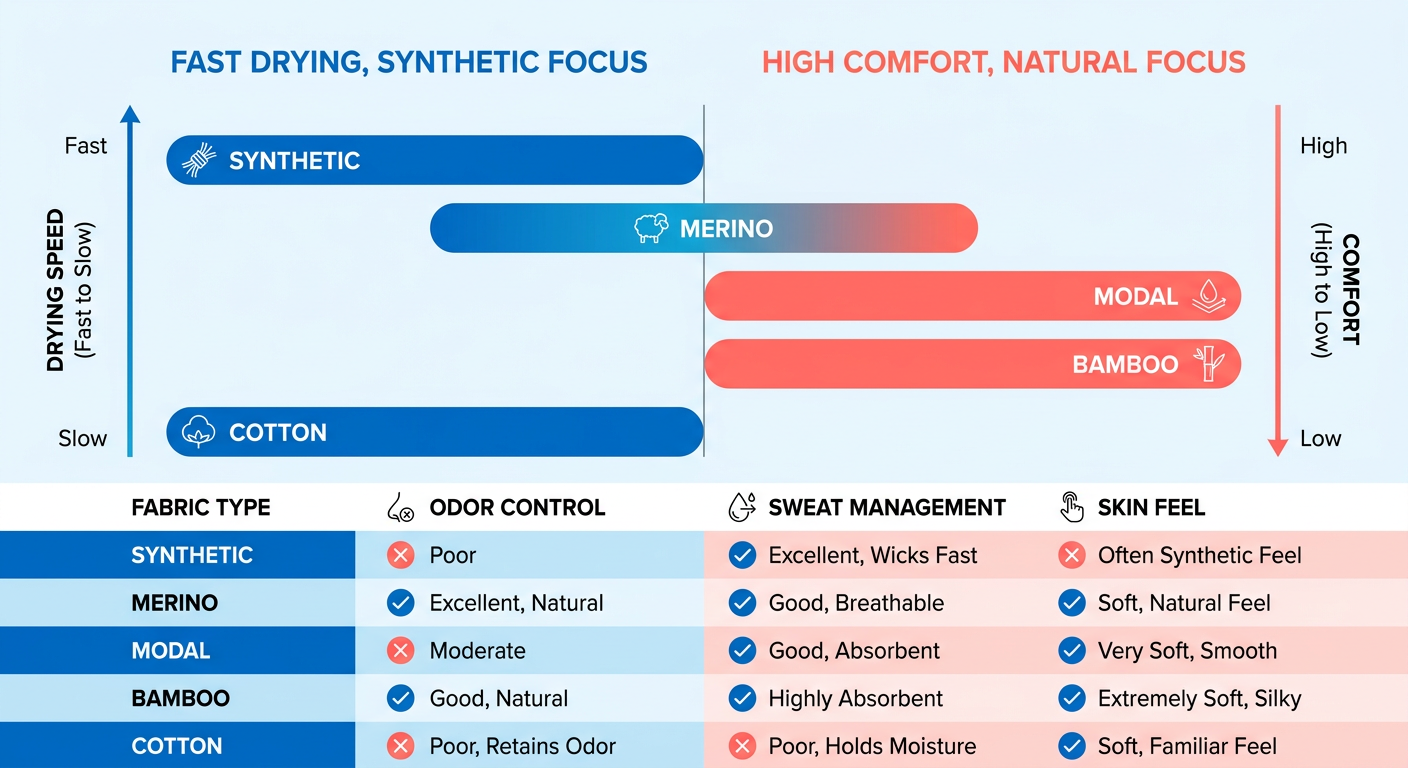
Match the fiber to your sweat level. Synthetics dry fastest for high‑intensity sessions. Natural fibers feel better and breathe all day for moderate‑sweat activities like yoga.
One gynecologist‑backed guide argues synthetics support vaginal health because they dry faster than cotton. A summer‑underwear guide warns that cotton holds moisture instead of wicking it.
Those warnings target basic cotton in saturating conditions. Real hot‑yoga testing tells a different story. GAP’s organic cotton held up through squats without rolling, and Women’s Health names the pima cotton Natori its best overall.
Premium Pima fills the gap. It offers softness and breathability while closing the moisture complaint against ordinary cotton. For yoga, it is a legitimate best‑fit choice, not a compromise. It’s where our certified Peruvian Pima cotton sits.
The Bottom Line
For yoga and moderate‑sweat training, choose premium natural fiber like pima cotton. For drenching cardio or multi‑day travel, reach for a quick‑drying synthetic or merino. OB/GYN Dr. Isabel Blumberg told InStyle to avoid anything too tight or constricting because it can cause chafing. Fit matters as much as fiber.
Why the “Best” List Might Not Fit You
Most mainstream moisture‑wicking guides optimize for one thing: how fast a synthetic dries. That leaves gaps for yoga lovers, sourcing‑concerned shoppers, or anyone who wants breathable comfort all day.
The core trade‑off is speed versus comfort. Synthetics like nylon and spandex dry faster and support vaginal health during drenching sessions, per gynecologist Dr. Kate White. That advantage matters only when you’re truly soaked. For moderate‑sweat, movement‑heavy practice, a well‑made natural fiber breathes all day and never feels clammy.
When Is a Synthetic the Wrong Call?
Skip pure synthetics for yoga and moderate‑sweat days. They win on dry‑time in minutes, but that metric is built for HIIT, not vinyasa. If you’re not saturating your gear, you pay a comfort penalty for an unused benefit.
Standard cotton gets criticized for moisture retention in high heat, but premium knits behave differently. InStyle’s real‑world testing shows high‑quality natural fibers stay secure and comfortable during active movement, resisting slide and bunching.
Fiber quality and cut matter as much as fiber category. A cheap cotton garment soaks and sags. A certified Peruvian Pima piece with long‑staple fibers stays breathable, stays soft wash after wash, and holds its shape.
What Do Mainstream Guides Leave Out?
Where the fabric comes from. Recycled PET and organic cotton appear only as footnotes in roundups. Sourcing, fiber quality, and long‑term skin feel rarely make the scorecard.
That’s the gap we fill. Our certified Peruvian Pima cotton gives breathability with ethically sourced fibers built to last, a lane synthetic‑first guides leave wide open. It’s the natural‑fiber pick for women who want comfort and quality they can feel.
What to Weigh Before You Buy
- Fiber origin. Long‑staple cotton grown and certified at the source resists pilling far better than short‑staple bulk cotton. Ask where the fiber comes from, not just what it’s called.
- Waistband and seam construction. Flat, bonded seams stay put through deep hip openers and folds. Elastic‑heavy bands can dig in during long holds.
- Wash durability. A fabric that softens over dozens of cycles beats one that stiffens or thins after a month. Long‑term feel is the metric most guides skip.
A note on cost. Synthetic picks range from budget to premium, so price alone won’t guide you. Match fabric to activity: synthetics for sweatiest sessions, premium natural fiber for yoga, travel, and everyday wear. That split covers more days than any single “best” pick can.
If hot HIIT dominates your routine, lead with a fast‑drying synthetic. If most of your week is yoga, flow, and daily life, a natural fiber earns its place.
Our Top Pick: Certified Peruvian Pima Cotton
For yoga, our top pick is certified Peruvian Pima cotton. It satisfies two camps at once: the softness gynecologists praise and the construction that closes the moisture gap experts hold against ordinary cotton.
Anti‑cotton warnings target pure, basic cotton in saturating conditions. Fiber quality and cut matter as much as fiber category. A tight knit, a well‑anchored waistband, and a longer staple length change how cotton behaves under real movement. Those variables rarely appear in blanket “avoid cotton” advice.
What Makes Peruvian Pima Cotton Different?
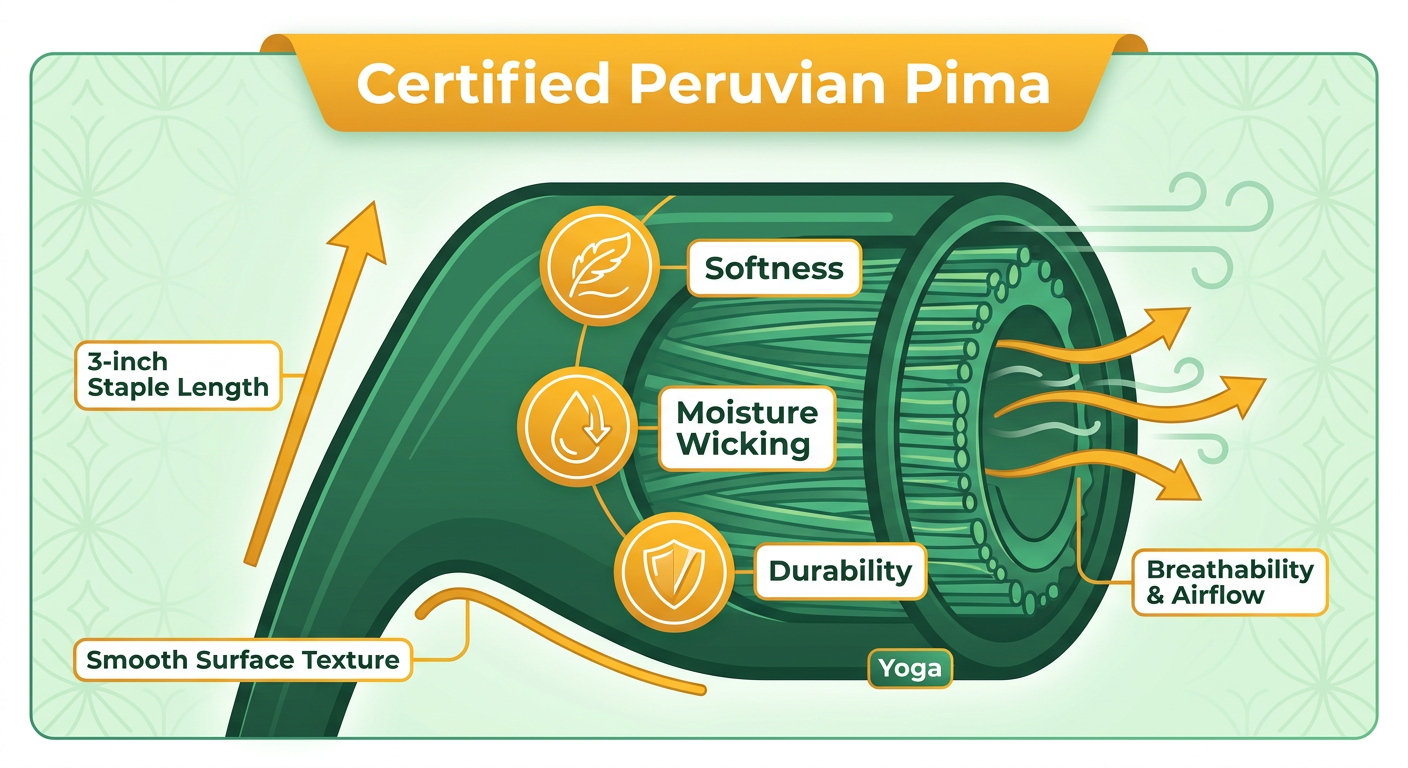
Peruvian Pima cotton is an extra‑long‑staple cotton. Longer fibers produce a smoother, stronger, more breathable fabric than standard short‑staple cotton. That length makes it feel like silk and resist the clammy feel of cheap cotton.
Pima sits in a middle ground no mainstream guide names. Its fibers stretch beyond 1.4 inches, roughly a third longer than short‑staple cotton in bargain packs. That length lets it hold shape wash after wash. Gynecologist Dr. Kiarra King notes that “natural fibers like cotton help keep your pelvic area happy by reducing the risk of irritation.” Pima is that natural fiber, upgraded.
When Should You Skip Our Pick?
Skip Pima for drenching HIIT or a 90‑minute sprint. For high‑intensity training, synthetics remain the standard for rapid moisture clearance, and cotton cannot win that race. For moderate‑sweat practices, the comfort of a premium natural fiber often outweighs raw drying speed. Yoga, pilates, barre, and everyday wear benefit from all‑day comfort.
Our Pima is certified and ethically sourced for long‑lasting wear. Choosing it means quality you can feel, an angle moisture‑wicking guides skip entirely.
How Does It Compare?
| Attribute | Pima Cotton | Basic Cotton | Synthetic Blend |
|---|---|---|---|
| Softness against skin | Highest | Moderate | Low to moderate |
| Breathability | High | Moderate | Varies |
| Drying speed | Slow | Slowest | Fastest |
| Shape retention | Excellent | Poor to fair | Good |
| Ethical sourcing | Certified | Rarely tracked | Rarely tracked |
Pros: Silky against skin, breathes all day, ethically sourced, holds shape through movement.
Cons: Not the fastest‑drying option for drenching cardio; premium tier costs more than basic cotton multipacks.
Merino Wool: The One That Answers the Cotton Knock
For high‑sweat sessions where drying speed beats everything, our second pick is merino wool. It answers the moisture‑management knock against cotton. A quality merino brief keeps you dry and odor‑free through drenching cardio, then carries you through a long day without feeling clammy.
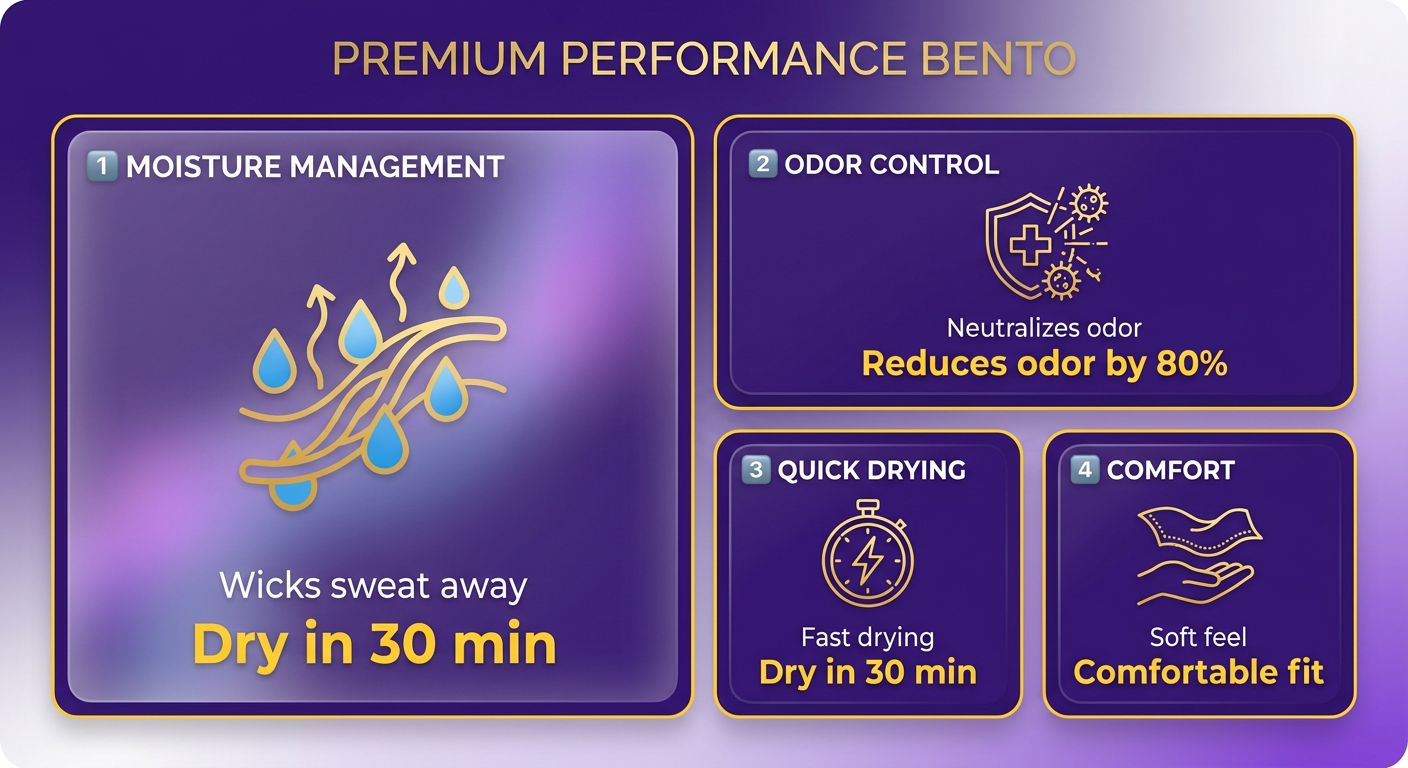
Merino fibers move vapor away before it turns to liquid sweat. The fiber is naturally temperature‑regulating and moisture‑wicking, so it wicks like a synthetic while staying breathable.
How Does Merino Perform in Real Testing?
Outdoor Gear Lab ran each pair for a week in Yosemite Valley and Indian Creek, scoring comfort, breathability, and odor control.
The standout was the Woolly Hipster Brief. Its merino‑elastane blend held shape across repeated wears and packed down small enough for a jacket pocket. Testers praised its “full‑coverage fit without thick seams,” so it disappears under leggings without panty lines.
Odor resistance is where merino pulls ahead. Synthetics wick fast but can smell after a hard session. Merino stays fresh through multiple wears, useful when you go from class to errands without washing.
Where Merino Falls Short for Yoga
Merino excels for high‑sweat, multi‑day use, but it isn’t our top yoga choice. Moderate‑sweat, movement‑heavy practice still benefits from the second‑skin comfort of soft cotton.
Merino also runs pricier than cotton and needs gentler laundering. Hot water and aggressive agitation can felt the fibers. Cold‑water washes and flat drying preserve performance.
Pros: Fast‑drying, odor‑resistant, temperature‑regulating, seamless full coverage.
Cons: Higher price, careful washing required, less plush than cotton for gentle yoga.
Modal Thong: When Panty Lines Are the Enemy
For running and low‑impact days when invisibility matters, our third pick is a modal‑blend thong. It solves the problem cotton can’t beat: staying seamless under thin leggings while feeling soft.
Modal is a semi‑synthetic fiber spun from beech pulp. It drapes smoother and thinner than cotton, giving a second‑skin feel with minimal seams. The stretch in a quality modal blend keeps the cut in place through repetitive motion.
Julia Stern, cofounder of Rumble Boxing, recommends modal‑based underwear for comfort and shape retention. A thong that holds its cut won’t bunch mid‑stride and recovers shape wash after wash.
When Should You Skip a Modal Thong?
Skip modal for drenching HIIT or hot yoga where you’re truly soaked. It breathes well but doesn’t wick sweat as fast as synthetics or merino, so it can feel damp in saturating conditions.
Also skip the thong cut if you’re prone to irritation. Medical experts caution against overly restrictive cuts that trap heat and cause friction. A full‑coverage cotton bikini serves sensitive skin better on long days.
Modal blends rarely disclose fiber or labor origins. That transparency gap contrasts with certified Peruvian Pima cotton’s traceable supply chain.
Modal Thong: Pros, Cons, and Pricing
| Factor | Detail |
|---|---|
| Cut | Mid‑rise thong, seamless |
| Waistband | Bonded, no‑dig edges |
| Care | Machine wash, lay flat to dry |
| Rating | 4/5 for yoga; 3/5 for high‑sweat cardio |
| Break‑in | None; comfortable from first wear |
Pros: Invisible under tight gear, soft natural‑based fiber, strong shape retention.
Cons: Slower drying than synthetics or merino, thong cut isn’t for everyone, sourcing rarely disclosed.
Synthetic Bikini: The Specialist for No‑Wash Days
For heavy‑sweat sessions where you can’t rinse, our fourth pick is a quick‑drying synthetic bikini. It excels on travel days, back‑to‑back classes, or any stretch without washing.
Fast moisture transfer keeps a healthy microclimate, and gynecological guides emphasize how quickly synthetic fibers clear dampness to protect sensitive skin. For moderate‑sweat yoga, that edge matters less. For hot travel days, it’s the whole game.
How Does a Synthetic Compare on Dry Time?
Synthetics dry noticeably faster than natural fibers, making them practical for multi‑day wear without washing. OutdoorGearLab’s travel tests showed lightweight synthetics shed water far quicker than comparable natural fabrics. The lightest synthetic weighed just 29.2 g, a fraction of a damp natural pair.
Raw‑cut edges lie flat against skin without digging in, a feature InStyle’s activewear testing praised. That payoff matters when you’re truly soaked.
Who Should Skip This Pick?
Skip the synthetic if yoga and comfort dominate your routine. The clammy‑versus‑breathable trade‑off tips back toward natural fibers the moment you’re not drenched. Nylon simply doesn’t feel like soft Peruvian cotton against skin.
The synthetic is a specialist, not an everyday choice. Use it on sweatiest, no‑wash days. For the rest of the week, a breathable natural panty treats your skin better and still holds up through movement.
When Does the Synthetic Actually Pay Off?
- Multi‑day trips with no laundry access
- Humid climates where fabrics don’t dry overnight
- Packing‑light travel where one pair replaces three
In those scenarios, fast‑dry advantage outweighs softer hand feel.
Pros: Fast dry time, strong odor control, seamless invisibility, proven through week‑long testing.
Cons: Synthetic feel, petroleum‑based sourcing, overkill for moderate‑sweat yoga, no skin‑comfort edge over premium natural fiber.
Rating: 4/5 for high‑sweat and travel; 2.5/5 for daily yoga.
Bamboo Blend: The Gentle Pick for Reactive Skin
For sensitive skin and hot‑weather comfort, our fifth pick is a bamboo‑blend seamless thong. It’s hypoallergenic and invisible under leggings, ideal for reactive skin.
Bamboo is naturally soft, breathable, and moisture‑wicking, which is why testers highlighted the CSB Seamless Bamboo Thong as a standout hypoallergenic option. The seamless construction disappears under tight gear with a soft‑against‑the‑body feel.
What Makes Bamboo Different from Cotton?
Bamboo blend is a rayon‑based fabric spun from bamboo pulp, blended with nylon and spandex for stretch and a smooth finish. It runs softer than woven cotton and handles heat well, staying comfortable through a sweaty flow without the clammy feel of standard cotton.
Bamboo and premium Peruvian Pima cotton solve the same problem from different angles. Bamboo leans on a processed rayon fiber for smoothness; Pima relies on long‑staple cotton for durability and a truly natural hand. Both breathe. Bamboo wins on initial softness; Pima wins on long‑term durability.
Where Does This Panty Fall Short?
Skip bamboo for drenching HIIT. It breathes well but won’t dry as fast as true synthetics, making it less suitable for high‑intensity workouts.
Bamboo rayon often involves chemical processing, so sourcing transparency is lower than certified natural fibers. If ethical sourcing matters, certified Pima offers more assurance.
Bamboo‑Blend Thong At a Glance
| Attribute | Detail |
|---|---|
| Fabric | Bamboo / nylon / spandex blend |
| Cut | Seamless thong |
| Best for | Sensitive skin, invisibility under leggings |
| Price tier | Mid‑market |
| Rating | 4/5 for moderate‑sweat yoga |
Pros: Hypoallergenic, very soft, seamless, breathable in heat.
Cons: Slower drying than synthetics, sourcing often less transparent, thong coverage isn’t for everyone.
Merino‑Synthetic Travel Brief: Built for the Road
For all‑day travel where washing isn’t an option, our sixth pick is a merino‑synthetic travel brief. It handles flights, classes, and long days without smelling or feeling damp.
Field trials over consecutive days of active use show how well specialized travel underwear performs without laundry, per OutdoorGearLab. A quality merino brief stayed breathable while resisting odor between washes.
Synthetics push drying even faster. The ExOfficio Give‑N‑Go 2.0 clocks a 35‑minute dry time with breathable mesh. Testers praised its odor resistance after months of use. For back‑to‑back travel days, that speed earns its keep.
When Should You Skip the Travel Brief?
Skip it for moderate‑sweat home yoga. The travel brief solves a problem you don’t have when you can rinse daily. Its utilitarian feel works against you in gentle floor sequences. Use it for trips; choose a softer everyday panty for home practice.
Summary Comparison
| Pick | Best For | Fiber Content | Odor Resistance | Ideal User |
|---|---|---|---|---|
| Merino travel brief | Multi‑day trips | Merino wool blend | High | Travelers without daily washing |
| Synthetic mesh brief | Fast drying on the go | Nylon mesh blend | Moderate | High‑sweat travel days |
| Icebreaker Siren Thong | Lightweight packing | Merino blend | High | Minimalist packers |
Pros: Fast‑drying, odor‑resistant, seamless full coverage.
Cons: Utilitarian feel, higher price for merino, overkill for home yoga.
Everyday Pima: Natural Fiber as Your Default
This panty suits women who want natural‑fiber comfort as their default, not just for workouts. When skin‑feel and all‑day breathability matter more than fast drying, a well‑made pima brief wins.
Pima sits in a middle ground no mainstream guide names. Extra‑long‑staple blend delivers soft, breathable feel at a premium tier that closes the moisture complaint against ordinary cotton. Reviewers who log comfort and durability consistently rank pima‑blend briefs at the top for daily wear because they hold shape and softness far longer than budget cotton.
What Makes a Pima Cotton Panty Different?
Pima cotton is extra‑long‑staple, running softer and more durable than standard cotton. Longer staples mean fewer loose ends, so fabric feels smoother and pills less over time. A high‑grade knit stays light and airy even in warm weather.
Synthetics excel at rapid drying during intense training, while premium natural fiber offers superior comfort for daily routines. Skip pima on a hot travel day when you can’t change. Choose it for errands, gentle flows, or all‑day wear.
Who Should Choose This Pick?
Choose a premium pima bikini if natural fibers are your baseline and comfort beats drying speed. Look for a flat elastic waistband that sits under leggings and slacks without digging in during long sits or short flights.
A bikini cut with modest side coverage stays put during light movement and won’t ride up. Those practical touches make a natural‑fiber pair worth reaching for each morning.
| Feature | Everyday Pima Cotton Bikini |
|---|---|
| Best for | All‑day wear, moderate‑sweat days |
| Material | Pima cotton blend with a touch of stretch |
| Key strength | Extra‑long‑staple softness, all‑day breathability |
| Pros | Gentle on skin, durable, natural‑fiber comfort, resists pilling |
| Cons | Slower drying than synthetics; not ideal for drenching sessions |
| Skip if | Doing hot HIIT or traveling without a wash |
Rating: 4.5/5 for everyday breathable comfort. It loses half a point only on drying speed, which matters only when you’re truly soaked. For most women’s daily lives, pima cotton feels best from the first hour to the last.
Premium Peruvian Pima: Where Softness Earns Its Place
For yoga practitioners who want breathable fabric that does more than perform, our eighth pick is premium long‑staple Peruvian Pima cotton. Luxury softness meets all‑day breathability.
Most moisture‑wicking roundups stop at synthetic specs and drying times. Few name the caliber of fiber used or how it’s finished. That blind spot matters to readers who already chose natural fibers for skin comfort.
What Makes Premium Peruvian Pima Different?
Long‑staple Peruvian Pima is grown and finished in Peru, delivering breathability with ultra‑soft, naturally resilient hand feel that stays soft wash after wash.
Extra‑long staples create fewer exposed fiber ends, producing an incredibly smooth surface that resists pilling and thinning. Peru’s coastal climate and hand‑harvesting protect fibers from breakage, so the knit resists thinning through repeated washes.
Only one pair can match the breathability of a synthetic while offering silk‑like softness. That tiebreaker matters for yoga lovers who value feel as much as function.
When Should You Skip This Pick?
Skip natural cotton for back‑to‑back sweat sessions. When maximum moisture clearance is the goal, technical synthetics remain the practical choice. Comfort won’t dry your gusset any quicker. For moderate‑sweat yoga and long days on your feet, premium Pima is the honest best‑of‑both.
Ideal user: Yoga practitioner who values skin‑feel and all‑day breathability over a few grams of drying speed.
How Do the Options Compare?
| Pick | Fabric | Best For | Pros | Cons |
|---|---|---|---|---|
| Premium Peruvian Pima | Long‑staple Pima cotton | Yoga + everyday comfort | Luxury softness, breathable all day, stays soft wash after wash | Slower drying than synthetics |
| Standard upland cotton brief | Short‑staple cotton blend | Casual wear | Cheap, widely available | Pills faster, thins over time |
| Modal‑cotton blend | Beechwood modal / cotton | Sensitive skin | Extra‑soft, drapes well | Less durable when wet |
| Nylon‑elastane thong | Nylon / spandex | High‑intensity cardio | Fast‑drying, invisible | Synthetic against skin |
Rating: 4.5/5 for yoga‑and‑comfort readers. The half‑point drop reflects slower drying in extreme sweat, but for typical practice, premium Pima delivers durable softness mainstream guides rarely spotlight.
Final Recommendations
Our honest bottom line after cross‑referencing six independent testing guides: the best breathable panty depends on how much you sweat, not which fabric wins a marketing spec sheet. Match the pick to your session and you stop compromising.
- Yoga and moderate‑sweat movement: Choose premium Peruvian Pima cotton first.
- Multi‑day travel or no‑wash days: A synthetic or merino brief earns its place.
Clinical advice emphasizes fast drying of technical synthetics for intense workouts, but real‑world testing shows high‑quality natural fibers perform well during structured movement and flexibility training. Anti‑cotton warnings apply to pure cotton in soaked conditions, not to premium blends in a movement‑heavy flow.
Which Breathable Panty Should You Buy?
Three questions decide it: session length, sweat amount, and wash availability.
- Short, sweaty, wash between wears? Choose a quick‑dry synthetic or merino. Odor control and drying speed matter more than feel.
- Long, moderate, feel‑first? Choose a natural‑fiber pick. Softness and steady breathability carry a full flow.
- Sensitive skin or visible‑line worries? A seamless bamboo or modal blend solves both without forcing a fabric trade‑off.
Use the comparison table at the top as a quick reference at checkout.
What’s the Best Budget Pick?
A basic cotton‑spandex bikini brief wins on price. Reviewers who log thousands of testing hours consistently rank an affordable cotton‑spandex brief as the top low‑impact value. It handles gentle sessions and errands well. On drenching cardio, basic cotton holds moisture instead of moving it. Save it for yoga, stretching, and everyday tasks.
What’s the Best “Do It All” Pick?
Best overall for yoga‑focused women: premium Peruvian Pima cotton. It sits in a middle ground no mainstream guide names outright: natural‑fiber softness praised by gynecologists, at a tier that closes the moisture gap experts hold against ordinary cotton.
That’s why we keep landing here for moderate‑sweat, movement‑heavy practice. You get a silk‑like hand feel, honest breathability through a full flow, and a sourcing story moisture‑wicking guides skip entirely. Choosing it also backs Peruvian artisans who grow and finish the fiber.
Our final verdict: skip the “one fabric rules them all” advice. Reach for a synthetic on your sweatiest, wash‑free days. Reach for Pima for yoga and everyday comfort, where feel and breathability matter more than raw drying speed.
References
[1] The 11 Best Underwear for Working Out, Tested and Reviewed – InStyle – https://www.instyle.com/best-underwear-for-working-out-11734680
[2] The Best Moisture‑Wicking Underwear for Summer (Including Hot Flashes) – https://www.wardrobeoxygen.com/the-best-moisture-wicking-underwear-for-summer/
[3] 11 Best Underwear for Working Out, Approved by Ob‑Gyns & Trainers – https://www.glamour.com/gallery/best-underwear-for-working-out
[4] Workout Underwear: What’s The Best Underwear For Working Out? – Sweat – https://sweat.com/blogs/wellbeing/workout-underwear
[5] 8 Best Moisture‑Wicking Underwear For Women, Per A Gynecologist – https://www.womenshealthmag.com/style/g32879913/best-moisture-wicking-underwear/
[6] The Best Running Underwear of 2025 for Women and Men – Runner’s World – https://www.runnersworld.com/gear/a20862805/best-underwear-for-runners/
[7] 10 Best Underwear For Working Out, According To Experts – https://www.womenshealthmag.com/style/g19942585/best-underwear-for-workouts/
[8] What Are the Best Panties for Working Out? – Victoria’s Secret – https://www.victoriassecret.com/us/vs/panties/best-panties-for-working-out
Frequently Asked Questions
1. Can I wear the same panties for both hot HIIT and yoga, or do I need separate pairs?
One fabric rarely covers both extremes well. Synthetics excel for soaked sessions; premium natural fibers prioritize softness and airflow for yoga. Most people keep a synthetic pair for intense workouts and a natural‑fiber pair for everyday practice.
2. Does merino wool cause overheating during summer workouts?
Merino regulates temperature rather than trapping heat, so it stays comfortable in warm conditions. It wicks moisture like a synthetic while resisting odor across multiple wears. Wash cold and lay flat to preserve fibers.
3. Is bamboo underwear actually a natural fiber like cotton?
Bamboo underwear is typically made from bamboo rayon, a semi‑synthetic fiber. It offers excellent initial softness and breathability, but the chemical manufacturing process means the fibers may wear down faster than high‑grade natural cotton.
4. Are thongs a bad choice if I’m prone to chafing or irritation?
Health professionals often recommend avoiding overly tight or restrictive styles during workouts. A full‑coverage bikini made from breathable fabric can minimize friction and support sensitive skin during repetitive movements.
5. Why does long‑staple Pima cotton resist the “clammy” feeling of cheap cotton?
Extra‑long staples create a smoother yarn with fewer exposed ends. This structure yields a stronger, more breathable fabric that resists sagging and moisture retention typical of short‑staple cotton.
6. How much should I expect to spend on breathable workout underwear?
Prices vary widely. Budget‑friendly organic cotton options can be found under $15. Mid‑tier synthetic activewear typically ranges from $15 to $25. Premium natural fibers like merino wool often sit at the higher end of the market.
7. Does modal underwear wick sweat as well as synthetics?
Modal is highly breathable and exceptionally soft, but it does not match the rapid moisture‑clearing speed of specialized synthetics. It is best for low‑to‑moderate sweat activities where comfort and a smooth, line‑free fit under clothing are the main priorities.