5 Things "Breathable" Labels Won't Tell You Before Checkout
September 5, 2026
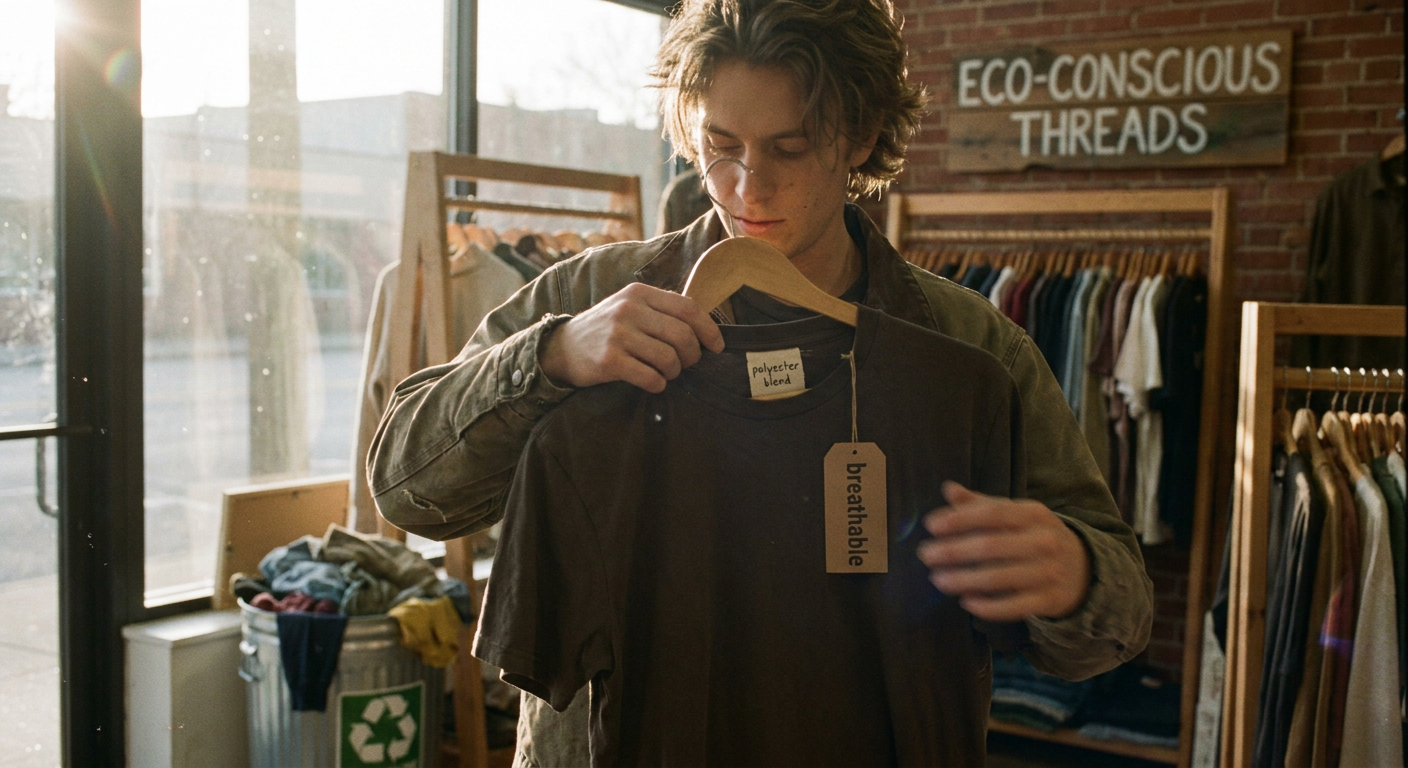
Key Takeaways
- A "breathable" label certifies flat-swatch lab performance, not how your finished garment behaves after cutting, sewing, and fifty wash cycles.
- Lab testing measures both moisture transmission and heat retention, but on raw textiles, and independently of each other.
- A fabric can shed moisture vapor beautifully and still trap body heat if its thermal resistance runs high.
- Standard lab hotplates need large, flat swatches, so no one is testing the actual seams and curves of your leggings.
- Because certifications rest on pre-production swatches, they miss how a finished garment behaves on your body.
- Sensory comfort during a workout is what active women buy for, but marketing claims rarely say anything about real-world durability.
- The old assumption that natural fibers always beat synthetics ignores a big gap in drying speed.
What a "breathable" tag is really promising
A "breathable" label tells you almost nothing on its own. It certifies how a flat swatch moved air or water vapor under lab conditions, not how your finished garment performs after cutting, sewing, finishing, and fifty wash cycles. For women hunting breathable workout clothes that are also durable and sustainable, that gap is where the real tradeoff hides.
The gap matters more than it sounds. Comfort during sweat is the top purchase driver for most active women, and poor airflow does more than feel unpleasant. It raises the risk of skin irritation and traps moisture against your body during long wear. When you live in athleisure 8 to 10 hours a day, that airflow claim is doing real work.
What "breathable" actually measures
Breathability is not one number. Testing under EN ISO 11092:2014 splits it into two: R_et (water-vapor resistance) and R_ct (thermal resistance). A fabric can score low on R_et and still feel hot if R_ct runs high.
The SATRA sweating guarded hotplate heats a porous plate to 35 °C to mimic your skin. But it only tests sheet specimens 400 mm or larger. It cannot test a finished legging.
That's the catch a label buries. A testing lab like Airmid presents R_et alone as an objective breathability number, while SATRA argues one number isn't enough. Both have a point. Neither number describes the garment you actually wear.
Does cotton really breathe better?
Not the way you'd assume. This is where sustainable-luxury shoppers get burned. One textile analysis says natural fibers like cotton beat synthetics on air permeability. A sportswear drying study found cotton dries roughly four times slower: 0.67 mL/h versus 2.62 mL/h for synthetics.
Both are true. Cotton wins on raw airflow. Synthetics win on staying dry during a sweaty session, and your body makes about 450 mL of sweat per hour during moderate exercise.
The natural-fiber advantage is real when the fabric's new. But finishing and wash cycles wear down air permeability over time. The label captures the fabric's best day and none of its decline.
Your pre-checkout breathability checklist
Run these fast checks before you pay. Most take under two minutes.
- Read the fiber content first (30 seconds, difficulty 1). Look for "100% Pima Cotton" with no hidden blend. A blend can quietly change airflow behavior the label never explains.
- Scan for a "no-finish" or "no-chemical" badge (45 seconds, difficulty 2). Finishing treatments cut breathability, so an un-finished low-GSM fabric holds its airflow longer.
- Check the care symbols (2 minutes, difficulty 3). Repeated washing erodes air permeability, so gentler care instructions signal the breathability will last.
- Ask whether the claim was tested on the finished garment (varies, difficulty 5). Most "breathable" claims come from a swatch tested before it became clothing.
Skip the fabric-science deep-dive if you only wear a piece for short errands. For daily 8-hour wear, these checks earn their two minutes.
Hidden fiber blends that quietly kill airflow
A "cotton-blend" tag is where breathability quietly dies. Add even a small percentage of synthetic fiber and you lose airflow you paid for. Mixing fibers of different diameters and surface textures disrupts the natural spacing within the yarn, and that builds a more congested barrier.
That contradiction sits at the heart of buying breathable workout clothes. Pure natural fibers like cotton rely on a hollow structure and larger inter-yarn gaps to let air pass. Tightly extruded synthetic filaments pack closer together. Blend the two and the synthetics fill those natural gaps, cutting the fabric's overall air permeability.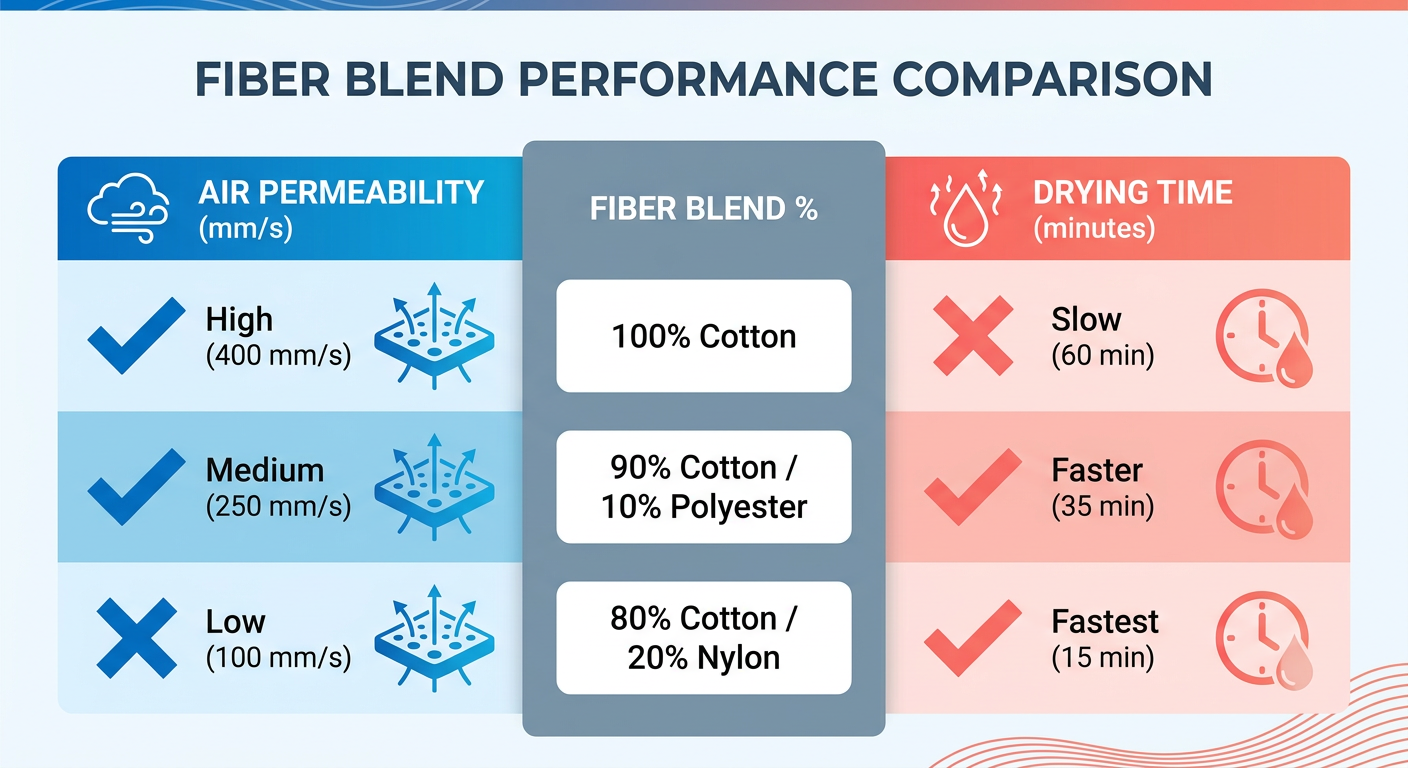
"Breathability" is a relative term. During hard exertion, moisture management becomes the bottleneck. For everyday wear, all-day comfort, and skin contact, raw airflow wins. Peruvian Pima cotton is built for the second job, with a naturally open structure that doesn't lean on synthetic assistance.
How to read a composition label
The trap: a single synthetic percentage means the fabric was engineered for stretch or price, not maximum airflow. Even 5% elastane changes how the whole textile moves air.
- Watch for terms like "performance cotton" or "cotton-rich," which almost always signal a blended core rather than a pure natural fiber. A hero image reading "breathable cotton feel" often hides a poly or rayon-spandex construction in the fine print.
- Decode the full fiber list using the US FTC Textile Rule or EU labeling directive, which require every fiber and its percentage to be declared by weight.
- Treat "cotton-poly blend" as a yellow flag. Our pieces use certified Peruvian Pima with no synthetic dilution, so the natural breathability you're paying for actually reaches your skin.
Why the label lies about finished garments
The gap: standard breathability tests need a flat fabric sheet, so the number on your tag was measured before the fabric was cut, sewn, dyed, and finished. You never receive the fabric that got tested.
Testing labs confirm it. Standard protocols are built for uniform, tension-free swatches, so they can't account for the physical stress, seam bulk, or directional tension of a finished pair of leggings. And the mechanical friction of daily wear and abrasion alters the yarn loft, so the breathability profile keeps shifting long after the fabric leaves the factory floor.
- Ask whether the breathability claim reflects the finished product or a pre-production swatch. Most claims describe a state you'll never touch.
- Watch how a fabric ages, since synthetic blends trap sweat and leave that "sticky" feeling during a Pilates session. Peruvian Pima's naturally breathable fibers let air circulate through the same session.
- Weigh the eco tradeoff. Cotton's slower drying is the price of a natural fiber. For women chasing luxurious, timeless comfort, that's a fair trade the synthetic label never has to admit.
Weight, GSM, and thickness: the airflow mask
GSM is the number "lightweight" is hiding from you. GSM stands for grams per square meter, the actual weight of a fabric. For yoga and everyday layering, aim for the 120 to 150 gsm range. Anything over 250 gsm feels like a second skin that traps heat and slows airflow to a crawl.
This is where the whole "breathable" promise gets fuzzy. A brand can call a fabric feather-light while the finished tank sits at 210 gsm. The word tells you nothing. The number tells you everything. GSM also stays constant across every size, so the weight you read for a small is the weight you get in an extra-large.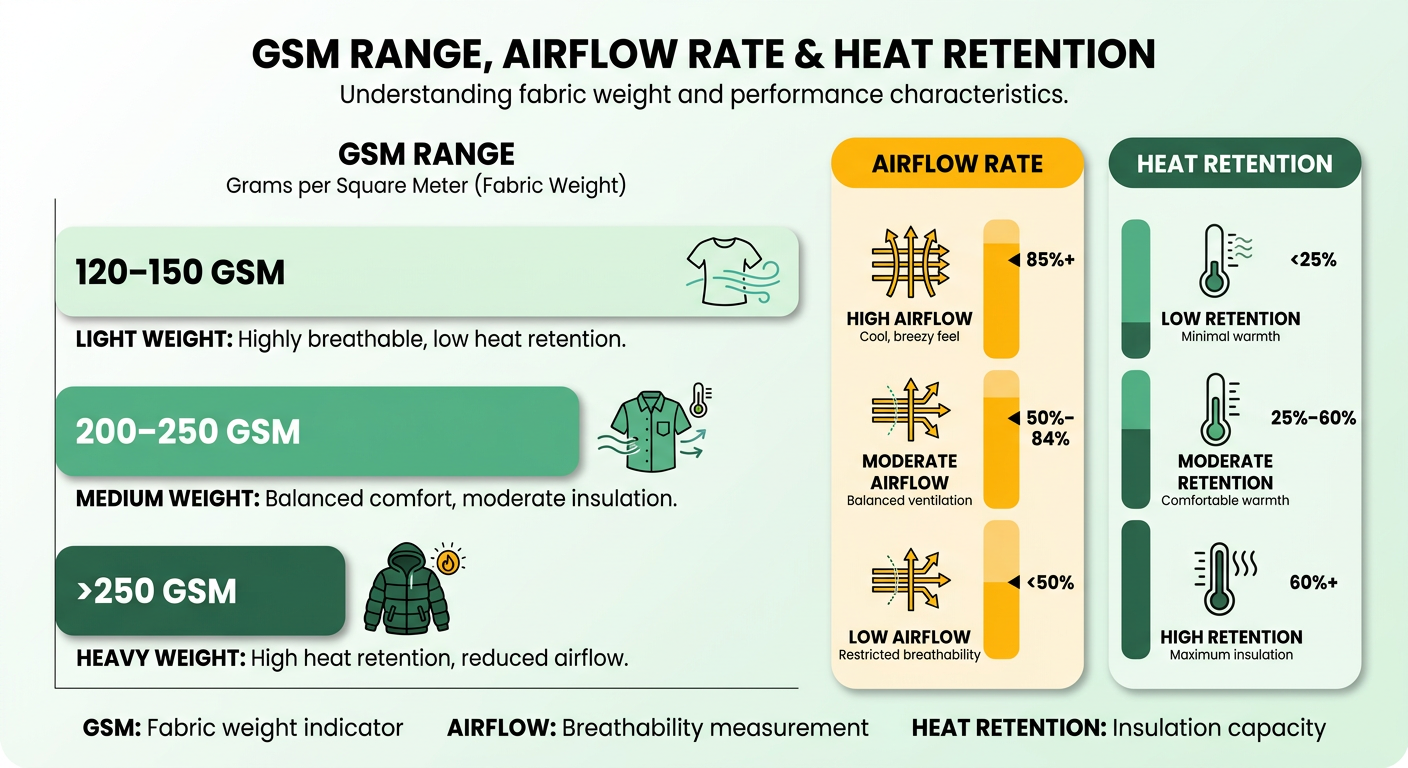
Why lower GSM moves more air
Lower GSM means less fiber per square meter, which means more open space for air to pass through. A thin, open knit lets warm air escape and cool air in. A dense, heavy weave chokes that flow. Thickness is one of the factors affecting air permeability, and it's one you can actually judge yourself.
Here's the tradeoff nobody prints on the hangtag. A lighter jersey around 130 gsm tends to move noticeably more air than a dense 240 gsm blend. Knit structure matters too: a single jersey at a given GSM breathes more freely than a double-knit at the same weight, because the double-knit stacks two fabric layers into one number.
But airflow and staying dry are two different jobs. For slow flow, restorative sessions, and all-day wear, a lighter GSM keeps you comfortable without overheating. For a sweat-drenched HIIT class, weight matters less than how fast the fabric releases moisture. Pick the fabric for the job, not the buzzword.
How to estimate GSM from a product photo
You can read GSM off a listing before you ever touch the garment. Zoom into the product photo and look at the knit. An open, slightly see-through knit signals low GSM and high airflow. A tight, opaque weave with no light passing through signals a heavier, denser fabric that will run hot.
Lab certifications are easy to game by testing pristine, unsewn swatches. GSM is a physical property that stays put. It can't be masked by clever marketing or a temporary surface treatment, which makes it the most reliable read on how much material stands between your skin and the open air.
Your pre-checkout GSM checklist
Thirty seconds each, and they cut through the marketing.
- Find the GSM number in the specs. If it's listed, you win. Look for 120 to 150 gsm for yoga and layering, and treat anything over 250 gsm as a warm-weather no.
- Decode the vague words. "Feather-light" and "air-kissed" mean nothing without a number. Ask the seller for the GSM if it's not published.
- Zoom into the photo. An open knit that shows a little light means better airflow. A dense, opaque weave means heat retention.
- Check the knit type, not just the weight. A single-knit at 140 gsm breathes more than a double-knit at the same number. The construction changes how the weight sits against your skin.
- Remember the structural decay. Over time, fibers pill and pack down, which alters the density of the knit. A high-quality, long-staple fabric keeps its original yarn spacing far longer than a cheaper, short-staple one.
Post‑wash shrinkage and fit changes that kill breathability
The "breathable" label on your tank was earned before the garment ever met a washing machine. During manufacturing, the textile is held under tension on industrial frames. Once it's cut, sewn, and hit with water and heat, those internal stresses release, and the yarns relax and contract.
That first wash is where the gap widens. A fabric that wasn't pre-shrunk can tighten up to 4% after one cycle, and that tightening closes the pores air used to pass through. The knit's geometry compacts, so the airflow pathways present during factory testing are permanently restricted. For anyone shopping breathable workout clothes as a long-term, sustainable buy, this post-wash shift is invisible on the tag.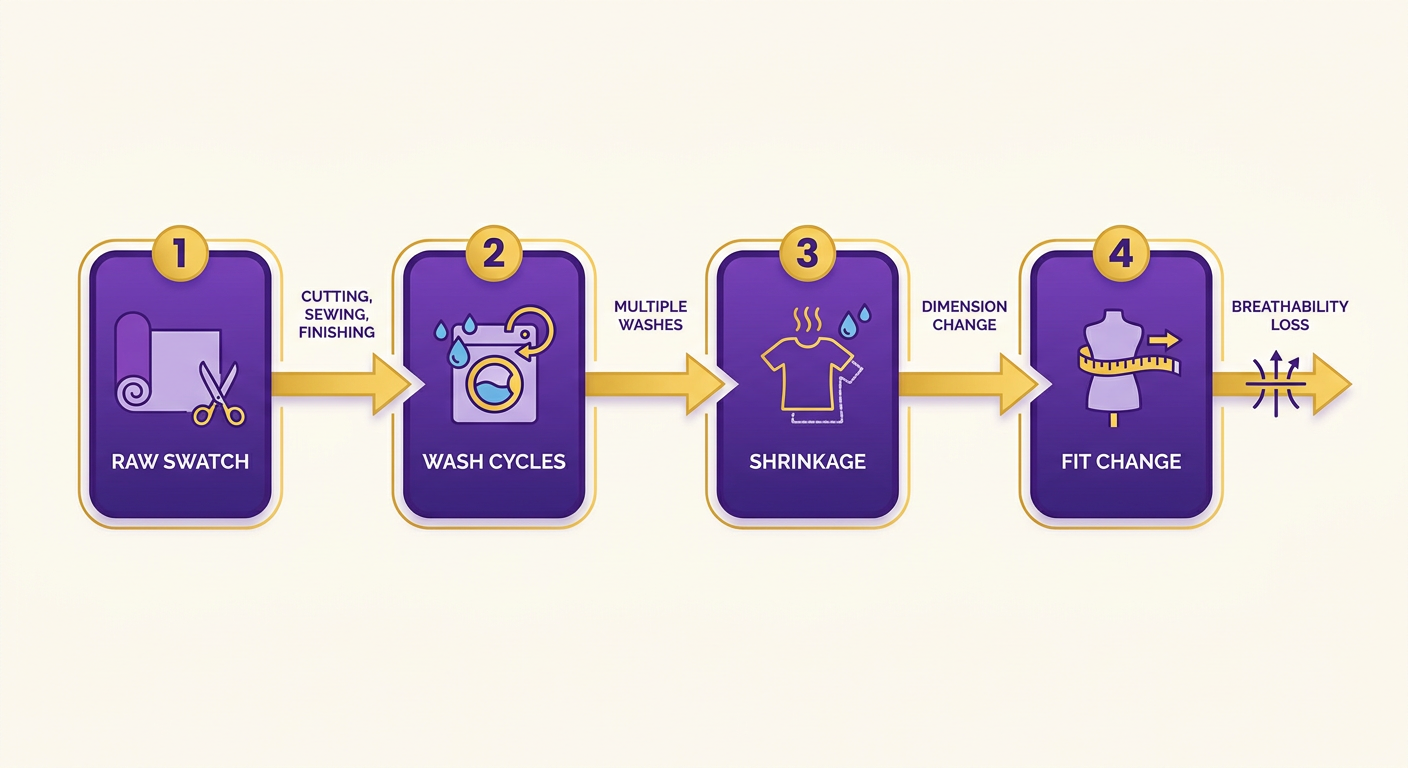
Why the first wash kills airflow
Shrinkage and surface finishes close the fabric's pores, so airflow drops sharply after laundering. Air permeability is measured in volume of air per area per time, like mL/cm²/s. When fibers pull tighter after washing, less air moves through the same square of cloth.
Resin coatings make it worse. A resin finish sits on the fiber like a thin plastic film, blocking moisture from escaping. Natural cotton has no such barrier. This is the hidden compromise sustainable buyers pay when a "breathable" garment leans on chemical finishes to hit its number. The finish washes down, the eco-story falls apart, and the airflow was never durable to begin with.
Fiber length is what protects airflow through repeated washing. Short-staple fibers under 25mm break and fuzz at the surface, and those loose ends mat down over time to seal the tiny channels air needs. Extra-long staple fibers past 35mm spin into smoother, denser yarns that resist that breakdown, so the pore structure holds its shape wash after wash instead of collapsing into a tighter, warmer weave.
What your wash-care checklist should cover
Your laundering habits protect or destroy breathability more than the label ever will. Fabric softener is the quiet offender. Garments washed with softener lose up to 18% air permeability after just 10 cycles, because the coating fills the exact gaps that let air through.
- Machine wash cold to limit shrinkage that tightens the weave and closes pores.
- Tumble dry low or line dry so heat doesn't force the fibers to contract further.
- Skip fabric softener entirely, since its residue coats fibers and cuts airflow.
- Look for "pre-shrunk," "zero-finish," or "wash-care-tested" badges before checkout.
How to test breathability at home
Run the breath test after each wash. Hold a single ply of the fabric flat against your mouth and exhale. If your breath passes through easily, airflow is intact. If it feels blocked or damp, a finish or softener residue is choking the pores.
Do this before and after the first few washes to catch decay early. Here's how each care choice maps to breathability:
| Care Symbol / Choice | Breathability Impact |
|---|---|
| Machine wash cold | High retention |
| Tumble dry low / line dry | High retention |
| Hot wash / high-heat dry | Low retention |
| Fabric softener | Low retention |
The label sold you a swatch. Your wash routine decides what you actually wear.
Chemical finishes: the invisible barrier to skin comfort
The finishes that make a fabric feel "silky" or "wrinkle-free" often work by sealing the very pores that let it breathe. Manufacturers add chemical layers to claim durability or a smooth hand, but those coatings sit on top of the fiber and choke airflow. For anyone shopping breathable workout clothes, this is the layer no label spells out.
Here's the tradeoff. A finish can pass a lab breathability test on the raw fabric, then get applied after the swatch is measured. Standard air permeability methods like ASTM D737 push air through fabric at a set pressure of 125 or 200 Pa. But that number reflects the fiber, not the coating layered on later. Because these chemical baths coat individual yarns in a hydrophobic or smoothing film, they change the surface tension of the textile, and real-world performance drifts a long way from the lab result.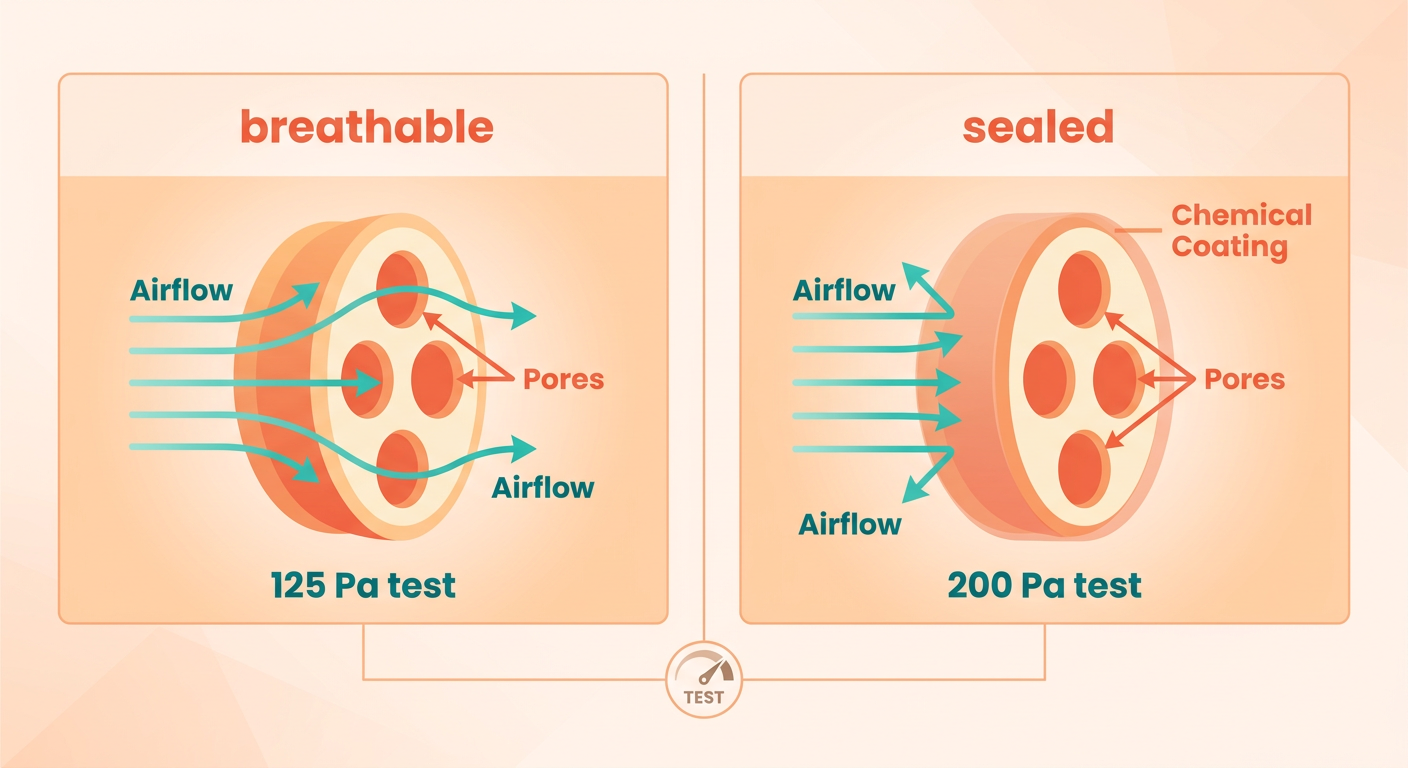
Which finishes block airflow most
The three worst offenders are formaldehyde-based anti-crease resins, PFAS-based water repellents, and silicone softeners. Each one adds a film or cross-links the fiber, and each trades breathability for a marketing claim. Silicone-finished fabrics have shown roughly a 22% drop in air permeability in applied-textile testing, so nearly a quarter of the airflow you paid for is sealed off.
- Check for silicone softeners that create that "buttery" hand. That smooth feel is a coating, and it cuts air permeability by about a fifth.
- Watch for PFAS water-repellent treatments on activewear. Up to 12% of women report contact dermatitis from PFAS-treated fabrics, per dermatology reporting, so sensitive skin pays twice.
- Avoid formaldehyde-based anti-wrinkle resins. They cross-link fibers to resist creasing, which stiffens the weave and slows the airflow a natural fiber should allow.
Why this matters more for cotton
Because a chemical finish erases the exact advantage that makes natural fiber worth buying. Long-staple cotton breathes well on its own, and coating it in silicone or PFAS smothers the trait you paid a premium for.
The sustainability angle makes it worse. Cotton already retains moisture longer than synthetics, holding sweat against your skin. Layer a moisture-repellent finish on top and you compound the problem, while adding a chemical load that undercuts any eco claim. And many of these finishes don't even last. Durable water repellents can lose up to half their effectiveness within 20 wash cycles, so the coating flakes into your drain and your wastewater long before it stops blocking airflow. An untreated natural fiber breathes honestly. A "treated" one is selling you a feel, not performance.
How to spot a treated garment before checkout
Read the product copy and the care label together. The words "finished," "treated," or "coated" in a description signal an added chemical layer. On the care tag, "dry clean only" is often a red flag that a finish can't survive normal washing.
- Scan the description for "treated," "coated," or "finished" language before you buy.
- Flag "dry clean only" care labels, since a durable natural fiber rarely needs them.
- Look for a third-party chemical certification like Oeko-Tex Standard 100, which verifies the fabric was tested for harmful substances rather than just labeled "breathable."
References
[1] Air Permeability Testing Guide | Fabric, Filter & Barrier Materials - https://infinitalab.com/blog/air-permeability-testing-guide/?srsltid=AfmBOorYSSN85nNziO-qgO61jM8P-IXvvngakPNy_WZS_2C0-K2sUvbs
[2] Textile Air Permeability Testing - Applus+ Reliable Analysis - https://ralab.com/industries/materials/textile-air-permeability-testing/
[3] Measuring thermal and water vapour resistance - SATRA - https://www.satra.com/bulletin/article.php?id=2310
[4] ISO 11092 (EN 31092) – Textile Testing - Airmid Healthgroup - https://airmidhealthgroup.com/iso-11092-en-31092-2.html
[5] Factors Affecting Fabric Air Permeability and the Importance of ... - https://textilefocus.com/factors-affecting-fabric-air-permeability-and-the-importance-of-air-permeability-testing/
[6] Analyzing Fabric Parameters in Active Sportswear - https://journals.sagepub.com/doi/full/10.1177/24723444241306468
Frequently Asked Questions
1. Can I trust a "moisture-wicking" claim the same way I distrust a "breathable" label?
Treat both claims skeptically because they address entirely different physical processes. Moisture-wicking refers to a fabric's ability to pull liquid away from the skin and dry rapidly, which is a strength of synthetic fibers. However, a fast-drying synthetic can still have low air permeability, leaving you feeling hot and enclosed. Wicking describes moisture movement, whereas breathability describes actual air circulation.
2. Does a higher price guarantee better breathability in workout clothes?
Price is often a misleading indicator of performance. Many high-end activewear brands use chemical softeners to give their garments an ultra-smooth, premium hand-feel. Unfortunately, these chemical coatings act like a microscopic film over the yarns, blocking the spaces that allow air to pass. To ensure real performance, look for raw fiber specifications and weight metrics rather than relying on a premium price tag.
3. My leggings are labeled "cotton-rich." Is that basically the same as 100% cotton?
"Cotton-rich" is a marketing term used to obscure the presence of synthetic fibers. When natural cotton is blended with even a small amount of stretch-inducing synthetics, the dense synthetic filaments fill the natural gaps in the cotton yarns. To find out what you are actually buying, bypass the promotional copy and check the mandatory composition breakdown on the inner care label.
4. How often should I run the home breath test on my activewear?
It is wise to test your activewear early in its lifecycle, as the initial laundering cycles cause the greatest structural changes. When fibers relax and contract after washing, the knit tightens. By performing a simple exhalation test through a single layer of the fabric, you can easily determine if the pore structure has collapsed or if laundry residues are blocking the passage of air.
5. Is "dry clean only" really a problem for breathable clothing?
Yes, because delicate chemical finishes are often highly sensitive to water and agitation. If a supposedly breathable activewear piece requires dry cleaning, it usually means the manufacturer has applied a temporary surface treatment to achieve its soft feel or performance claims. A high-quality, naturally breathable fabric should be durable enough to withstand standard home laundering.
6. Does knit type matter more than GSM for staying cool during yoga?
Knit structure plays a massive role because it dictates how fibers are physically arranged. Even if two fabrics share an identical weight, a single-knit construction features a single layer of loops with abundant open spaces, whereas a double-knit construction layers two interlocking structures together. This interlocking design creates a much denser barrier that restricts airflow, making single-knits far superior for low-intensity cooling.
7. Are chemical finishes a health concern beyond just reduced airflow?
Yes, many performance coatings rely on harsh chemical compounds that can trigger skin irritation, especially when heat and sweat open your pores during exercise. These synthetic treatments can cause redness and discomfort for sensitive skin types. Choosing garments certified by independent textile safety organizations ensures the fabric is free from harmful topical finishes.