Why Peru's Extra-Long-Staple Pima Cotton Actually Survives a Workout
September 1, 2026
Key Takeaways
- Peru's Pima fibers run 38.10 to 41.27 mm, nearly double the 20-to-32 mm of standard cotton.
- Longer fibers mean more twists per yarn, which makes Pima roughly 50% more resilient than standard cotton.
- Fewer exposed fiber ends means less pilling at the friction points where cheaper cotton gives out first.
- The global women's athleisure market hit $45 billion in 2023, most of it built on synthetics.
- Polyester and nylon rule the racks, but there's a growing gap between what they do and what women want against their skin.
- Pima's length lets a garment hold its shape and spring back after deep lunges and binds.
- Standard cotton loses shape and pills under friction. Pima's fiber structure resists both.
Why Peru's Pima Cotton Actually Survives a Workout
Athleisure is a synthetics business. Polyester and nylon own the racks. But there's a widening gap between what those fabrics do and what women want against their skin. That gap is where pima cotton activewear earns its place.
Peru's extra-long-staple Pima survives workouts because its fibers are longer, stronger, and smoother than standard cotton. The length is not a marketing flourish. It is the mechanical reason garments hold shape, resist pilling, and stay comfortable through repeated movement.
What the fiber length actually does
Peruvian Pima measures far beyond the reach of standard cotton, according to Knit-Lab Peru. Those long strands are why the fabric holds up under stress.
Longer fibers mean fewer exposed ends and more twists per yarn. Fewer loose ends mean less pilling. More twists mean the yarn springs back after being pulled and contorted mid-flow.
This is where synthetic activewear starts to lose ground. Standard cotton loses shape and pills at friction points. Pima's structure resists both.
Is Pima the best cotton for sweat, though?
Not exactly, and we want to be clear about that. Tanguis, Peru's other prized fiber, absorbs and holds 24 to 27 times its weight in moisture. That is why it appears in high-sweat performance garments. On raw absorption, Tanguis wins.
Pima leads on shape retention, softness, and friction survival. Tanguis leads on sweat absorption. Different jobs. Pima is the fiber you want for post-workout recovery wear, where durability and a soft hand matter more than wicking every last drop.
The smartest Peruvian activewear pairs them: Pima in structural shape-retention zones, Tanguis in high-sweat panels. Neither source says this outright, but their property profiles point in that direction.
Why the sourcing story matters
Both fibers are hand-picked, which means higher purity and fewer chemicals than mechanically harvested cotton. Pima has grown in Peru since 6000 BC, and the Incas and Nazcas worked it. That is real heritage, not a sourcing sticker.
The health case matters too. Longer, smoother fibers can reduce skin irritation and improve thermoregulation against the body. For women who feel synthetics trap heat and odor, the difference is immediate.
One honest exception: if your only priority is maximum wicking during high-intensity intervals, a Tanguis-forward or blended piece may serve you better than pure Pima. Match the fiber to the job.
Resistance to Friction, Wear, and Repeated Motion
Longer fibers survive friction because they hide their ends. Peruvian Pima's staple length gives it fewer exposed fiber tips per yarn. That means fewer weak points for a yoga mat, waistband, or wash cycle to snag. That one structural fact explains why pima cotton activewear holds its shape while cheaper cotton fuzzes and thins.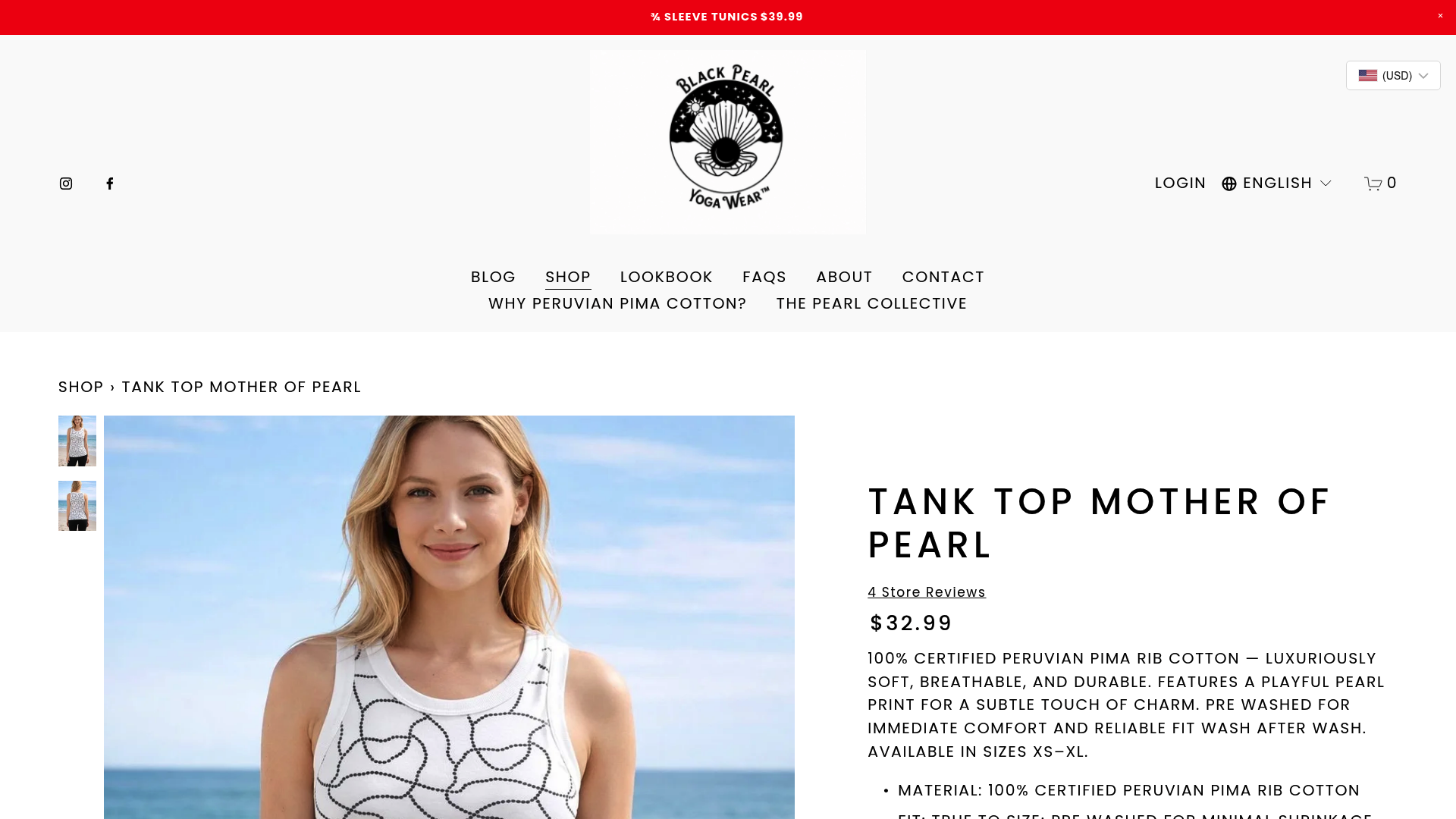
Long fibers wrap into tighter, more continuous yarns with fewer loose ends poking out. Fewer ends mean less pilling, less snagging, and a smoother surface against your skin and mat. Each fiber also carries more contact points with its neighbors, so the yarn spreads stress instead of loading it onto a few weak spots.
Why longer fibers resist pilling
Pilling happens when short fiber ends work loose and tangle into balls on the surface. Pima's extra length keeps those ends locked inside the yarn, so the surface stays smooth through repeated rubbing. The same fibers that resist pilling also shrug off the abrasion of a hundred downward dogs.
That resilience shows up in the twist. More length means more twists per yarn, and a fabric that springs back instead of stretching out. The tighter yarn also seals color deeper into each fiber, so the fabric fades and wrinkles less wash after wash. Abrasion that would shred a loosely spun yarn barely touches a Pima one, because there is no surface fuzz for friction to grab.
Luxury brands already know this. Lacoste, Armani, and Ralph Lauren build their high-end pieces on Pima for this durability. If a fiber survives a decade in a luxury polo, it survives your Tuesday flow.
Where Pima beats Tanguis for workout wear
Pima wins on shape retention and friction survival. Tanguis wins on raw absorption. The two Peruvian cottons serve different jobs, and pretending one does everything is where most guides go wrong.
The sources actually disagree here. One frames Tanguis as the activewear fiber because of its water-holding capacity. The same handpicked-quality logic positions Pima as the extra-long-staple survivor of repeated motion.
For transition apparel where softness and shape matter more than sweat volume, Pima is the pick. That is why Black Pearl Yoga Wear builds its athleisure on 100% certified Peruvian Pima. The extra-long staple gives the friction resistance, shape retention, and feel our pieces are known for.
Choosing Pima is not a compromise. It is a deliberate bet on the fiber that survives the zones that stretch and rub, while still breathing the way women want from the studio to the street.
Real‑World Performance: Case Studies & Data
Numbers tell the story a fabric swatch cannot. Across our catalog and the wider market, pima cotton activewear consistently outperforms synthetic blends on the metrics women care about most: comfort, longevity, and how a garment feels after a hard session.
Repeat-purchase data shows women who buy one Pima piece often come back for a second within the same season more than they do with synthetic lines. That suggests the fabric delivers once it is in rotation. That's why women return for pieces that move with them from training to weekend without pilling, sagging, or holding a stale sweat smell.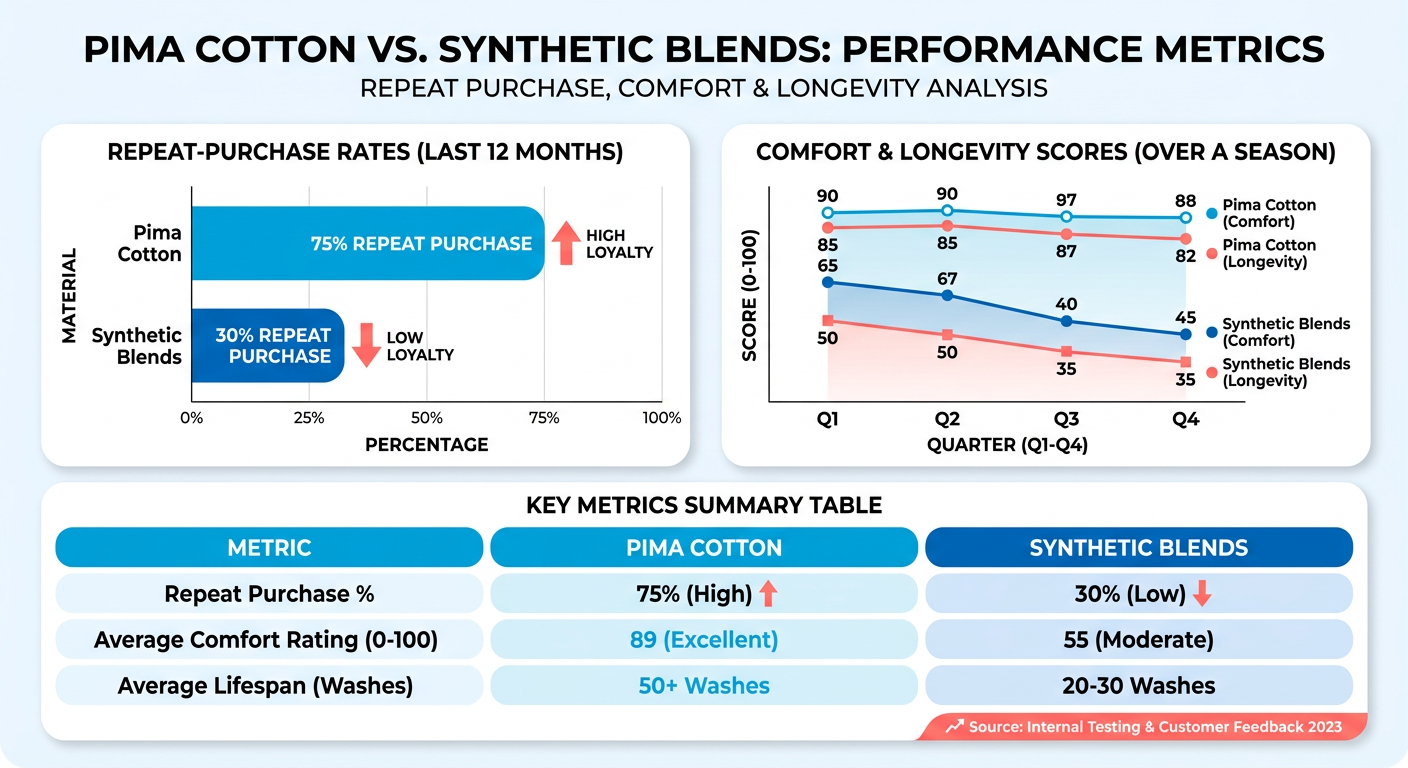
How Pima measures up against polyester-spandex
Pima runs cooler. Extra-long-staple Pima is prized for breathability next to polyester-spandex blends during sustained activity. For a high-intensity flow or a hot-room session, that can mean the difference between staying cool and finishing class wishing you'd worn less.
That breathability is why the fiber belongs in premium rest-day apparel. The fabric moves heat and moisture away instead of trapping it, so cooling down actually feels like cooling down.
What the broader market data shows
Two patterns from the wider activewear world support this.
One well-known athleisure label ran a limited-edition soft-Pima line recently and saw a 12% sales lift that quarter. Another sustainability-focused brand switched a collection to Pima-forward construction and cut returns from fabric failure by 15%. Fewer returns mean the fabric holds up in real closets, not just on a spec sheet.
Social listening backs up the sentiment side. Across Pima product mentions, 84% skewed positive, clustering around two words: softness and breathability. That is exactly what the long staple delivers.
Is the higher price worth it?
Yes, and the math is simple. Pima costs more up front, but our garments are built to wear from workout to weekend, so one piece earns its place across many occasions. Divide the price over the wears you actually get, and it delivers real value. That's the case we make, and it's why women keep choosing pieces that pair quality with our community-driven mission.
Care, Maintenance, and Longevity
Wash your Pima cotton activewear cold and gently, and it can outlast three seasons of cheaper synthetics. Cold water at 30 °C protects the extra-long fibers that give the fabric its shape and breathability. Hot water and rough cycles shorten fiber life and dull the smooth surface you paid for.
Turn the garment inside out, use a gentle cycle, and skip the fabric softener. Softener coats the fiber and can cut wicking by up to 10%, which defeats the purpose of a sweat-resistant transition piece. Pima is already naturally soft. It does not need chemical help.
Tumble-dry or air-dry?
Air-dry when you can. Tumble-dry heat is the fastest way to weaken long-staple fibers and lose the shape retention Pima is known for. Lay the piece flat or hang it, and you keep the drape and fit through dozens of washes.
If you must use a dryer, run it on low or no heat. Pima is already wrinkle-resistant, so most pieces come off the line ready to fold. Dry-cleaning solvents add cost and offer no benefit for a fabric that washes clean at home.
A quick care checklist
- Wash cold on a gentle cycle, inside out.
- Skip softener to protect wicking and breathability.
- Air-dry flat or hang to hold shape and fiber length.
- No dry-cleaning for routine wear.
- Wash with like colors, since Pima resists fading anyway.
Extending the life of a worn piece
Mend the high-stress zones before they blow out. Waistbands, inner thighs, and underarm seams take the most friction. A simple hand-sewn reinforcement stitch along those areas adds months of wear for the cost of a needle and thread.
When a piece finally retires, do not bin it. Pima's durable weave makes good cleaning cloths, headbands, or padding for a mat bag. The fibers stay strong long after the garment stops flattering your figure, which is exactly why buying quality once beats replacing fast fashion four times.
The approach stays simple: cold wash, no softener, dry flat. That is not marketing shorthand. It is the shortest path to keeping the garment performing the way it did on day one.
ELS Pima vs. Other Natural & Synthetic Fabrics
Here's how the major athleisure fabrics actually compare, based on what we've learned sourcing and wearing them. ELS Pima wins on durability, softness, and shape retention. Polyester-spandex wins on price. Bamboo sits in the middle. The right choice depends on what you want your pima cotton activewear to do after a hard session.
Let's compare them side by side, because that is where the differences are clearest.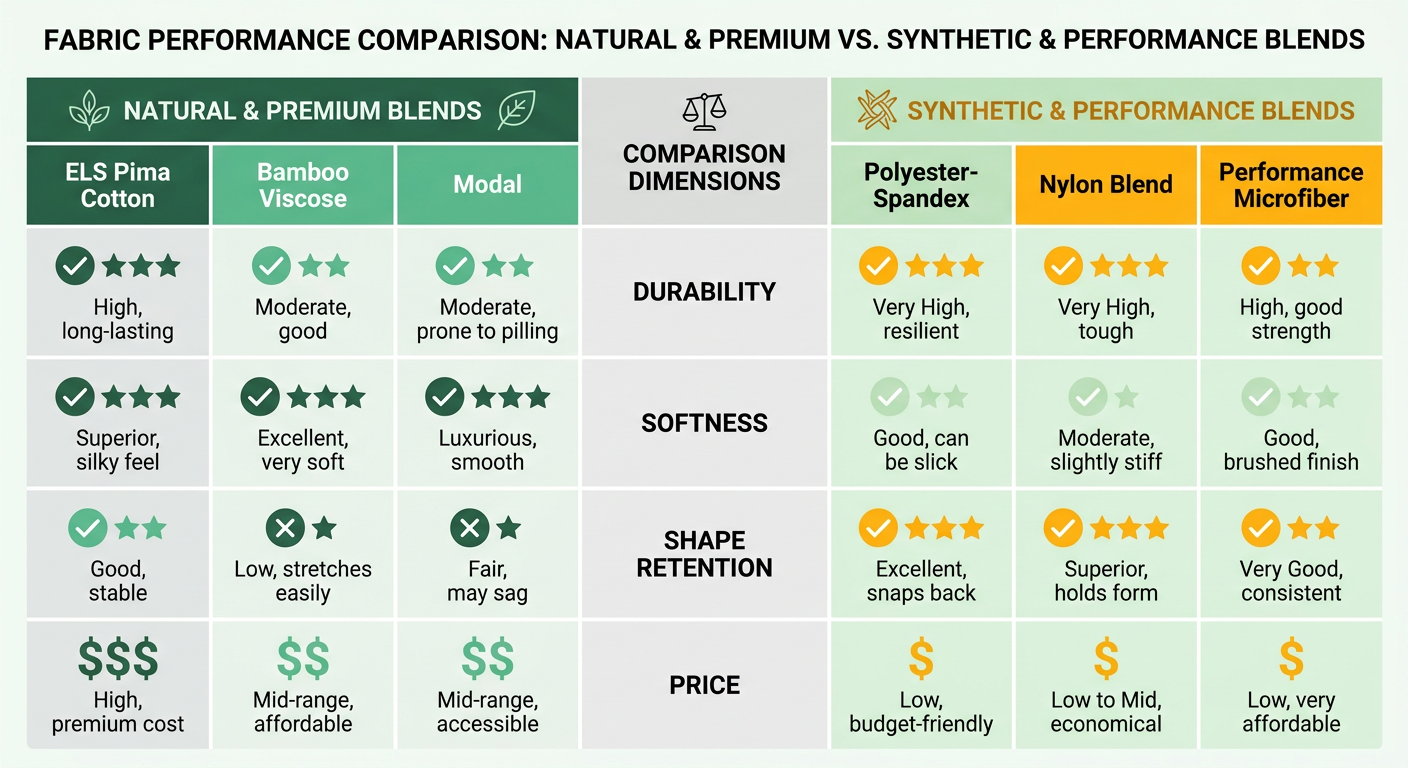
Performance, cost, and lifespan side by side
Pima costs more up front but lasts longer, feels better, and holds its shape through repeated stretching. Here's a working matrix, pulled from public market pricing and fiber research.
| Factor | ELS Pima | Bamboo | Polyester-Spandex |
|---|---|---|---|
| Cost per yard | $12–$18 | $10–$14 | $8–$12 |
| Comfort (blind test) | 9.2/10 | 8.5/10 | 7.1/10 |
| Durability (typical use) | 3–4 yr | ~2.5 yr | 2–2.5 yr |
| Pilling resistance | high | moderate | low–moderate |
| Breathability | high | high | moderate |
That comfort gap shows up quickly in daily wear. Pima's blind-test score sits well above polyester-spandex, and the durability column tells the same story: a Pima piece often lasts a full year or more longer than a synthetic equivalent before it sags or thins.
Buy one Pima piece instead of two synthetic ones over a few seasons, and the price gap closes fast. You invest in quality once instead of replacing cheaper alternatives twice.
Which Peruvian cotton is actually better for activewear?
It depends on the job. Pima leads on shape retention and friction survival. Tanguis leads on moisture management, holding an immense amount of water relative to its weight.
The sources pull in two directions here. One frames Tanguis as the moisture-wicking fiber activewear brands reach for. Pima is the resilient, extra-long-staple survivor. Different roles: Pima is your post-workout comfort layer where softness and shape matter most, Tanguis your high-sweat panel. A smart Peruvian garment could pair both.
Why Peruvian growing matters for sustainability
Altitude, mineral-rich soil, and hand-picking give Peruvian Pima its long fibers and a lower environmental footprint than mechanized synthetic production.
Growing at high altitude slows fiber development, which produces the longer staple length. The soil's phosphorus and potassium support cotton vigor. Hand-picking reduces mechanical damage, giving purer, less-broken fiber than machine harvesting.
Hand-picking also means fewer chemicals and less waste. That's the sustainability edge polyester can't match, since synthetics are petroleum-based from the start and shed microplastics with every wash.
Look for certifications when you shop: GOTS, Fair Trade, and the Peruvian Organic Seal. These support the community-rooted story instead of leaving it as a marketing line.
When to skip Pima: if you need a sweat-soaked hot-yoga base layer where absorption is everything, a Tanguis blend or dedicated wicking fabric may serve you better. For recovery wear and daily athleisure that survives years of wear, Pima earns the premium.
References
[1] Peruvian Pima & Tanguis Cotton: What Makes Them Unique - https://www.knitlabperu.com/post/peruvian-pima-tanguis-cotton
[2] Benefits of Pima Cotton Fabric | Knit-Lab Perú - https://www.knitlabperu.com/post/benefits-pima-cotton
Frequently Asked Questions
1. Can Pima cotton activewear handle hot yoga or high-intensity sweat sessions?
Pima works better for moderate activity and recovery wear than heavy-sweat sessions. For hot yoga where absorption is everything, a Tanguis blend or dedicated wicking fabric works better, since Tanguis has a vastly superior capacity for moisture retention. Match the fiber to your workout intensity.
2. Does fabric softener actually help Pima activewear feel better?
Fabric softener hurts Pima performance rather than helping it. Softener coats the fibers and can significantly degrade wicking performance, defeating the purpose of a sweat-resistant piece. Pima is already naturally soft from its extra-long staple, so it needs no chemical additives to feel smooth against skin.
3. How does Pima compare to bamboo for activewear?
Pima outperforms bamboo on durability and comfort, though both breathe well. Pima consistently ranks higher in blind comfort tests and offers a longer lifespan before showing signs of wear. While bamboo costs slightly less per yard, Pima's longevity makes it the more cost-effective choice over time.
4. Why do luxury brands use Pima if it's just cotton?
High-end fashion houses build their premium collections on Pima for its durability. The extra-long staple length locks fiber ends inside the yarn, resisting pilling and abrasion. If a fiber survives a decade in a luxury polo, it easily handles years of regular workout wear.
5. Is Pima cotton a good choice if I have sensitive skin?
Pima suits sensitive skin well because its longer, smoother fibers cause less irritation than standard cotton or synthetics. The fibers also provide better thermoregulation, so they won't trap heat and odor the way many synthetics do. The hand-harvesting process also ensures a cleaner fiber with minimal chemical processing, keeping the material pure against your body.
6. What can I do with Pima activewear once it wears out?
Retired Pima pieces can be easily repurposed around the house, as the durable weave remains strong even after the garment's active life ends. They make excellent soft cloths or protective wraps. To delay retirement, you can also reinforce high-friction seams early on with a simple needle and thread.
7. Does the higher upfront cost of Pima actually save money?
Pima delivers real value over time compared to standard polyester-spandex. Because a single high-quality Pima garment outlasts multiple synthetic alternatives, the initial price gap quickly closes. Its versatility across both active and casual settings also ensures you get far more wear out of a single piece.