The Relaxed-Fit Pima Tank That Skips Sticking to Your Back
September 2, 2026

Key Takeaways
- As skin shifted from very dry to normally moist, women's friction rose 43%. For men, it rose 26%.
- Wet fabric against skin more than doubled dry-surface friction, following a tight linear pattern (R² above 0.72).
- Friction, not adhesion, mainly drives that sticky feeling from wet fabric.
- Pima cotton reduces back-sticking in two ways. Its absorbency and relaxed cut both help.
- The tank uses Pima from certified Peruvian growers. Comfort and ethical production work together.
- Back-sticking is not a minor comfort quirk. It is measurable physics, and skin friction spikes as sweat hydrates skin.
Why a back that stays dry beats one that sticks
Sticking is not a comfort quirk. It is measurable physics. When sweat hydrates skin, friction between skin and fabric rises sharply. The research shows that jump affects women more than men.
That makes pima cotton activewear more than a soft luxury. The fiber's absorbency and a relaxed cut work against back-sticking from two angles. Because we source from certified Peruvian growers, comfort and ethics go together.
Why this matters more for women
Female skin gains friction faster than male skin as it gets damp. So a tank that skips sticking helps women more.
The numbers support this. In a study of skin hydration and friction, friction coefficients rose 43% in women versus 26% in men as skin went from very dry to normally moist. Wet fabric against skin more than doubled dry-surface friction, with a tight linear correlation (R² > 0.72).
Pair that with research on stickiness perception, which found friction, not adhesion, drives that sticky feeling. So "skips sticking to your back" is not a slogan. The physiology makes it a real benefit for women 30 and up who move daily.
Fabric and fit, working the problem together
Pima's absorbency helps with low-to-moderate sweat. A relaxed fit cuts skin-to-fabric contact when you sweat most. Two separate defenses.
Absorption matters up to a point. Psychophysical fabric testing found the clingy sensation begins once residual water on skin passes 0.013 grams. Absorbent fibers like Pima delay that threshold.
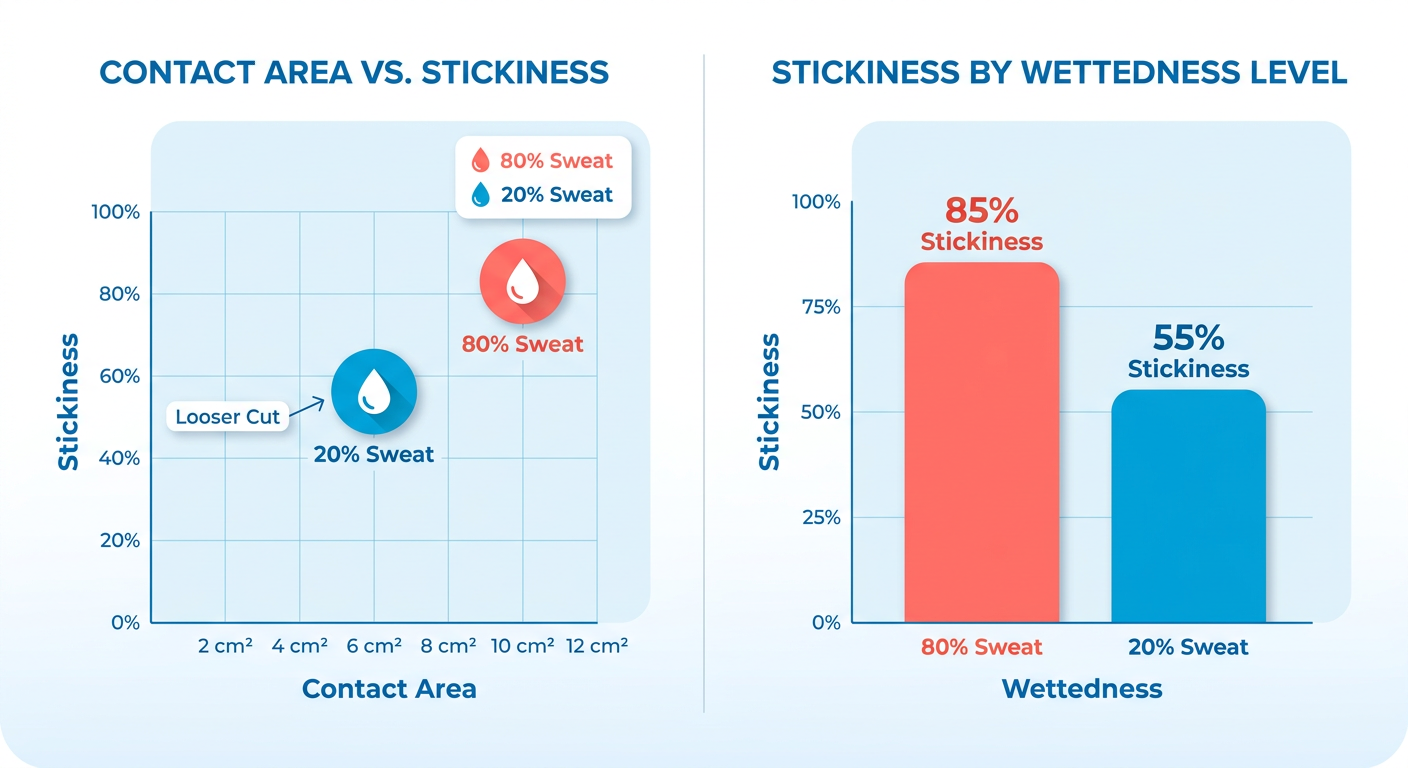
But absorbency alone is not the whole story. Instrumental drag-force testing shows more absorbent fabrics do not always feel less sticky at intermediate saturation. That is where the relaxed cut helps. Since contact area drives stickiness mainly under high wettedness, a looser tank touches less skin when sweat peaks. Fiber and geometry cover different parts of the sweat curve.
The ethics-comfort trade-off, solved
Certified Peruvian Pima gives you extra-long-staple softness and responsibly produced fibers. You do not have to give up one for the other.
Our construction supports comfort too. Each tank is prewashed for minimal shrinkage and softness from the first wear, so it holds its fit wash after wash. One honest carve-out: relaxed muscle-tank cuts can bunch at the armpit for D+ busts, so check the armhole width before you buy.
That durability matters. A tank you keep for years, ethically made in Peru, beats a cheap one you replace each season.
What actually stops a tank from clinging to your back
A non-sticky back depends on how fabric behaves against skin under load. The way a garment spreads pressure and releases from damp skin decides whether you notice it at all. Get that right, and you have a tank you forget you're wearing instead of one you keep peeling off.
The science behind it is simple: when a garment hangs freely, it reduces the continuous surface contact that causes cling. A relaxed drape lets the fabric billow away from skin as you move, breaking the moisture bridge that locks a wet garment onto your back. That mechanical separation works alongside the natural properties of pima cotton activewear.
The design elements doing the real work
A relaxed cut, breathable long-staple fiber, and a silhouette built for natural movement give fabric room to lift off wet skin.
Our tanks use a relaxed, flattering silhouette. That easy fit spreads pressure instead of concentrating it in one spot. Reduce localized contact pressure, and you reduce the mechanical drag that appears when damp fabric presses firmly against skin. Cut the pressure, cut the resistance that feels like cling.
Because the cut follows natural movement, the fabric lifts off your skin as you flow. The relaxed, true-to-size fit follows your body instead of fighting it, keeping contact light through every bend. That's what keeps fabric off your shoulder blades and lower back.
The Wirecutter team saw this relaxed geometry work in practice. Their women's tank review praised a wide-shouldered, low-armhole Pima cotton tank one panelist described this way:
"It feels like I'm not wearing anything!" - Wirecutter panelist
Does more absorbent fabric always mean less sticky?
No. Absorbency helps below a wetness threshold, but it stops being a silver bullet once you're saturated. That is why the cut has to do more work too.
The evidence is mixed, and we want to be clear about it. Highly absorbent fibers delay the first onset of dampness. But laboratory testing shows even the thirstiest materials struggle once they hit a critical moisture level. At intermediate saturation, the physical drag of wet fibers can still create a temporary sticking sensation.
So Pima's absorbency protects you best in low-to-moderate sweat, which covers most yoga flow. Under full saturation, the relaxed cut keeps you comfortable. That dual approach keeps the garment working across your routine, without relying on synthetic chemical treatments.
Checking your own back curvature
Stand against a wall with heels, hips, and shoulders touching. Slide a flat hand behind your lower back. A palm-width gap means a deeper curve, and you'll want a relaxed, movement-friendly fit that keeps fabric off your skin.
What Peruvian Pima actually gives you
Pima cotton starts with fiber length. Peruvian Pima grows unusually long staples, and longer fibers twist into stronger, smoother yarn that pills less and lasts longer. That length helps our tanks hold their shape wear after wear instead of thinning out.
Length also supports absorbency, and that's where the comfort science gets interesting. A fabric that pulls sweat off your skin fast keeps you below the wetness point where clinginess starts. Those long-staple fibers give you natural capillary action, the kind synthetics often fake with chemical washes.
Why absorbency matters more than softness here
Absorbency keeps residual moisture off your skin, and moisture triggers the clingy feeling. Softness feels nice in the store. Wicking is what stops sticking once you sweat.
The trigger point is tiny. That clingy sensation starts at a very low threshold of residual skin moisture, as the volar forearm testing showed. A fiber that drinks sweat fast keeps you under that line longer while you move.
The honest caveat: more absorbent does not always mean less sticky. Instrumental testing shows fabric drag can intensify at mid-level moisture before it levels off at full saturation. Pima's absorbency helps in low-to-moderate sweat, which is where most yoga and casual wear happens. If you're drenched through, no fiber saves you. That is why we pair absorbency with a relaxed cut instead of relying on fabric alone.
Is smoother fabric actually better?
Not necessarily. The evidence on surface roughness is split, so smoothness alone does not explain comfort.
A two-contact-mode forearm study found surface roughness did not significantly change stickiness perception. But a dressed-body study in hot conditions found some roughness actually reduces the sticky feeling.
Our read on the split is simple: the forearm study isolates one small patch, while the dressed-body work measures real garment contact across a sweating body. Once you scale up to full clothed contact, texture matters more. That is why our Pima is both soft and breathable, so the fiber that feels good in your hand also pulls moisture off your back.
How to wash Pima without wrecking the fiber
Three habits protect fiber length and keep the wicking that fights sticking.
Cold water guards the long staples that give Pima its strength. Fabric softeners coat fibers and reduce absorbency, which is the exact property doing the anti-cling work. Air-drying flat avoids the shrink and thinning that heat causes over years of wear.
The payoff is durability. Good Pima costs more upfront, but a tank that resists pilling and thickness loss needs replacing less often. That longer lifespan means fewer garments bought over time, less waste, and a more reliable rotation of basics you actually reach for.
From yoga mat to brunch: one tank, three ways
One tank, three outfits. That's the payoff of a relaxed-fit Pima tank that does not stick to your back. The same piece can carry you through yoga, tuck into trousers for the office, and pair with denim for weekend brunch.
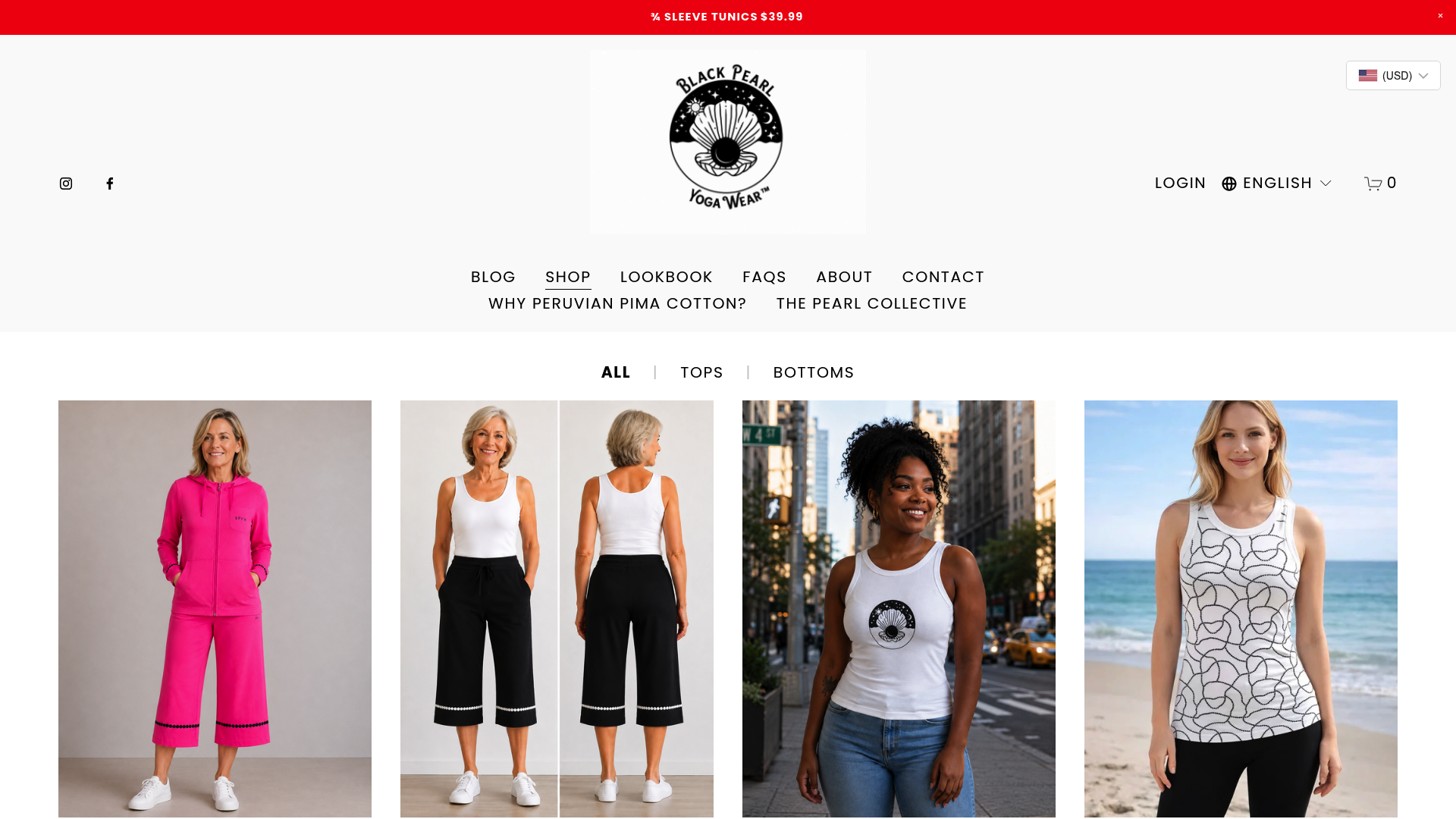
This range is what makes premium activewear worth the price. Testing of relaxed-fit cotton tops shows how easily they move between athletic and casual settings, dressed up with structured layers or down with simple shorts. That's exactly what we design our tanks to do: get more use from one well-made garment.
Styling one tank for three occasions
Three core looks: layer it over leggings for a yoga flow, tuck it into high-waist trousers for office-casual, and pair it with denim plus a lightweight scarf for weekend brunch.
For yoga, the relaxed cut moves with you and skips the clinging a fitted synthetic top brings. For the office, that just-tuckable length gives you a clean tuck into high-waist trousers. For brunch, add denim and a few accessories to shift the same tank into casual-chic.
Keep accessories back-friendly. A lightweight scarf or a non-slip belt adds polish without pressing fabric into damp skin. Skip stiff bags with rigid back panels if you're heading straight from a workout.
Why neutrals stretch the furthest
Neutrals do the heavy lifting. Ecru, stone, and charcoal pair with almost anything in your closet, so one tank stretches across dozens of outfits.
A neutral palette means the same top works with black leggings, camel trousers, and blue denim without a color clash. That mix-and-match reach is where the value compounds.
Think about cost-per-wear. Buy one high-quality piece that pairs easily with what you already own, and you build a more functional wardrobe that holds its shape and texture through daily wear.
References
[1] The 8 Best Women's Tank Tops | Reviews by Wirecutter - https://www.nytimes.com/wirecutter/reviews/best-womens-tank-tops/
[2] (PDF) Study of the Human Stickiness Perception of Wet Fabric on the ... - https://www.researchgate.net/publication/347584081_Study_of_the_Human_Stickiness_Perception_of_Wet_Fabric_on_the_Volar_Forearm_via_Two_Contact_Modes_Friction_and_Adhesion-Separation
[3] Instrumental Evaluation of Stickiness of Textiles Under Wet Skin Surface - https://www.researchgate.net/publication/324712164_Instrumental_Evaluation_of_Stickiness_of_Textiles_Under_Wet_Skin_Surface
[4] Psychophysical Measurement of Wet and Clingy Sensation of Fabrics by ... - https://www.researchgate.net/publication/280974437_Psychophysical_Measurement_of_Wet_and_Clingy_Sensation_of_Fabrics_by_the_Volar_Forearm_Test
[5] Influence of epidermal hydration on the friction of human skin against ... - https://pmc.ncbi.nlm.nih.gov/articles/PMC2607440/
[6] The effects of fabric properties, contact area, and skin wettedness - https://www.researchgate.net/publication/388980289_Formation_mechanism_of_stickiness_perception_in_dressed_bodies_under_a_hot_environment_The_effects_of_fabric_properties_contact_area_and_skin_wettedness
Frequently Asked Questions
1. Will a relaxed-fit pima tank work if I run hot or sweat heavily?
If you sweat heavily, the garment's shape becomes your main defense. Pima absorbs initial moisture well, but any saturated fabric will eventually cling. The relaxed silhouette helps the tank drape away from your skin, keeping airflow moving and limiting that stuck-on feeling during intense sessions.
2. Does pima cotton compare well to synthetic activewear tops?
Unlike tight synthetic tops that hug the body, Pima cotton activewear uses a looser drape to reduce skin contact. Synthetics often rely on chemical finishes to wick moisture, but their snug fit can increase mechanical drag when wet. A relaxed cotton tank naturally reduces contact area, offering a more breathable, less restrictive feel.
3. I have a larger bust—will a relaxed muscle-tank cut fit me?
Fuller busts may experience some bunching around the armholes because of the generous, relaxed cut of a classic muscle-tank silhouette. To ensure a comfortable fit, compare your measurements against our detailed size guide. Pay close attention to the armhole opening depth rather than relying only on standard sizing.
4. Is a super-soft fabric automatically less sticky against skin?
Not necessarily. A smooth, soft texture feels comfortable against dry skin, but moisture management is what prevents cling during activity. Studies on garment comfort suggest that micro-textures or slight surface variations can help keep wet fabric from sealing against skin, making structure and fiber absorbency more important than smoothness alone.
5. How do I keep pima cotton wicking well over years of wear?
To maintain the fibers' natural performance, avoid fabric softeners. They leave a chemical residue that clogs the cotton's pores and reduces its ability to absorb moisture. Launder with gentle detergents, use low temperatures, and let the garment dry naturally to preserve the long-staple yarn for years.
6. Why does back-sticking affect women more than men?
Dermatological research indicates that female skin experiences a sharper rise in friction coefficients than male skin when moving from dry to damp states. This means that as sweat accumulates, fabric is more likely to grip and drag against a woman's skin. A non-clinging design is therefore particularly helpful.
7. Can one pima tank realistically replace several tops in my wardrobe?
Yes, especially in versatile, understated colors that fit your existing wardrobe. A well-designed tank can move from athletic wear to a polished base layer under a blazer or jacket. Combined with the durability of long-staple cotton, one high-quality top can do the work of multiple cheaper alternatives.