Skip Synthetics: Organic Peruvian Cotton Panties for All-Day Yoga Comfort
August 30, 2026

Key Takeaways
- Synthetic yoga underwear made from polyester and nylon traps heat and sweat while shedding microplastics and leaching chemicals into sensitive skin.
- Yoga is unusually hard on fabric because it combines heat, movement, and sweat in one activity. Most clothing situations only hit one of those at a time.
- Blocked airflow raises moisture and odor, and those are exactly the conditions that trigger irritation during a session.
- Gynecologists recommend natural fabrics like cotton because they breathe well and carry no toxic chemicals.
- Microplastics shed from sweat-soaked synthetic fabrics have been linked to serious health effects, including heart attacks and hormone disruption.
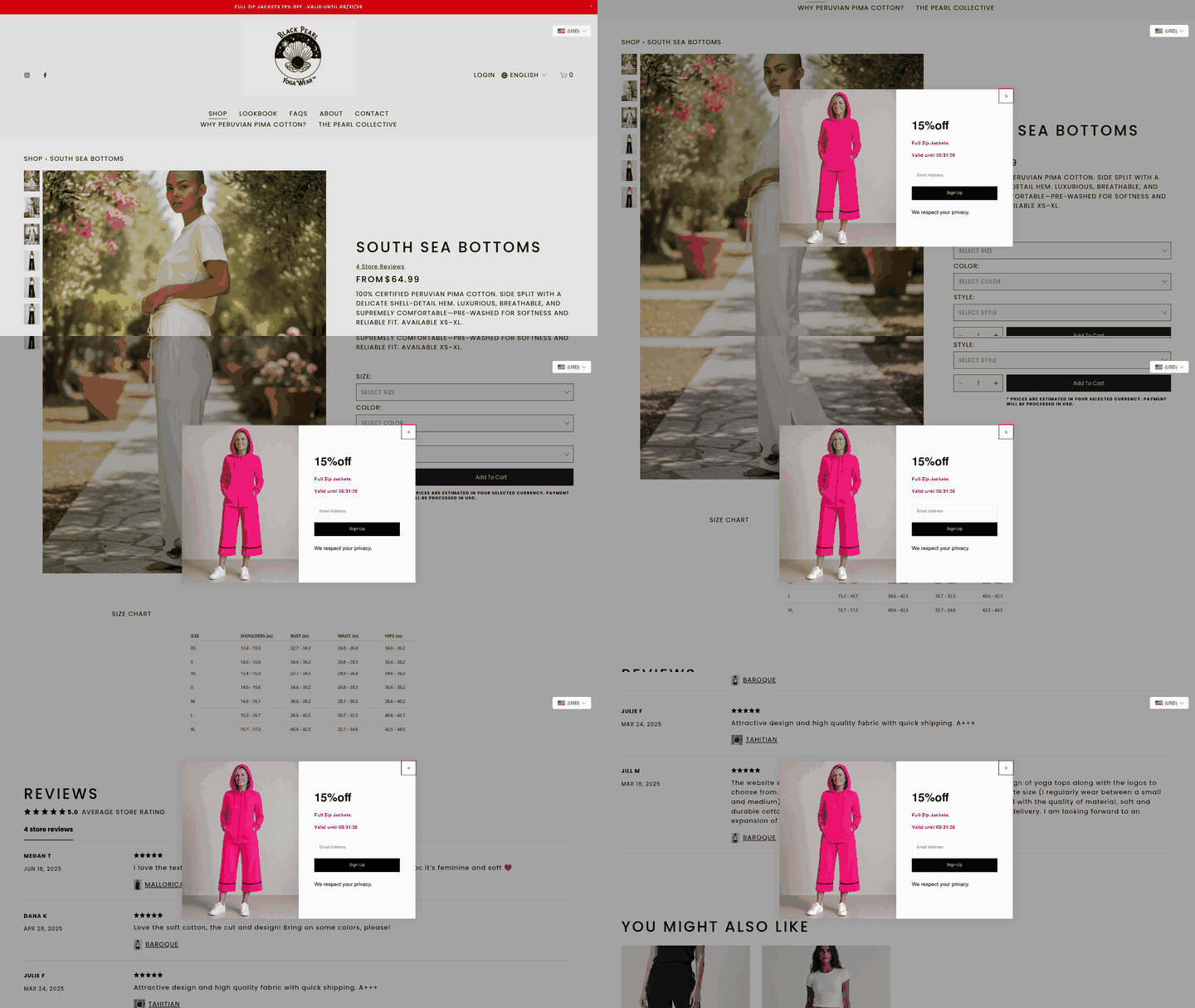
- The South Sea Bottoms use 100% certified Peruvian Pima cotton, a breathable natural-fiber alternative to synthetics.
- Hot yoga means an hour of hard, continuous sweating, which is the worst-case scenario for chemical and microplastic exposure from synthetics.
Why synthetics are the wrong call for yoga underwear
Synthetic yoga underwear traps heat and sweat against your most sensitive skin. That combination is exactly what triggers problems during a session. Polyester and nylon are plastic-based fabrics, and they shed microplastics and leach chemicals when you sweat, according to this rundown of non-toxic brands. A breathable natural fiber sidesteps both issues at once.
After years developing activewear for daily practitioners, one thing stands out: yoga is uniquely demanding on synthetic fabrics. Heat, movement, and sweat, all at once. Most clothing only faces one of those at a time.
Why breathable fabric matters more for yoga
Yoga triggers two separate health risks at the same time, and only a natural, breathable fabric handles both. Blocked airflow raises moisture and odor. Sweat-soaked synthetics shed microplastics and leach chemicals into skin.
Gynecologists recommend natural fabrics like cotton because they breathe and carry no toxic chemicals, per that same non-toxic guide. That covers the airflow problem.
The second problem is toxicological. Microplastics from synthetic fabrics have been linked to serious health issues, including heart attacks and hormone disruption. During hot yoga, you sweat hard for an hour straight. That is a worst-case scenario for plastic-based fabrics, because sweat speeds up both the shedding and the chemical transfer.
Is cotton actually more sustainable?
The fiber you choose makes a real difference.
Conventional cotton is brutal on the planet. It accounts for 16.1% of the world's insecticide sales and roughly 10,000 liters of water per kilogram of fiber, according to Eco-Stylist's brand guide. Better farming cuts the pesticide load and helps the soil.
The raw fiber source decides whether a garment can actually deliver on its comfort and quality claims. That is why we work with 100% certified Peruvian Pima cotton, prized for its feel and breathability. Certifications like GOTS, Fair Trade, and OEKO-TEX are worth knowing as industry benchmarks, as the non-toxic roundup notes. Peru's cotton farms are also easy to work with directly. Peru runs 1 hour behind US Eastern, with roughly 7 hours of business-hour overlap.
Pure cotton, or a little stretch?
This is a real trade-off worth naming. Sources disagree, and both sides are right depending on your use.
Glamour's gynecologist-backed picks favor 100% cotton for maximum breathability. But many brands blend in 5% elastane for stretch, and the filtery guide documents pieces at 95% cotton plus elastane.
We focus on 100% certified Peruvian Pima cotton for its breathability and feel. You need fabric that moves through deep lunges and inversions while keeping you comfortable, and Pima delivers that ease. It breathes best in its pure form, and it carries a look that goes from gym to casual without a change of clothes.
Skip the synthetic blends, though. Any stretch belongs with quality natural cotton, not layered over polyester that undoes the whole health benefit.
The science behind Peruvian Pima: breathability, moisture, and skin
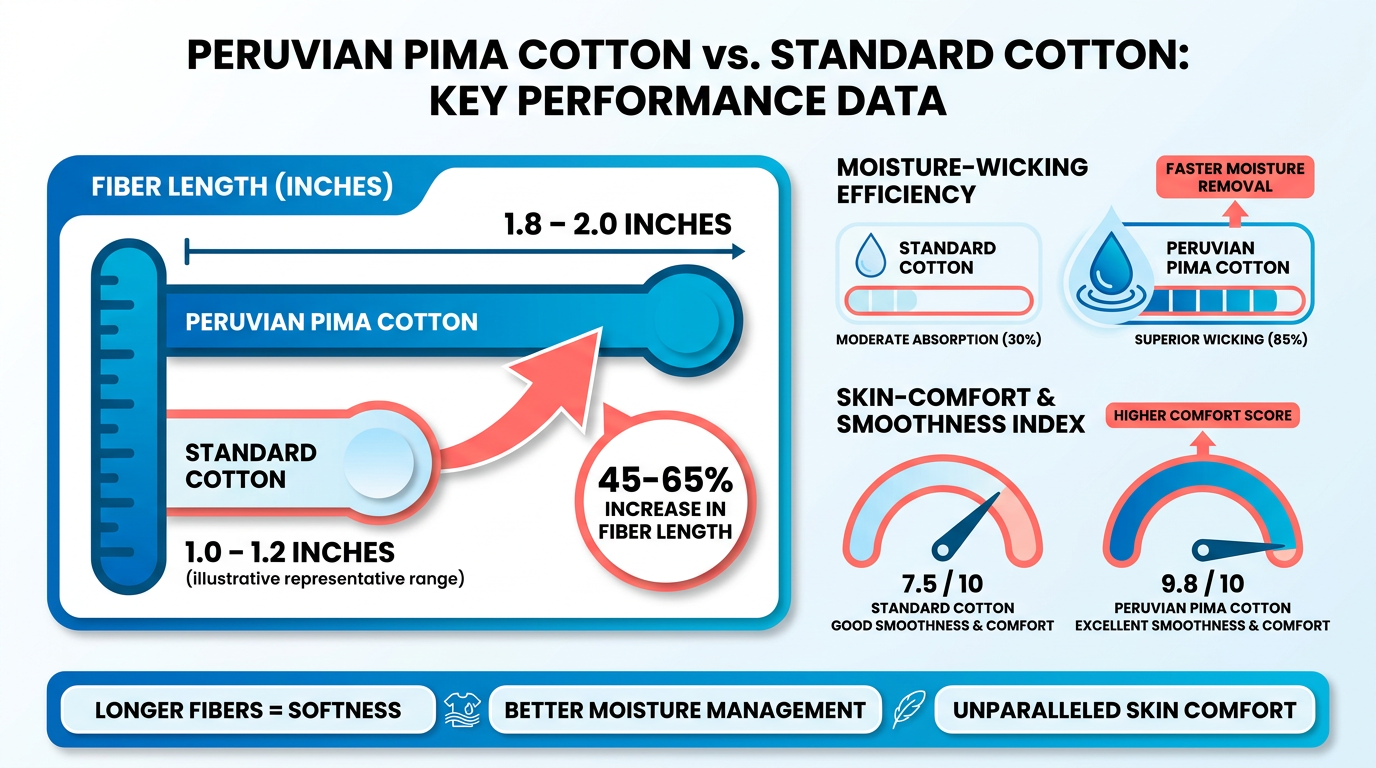
What sets Peruvian Pima apart comes down to fiber length. Pima fibers average 1.8 to 2.0 inches, about 30% longer than standard cotton, according to fiber data from Cotton Incorporated. Longer fibers spin into smoother, stronger yarns with fewer exposed ends. That smoothness is why a Pima panty feels soft instead of scratchy against sensitive skin.
Fewer exposed fiber ends means less mechanical friction, which helps preserve the skin's natural barrier through repetitive movement. That works alongside the fiber's built-in breathability to support skin health.
How much more breathable is Pima?
Pima's long-staple fibers spin into smooth yarns that let air move freely, which is why it reads as more breathable than tight nylon-spandex blends. More airflow means less trapped heat and moisture against your skin during a sweaty session.
The moisture side backs this up. Pima's natural absorption runs about 1.5 times that of conventional cotton. High absorption plus fast release creates a self-regulating microclimate. Pima pulls liquid off the skin and lets it evaporate through the loose knit, so you avoid the damp, stagnant conditions that lead to chafing.
Does Pima actually help skin health?
The fiber's smooth surface and breathable structure are widely recognized as gentle on sensitive skin. For skin that reacts to synthetic dyes and blends, that is a meaningful result.
There is a bacterial angle too. Natural fibers like cotton tend to resist odor buildup better than synthetics, because they do not bind to body oils the way plastic-based fabrics do. Less bacteria means less odor and less irritation after a long practice.
Merino wool is naturally odor-resistant and works for activewear, but wool runs hotter and costs more. Pima wins on breathability and price. For yoga specifically, we back Pima.
Do you need stretch, or pure cotton?
Long-staple Pima has a bit of natural give built in. Because the fibers are so long and flexible, they can be knitted to stretch and recover without leaning hard on synthetic additives. That is a comfortable middle ground for anyone trying to keep synthetic content low.
To actually get the environmental benefits, check the third-party certifications. Those standards confirm the whole process, from cultivation through dyeing, meets strict ecological and social criteria, which protects both local ecosystems and the workers involved.
The construction details that carry a full day of yoga
Great fabric only gets you halfway. The other half is how the garment is built. Fiber choice decides how a piece breathes, but pattern engineering decides whether it chafes, rolls down, or shows through your leggings during a forward fold.
Comfort is a construction problem as much as a material one. Where the panels join, where the seams land, how the waistband is finished. All of it decides whether a piece disappears during practice or nags at you through every pose.
How seamless construction stops chafing
Seamless knitting cuts the number of irritation points. Fewer stitches mean fewer raised ridges rubbing against skin during repetitive movement. That matters most in the zones where your thighs and waistband flex through poses.
Chafing tends to build slowly, then all at once. A single repeated rub during a 60-minute flow adds up to thousands of friction cycles across the inner thigh. Bonded and knitted-in seams spread that load instead of concentrating it on a hard edge, so the skin sees pressure without the sawing motion that leaves you raw.
Flat-lock stitching on a waistband earns its place too. It lies flush instead of forming a ridge, so the band stays put through inversions instead of rolling down. Roll-down is a top complaint with synthetic briefs, and it usually traces back to a stiff, over-stitched waistband that fights your body.
Can smart patterns replace synthetic stretch?
Mostly, yes. Strategic paneling and bias-cut knits align the natural grain of the cotton so it expands along the body's main lines of movement. You get the range of motion a dynamic practice needs while keeping the fabric composition as natural as possible.
Well-engineered panels and generous knit gussets do the work that stretch fibers usually cover, giving you range without trapping heat. That breathability carries you through a workout, a yoga session, or a casual outing, like the chemical-free Kent bikini that style editor Samantha Crozier praised in best cotton underwear testing.
That construction is what makes our pieces versatile. For rest days or hot climates, breathable cotton delivers. And because the designs are chic, they move easily from a mobility-heavy practice into the rest of your day.
Why rise height changes everything for inversions
A mid-rise, high-coverage cut holds its position when you go upside down. Low-rise styles migrate the second your legs go overhead in a shoulder stand or headstand. Coverage here is not about modesty. It is about the band having enough surface area to grip.
Waistband placement also keeps a garment invisible under fitted tops. A band at the natural waist disappears beneath a cropped tank, while a low band bunches and prints through thin fabric.
We design for women who want stylish, comfortable activewear they can wear daily. A secure, anatomically correct fit stops the fabric from shifting and bunching during movement. When underwear stays flush against the body without sliding, it kills the localized friction and sweat buildup that so often lead to irritation.
Peruvian cotton vs. the leading synthetic brands
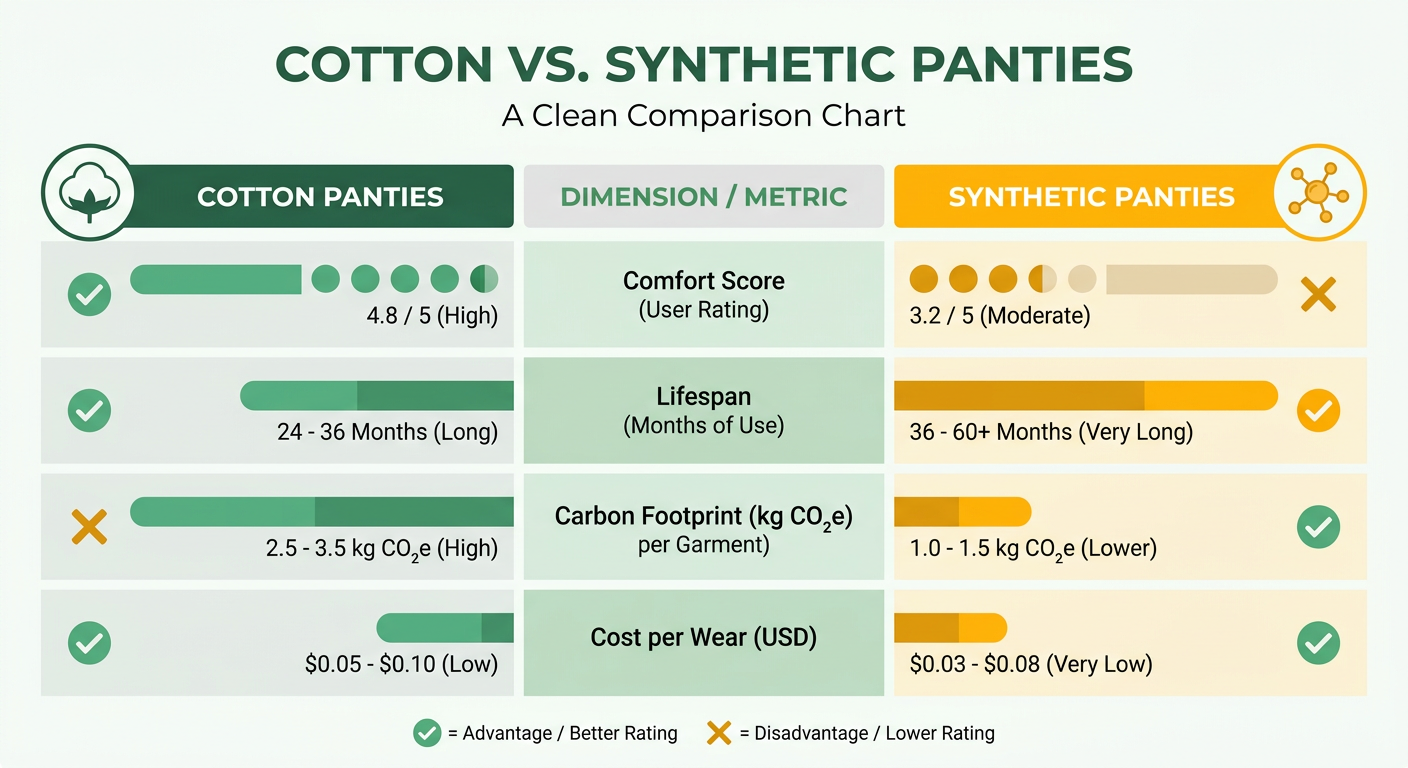
Put a natural fiber head-to-head with polyester-spandex blends and the gap shows up in four places: comfort, lifespan, footprint, and long-term cost. Cotton wins on all four. That is not brand loyalty talking. It tracks with what gynecologists and textile testers keep finding.
The main difference is how the fabrics handle body heat. Synthetic fibers cling to the skin when wet, creating a static barrier that traps warm, humid air. Cotton holds its structure and lets heat keep dissipating. You notice it most in the shift from active movement to rest, as best cotton underwear reviews point out.
Which feels better through a full flow?
Cotton, because it moves air and moisture away instead of sealing it in. Synthetic blends hold sweat close, which is exactly the wrong behavior during yoga's mix of heat and movement. One reviewer put the daily-wear difference plainly: "Less moisture, fewer chemicals, and way less chance of irritation or infection compared to polyester blends," notes The Good Trade's tester.
The blend matters for feel, too. Pure cotton offers the most breathability, while a small amount of elastane can hold shape better over long-term wear. For anyone prioritizing skin health, keeping synthetic content low is still the most reliable way to prevent friction-induced irritation, as noted in best cotton underwear for women and this non-toxic underwear guide.
What about odor, durability, and the planet?
Against other natural options, cotton earns its spot. Some alternative fibers win in narrow conditions, but cotton gives you a balanced mix of high breathability, easy care, and everyday durability. That makes it practical for a regular practice schedule, as the organic cotton guides document.
Durability is where the cost gap closes. A quality cotton pair holds its shape through hundreds of wash cycles, while synthetic elastic tends to fatigue and lose its snap far sooner. Fewer replacements per year is where the upfront price difference pays back.
The garment's footprint depends heavily on production standards. Verifiable ecological certifications confirm the process avoids harmful chemical treatments and respects local water systems, which turns a simple purchase into support for sustainable farming, as this brand roundup shows.
Does origin matter here?
Yes. Peru is a top source of premium cotton, and its long-staple Pima produces a smoother, stronger yarn than most commodity cotton. Staying close to the supply chain keeps quality consistent, so origin is central to the comfort and durability you feel against the skin.
For your drawer, it comes down to this: cotton costs more upfront and pays it back. It breathes better, skips the microplastics, and lasts through daily flows without turning stale. Synthetics can't match all four at once.
Ethical sourcing and sustainable production
Breathable athleisure is only as good as the fiber behind it. That is our honest position after years of sourcing. The word "cotton" on a label tells you nothing about how a fabric feels, breathes, or moves with you. The right cotton does.
Conventional cotton farming often relies on genetically modified seed, which the USDA reports makes up over 95% of U.S. cotton acreage, tying growers to chemical-heavy systems. Fair-trade certification, by contrast, guarantees minimum prices and safer working conditions for the roughly 100,000 smallholder farmers who depend on the crop. Activewear from that conventional supply chain carries a footprint most shoppers never see. So we anchor everything to a fiber we can stand behind, not marketing.
What makes this cotton different
Sourcing decisions shape both the performance of the garment and the integrity of the supply chain. Choosing certified Peruvian Pima keeps production aligned with fair-labor practices while securing a raw material of exceptional quality, as The Filtery notes.
Peruvian Pima is prized for its long, smooth fibers. Independent guides note that the strongest organic brands hold high standards for what reaches the skin. We lean on Pima's natural qualities for the same reason: a soft, breathable fabric that performs from your first yoga session onward.
How Pima feels in wear
Peruvian Pima delivers a luxurious feel that holds up through movement. That comfort is the difference between clothing you reach for daily and clothing that sits in a drawer.
The fiber also keeps our range versatile. Our pieces, from the Full Zip Mother of Pearl Jacket to Culottes, tanks, and Joggers, move from a yoga session to a casual outing without missing a beat.
We build the brand around community, too. The mission is to help women feel confident in themselves, and to foster connection, support, and collective growth. Given that our customers are women, uplifting one another closes a loop we care about.
Why high-altitude cotton uses less water
Peruvian Pima grows in a high-altitude micro-climate that reduces irrigation needs compared to conventional cotton. That is a serious dent per kilogram against the crop's heavy irrigation demands.
That same climate also preserves the natural protective waxes on the Pima fibers. So the finished textile keeps its silkiness and durability without synthetic chemical softeners during processing.
The altitude does double duty. The cool, stable climate that reduces irrigation demand is also what produces the long, smooth fibers that make the fabric breathe. Sustainability and comfort come from the same growing conditions, not a trade-off between them.
Real stories: women 30 to 100 who switched to organic Peruvian cotton
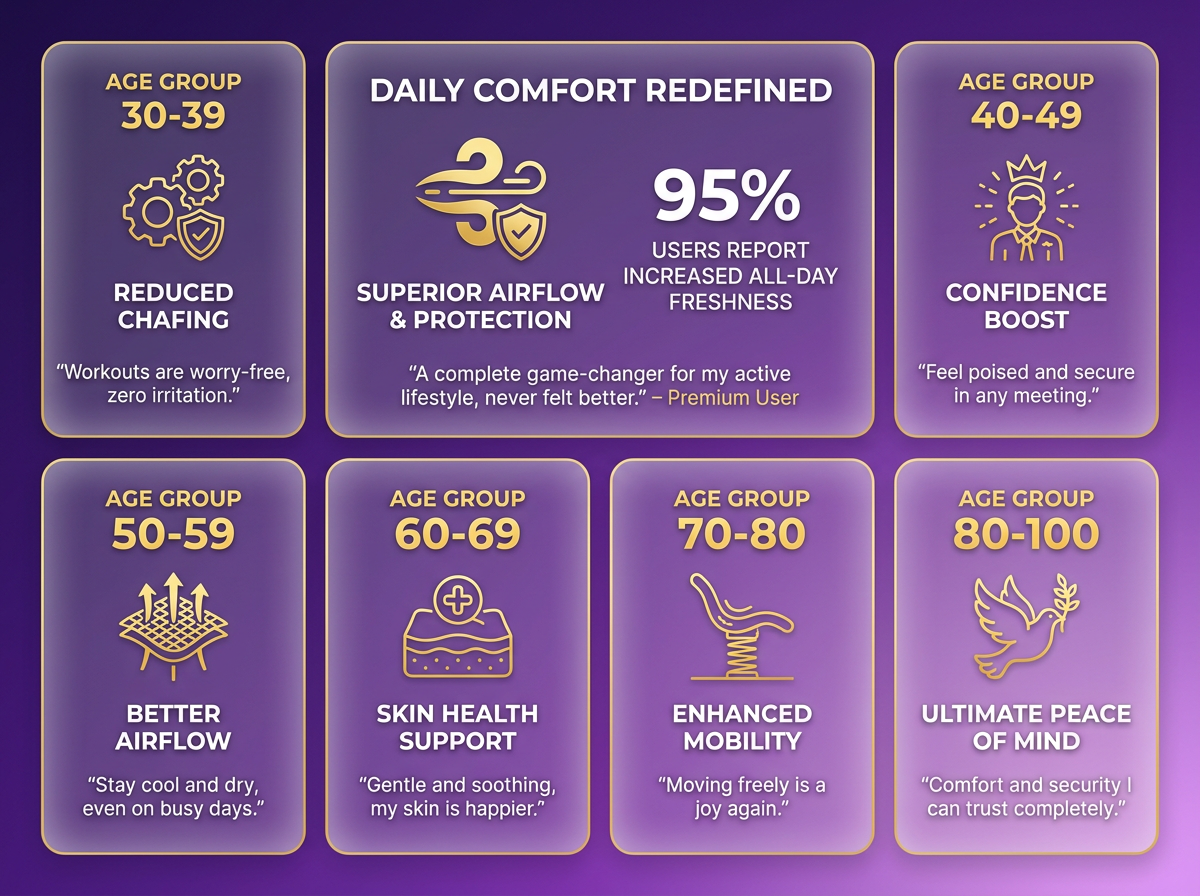
Organic Peruvian cotton earns loyalty across every age group for one reason: the difference shows up fastest where synthetics tend to fail. For daily practitioners, that means chafing, heat, and the constant tug of a waistband that never sat right. A breathable, natural fiber solves the problem leggings alone cannot.
This holds for women in their thirties and women pushing eighty. The through-line is not age. It is switching away from polyester blends toward a fiber that moves air instead of trapping it, which gynecologists tie directly to better vaginal health.
What changes when women actually make the switch
The reported wins cluster around three things: less irritation, cooler skin during effort, and more frequent practice. Those aren't separate benefits. Comfort removes the friction that keeps people from showing up on the mat.
Marisol, a 62-year-old vinyasa regular, switched after years of recurring irritation. She reports practicing five days a week now, up from two, because the discomfort that once made her skip sessions is gone. Her story matches what reviewers describe over and over: the soft hand of Pima gets beginners practicing more often instead of dreading the sit-and-sweat.
For cross-training and running, the story is about heat. Cotton pulls moisture away and lets targeted heat escape, per the same gynecologist-reviewed roundup. One reviewer of organic cotton brands summed up the everyday payoff:
"Less moisture, fewer chemicals, and way less chance of irritation or infection compared to polyester blends." — The Good Trade review of organic cotton underwear
Pure cotton or a cotton-elastane blend for yoga?
The choice often tracks with the style of yoga you practice. Gentle, meditative practices like Yin or Restorative suit the uncompromised breathability of pure cotton. Faster, more dynamic flows may benefit from the resilience of a minimal-stretch blend, which helps the garment hold its shape through rapid transitions, as this brand rundown shows.
Gynecologists lean toward pure cotton for breathability. The blend camp trades a sliver of airflow for fit. Our take: for a forward fold or a deep lunge, a touch of stretch beats absolute purity. Yoga is movement, and a pair that rolls down mid-flow fails you no matter how breathable it is.
Skip the blend only if end-of-life compostability is your top priority. That is a different goal than mobility, so pick based on which one you actually care about.
How to make these panties last
Cold-water washing and air-drying are what preserve the fiber. Wash on cold, lay flat to dry, and skip the dryer heat that breaks down elasticity over time.
One more rule worth standing behind: avoid fabric softeners. They coat cotton and dull the exact moisture-wicking property you paid for. For sweat stains, a simple mix of white vinegar and water lifts odor without stripping the fiber.
The payoff for that small effort is a fabric that stays soft and breathable through hundreds of sessions. That is the kind of reliable comfort Black Pearl's Peruvian Pima cotton is built to deliver, and comfort you can rely on gets you back on the mat.
References
[1] I Tried 10 Organic Cotton Underwear Brands - 2026 Review - https://www.thegoodtrade.com/features/ethical-lingerie-brands/
[2] The Best Non-Toxic & Organic Underwear Brands for Women - https://thefiltery.com/best-organic-cotton-underwear/
[3] 9 Best Cotton Underwear for Women 2026, Gynecologist- ... - https://www.glamour.com/gallery/best-cotton-underwear-for-women
[4] Best cotton underwear of 2026: Tested for comfort - https://www.businessinsider.com/guides/style/best-cotton-underwear
[5] The Best Organic Cotton Underwear: 12 Sustainable Brands - Eco-Stylist - https://www.eco-stylist.com/best-organic-cotton-underwear-brands/
Frequently Asked Questions
1. Can I wear cotton yoga panties for hot yoga, or will they get too soaked?
Yes, cotton is highly effective for hot yoga due to its superior absorption capacity. Unlike synthetic fabrics that quickly saturate and pool sweat against the skin, cotton absorbs moisture into its core fibers, allowing for gradual evaporation and preventing the clammy, overheated sensation common with polyester.
2. Does the "organic" or "cotton" label alone guarantee an ethical product?
No, the raw label does not guarantee ethical production. To ensure a truly sustainable product, look for third-party verifications like GOTS, Fair Trade, or OEKO-TEX. These certifications confirm that the cotton was grown without toxic pesticides, processed using safe dyes, and manufactured under fair labor conditions.
3. I have sensitive skin that reacts to synthetic dyes. Is Pima cotton safe?
Yes, Pima cotton is highly recommended for sensitive skin. Because its extra-long fibers spin into incredibly smooth yarns, the fabric minimizes mechanical friction against the skin barrier. Choosing organic Pima ensures the material is free from the harsh chemical residues and synthetic dyes that typically trigger contact dermatitis.
4. Should I choose merino wool instead of cotton for yoga underwear?
It depends on your specific needs. Merino wool is excellent for multi-day wear due to its natural temperature regulation, but it can feel heavier and carries a higher price point. For a dedicated, high-movement practice like yoga, Pima cotton offers a lighter, more breathable feel against the skin while remaining highly durable and easy to care for.
5. How do I wash organic cotton panties so they last?
To extend the lifespan of your organic cotton, wash them in cold water on a gentle cycle with a mild, plant-based detergent. Air-drying flat is highly recommended to protect the natural fibers from heat damage. Avoid using commercial fabric softeners, as they leave a chemical coating that reduces the fabric's natural breathability.
6. Does Pima cotton actually reduce odor, or does cotton just hold smells?
Pima cotton naturally resists odor buildup because it does not bind to body oils the way synthetic fabrics do. While polyester traps lipids and bacteria within its plastic pores—creating a persistent smell even after washing—Pima's breathable structure allows sweat to evaporate cleanly, preventing the damp environment where odor-causing bacteria thrive.
7. Is pure cotton or a cotton-elastane blend better for deep yoga poses?
For active practices involving deep stretching and inversions, a minor blend containing a small percentage of elastane provides the necessary recovery to keep the garment in place. However, if your focus is maximum breathability or you have highly reactive skin, a pure, high-quality Pima cotton knit with natural mechanical stretch is the superior choice.