Ditch Polyester Leggings: 100% Certified Peruvian Pima Cotton Activewear for Women Sheds No Microplastics
November 9, 2026
Wash day is where the polyester problem hides. You're not just rinsing out sweat.
Key Takeaways
- Over 90% of the activewear market is built on polyester, a petroleum-based plastic that releases microfibers during every wash.
- A 51-garment laundering study found recycled polyester shed 12,430 fibers per gram while virgin polyester shed 8,028.
- The shed difference between recycled and virgin polyester was not statistically significant, so recycled fabric still pollutes.
- Cotton released a greater total fiber mass of 1.85 mg per gram, but those fibers were fewer and longer than polyester particles.
- Cotton fibers entering wash water are plant-based rather than plastic microfibers, so they do not persist as plastic particles.
- Polyester leggings trap heat and sweat close to the skin, while long-staple cotton options feel drier and less plastic-shiny.
- Extra-long staple Pima cotton keeps a smoother line and avoids the knee bagging common in generic cotton athleisure.
What polyester leggings leave behind in the wash
Most leggings in our category are polyester, a petroleum-based plastic. The market story is blunt: over 90% of activewear is built on it, according to this activewear comparison. Every time those leggings go through the wash, tiny plastic microfibers can come off into the water. We keep returning to that reality because our own line centers on 100% certified Peruvian Pima cotton activewear, not a synthetic blend.
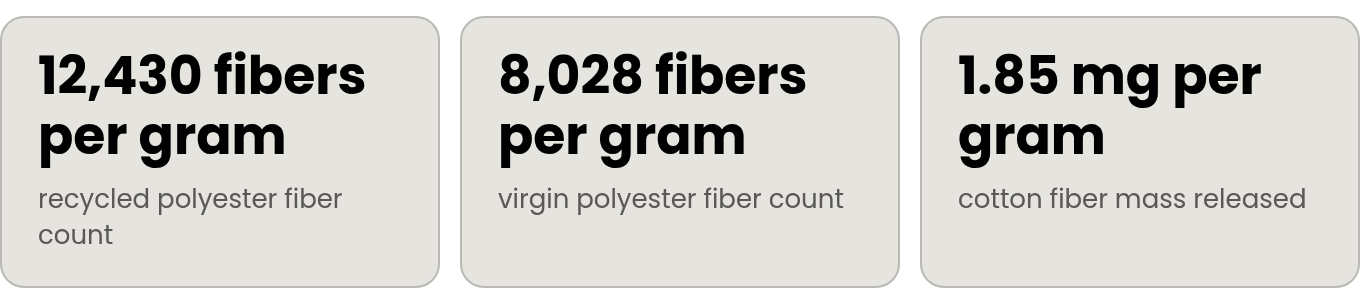
Standardized laundering tests measure how many fibers release from garments. A comparative study of 51 commercially available garments found recycled polyester shed a mean 12,430 fibers per gram and virgin polyester shed 8,028 fibers per gram. The difference between those two plastic options was not statistically significant across material categories. Choosing recycled polyester leggings does not erase the microplastic problem.
Why do polyester leggings feel less breathable?
Polyester traps heat and sweat close to your skin. Plastic-based workout clothing is not breathable, so moisture sits instead of moving away. Natural fibers such as cotton handle moisture differently, which is why cotton can feel more comfortable in a sweaty yoga class.
What does Peruvian Pima cotton activewear change?
Cotton released a greater total fiber mass, 1.85 mg per gram, but those fibers were longer and fewer in number. That matters because natural cotton fibers are not plastic microfibers, so they do not add persistent plastic particles to wash water.
| Material | Microfiber count per gram | Mean fiber length | Plastic microfibers? |
|---|---|---|---|
| Recycled polyester | 12,430 | 0.42 mm | Yes |
| Virgin polyester | 8,028 | 0.52 mm | Yes |
| Cotton | Fewer than both | 0.52 mm | No |
Total mass alone can be a distraction if you only look at weight. The more relevant metric for wash water is plastic microfiber count. Pima cotton still sheds natural fibers, but it avoids adding persistent plastic microfibers to every load.
Gym-to-coffee legging tradeoffs, side by side
When we line up four legging choices for the gym-to-coffee swap, the tradeoffs get sharp quickly. Standard polyester leggings win on stretch and price. They lose on shedding. The less obvious gap shows up after two hours at a café: polyester tends to hold warmth and odor, while long-staple cotton options feel drier and keep a softer drape.
That difference matters most in the wash. Polyester releases plastic fibers, recycled polyester is not much better on that front, and natural cotton releases longer plant fibers instead. You can feel the difference too: Pima cotton breathes without the plastic sheen that makes some leggings read as gym-only.
How does Peruvian Pima cotton activewear compare for gym-to-coffee days?
| Dimension | Standard polyester leggings | Generic cotton athleisure | Premium cotton brands | Black Pearl Yoga Wear |
|---|---|---|---|---|
| Breathability | Moderate; wicking but traps heat | Good; heavier cotton can feel warm | Strong; long-staple cotton breathes well | Strong; extra-long staple cotton feels cool against skin |
| Microplastic shedding | Yes, every wash cycle | None, but cotton fibers shed | None | None |
| Style versatility | Gym-first look | Casual-first look | Elevated casual | Designed for gym-to-coffee |
| Community vibe | Minimal | Minimal | Some brand storytelling | Built into how we run our line |
| Price band | Low to mid | Low | Mid to high | Mid |
Standard polyester is the wrong pick if you want a single pair that moves from barre to coffee without looking technical. In our experience, the shiny finish and cling read as workout-only. Price is friendly, but you are trading microplastic shedding and style range.
Generic cotton athleisure solves the plastic issue but often misses fit recovery. It can bag at the knees after a few squat sets, while extra-long staple Pima keeps a smoother line through the day. Premium cotton brands close that gap, though their price bands climb and community feel can be thin. Our approach keeps Pima cotton at the center and holds the price mid-range, so the fabric choice and the look don't fight each other.
Skip polyester if shedding is on your mind. The stretch benefit isn't worth the wash cycle tradeoff for gym-to-coffee wear.
Where Pima cotton actually earns its keep
The wash test data contains one odd detail: total fiber mass makes cotton look worse, but fiber count and fiber length tell a different story. In the study, cotton released a greater total weight of fragments, yet those fragments were longer and less numerous than polyester particles. A few long plant fibers are easier to catch and less likely to persist than a cloud of short plastic pieces. You feel that difference on skin too: cotton rests soft, not slippery.
The same study found recycled polyester released the shortest fibers. Shorter plastic fragments slip through filters more easily. One brand in the study consistently shed more across both virgin and recycled synthetics, suggesting fabric construction is a second lever. For ocean health, the metric that counts is plastic microfiber presence, not total shed mass. You can find the full comparison in the standardized laundering study.
Plenty of activewear relies on polyester or other synthetics. Choosing cotton means stepping outside that plastic category entirely. Brands like EveryRep and Reprise use TENCEL or other plant fibers, but many still include spandex. Our cotton pieces follow the same plant-first logic, so the wash discussion shifts from plastic fragments to plant lint, which degrades rather than persists. That is the simplest way to cut plastic shedding at the source.
What sets Peruvian Pima cotton activewear apart?
| Factor | Virgin polyester | Recycled polyester | Pima cotton |
|---|---|---|---|
| Primary shed material | Plastic microfiber | Plastic microfiber, often shorter | Plant lint |
| Fiber count per wash | High | Often higher | Lower |
| Marine persistence | High | High | Low; plant matter degrades |
| Main design response | Tighten weave and construction | Tighten weave and construction | Use extra-long staple cotton |
Peruvian Pima's extra-long staple, typically 35 mm or more before spinning, produces fewer loose fiber ends than shorter cotton varieties. The recycled option is not a clean fix. The study noted recycled polyester released more fibers by count than virgin polyester. Cotton's longer, fewer fibers are a different pollution profile entirely. We would not call cotton zero-shed; it sheds plant matter, not plastic. Plant matter breaks down, unlike the plastic microfibers that EcoCult's plastic-free guide warns about.
When cotton is the wrong call
Cotton is not the right tool for every workout. If you want a suit that stays put in the water or gear that can handle constant abrasion against a treadmill belt, cotton will not be your first choice. Cotton also dries more slowly than synthetic knits, so a rainy run or a very sweaty interval day may leave you feeling heavier. For yoga, barre, and casual wear, that drape and softness is the point. If your priority is reducing plastic microfiber shedding, cotton leggings are the clearest choice. If you need a more elastic fit, a plant-based elastane blend might serve better, but that is a separate conversation.
Keeping Pima cotton leggings soft for the long haul
You come home from a sweaty yoga class, drop your Pima cotton leggings into the basket, and hope for the best. We have learned that a little routine care keeps them soft and microplastic-free much longer.
The simplest habit: wash in cold water on a gentle cycle. Cold water helps the cotton fibers keep their natural softness. A gentle cycle means less twisting and pulling on the waistband and seams.
What is the best way to keep Peruvian Pima cotton activewear soft and shapely?
Skip the dryer and fabric softener. Line dry your leggings to avoid lint buildup and heat damage, and skip softener because it coats the fibers and reduces breathability. Fold them flat on a shelf instead of hanging, so the waistband does not stretch out from its own weight. If you have ever felt a waxy coating on cotton, that is softener residue. It blocks the natural airflow that makes Pima cotton feel cool against your skin.
| Care Step | Gentle Habit | What to Avoid |
|---|---|---|
| Washing | Cold water, gentle cycle | Hot water, heavy agitation |
| Drying | Line dry flat or on a rack | Tumble dry high heat |
| Softening | No softener needed | Coating softeners |
| Storing | Fold in a drawer | Hanging by waistband |
That kind of care means you can reach for the same pair after a morning flow and a run to the farmers market. They stay smooth, breathable, and ready to move with you.
References
[1] 13 Plastic-Free, Natural Activewear Brands That Are ... - https://ecocult.com/plastic-free-sustainable-activewear-natural-fibers-organic/
[2] Best Non-Toxic Activewear Brands in 2026: An Honest, ... - https://everyrep.com/best-non-toxic-activewear-brands/
[3] (PDF) Comparative microfiber shedding from natural, virgin ... - https://www.researchgate.net/publication/411188434_Comparative_microfiber_shedding_from_natural_virgin_and_recycled_synthetic_textiles_under_standardised_laundering_conditions
FAQ
Are recycled polyester leggings a safer choice if I want to avoid microplastic shedding?
Recycled polyester still releases plastic microfibers in the wash, so it is not a low-shed alternative. In the laundering research, recycled fabric shed more fibers by count than virgin polyester, and those shorter plastic fragments are harder to filter out. Choosing plant-based activewear keeps that persistent plastic load out of your wash water.
Will 100% cotton leggings hold up for a sweaty run or high-intensity interval session?
Cotton is not the first choice for heavy sweat or constant abrasion. It dries more slowly than synthetic knits, so a rainy run or intense interval day can feel heavier against your skin. For yoga, barre, and gym-to-coffee wear, Pima cotton’s softer drape and cooler feel are exactly what you want.
What is the one drying mistake that causes Pima cotton leggings to lose their shape?
High-heat tumble drying is the main avoidable mistake. Heat can damage the cotton fibers, lead to lint buildup, and stress the waistband and seams. Line dry flat or on a rack instead, then fold the leggings in a drawer so the waistband keeps its shape over time.