7 Pima Pieces That Pull Double Duty From Brunch to Pilates
August 31, 2026
Key Takeaways
- Pima cotton fibers run 1.4 to 2 inches long. They resist pilling and keep their drape.
- Pima represents roughly 1–2% of global cotton output.
- Pilates uses low-impact, controlled mechanics. It does not need moisture-wicking synthetics like cardio does.
- That makes Pima a practical studio choice, not just a stylish one.
- Most Pima activewear solves only one side of the problem.
- The seven pieces here cover both studio and social wear.
- All seven pieces cost between $32.99 and $64.99.
- The premium end sits in the $57–$65 range.
- The South Sea Bottoms ($64.99) are the strongest dual-use piece here.
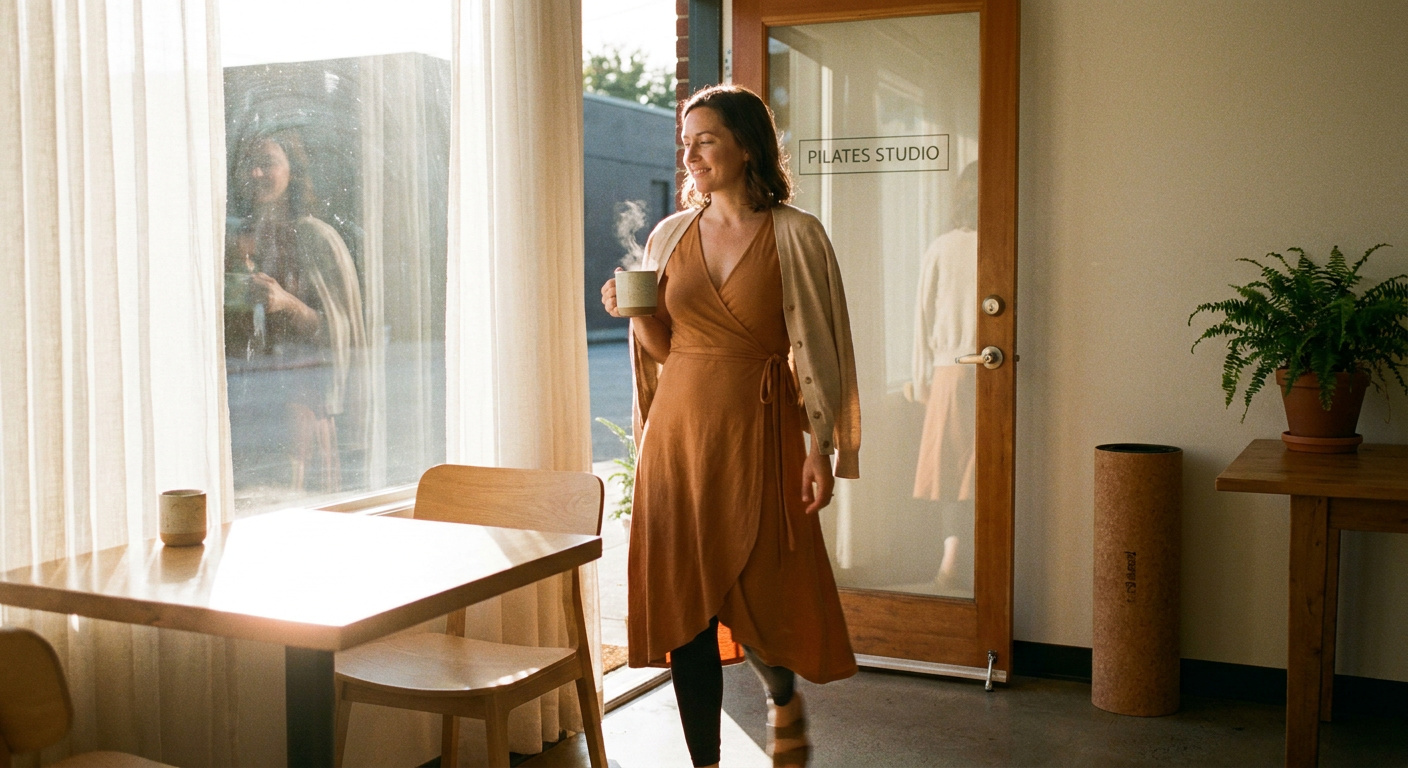
- They work for reformer class in the morning and brunch by noon.
- The $57.99 Joggers pair with a blazer and still fit Pilates.
Quick Summary
Most Pima activewear solves one problem well. Pieces that suit brunch often look too polished on a reformer. Pieces built for sweat can look too athletic at a café. The seven pieces in this roundup were chosen because they avoid that tradeoff.
That balance comes from the fabric and the activity. As fibre2fashion's textile guide on Pima cotton details, this fiber holds structural integrity and resists surface wear better than standard cotton. And Vogue's Pilates wear coverage notes that Pilates' controlled mechanics do not require the aggressive synthetic engineering used in high-intensity cardio. That opens the door for a natural luxury fiber to work in the studio, not just afterward.
Pima Cotton Activewear: All 7 Pieces Compared
| Piece | Best For | Starting Price | Key Strength |
|---|---|---|---|
| South Sea Bottoms | Reformer sessions + brunch | $64.99 | Tailored drape reads as elevated casual off the mat |
| Joggers | Weekend errands + light Pilates | $57.99 | Relaxed fit with enough structure to pair with a blazer |
| Golden Bottoms | Brunch-first wear with studio backup | $58.99 | Sequin detail elevates the look without restricting movement |
| Tahitian Top | Pilates-to-patio transition | $44.99 | Versatile cut works tucked or untucked, layered or solo |
| Akoya Top | Studio essentials | $39.99 | Clean lines hold up under overhead lighting |
| Mallorica | Everyday Pilates wear | from $36.99 | Most accessible entry price in the collection |
| Tank Top Mother of Pearl | Mat sessions + post-class coffee | $32.99 | Lightweight Pima breathes well through floor-based work |
How to Read the Table
The "Best For" column shows the main use case, not the only one. For one piece that handles both occasions, start with the South Sea Bottoms or the Tahitian Top. Both hold their shape through a full session. Neither signals "gym" when you walk into a restaurant.
One clear exception: skip the sequin pieces for reformer work involving straps or handles. The embellishment creates snag risk in that setting. For mat Pilates or casual wear, they work fine.
As theeverygirl's guide to versatile athleisure frames it, dual-purpose dressing should remove friction from your day. Pima's extra-long staple fibers keep a smooth, refined surface that moves from workout to lunch without losing shape.
Where Pima Cotton Has Limits
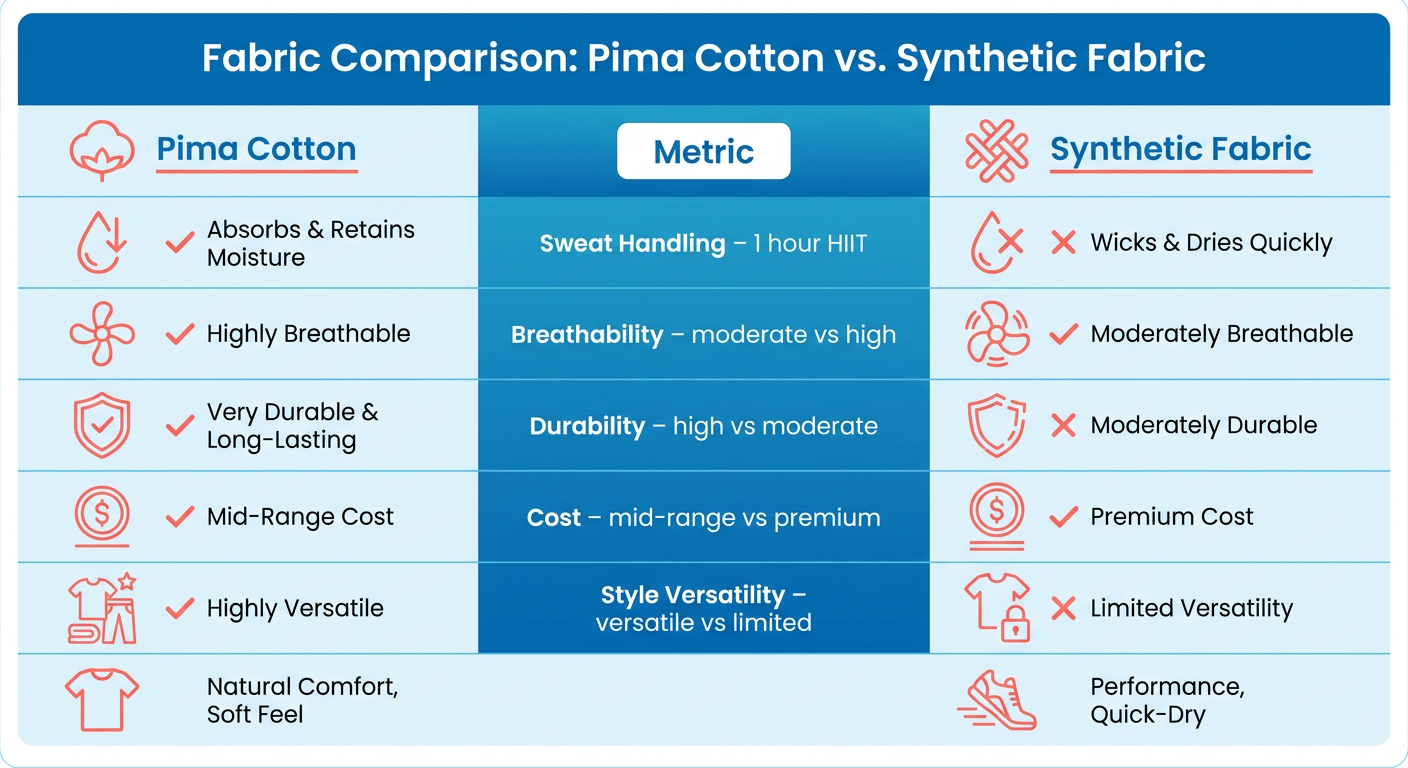
Synthetic performance fabrics handle high-intensity sweat better. For an hour of HIIT or a spin class, moisture-wicking engineered knits like Luxtreme, the material Lululemon uses in its Court Rival High-Rise Skirt, do something Pima cannot.
That limit matters. Skip these pieces for workouts that produce serious moisture. The wicking benefit of synthetics is real, and it would be misleading to say otherwise.
When Synthetics Fall Short at the Table
The flip side is also real. Performance athleisure announces itself in social settings. The sheen, flat-seam construction, and four-way stretch profile all read as gym wear in a restaurant. "Versatile" in the synthetic category has limits.
Outdoor Voices offers its Exercise Dress in 15 colorways. Lululemon leans on technical performance. Neither fully closes the brunch gap, because synthetic construction brings aesthetic limits that color alone cannot fix.
The Cost Math on Pima Cotton
Pima runs 30–50% more than standard cotton. The premium pays off through lifespan, not immediate performance.
Standard synthetic athleisure pills noticeably by the 20th wash and loses shape before function. Pima's extra-long staple fibers, which cotton industry research classifies as having lower micronaire than upland cotton, hold drape and resist degradation across more wash cycles. The cost-per-wear math often flips over a two-year horizon.
The Activity Match That Makes This Work
Pilates is the category where a natural luxury fiber can outperform synthetics on both counts. The focus on controlled movement, deep breathing, and steady resistance means you rarely hit the body-temperature spikes tied to high-intensity training. Pairing heavy-duty synthetic compression with a reformer session often adds more technical capability than the activity needs.
A textile expert cited by Fibre2Fashion describes Pima as "the cashmere of cottons, offering unmatched softness and durability." For a class followed by lunch, that softness and durability are not a compromise. They answer both needs at once.
At a Glance: Which Fabric Type Fits Your Use Case
| Fabric Type | Brunch Wearability | Pilates Suitability | Durability | Price Point |
|---|---|---|---|---|
| Synthetic performance (Luxtreme) | Low | Adequate | Moderate | Low–Mid |
| Standard cotton | Moderate | Poor (absorbs moisture) | Low | Low |
| Peruvian Pima cotton | High | High | High | Mid–High |
For high-intensity cardio, stay with synthetics. For a Saturday that moves from reformer to restaurant, Pima fills the gap performance fabrics leave open.
How These Pieces Are Built
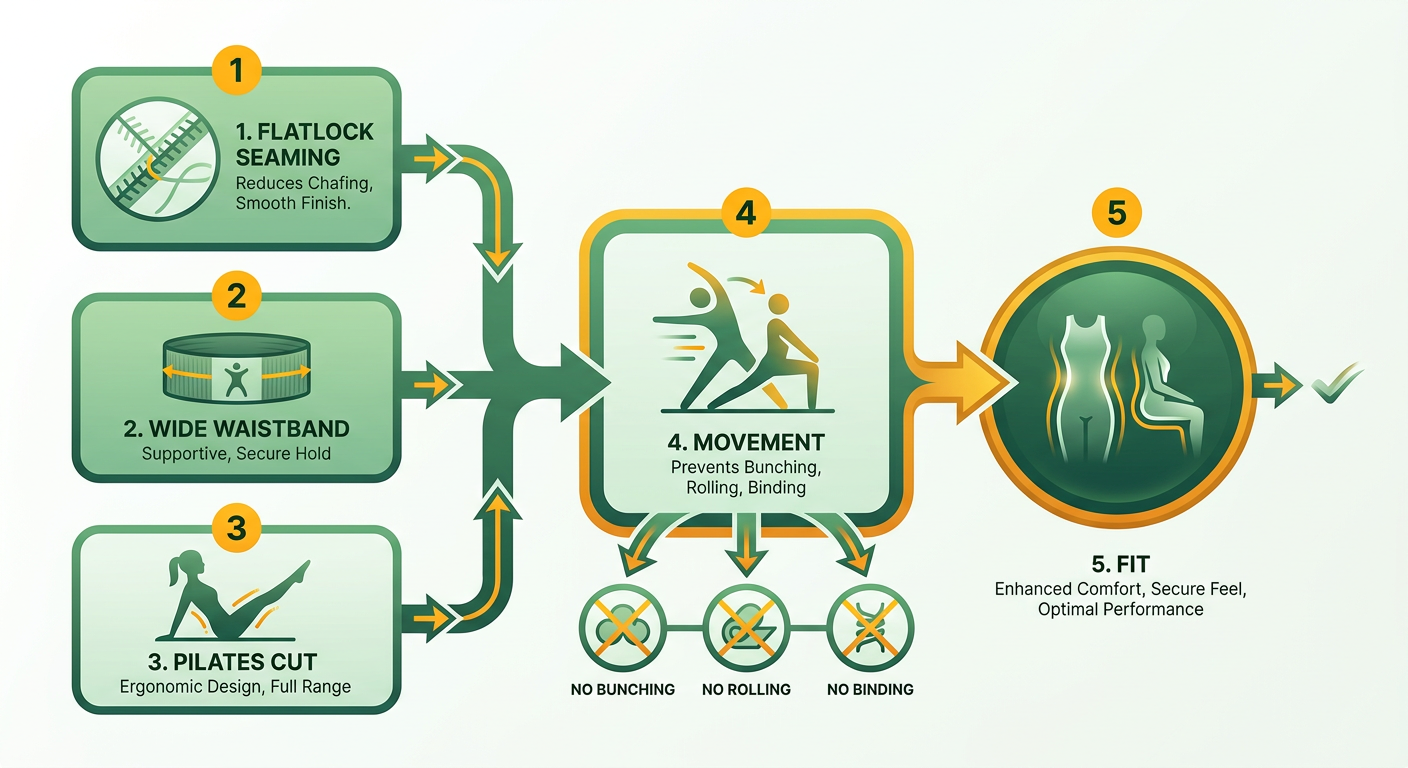
The construction choices here are as deliberate as the fiber. Together, they make pima cotton activewear feel like a real category, not a style compromise. Flatlock seaming along the inner leg prevents bunching during lateral movement. The wide waistband sits flat through forward folds and seated transitions. It does not bind or roll down. These details separate Pilates-specific construction from general athleisure cut in a flattering silhouette. They matter most when you're thirty minutes into a reformer flow and not thinking about your clothing at all.
Why Peruvian Pima Changes the Equation
Not all Pima comes from the same origin. Peruvian Pima is a specific regional designation, hand-harvested in ideal growing conditions. That harvesting method helps preserve fiber integrity and creates a smooth texture. Our bottoms use this fiber in a pure construction — no polyester blend chasing a performance spec the fabric was not designed for.
In practice, it drapes rather than compresses. For Pilates, where controlled range of motion matters more than compression, that is a real functional advantage. At brunch, it means nobody at the table knows you came from class.
Pricing sits at the mid-market tier, in line with quality athleisure rather than the category's premium end.
| Peruvian Pima | Standard Pima | Cotton-Modal Blend | |
|---|---|---|---|
| Staple length | Extra-long | Long | Varies by blend |
| Drape | Fluid, relaxed | Moderate | Soft, slight stretch |
| Breathability | High | Good | Moderate |
| After washing | Softens further | May pill over time | Holds initial texture |
| Best context | Movement + all-day wear | Casual wear | Casual wear |
Ideal for: Women who move between reformer sessions and everyday life without changing outfits.
Skip this for: High-intensity cardio where serious sweat is the goal. Pima cotton is not a wicking fabric. That is not a flaw — it is where the category ends.
Tommy Hilfiger Pima: Polished at Brunch, Qualified at the Reformer
Tommy Hilfiger is one of the few mainstream brands that openly markets Pima cotton pieces instead of blending them with synthetics to meet a performance spec. The fiber quality is genuine. Cottongins.org notes that Pima accounts for only about 3% of U.S. cotton production, and Tommy Hilfiger builds its positioning around that premium. What you get is real softness, a drape that holds wash after wash, and a polished look that does not try too hard.
How Tommy Hilfiger's Pima Cotton Performs Beyond the Café
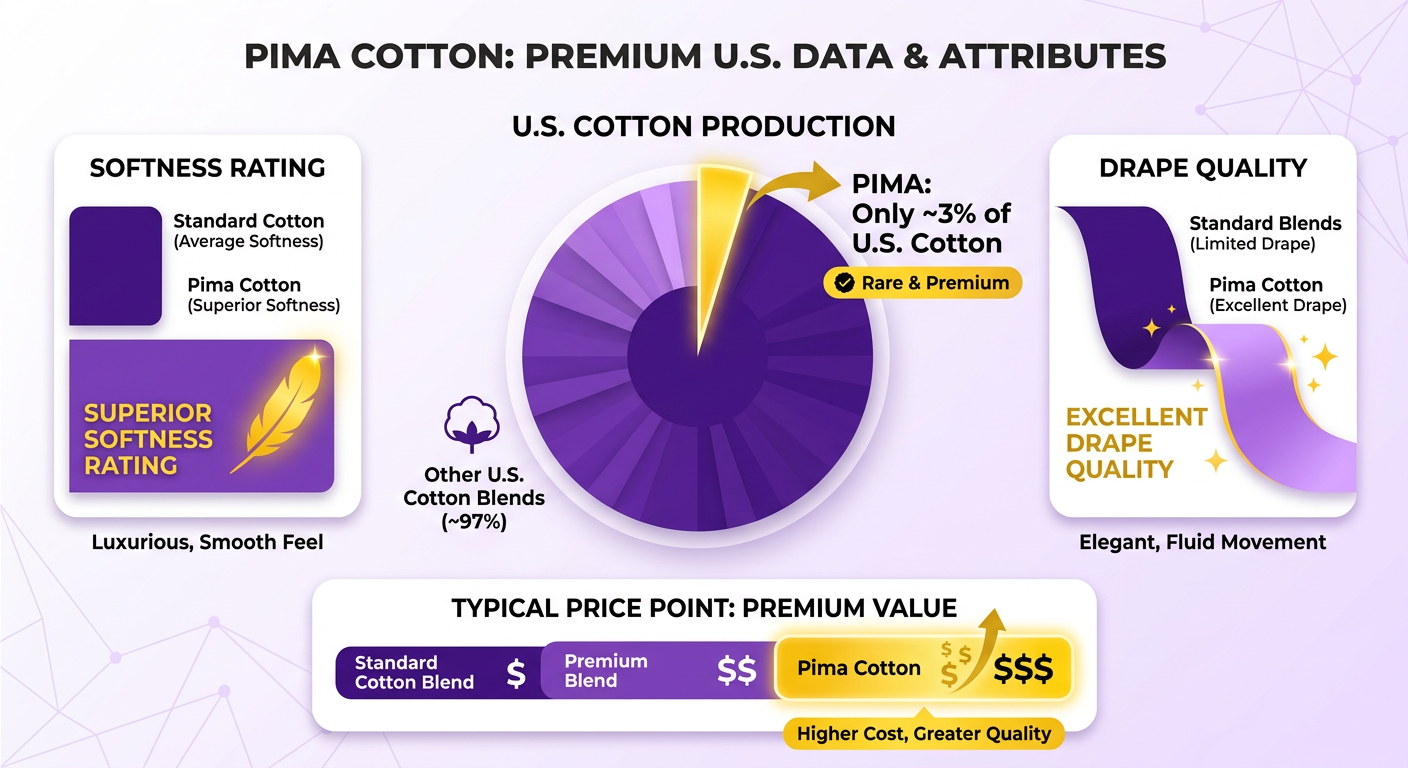
The studio side tells a more limited story. Tommy Hilfiger's cuts use a fashion-forward, relaxed silhouette. For mat Pilates or low-movement barre, that ease works in your favor. Nothing pulls when you reach or twist. For reformer sessions, where a fitted line keeps fabric from catching on the carriage, the loose cut becomes a real constraint. Of the two environments, the reformer is the one where fit discipline matters more than fiber quality.
Tops in this line typically land between $45 and $70, depending on style. That puts them directly against dedicated activewear labels at the same price. You are paying for social presentation and fiber integrity, not a silhouette engineered to move with you.
Skip this for reformer-heavy sessions or anything needing a close, movement-tested fit. The cut was not built for that range of motion, and fiber quality alone will not compensate.
One practical advantage is laundry behavior. Pima's longer-staple fiber resists pilling better than standard cotton blends, and colors tend to stay truer over multiple washes. That helps if you wear a top weekly. The fabric weight sits in the medium range, with enough body to drape cleanly without clinging in warm weather. Machine wash cold and lay flat to dry on heavier styles, and these pieces will outlast a lot of activewear in the same price window.
Style variety is reasonable: classic crew necks, scooped hems, and relaxed V-necks in seasonally rotated neutrals with occasional accent colors. Nothing runway-forward, but that predictability is part of the appeal. These pieces blend easily into an existing wardrobe without demanding a specific aesthetic.
Best for: Women who spend more time at the café than on the reformer and want Pima's softness and social finish in a familiar brand.
Quince: Genuine Pima at a Price That Makes a Full Wardrobe Practical
Quince built its brand around Peruvian Pima cotton at a price that makes a full wardrobe realistic. Their catalog spans leggings, tanks, bralettes, and shorts — enough to outfit a complete rotation at the price most activewear brands charge for one piece.
Does Affordable Pima Cotton Hold Up in the Studio?
The fiber quality is real. The softness and longevity Pima is known for show up in these pieces across dozens of washes. At this price tier, a complete Pima wardrobe is within reach, not just a single-piece investment. That accessibility is the brand's clearest strength.
The limitation is consistent: construction. Quince designs elevated basics and lounge silhouettes, not studio-ready cuts. Their leggings drape well but lack a compression-focused waistband. Tops read as polished streetwear, not reformer gear. For low-intensity mat work, the breathability holds. For reformer sequences, inversions, or anything requiring a secure fit through full range of motion, the cut works against you.
| Quince | Black Pearl | |
|---|---|---|
| Cut | Casual/lounge-focused | Versatile yoga-to-casual |
| Style range | Leggings, tanks, bralettes, shorts | Bottoms-focused lineup |
| Brunch-ready | Yes | Yes |
| Reformer performance | Light use only | Mat yoga and everyday wear |
| Price tier | Budget-accessible | Mid-market |
Best for: Women building an affordable Pima wardrobe for low-intensity mat classes or casual wear. The fabric quality is there. The technical construction is not.
Skip if: Your sessions involve reformer work, inversions, or movements that need compression and a secure fit throughout.
Vuori: The Best Tops in This Group, With a Gap Below the Waist
Vuori's pima cotton activewear approaches the same dual-use problem this list addresses, but from the top down. Their pieces focus on structured tops, and the proportions land well: relaxed but not shapeless, long enough to read as casualwear, and deliberate enough to work at brunch without looking like you forgot to change.
The fiber holds. Peruvian Pima at the base means softness that lasts after repeated washing and a drape that does not collapse into the flat texture standard cotton develops over time. No synthetic blend tries to compensate for what the fabric was never designed to do.
Where Vuori Earns Its Spot — and Where to Fill the Gap
For mat Pilates, the tops move cleanly. Reformer work is different: the relaxed hem shifts during spine flexion sequences, and without a close waistband anchor, you'll spend class adjusting. The fix is simple — size down, or pair the top with a high-waisted bottom that holds the hem in place.
At a café, these read as considered basics. The neutral palette and clean hem length do not announce workout gear, which is the point of this roundup.
Skip Vuori if you want one brand to cover the full outfit. Their bottoms lean toward joggers and shorts, not reformer-ready leggings. Their tops pair cleanly with performance-cut Pima bottoms from other brands already in this list.
Pricing: $68–$88 for tops. Ideal for: Women who prefer sourcing bottoms from a performance-focused cut and want a Pima top that carries the outfit visually.
Building the Complete Look
Since Vuori stops at the waistband, the outfit logic runs bottom-up. Performance-cut leggings with a wide waistband work best. They should grip at the hip rather than fold over. Anchor the hem, and these tops perform closer to their ceiling in class. For brunch, a mid-rise trouser or structured cotton short keeps the silhouette balanced. The tops are cut long enough to stay untucked without looking unfinished, so fit at the shoulder and chest matters more than hem length when sizing.
Fabric care is straightforward: use a gentle cycle and avoid high heat. While Peruvian fibers are naturally resilient, excessive heat can break down the weave over time. Treat these like a fine knit you happen to wear to the studio.
Prana: Best for the Mat, Honest Limits Everywhere Else
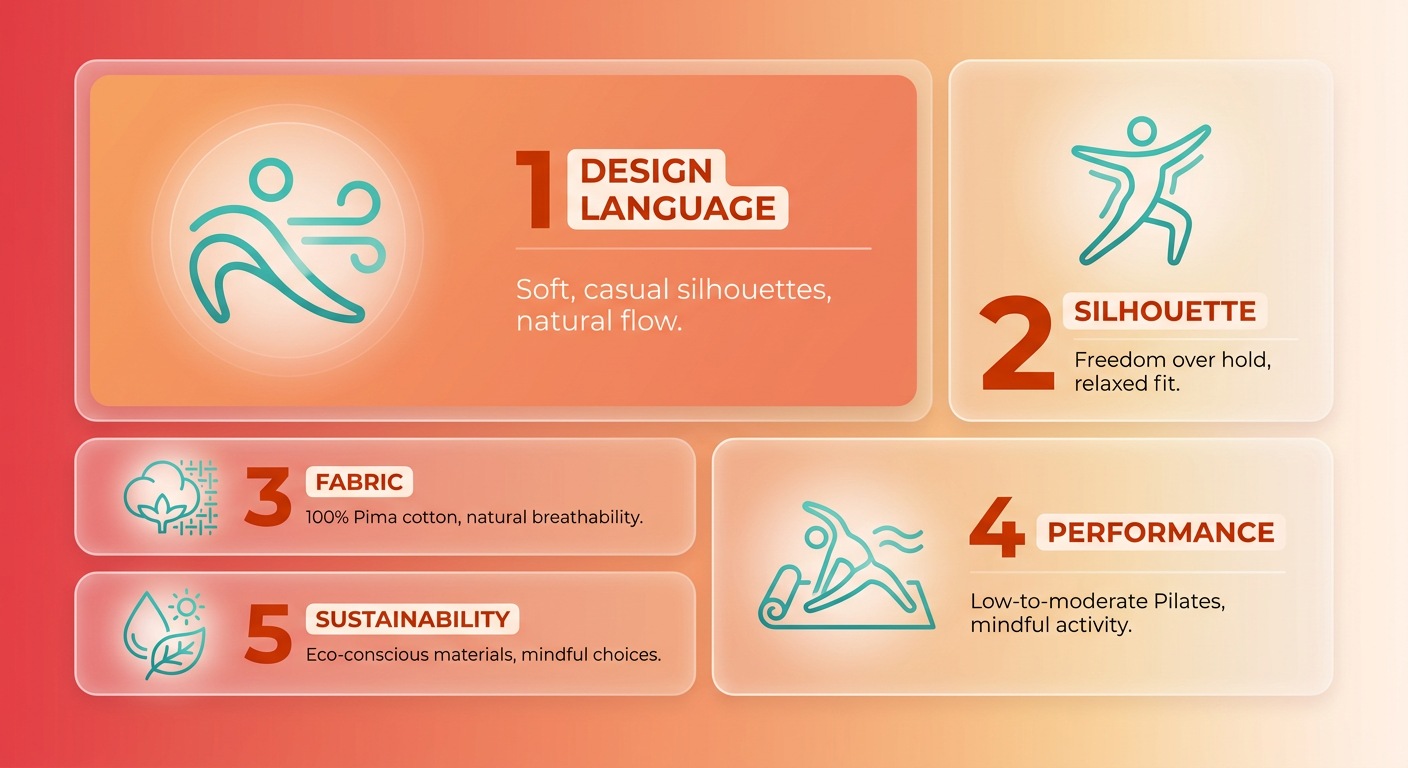
Prana takes a different position in Pima activewear. The design language is softer, the silhouettes are more casual, and the construction moves away from compression. The fiber quality is real: genuine Pima softness that holds up through repeated washing, with cuts that prioritize ease of movement over structure. For mat Pilates or low-to-moderate reformer work, the pieces do not fight you.
The trade-off shows up in more dynamic studio work. Prana designs for freedom over hold. Seated poses, standing flows, and cross-legged transitions are all fine. But for exercises where you want pieces that track the body closely, such as side-lying leg series or bridging, the looser construction can shift. Knowing that upfront helps avoid mid-class wardrobe adjustments.
Does Prana Pima Pull Double Duty at the Table?
At brunch, the look reads as intentional casual rather than polished dressed-down. Natural tones and relaxed proportions register as a deliberate style choice, not as "I forgot to change." For women whose aesthetic already runs earthy or bohemian, that is a real strength. For those who want a more refined, structured café presence, it is the brand's clearest limitation.
The difference between "relaxed Pima" and "brunch-ready Pima" comes down to cut and construction as much as fiber quality. Prana leans firmly toward the relaxed end.
Pros: Genuine Pima softness; excellent freedom of movement; relaxed silhouettes work in casual settings; sustainability focus throughout the line.
Cons: Loose cuts underperform on the reformer; casual-first aesthetic limits polish for dressier brunches; minimal compression support.
Best for: Women who prioritize comfort and personal style over performance structure, and whose daily aesthetic already leans relaxed or earthy.
Pricing: Mid-market, broadly comparable to Quince's upper range.
Getting the Most from Prana's Pima Line
Not every piece in the line performs equally. Fitted tops and tanks sit closer to the body than the bottoms, so mixing silhouettes — a snug top with a relaxed wide-leg pant — usually looks more considered than matching sets in their loosest cuts. For reformer work, a mid-rise fitted legging outperforms the straight-leg options, which tend to slide or bunch during dynamic carriage movements.
For brunch, solid tones in muted palettes — terracotta, slate, and sage — read as deliberate style choices more reliably than the busier prints. The Fair Trade and bluesign certifications apply to most of the line, though not all, so check individual product pages if sustainability factors into the decision.
How to Choose from This List
The case for Pima over synthetics is not a lifestyle preference. It is a mechanics argument. As Liana Levi, founder of Forma Pilates, explains to Vogue, the studio environment allows for a more expressive, fashion-forward wardrobe. When the activity does not demand serious sweat management, a fabric engineered for the social half of your day becomes a genuinely functional choice.
That synthesis is why this list works. Fibre2fashion's textile analysis highlights how premium-length fibers prevent the fuzzy surface wear common in lesser cottons, and that durability changes the long-term value proposition for anyone building a real rotation instead of buying one piece.
All Five Brands Compared
| Brand | Pima Type | Best For | Studio Fit | Social Presence | Verdict |
|---|---|---|---|---|---|
| Black Pearl | Peruvian Pima | Studio to street, same outfit | Comfortable, breathable fit | Reads as elevated casualwear | Best overall dual-use |
| Quince | Peruvian Pima | Budget full-wardrobe build | Mat and light reformer | Clean, understated | Best for budget |
| Vuori | Peruvian Pima | Studio tops, not full outfits | Mat cleanly; reformer with caveats | Relaxed and polished | Best tops pick |
| Tommy Hilfiger | Pima, fashion silhouette | Brunch-first, mat occasionally | Fashion cut limits studio range | Strongest social presence | Best social-first |
| Prana | Pima cotton | Mat flows, casual practice | Mat and seated work only | Intentionally relaxed | Best for gentle practice |
What We'd Actually Recommend by Use Case
Skip everything on this list for high-intensity work. HIIT, spin, or any class that creates sustained sweat belongs in synthetic performance fabric. That is not hedging — it is the real limit of a natural fiber.
Within Pilates, the choice comes down to three variables: reformer versus mat, dual-use priority, and budget.
For the best studio-to-street transition, Black Pearl's bottoms anchor this angle. The cut is fashion-forward without sacrificing the movement range a Pilates session requires. Pima's natural breathability handles the studio side; the elevated silhouette handles the café side. Finding both in one piece at this price point is harder than it sounds.
For budget: Quince is the honest entry point. It offers real Peruvian Pima, genuine longevity, and a price that makes building a full wardrobe practical instead of buying one investment piece. The construction favors ease over studio hold — fine for mat work, less reliable for reformer.
For tops only: Vuori fills that gap cleanly. The proportions work both in and out of the studio. They just do not anchor a complete reformer-ready outfit on their own.
For brunch-first with occasional mat work: Tommy Hilfiger has the strongest social presence in this group. Do not bring the fashion-forward cut to a reformer class expecting it to perform.
For a gentle mat practice with no café agenda: Prana's relaxed construction is a deliberate choice, not a shortcoming. Match it to a practice at the same pace, and it delivers what it promises.
References
[1] Mat or Reformer? Shop the Best Pilates Clothing for Either ... - https://www.vogue.com/article/what-to-wear-to-pilates
[2] 10 Versatile Athleisure Pieces To Wear From the Gym ... - https://theeverygirl.com/versatile-athleisure-pieces/
[3] What is Pima Cotton Fabric: Properties, Varieties, Uses & ... - https://www.fibre2fashion.com/market-intelligence/texpro-textile-and-apparel/textile-guide/10533/pima-cotton-fabric
[4] What Is Pima Cotton? A Comprehensive Guide to ... - https://cottongins.org/blog/what-is-pima-cotton-a-comprehensive-guide-to-the-luxurious-fiber/
Frequently Asked Questions
1. Are the sequin pieces in this roundup safe for reformer Pilates?
To protect the delicate embellishments on the Golden Bottoms, it is best to reserve them for floor-based mat classes or social outings. With equipment that uses heavy straps, springs, or textured handles, smooth, clean-finished alternatives like the South Sea Bottoms or Joggers help prevent friction or wear on the decorative details.
2. Does fit matter more than fabric quality when choosing pieces for reformer Pilates specifically?
Fit discipline is essential on the reformer. A fashion-forward, relaxed silhouette may look excellent at brunch, but loose fabric can bunch or get caught in the moving parts of the carriage during exercises like carriage-based lunges. A streamlined, body-skimming cut improves safety and focus, while the fabric's natural breathability still works in your favor.
3. Does it matter whether a piece uses Peruvian Pima versus standard Pima cotton?
Yes, the geographic origin affects the tactile experience. Peruvian Pima is known for its silk-like hand-feel, which creates a garment that glides smoothly against the skin during deep stretches and complex transitions. This frictionless quality offers better comfort during active movement than the slightly heavier, more rigid drape of standard cotton varieties.
4. Can these pieces work for barre or hot yoga, or are they suited only to Pilates?
These garments work well in moderate-temperature, low-impact settings where comfort and flexibility matter most. Barre, restorative yoga, and mobility sessions are excellent matches. However, high humidity and heavy perspiration, such as hot yoga, call for specialized synthetic knits designed to disperse moisture rather than absorb it.
5. Is the higher price of Pima cotton activewear actually worth it compared to standard synthetic options?
The value of this premium fabric shows up over its full lifecycle. While the initial investment is higher than basic cotton or budget synthetics, Pima garments resist the stretching, thinning, and surface fuzzing that happen after repeated laundering. By keeping their original shape and polished appearance over many wash cycles, they often deliver a favorable cost-per-wear ratio over time.
6. If I can only buy one piece from this roundup, which offers the most flexibility between studio and social settings?
Your choice depends on whether you want to anchor the outfit with a versatile top or bottom. A structured pant creates a strong foundation that pairs easily with casual streetwear, while a versatile top can be layered under a jacket for a fast post-class transition. Both options help you look polished without changing your whole wardrobe.
7. How should I care for Pima cotton activewear to protect its quality over time?
To preserve the soft texture of these garments, wash them with mild, liquid detergents and avoid fabric softeners, which can leave residue on natural fibers. Air drying is highly recommended because it preserves the natural elasticity and loft of the weave. Treating these garments like fine knitwear will help them stay in your wardrobe for years.