Relaxed-Fit Tank Tops That Don't Ride Up During Floor Work
October 20, 2026
Quick Summary
If you're looking for a relaxed-fit tank that stays put during floor work, fit and fabric matter more than you might think. The comparison points to a few key details: how the material stretches, where the seams sit, and whether the cut gives you enough coverage to move freely.
Comparing Relaxed-Fit Tank Construction and Materials
Where the Wirecutter review reported specific specs, the comparison looked like this:
| Tank | Material | Size Range | Bra Compatibility | Reported Shrinkage After Wash |
|---|---|---|---|---|
| A New Day Ribbed Tank | 58% cotton / 39% modal / 3% spandex | XS–4X | Racerback bras | 3.95% |
| Buck Mason Surplus Rib | 90% cotton / 10% spandex | XS–2X | Racerback or strapless | <1% |
| Jungmaven Cropped Tank | 55% hemp / 45% organic cotton | XS–3X | Regular bras | <1% |
| AYR The Champ | 100% pima cotton | XS–3X | Any style | <1% |
| Marine Layer Lexi Rib | 49% cotton / 47% Tencel / 4% spandex | XS–3X | Regular bras | <1% |
| AYR The Sexy Flexy | 50% pima cotton / 49% modal / 1% spandex | XS–3X | Some styles | <1% |
| Skims Cotton Jersey Cami | 90% cotton / 10% spandex | XXS–4X | Built-in shelf bra | <1% |
Two things stood out: breathable, stretchy blends with construction details that anchor the hem tend to handle movement better than rigid cotton alone. Ribbed trims, high necklines, or built-in shelf bras can help keep things in place when you're moving through floor sequences. Most tanks in the comparison shrank less than 1% after washing, though the ribbed A New Day tank shrank nearly 4%, so sizing up is worth considering if you're between measurements on that one. Quality relaxed-fit tanks often range from around $8 to $80, with most favorites landing in the $40–$50 range.
The short version:
- Breathable, stretchy blends generally handle floor movement better than rigid cotton alone.
- In the available comparison, the A New Day Ribbed Tank shrank 3.95% after washing, while most other tanks shrank less than 1%.
- Quality relaxed-fit tanks often range from $8 to $80, with most favorites in the $40–$50 range.
What Actually Keeps a Tank Down During Floor Work
When you drop into a plank or flip through sun salutations, the last thing you want is a tank that creeps up your ribcage. We've all been there, tugging our tops down mid-flow. It's a distraction that pulls you right out of the moment. A relaxed-fit tank should sit comfortably at your waist and stay there, even when you're moving through poses that turn you upside down or press your body weight into the floor.
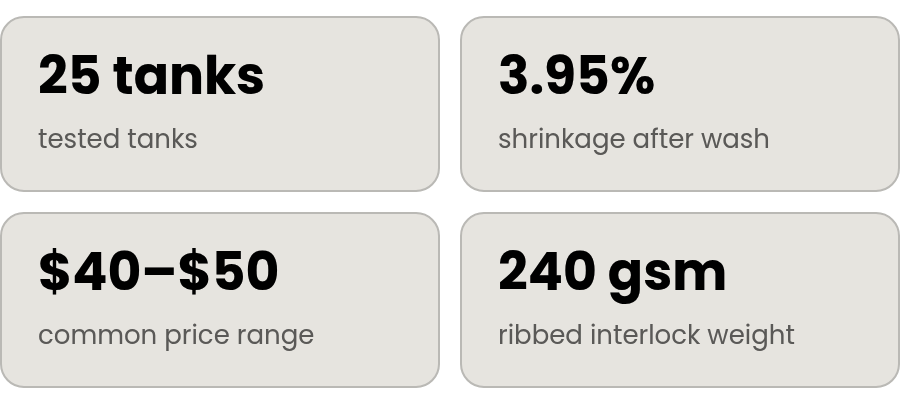
The difference comes down to fit, fabric, and seam placement. The 25-tank comparison showed that relaxed styles with breathable, stretchy blends handle movement better than rigid cotton alone. Pima cotton activewear often includes a touch of spandex or modal for a soft drape and a bit more grip.
Bra compatibility matters, too. Many of the highest-rated tanks either hide straps or work with racerback styles, so you're not fighting with both your top and your bra during a vinyasa sequence. We carry pima cotton pieces designed to move from studio to casual outings, with breathable fabric and a comfortable fit meant to support you through your practice.
Fabric That Actually Moves With You
Whether you're flowing through sun salutations or holding a plank, the fabric itself affects whether your tank creeps up or stays put. Blends across cotton-modal, hemp-cotton, and pima cotton activewear point in the same direction: breathable, stretchy materials tend to lie flat against the body instead of bunching at the ribs.
What separates a tank that stays put from one that rides up is knit structure as much as fiber content. Lighter single-jersey knits can move freely but sometimes twist at the hem during inversions. Four-way stretch can matter more than total elastane content. A fabric with recovery in both directions is generally more forgiving as you round forward, whereas two-way stretch may only move well in one direction.
A useful check is to stretch a tank and see how quickly it snaps back. Laundering told a similar story: pieces washed cold and hung to dry tend to hold their measurements longer, while tumble-drying on high heat can loosen the knit and leave the hem wavy. We've found that pima cotton pieces keep their hand-feel longest when the knit is dense and the fiber combed, so the surface stays smooth instead of pilling where a strap rubs.
Cut shifts the equation too. A relaxed tank with a wide armhole needs a denser knit to sit level in downward dog, while a close-fitting cut can get away with a lighter, airier fabric. If you're between sizes in the lighter weights, sizing down can help keep the hem anchored.
Design Details That Make the Difference
We've found that three details matter most: where the armholes sit, how the hem is cut, and whether the fabric has enough weight to resist bunching. High-cut armholes look sleek when you're standing, but they can tug the fabric toward your ribcage the moment you fold forward.
The hem itself plays a bigger role than you might expect. Cropped styles work if the cut is loose enough to drape rather than cling, but a true relaxed fit usually means a little extra length in back.
How Your Tank Works With Your Bra
If you usually skip built-in shelf bras, the way your tank interacts with your sports bra determines whether everything stays flat. Racerback styles work cleanly with racerback bras, but if you prefer a standard strap, look for a scoop or V-neck that's cut wide enough to hide the straps entirely. Some tanks include hidden snap closures at the shoulders, and underarm panels like those on muscle-tank cuts can give you built-in coverage without adding bulk.
Finding a Tank That Fits Your Body
When you filter by "relaxed fit" at a major retailer, the label alone won't tell you whether a tank will stay put during floor work. A cross-check of Dick's Sporting Goods relaxed-fit listings points to a stronger pattern: most relaxed-fit listings are casual or fan gear rather than activewear, exercise-specific tagging is rare, midrange products often lack verified construction data, and size availability collapses above XXL. That means you need to dig into fit specs and construction details rather than relying on the "relaxed fit" filter alone.
A true relaxed fit for yoga or pilates sits comfortably at your natural waist without clinging to your ribcage. Tanks that have enough room through the torso are more likely to stay flat when you fold forward or hold a plank. If the fit is too snug through the midsection, it may creep upward no matter how relaxed the label claims it is.
Size ranges matter more than you might expect. The best-performing tanks in the comparison cover XS through 4X, which translates to roughly US sizes 0 through 30. That broad range often signals that the brand has tested the fit across body types, not just scaled a single pattern up and down. When a tank only goes to XL, the "relaxed" fit often disappears at the high end of that range, and availability above XXL becomes less consistent across retailers.
Price is another practical filter. A budget staple like the $8 A New Day example can work if you account for its higher reported shrinkage and consider sizing up. Many favorites cluster in the $40–$50 range, where you are more likely to find better recovery, extended sizing, and bra-friendly cuts. Pima-cotton options tend to prioritize hand-feel and drape for studio-to-desk wear, but they may not always be the cheapest choice. The buyer tradeoff is usually between a tested budget staple and a specialty fabric: budget pieces can cover the basics but may require more careful laundering, while midrange and pima options are often more consistent when you need the tank to stay put through floor work.
Check bra compatibility before you buy. Racerback styles work best with racerback or strapless bras, while scoop-neck tanks give you more flexibility. If the armholes are too high or the neckline too low, you'll spend half your practice adjusting straps instead of moving through poses.
Keeping Your Tank Floor-Work Ready
We've found that most relaxed-fit tanks hold their shape reasonably well after washing, but shrinkage matters when you're counting on coverage that stays. Durable construction details like double-stitched hems can help preserve the original length, whereas single-stitch finishing may show fraying or slight elongation around the neckline earlier.
When a tank shrinks, the hem rises and the armholes can pull tighter, which brings you back to the same ride-up problem you bought a relaxed fit to avoid. Tumble drying on medium heat can cause more dimensional change than air-drying flat, and that difference can be enough to turn a hip-grazing hem into one that lands above your waistband.
We recommend washing relaxed tanks in cold water and air-drying them flat to preserve the fit. The less heat you apply, the less the fibers will contract, and that keeps the tank long enough to stay down when you fold forward. For tanks with printed graphics or heat-transferred logos, turn them inside out before washing to prevent cracking and peeling, which can stiffen the fabric and reduce overall drape.
References
[1] The 8 Best Women's Tank Tops | Reviews by Wirecutter - https://www.nytimes.com/wirecutter/reviews/best-womens-tank-tops/
[2] Relaxed Fit Tank Tops - https://www.dickssportinggoods.com/o/tank-tops/relaxed-fit-tank-tops?srsltid=AU7gw4Ur21xrHlxQnPXvCm22ifNkrg6RuguTyxGzcezQ2a3TSl3cMGGe
FAQ
Do relaxed-fit tanks actually stay down better than fitted styles during floor work?
Relaxed tanks tend to stay put when they combine loose torso room with stretchy, anchored construction. A fitted tank can work if the knit is dense enough, but relaxed cuts give you coverage without constant tugging when you fold forward or hold a plank.
Should I size up if I'm between sizes on a relaxed tank?
Size up only if the tank uses a lighter knit or showed significant shrinkage in the available comparison—the A New Day Ribbed Tank shrank nearly 4%, so going a size up there can help. Most tanks in the comparison shrank less than 1%, and sizing down in lighter-weight blends can still help keep the hem anchored during movement without sacrificing comfort.
Can I tumble-dry a relaxed tank without ruining the fit?
Air-drying flat is the safer choice for preserving the original length. Tumble drying on medium heat can cause more dimensional change than air-drying, and high heat can lift the hem and tighten armholes.